Bledsoe’s Back is Back, Science Teacher Returns After Strenuous Surgery

Kaveri Dole || STAFF WRITER

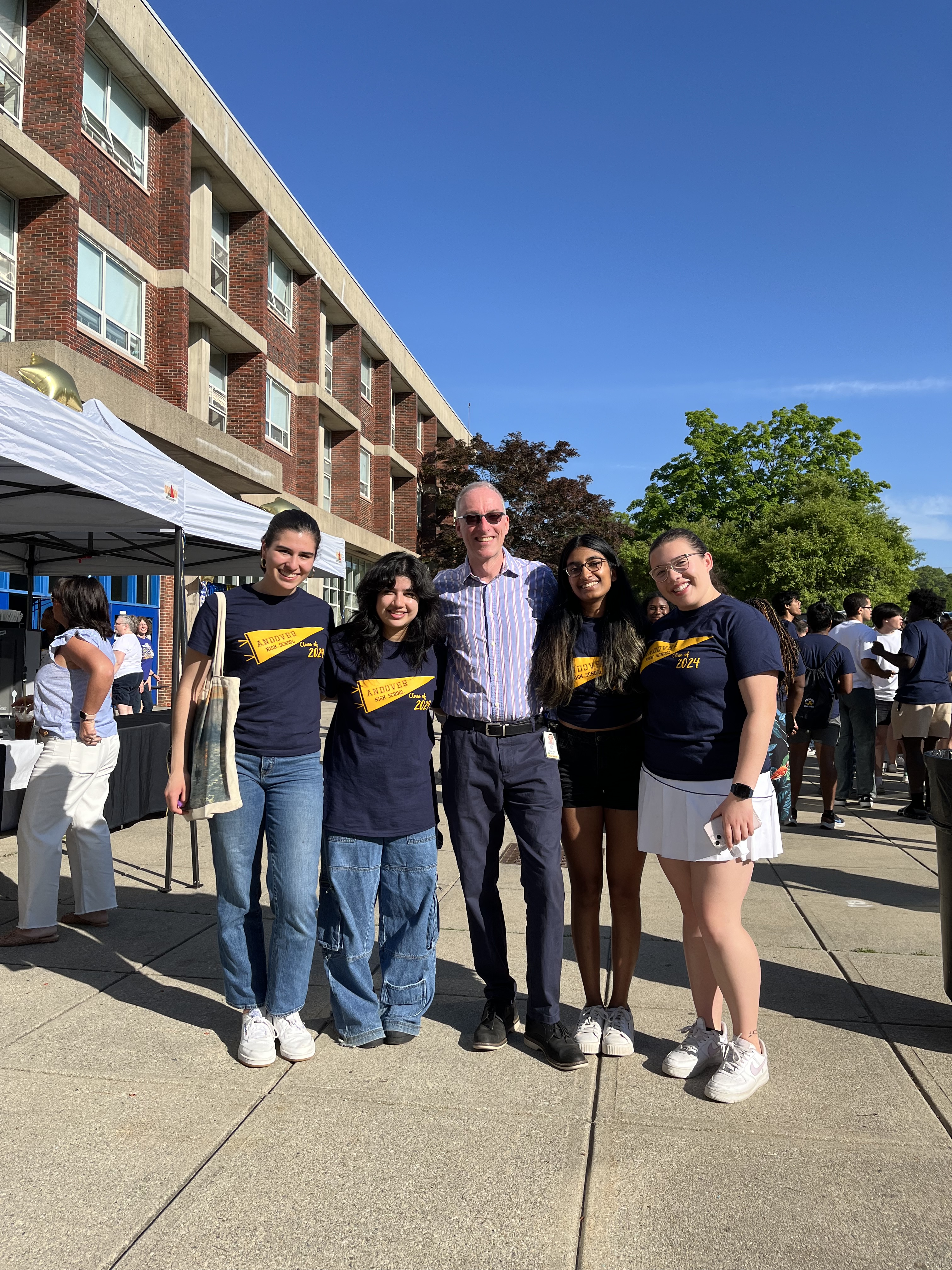
Ralph Bledsoe, a beloved science teacher at AHS, recently took a two-month leave of absence due to surgery on his spine.

Bledsoe reluctantly left AHS from October 31 until December 20. This time included surgery preparation, a 5-hour surgery, and over a month of recovery.

“I could not [walk] without my feet disappearing [and it felt] like walking on stumps,” said Bledsoe. Bledsoe was having trouble simply walking from his car into the school, and had to get permission to park directly outside of his class to reduce the distance of this simple yet agonizing experience he had to overcome twice a day.

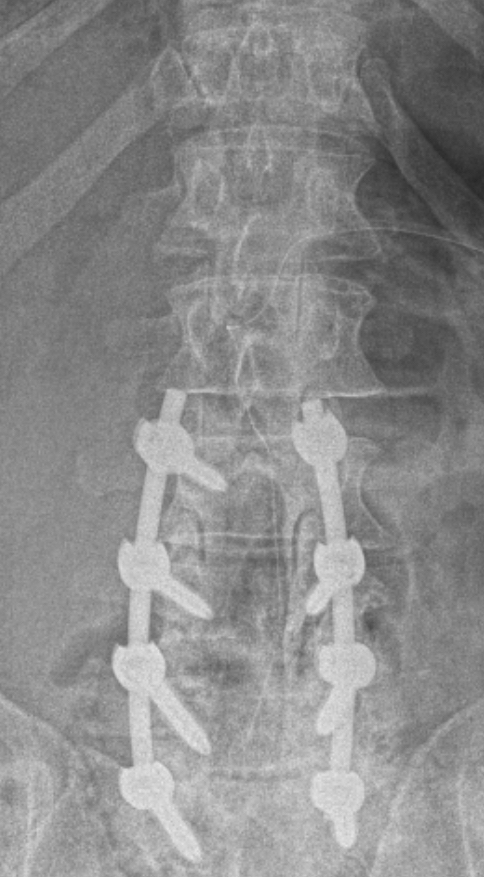
The source of this issue stemmed from Bledsoe’s spine, where three 

inter-vertebral discs were missing, causing movement in his vertebrae, leading to several issues.

At first, Bledsoe experienced extreme symptoms such as his legs and feet becoming numb after standing up still for prolonged periods, hindering his ability to walk and get around.

It became increasingly evident for Bledsoe that action would need to be taken. At first, he tried a chiropractor, who said that his symptoms were too severe and that he would need to turn to a surgeon.  

Bledsoe repeatedly expressed his gratitude for the extensive research that Massachusetts General Hospital had been doing. “Getting into Massachusetts General Hospital was one of the best things because they are a research teaching hospital,” Bledsoe said.

Researchers were using a new robot for Bledsoe’s case that read MRI bone densities to determine the best location for the eight screws that were to be inserted into his vertebrae. Thus guaranteeing the spinal structural support that Bledsoe had been lacking.

“On Halloween night I was carved like a pumpkin because the day of my surgery was Halloween day,” Bledsoe said regarding his lengthy five-hour surgery. “The operating room was as large as a physics lab but stuffed to the gills with equipment.” 

In Blesoe’s absence, He left his students under the instruction of Cole Hauser, a substitute teacher. “This is the first time I’ve had experience taking over someone’s class like that,” Hauser said. “I think it’s really good to help out where you can for teachers. These life events can take you by surprise.”

However, Hauser seamlessly handled the transition for freshmen in physical science between teachers, ultimately extracting a beneficial experience for himself and his students. “They made that transition really easy, ” Hauser said, referring to his students. “I enjoyed it and had a great time”

Hauser studied Marine Biology and teaching in college. However, he received glowing reviews from his students in his Physical Science class. “I think Mr. Hauser prepared us really well for his tests so I don’t think my education was really impacted,” said Ishwa Dharan, a freshman currently in Bledsoe’s physical science class.

“He makes the class really fun so I was just glad he was back,” Dharan said. It’s not a secret that Bledsoe is adored and revered by students and staff. “He’s a pretty happy guy,” said Sydney Steddom, a sophomore and a former student of Bledsoe.

Related Posts

NEASC Visit Highlights AHS Goals
  • April 3, 2026

Anushka Dole || ONLINE EDITOR

Andover High School hosted a re-accreditation visit from the New England Association of Schools and Colleges (NEASC) from March 16-18, as part of a decennial review process designed to evaluate how well AHS supports student learning and identify areas of improvement. 

According to Assistant Principal Alicia Linsey, the process started during the 2023-2024 school year with a visit from the Collaborative Conference team, a group of visiting educators from across the New England area. In preparation for the visit, a team of AHS faculty members and administrators was formed.

“We picked out priority areas and presented those to this visiting NEASC committee … and they agreed with [our priority areas],” said biology teacher Lindsey L’Ecuyer, the AHS committee’s science department representative. 

There were five priority areas that AHS pledged to work on starting in the 2023-2024 school year: developing the Vision of a Graduate, implementing consistent curricula throughout all departments, vertical/horizontal alignment across departments and throughout grades, promotion of school pride, and building infrastructure. 

The Vision of a Graduate outlines the skills and values that the school hopes to instill in every student by the time they graduate. 

Vertical alignment refers to improving coordination between teachers across grade levels to ensure student skills build progressively, while horizontal alignment emphasizes greater collaboration between teachers across departments. 

“[The committee is] working on … finding time in the school day for teachers to collaborate more,” L’Ecuyer said, adding that AHS has begun standardizing curricula to support this effort.  

“There are committees in the school that have been working on documenting curriculum in a consistent format for our core classes … freshman English, for example, [and] biology,” L’Ecuyer said. 

Linsey mentioned that students and parents also play a role in the accreditation process. A team of visiting evaluators—distinct from the Collaborative Conference team—conduct interviews to gather student perspectives on the school climate and learning experiences. 

Although the committee leads the reflection process, administrators are then responsible for implementing action plans based on their findings. In accordance with these plans, faculty members must provide evidence of integration of the district goals.

L’Ecuyer emphasized that NEASC accreditation is more about reflecting on and improving school processes than it is about recognition.

“It’s less of a badge as it is opening yourself up to reflecting on and documenting what you do well and what it’s like setting goals for your school,” L’Ecuyer said.

Beyond internal reflection and planning, the “badge” that the reaccreditation process provides does carry additional, tangible benefits for students. It reassures families and colleges that AHS maintains a rigorous academic program, and that it’s constantly working towards improving learning.

“My understanding is that colleges know Andover High School—they know what our programs are like,” L’Ecuyer said. “[Because] of [accreditation] … they know the kinds of students that graduate from here, and what skills that [they] have.”

Accreditation also plays a role in the school’s ability to receive funding.

“NEASC accreditation is required for eligibility to receive some private, state, and federal grants, loans, and other federal funds,” Linsey noted in an email.

Continue reading

Leave a Reply

You Might Also Like

Spanish Department to Host Day of the Dead Fair

  • November 12, 2025

Funding the Future of Science: Proposed NIH Funding Cuts Throw US Biomedical Research Into Uncertainty

  • November 4, 2025
Funding the Future of Science: Proposed NIH Funding Cuts Throw US Biomedical Research Into Uncertainty

Student-Hosted Video Game Hackathon Scheduled for Late September

  • September 22, 2025
Student-Hosted Video Game Hackathon Scheduled for Late September

World Languages Coordinator Reflects On Career, Retirement

  • June 9, 2025
World Languages Coordinator Reflects On Career, Retirement

CollegeBoard Scores 1/5 on AP Testing Administration

  • June 9, 2025

AHS Student Directs Coming-of-Age Film, ‘Horizon’

  • June 9, 2025

Discover more from AHS NEWSPAPER

Subscribe now to keep reading and get access to the full archive.

Continue reading