Funding the Future of Science: Proposed NIH Funding Cuts Throw US Biomedical Research Into Uncertainty
  • November 4, 2025

Anushka Dole || Online Editor 

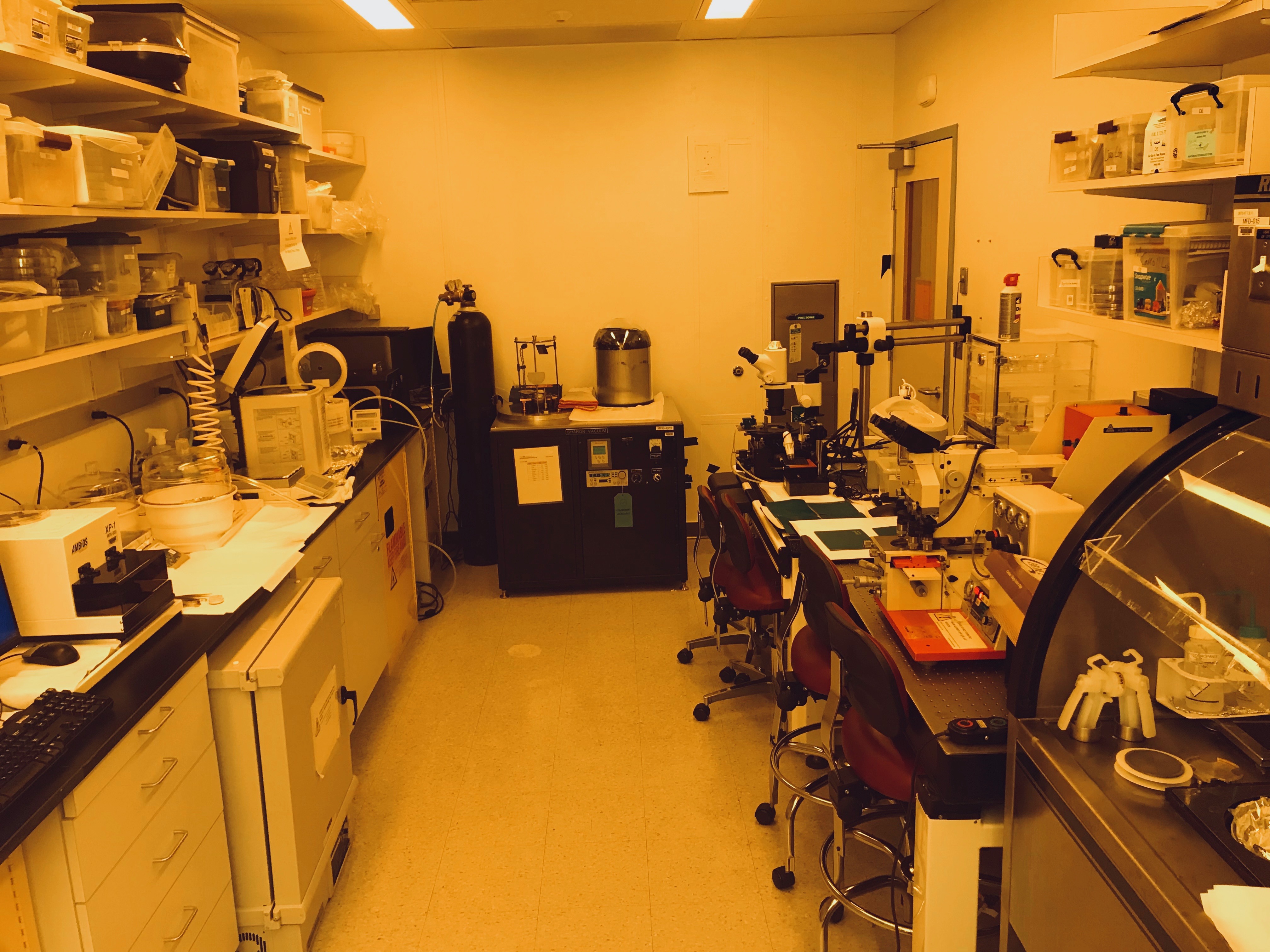
In the sunlit Orkin Lab at Harvard Medical School, lab technicians diligently carry out their experiments, pipetting meticulously into Eppendorf tubes. Next door, in a darkened room, a team of researchers are  huddled around a fluorescence microscope, tracking how gene‑editing tools can restore crescent-shaped red blood cells into their healthy state—a pathway the Orkin team helped pioneer.

Like the Orkin Lab, countless biomedical research labs across the United States engage in lifesaving research every single day. Their research is now in jeopardy. Funding inconsistencies in the National Institutes of Health (NIH), including proposed cuts to indirect costs and the halt in federal funding due to the current government shutdown, threaten to stall progress and could have lasting detrimental effects on both the ongoing research and the communities that rely on it, including Andover.

In April, the NIH cancelled $800 million in grants that it had already approved because the projects didn’t align with the Trump administration’s policies. In July, a federal judge then ruled that the cuts were unlawful, which restored research funding. According to the Boston NPR station WBUR, the US Supreme Court ruled that the NIH can withhold the grants in August.

In addition to withholding the grants, the Trump administration is proposing to significantly reduce funding for “indirect” costs of research, supported by the narrative that the funds “were largely administrative bloat, unrelated to the costs of research.” According to the Harvard Crimson, these indirect funds include costs such as lab construction, research equipment, hazardous waste removal and “countless other very real and necessary costs of research.” For institutions in our own backyard, the impact is tangible: Harvard University stands to lose hundreds of millions of dollars, a blow that could ripple across its affiliated hospitals—including Boston Children’s Hospital, Brigham and Women’s hospital, Dana-Farber Cancer Institute, Massachusetts General Hospital, and many more. Across the country, other US institutions stand to lose billions more.

To fully understand the effects of the funding cuts, it’s important to start at the source: with the research itself. Research is a long, iterative process, full of ideas that start small and experiments that may or may not work. Unlike labs and experiments in school, where the outcome is clearly defined and predetermined, research can be filled with dead ends and uncertainties.

It often begins with something as simple as an idea. Dr. Nathan Crook, an associate professor in the Department of Chemical and Biomolecular Engineering at North Carolina State University, described a project’s start as the moment you first think of a concept, and the end as the moment you stop actively working or thinking about it

“Normally, you or someone in your lab has a flash of insight… at these early stages, you usually don’t have dedicated funding for it,” he said. Early experiments are often small-scale pilot tests that can be supported by seed-funding (typically around $10,000) from the university, or a research foundation. More senior researchers may have access to discretionary funds – “rainy day” funds to use on early projects that aren’t bound by any specific research question.

Dr. Sara Smaga, an AAAS Congressional Science and Engineering Fellow and former Executive Director at the NSF Center for Genetically Encoded Materials, added that this initial stage is the beginning of a longer iterative process.

“In academia, faculty choose what topics they want to study…often a student will collaborate to design their project within their advisor’s topic area,” she explained. “The results of each experiment generate new questions, leading to further hypotheses, even if the initial result is ‘nothing happens!’”

Each experiment can quickly expand into multiple interconnected projects. Each project requires more resources, which are obtained by funding, typically in the form of research grants.

“Let’s say the pilot test goes well, and you get some interesting data,” Crook said. “You will then likely apply for a ‘normal’ research grant using those results as preliminary data. Usually the cool projects are kind of crazy, and the grant reviewers won’t believe that you will be able to do what you are proposing unless you have some sort of proof-of-concept that it is working.”

These grants can come from a variety of sources, including private foundations (such as the Gates foundation or the Chan Zuckerberg Institute), federal funding, internal university funding, state grants, or industry funding. 

“Generally, a Principal Investigator (usually the senior faculty member overseeing the lab), will craft a proposal describing what they’d like to study and why, and submit to a funder,” Smaga said. “After submission, proposals are reviewed by a panel of experts in the field, who evaluate each proposal for feasibility and impact. Not every proposal is funded, and sometimes it takes multiple tries to write a proposal that gets chosen for funding.”

If a proposal isn’t funded right away, researchers often continue the project on the side, refining their ideas and re-applying for grants until they can secure official funding. Once secured, labs can expand, hire more researchers, and pursue the project in earnest. Ultimately, the most significant source of funding for research projects—especially in academia—comes from federal funding, typically the NIH.

“Most of the funding in every lab I’ve ever been a part of has come from federal funding,” Smaga said. Crook agreed, stating that “the most important [source of funding] by dollar amount, are federal grants,” and that “federal grants have funded 77 percent of the research in [his] lab.”

This reliance on federal support means that any disruptions in the grant cycle—whether from delays, government shutdowns, or the proposed cuts to indirect costs at agencies like the NIH—can ripple far beyond the walls of a single lab, outpouring from academia to industry, and eventually, impacting the lives of citizens. The money from NIH funding is a key part of funding early-stage projects, like projects being worked on by Smaga and Crook, laying the foundations for industry to develop novel therapeutics. 

“Just one example: NIH-funded research on bacterial immune systems gave us gene editing, which is now being used to cure sickle cell and rare genetic diseases,” Smaga said.

Jackie Thompson, who works on targeted cancer treatments at Takeda Pharmaceuticals in Cambridge, agreed. “My current work involves developing cell and gene therapies for cancer,” Thompson said. “These treatments rely on decades of foundational research…that was often NIH-funded.”

For communities like Andover, where students and educators are deeply connected to Massachusetts’ vibrant research ecosystem, those losses hit especially close to home. Sarepta Therapeutics, a biotechnology company with an office in Andover, develops gene therapies that depend on the same fundamental research NIH grants have long supported. 

At AHS, the BioBuilder club gives students hands-on experience with synthetic biology research, and the opportunity to work on projects that can be published in a student research journal. While BioBuilder opens doors for aspiring scientists, those doors exist within a larger research ecosystem that relies on consistent federal funding.

“It’s not something that you can just reinstate the funding and think that things are going to pick up as normal,” said Dr. Lindsey L’Ecuyer, the advisor of Andover High School’s BioBuilder club. “When people set up a lab somewhere else, they’re not coming back… it’s going to make it really hard for us to come back from that.”

L’Ecuyer sees the loss trickling down to high school classrooms, mentorship programs, and the students who might have been inspired to pursue science in the first place. “It feels like we’re losing a whole generation of people that would be coming to do research in the U.S.,” she said. “America has been a leading country in scientific research, and it’s going to make it really hard for us to come back from that.”

Crook agreed. “Other countries certainly aren’t reducing research funding, and guess where top scientists—even US citizens—will go? It really hurts our country’s economic…and actual…security to reduce research funding.”

Smaga also worries that America could lose a generation of scientists, and she’s already seen the early signs. “This past cycle, we saw graduate programs responding to funding freezes and future funding uncertainty by admitting fewer students,” Smaga said. 

Biomedical research supports far more than scientific discoveries and the university labs that make them: according to the nonprofit United for Medical Research, every dollar of NIH funding generates about $2.56 in economic activity. The stakes of losing consistent funding are clear in places like the federally funded Orkin Lab at Harvard, where gene-editing research is already transforming lives. The lab is a clear example of how federal support fuels the discoveries that save lives, and it continues to inspire students and scientists to pursue the next breakthroughs. 

“It’s a challenging time to be in biomedical research, but I’m still optimistic about the field,” Thompson said.

“For students who want to get into science, the advice is simple: start early, get involved, and follow the questions that excite you,” she said. “Even sending an email to a professor whose work interests you can open doors. Despite the obstacles, the next generation of scientists has a real shot at making a difference—and it could be your curiosity that drives the next big breakthrough.”
Continue reading
The Issue of Gender: New Legislation Bans Transgender Women from Participating in Sports
  • May 6, 2025

Jillian Slotnick || SPORTS EDITOR

The whistle blows, cleats pound against the turf, and sweat drips as athletes compete under the stadium lights. For many students, the field is a place of competition, teamwork, and passion. But for transgender athletes, it can also be a battleground for identity and acceptance. With new legislation from President Donald Trump restricting transgender women from competing in women’s sports at the collegiate and secondary level, the stakes have never been higher. 

In a move that has reignited the ongoing debate over transgender athletes in sports, President Trump has introduced an order restricting transgender women from competing in women’s sports. On February 5, Trump signed an executive order, titled “Keeping Men Out of Women’s Sports,” which states that Title IX requires that women’s and girls’ sports should be limited to individuals who were biologically female at birth, and threatens federal funding for institutions allowing transgender women and girls to compete in women’s sports. Title IX is a federal law that prohibits sex-based discrimination in any education program receiving federal financial assistance. Over half of U.S. states have already enacted laws or regulations restricting the banning of transgender athletes from participating in sports based on their gender identity in K-12 and collegiate levels. A congressional bill seeking to enforce similar restrictions failed to pass the Senate on March 3, and the executive order and state-level actions continue to face legal challenges.

This policy, echoing a wave of similar conservative legislation across the U.S., has drawn strong reactions from both advocates and critics, with many arguing that it oversimplifies a complex issue involving science, fairness, and inclusion. These policies apply not only to athletes in the National College Athletic Association (NCAA) but also to those at the high school level, including those at Andover High School. 

According to the Pew Research Center, political polarization in America is at an all-time high, with deep divides across parties on key issues like immigration, healthcare, and social justice. Social media and partisan news fuel differences between parties, which leads to distrust in the government and institutions. Additionally, this division has grown with the election of President Trump, causing strains on political discourse and dampening efforts to find common ground.

As debates continue, both Elbasiony and Long agree that education is key to fostering a more inclusive society. “If schools can’t allow trans athletes to compete on the teams they prefer, they should at least work to make them as comfortable as possible,” Long said. “Even small things like using the right pronouns and being flexible with language can make a big difference.”

For many schools, the issue is out of their hands. Kerry Cashman, Assistant Athletic Director at Andover High School, noted that schools must follow regulations set by governing bodies like the Massachusetts Interscholastic Athletic Association (MIAA). “Obviously we always want what’s best for our students, but it’s so difficult…we have to follow MIAA guidelines,” she said. ADs from across the state (including in the Merrimack Valley) have struggled with how to implement this new policy.

Currently, according to the MIAA’s “Gender and Participation” guidelines, “a student shall not be excluded from participation on a gender-specific sports team that is consistent with the student’s bona fide gender identity,” a policy in line with Massachusetts state law (M.G.L. c. 76, sec. 5), which prohibits discrimination in public schools based on gender identity. The U.S. Department of Education has since launched an investigation into the MIAA for “potential Title IX violations.” In response, the MIAA released a statement that said it, “has historically complied with all applicable federal and state laws” and that it is “currently seeking guidance from the Office of the Attorney General and [its] own legal counsel on [its] next step.” 

Khaled Elbasiony, a student researching gender identity for his Capstone project, believes that misconceptions about transgender individuals play a significant role in shaping policy. “So many people are uninformed about gender identity,” he said. “If people actually understood the science, this wouldn’t be a big deal legislatively.” He emphasized that transgender women, even before transitioning, often do not have the same physical advantages as cisgender men. “There’s a common misconception that trans women have an overwhelming advantage, but a lot of trans people actually have hormonal imbalances that can put them at a disadvantage.” This is supported by research performed at the University of California San Francisco.

Many people believe the new policies are less about science and more about political control with house members such as U.S. Representative Alexandria Ocasio-Cortez and other democrats agreeing with these sentiments. Additionally, the new executive order doesn’t consider any of the scientific complexities of gender identity in justifying the limitations on transgender athletes, with no mention of a scientific or biological backing for their claims.

For transgender athletes, these policies have real-life consequences. Florian Long, a transgender student who previously played soccer on the girl’s team, shared his struggles with acceptance in sports. “It would have been better to play on the boys’ team because I felt more at home there, and they treated me better.” Long has since quit soccer and is now focused on music.

Long and many others fear that the new legislation will force transgender athletes into an impossible choice: either participate in a sport where they feel unwelcome or quit altogether. “It’s going to make trans kids feel trapped,” said Long. “They’re either going to have to quit or deal with being in an environment where they aren’t accepted. Seeing people like you in sports is an amazing experience. It’s important for kids who are figuring out who they are to know that they belong.”

The question of fairness remains at the heart of the debate. While some argue that transgender women may have competitive advantages, others advocate for policies that support inclusion while ensuring a level playing field. Elbiasony was quick to point out that although it’s not fair to expect people to be comfortable in a team that doesn’t align with their gender, it might be best for athletes to transition before they play on a team different from their sex at birth.

Beyond athletics, the conversation about transgender athletes reflects larger societal debates about gender, identity, and rights. Elbasiony pointed out that the polarization surrounding transgender issues stems from the way society categorizes people. “Labels create division,” he explained. “When you put people into strict categories, it objectifies them. That’s part of why America is so politically divided right now.”

Long believes that, ultimately, policymakers should focus on creating a more accepting environment rather than restricting opportunities. “Trump and others pushing these policies should stay out of other people’s business,” Long said. “This [order] makes trans kids feel invalid and stuck in places where they aren’t happy.”

Continue reading
Procrastination Park: Senior Sliding to Success
  • May 1, 2025

HARRY GUO AND BRANDON NGUYEN || EXECUTIVE EDITORS

The final months of high school feel like a long exhale after years of pressure. College applications are in, grades feel less urgent, and the countdown to graduation is in full swing. For many seniors, this shift brings a newfound sense of freedom—sometimes a little too much. Enter the “senior slide,” a time-honored tradition where motivation dips, assignments pile up, mostly untouched, and students trade textbooks for spontaneous adventures. It’s a running joke among students, a headache for teachers, and a source of concern for parents watching their once-diligent kids hit snooze a few too many times.

But is senior sliding inevitable? Is it a well-earned break or a slippery slope? The class of 2025 faces the same age-old dilemma: let go and enjoy their final months, or stay the course and power through. With GPAs on the line and summer just around the corner, seniors are making their choices—some coasting, some at full effort, and others somewhere in between.

Assistant Principal Joanna Ganci sees senior sliding as a spectrum rather than a singular experience. “Everybody slides in their own specific way,” she said. “Not everybody implodes and [has] everything fall apart. Some people release themselves from the pressure they’re imposing on themselves; some parents relieve their kids of that pressure.” 

As a mother of a current senior at Beverly High School, Ganci shared parts of her daughter’s experience and the emotional weight of these last few months, not just in academics but in friendships. With the realization that high school is ending, “she’s cried a few times,” Ganci shared. “She’s starting to think about relationships and how they’ll change when everyone’s in different places.” 

According to Ganci, a certain level of sliding is normal and even beneficial. “Transitioning away from high school is very healthy,” she said. “It’s the end of a relationship. Hopefully an amicable… not an unhealthy end.” 

Senior sliding is, of course, not exclusive to AHS. According to a 2012 study from the National Institute of Health, which surveyed high school students in California, around 55% of surveyed students experienced some degree of academic burnout, characterized by decreased motivation, increased tardiness, and a decline in academic performance. A 2024 survey conducted at Oak Park and River Forest High Schools in Illinois found that 45% of their seniors rated their experience of senioritis as very strong, with a modest increase in D’s and F’s by the end of their senior year compared to the beginning.  ​

For some seniors, senior sliding is less of an accident. Senior Dom Papa embraces the lifestyle wholeheartedly. “I love it. I do it all the time. I think I’m going to do it tomorrow. I think I’m going to do it next week. I did it yesterday,” he said. “So yeah, I love it.” 

Papa’s approach to school has shifted dramatically since the second semester began. “I had motivation. You know, I had plenty of it, but it just ran out,” he said. “I’m not going to get it back.” However, once autumn comes around, he believes his “motivation will return once [he] goes to college.” While he acknowledges the potential risks of sliding too hard, he offers some advice to future seniors: “Don’t start early because once you start early, there’s no going back. Do it towards the end of the year when all your grades are finalized, when you know you’re going to college.” 

Senior Teddy Adessa is also currently on the slide, but also knows the downsides. “I love senior sliding,” he said, “but it’s definitely not the right thing to do, because my grades are not looking the best.” Even with his grades suffering, Adessa still values the experience. “I’m having a great time in high school, so I feel like that’s pretty important. Start strong and slowly slide your way down to give yourself some space.” 

Unlike some sliders who claim to be in full control, Adessa admits he wishes he were doing all his assignments. “It’s definitely not healthy,” he said. “Definitely get your work done, guys. Go to college.”

Senior Jaiden Li, another self-proclaimed slider, sees her academic decline as a product of her environment at Andover High School. “If you dropped me in college right now, I would lock in instantly,” she said. “It’s just the school… I hate [AHS]. I hate everything here!” 

Her frustration with AHS played a major role in her decision to disengage from schoolwork. “I think other high schools have greater structure, and, let’s just say, more rigid enforcement of making sure students aren’t sliding,” she said. “Here, there’s not really a consequence for sliding aside from your own detriment.” Still, she acknowledges a potential downside: “If you’re sliding on top of summer break, that’s like a six-month period where you aren’t studying. You aren’t going to be ready for college.” However, she also added, “I don’t think [senior sliding] is unhealthy. Sure, it might be an inconvenience, but I think after you’ve locked in and worked hard for like four years, you’re just like ‘whatever,’ right?” 

For senior Valeria Cauia, senior sliding isn’t an all-or-nothing concept. She recognizes the social aspect of sliding but still holds onto her academic responsibilities. “I thought about it,” she said. “Or actually, when there’s an opportunity—an excused opportunity—I will take it.”

Unlike those who fully embrace the slide, Cauia picks and chooses when to take breaks, making sure her grades remain intact. “I only slide when I don’t have anything important to do,” she said.

She believes senior sliding is natural, though largely shaped by the people around her. “I feel like I wouldn’t even think about doing it if other people weren’t [sliding],” she said. “But I’m not done yet, so I’m still scared about my grades. I want to keep my GPA.”

Not everyone sees sliding as a necessity. Senior Richard Chen, who has so far resisted the urge, remains motivated. “I don’t want a lot of my hard work for the past 3.5 years to go away,” he said. “That’s my motivation.” 

Similarly, senior Anna Bacchi has maintained her work ethic. “I think I’ve started caring less,” she admitted, “but I haven’t been just not doing my work.” For Bacchi, watching peers slide is interesting, but not tempting. “I understand it, but I also could never,” she said. “I would freak out too much.” 

While some students view sliding as a well-earned break, and others worry about its consequences, French teacher Olga Kostousova sees both sides. Teaching two AP French classes this year, she has seen seniors sliding first-hand. While she reports that she has not seen this year’s seniors slide as badly as in other years, she notices the decreased work ethic of her students. “When you anticipate the freedom, you may lose track of other things,” she said. “But, I understand [it].” 

Junior Kevin Sun is already thinking ahead to next year. “I don’t [like going]  to school, but I know I have to,” he said. While he insists he won’t slide, he leaves some room for doubt. “Well, maybe a little.”

Is senior sliding an unavoidable part of high school? The answer depends on who you ask. But, come June, some students will be sprinting to the finish line, while others will be sliding across it.

Continue reading
Beyond the Lunch Line
  • May 1, 2025

ISABELLA YAN || ARTS EDITOR

Behind the serving counter, the kitchen has been buzzing with energy since the early morning hours. Cafeteria workers have been busy preparing around 1,200 lunches––pasta, salads, sandwiches, pizzas, smoothies, fresh fruits and vegetables. The crunch of lettuce, the slosh of soups, the hum of the ovens, and the sizzle from stovetops form the symphony that is the daily routine in the kitchen.

In the offices tucked inside the kitchen, Assistant Food Service Director and registered dietitian Taylor Pirog is crafting the lunch menu for the students across Andover Public Schools (APS)––a menu that requires a delicate balance of nutrition, budgeting, and taste. Soon, Pirog will take on an even larger role, succeeding as Food Service Director following the retirement of longtime director Gail Koutroubas in May.

According to Pirog, the government provides $4.10 for each student meal. The money is not only allocated for the entrees, sides, and drinks but also for trays, utensils, and labor costs. All of those expenses must be under the four-dollar budget to allow money to be set aside to pay fees, fix equipment, and buy new products for the kitchen.

Planning school meals brings a range of challenges from budgeting constraints to fulfilling national standards and accommodating student needs.

Recent changes in budgeting have required adaptability in the menus. In early March, Massachusetts lost over $12 million in federal funding for school meals. According to Mass.gov, the Massachusetts Department of Elementary and Secondary Education received a termination from the United States Department of Agriculture for the second round of the Local Foods for School (LFD) funding. The notice of termination claimed that the funding was canceled because it “no longer effectuates agency priorities.” The funding provided by LFD was used to provide local and healthy food for schools. Prior to the cut, APS Food Services had been working with local farmers in Massachusetts and New Hampshire. However, the new financial constraints will limit the purchase of those farm products. 

“I don’t want our menus to change, so we’ll still have workarounds around that,” said Pirog. “It might be more limited with [the] local grass-fed burgers [and] the chickens––things that just cost more money.”

At its core, APS follows the National School Lunch Program, which requires that student lunches adhere to a certain meal pattern with specific components and dietary specifications according to grade level. This includes a certain amount of fruit, vegetable, grain, and meat components, as well as requirements for calories, saturated fats, and sodium.

While there is no requirement for providing vegetarian options in schools, Pirog is aware that there is a student need for it. When there are meat options on the menu, she tries to provide vegetarian alternatives. However, she added, “Part of what can make it challenging [to provide alternatives] is federal guidelines require you to have a serving of protein with every meal.” She prefers to purchase products from MorningStar Farms, a food brand that uses plant-based protein in their vegetarian meat products.

Despite these efforts to provide options for vegetarian students, limitations remain. Junior and vegetarian Ishani Singh-Joglekar shared that while vegetarian options are often available on the menu, the unpredictability has led her to develop strategies to navigate the lunch options. Singh-Joglekar shared, “If you a) check out the menu ahead of time, b) plan what you’ll eat that day, and c) order a wrap ahead of time if you want to get a wrap, there is a variety of food you eat every day.” She added, “Otherwise, you may have to resort to pizza or salad a lot of times.” 

Singh-Joglekar noticed that sometimes when there are alternatives to the meat options provided on the menu, it is not stated on the whiteboard or the online menu, making it difficult to plan ahead.

In addition to catering to dietary restrictions, the menu options also aim to reflect the growing diversity within Andover with a new range of cultural foods provided during lunch. When looking into Andover’s population data, Pirog noted significant changes in the demographics of the student population. According to mass.edu, in the last 12 years, the percentage of white students in the Andover student population has decreased by 15%, while the Asian population has increased by around 7% and the population of Black and Hispanic students has doubled. “It…felt like we needed to [have] menus that represented [the student diversity],” said Pirog. “I don’t know that we’re always cooking it as authentically as someone might have at home, but I think it’s really awesome that our staff are making that effort.” 

Singh-Joglekar echoed this sentiment, and shared, “The cultural food, specifically the Indian food, is usually inauthentic, but I do appreciate the effort.”

Pirog is always looking for student suggestions through surveys that she sends out through email. “I really honor those surveys,” she said. “My whole thought process is, ‘You are the ones eating the food. So we want to give you what you want to eat.’ And as long as we can make it happen, we try to do that.” When Pirog received 20 student requests for gyros with chicken and tzatziki, she immediately added it to the menu despite the busy preparation it demanded. 

As Pirog prepares to step into her new role as Food Service Director, she remains committed to her passion for providing students with equitable access to nutritious meals. The offices tucked inside the kitchen will continue to remain a space where thoughtful planning provides for versatile meals and honors student voices.

Continue reading