Funding the Future of Science: Proposed NIH Funding Cuts Throw US Biomedical Research Into Uncertainty

Anushka Dole || Online Editor 

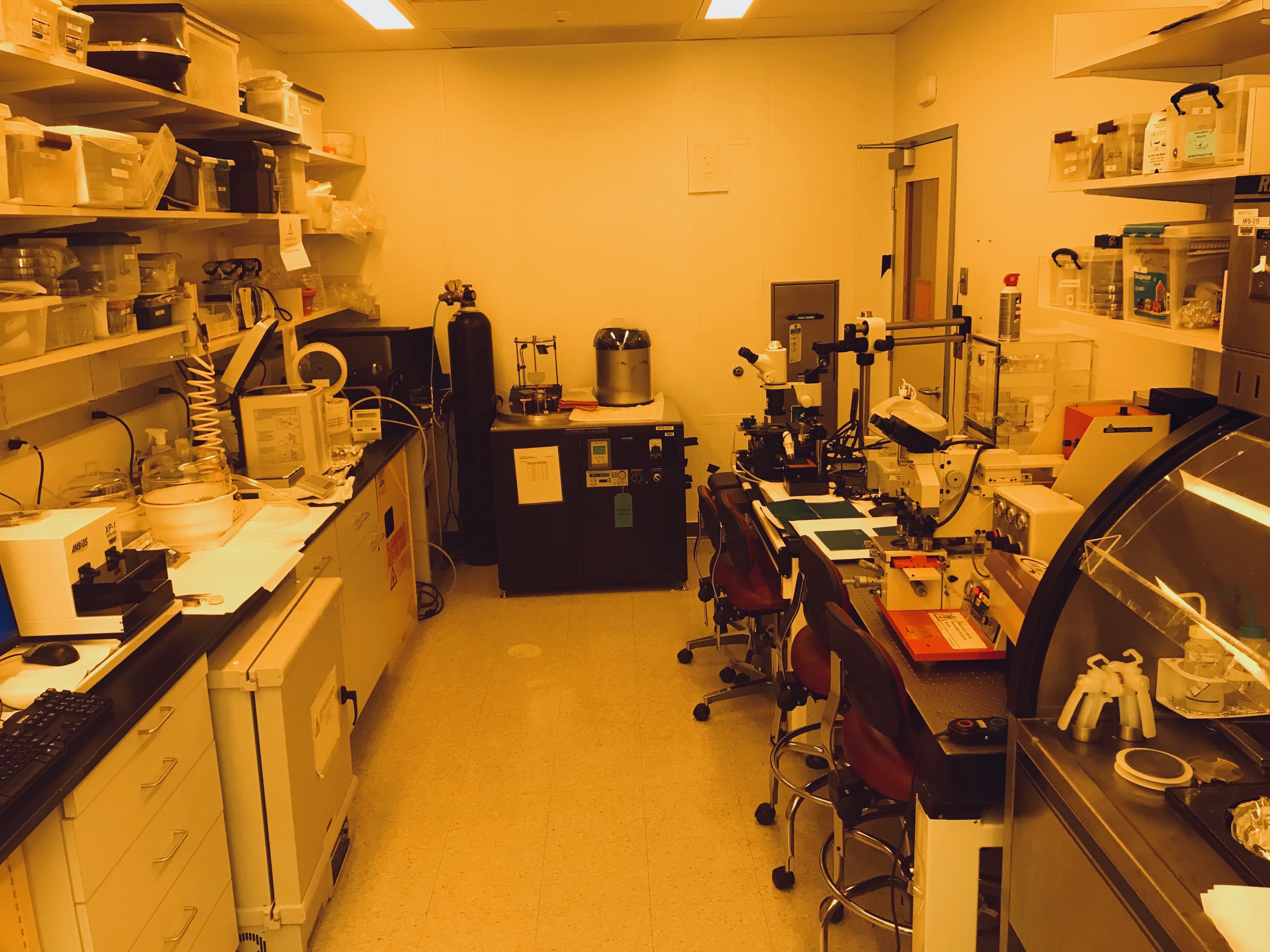
In the sunlit Orkin Lab at Harvard Medical School, lab technicians diligently carry out their experiments, pipetting meticulously into Eppendorf tubes. Next door, in a darkened room, a team of researchers are  huddled around a fluorescence microscope, tracking how gene‑editing tools can restore crescent-shaped red blood cells into their healthy state—a pathway the Orkin team helped pioneer.

Like the Orkin Lab, countless biomedical research labs across the United States engage in lifesaving research every single day. Their research is now in jeopardy. Funding inconsistencies in the National Institutes of Health (NIH), including proposed cuts to indirect costs and the halt in federal funding due to the current government shutdown, threaten to stall progress and could have lasting detrimental effects on both the ongoing research and the communities that rely on it, including Andover.

In April, the NIH cancelled $800 million in grants that it had already approved because the projects didn’t align with the Trump administration’s policies. In July, a federal judge then ruled that the cuts were unlawful, which restored research funding. According to the Boston NPR station WBUR, the US Supreme Court ruled that the NIH can withhold the grants in August.

In addition to withholding the grants, the Trump administration is proposing to significantly reduce funding for “indirect” costs of research, supported by the narrative that the funds “were largely administrative bloat, unrelated to the costs of research.” According to the Harvard Crimson, these indirect funds include costs such as lab construction, research equipment, hazardous waste removal and “countless other very real and necessary costs of research.” For institutions in our own backyard, the impact is tangible: Harvard University stands to lose hundreds of millions of dollars, a blow that could ripple across its affiliated hospitals—including Boston Children’s Hospital, Brigham and Women’s hospital, Dana-Farber Cancer Institute, Massachusetts General Hospital, and many more. Across the country, other US institutions stand to lose billions more.

To fully understand the effects of the funding cuts, it’s important to start at the source: with the research itself. Research is a long, iterative process, full of ideas that start small and experiments that may or may not work. Unlike labs and experiments in school, where the outcome is clearly defined and predetermined, research can be filled with dead ends and uncertainties.

It often begins with something as simple as an idea. Dr. Nathan Crook, an associate professor in the Department of Chemical and Biomolecular Engineering at North Carolina State University, described a project’s start as the moment you first think of a concept, and the end as the moment you stop actively working or thinking about it

“Normally, you or someone in your lab has a flash of insight… at these early stages, you usually don’t have dedicated funding for it,” he said. Early experiments are often small-scale pilot tests that can be supported by seed-funding (typically around $10,000) from the university, or a research foundation. More senior researchers may have access to discretionary funds – “rainy day” funds to use on early projects that aren’t bound by any specific research question.

Dr. Sara Smaga, an AAAS Congressional Science and Engineering Fellow and former Executive Director at the NSF Center for Genetically Encoded Materials, added that this initial stage is the beginning of a longer iterative process.

“In academia, faculty choose what topics they want to study…often a student will collaborate to design their project within their advisor’s topic area,” she explained. “The results of each experiment generate new questions, leading to further hypotheses, even if the initial result is ‘nothing happens!’”

Each experiment can quickly expand into multiple interconnected projects. Each project requires more resources, which are obtained by funding, typically in the form of research grants.

“Let’s say the pilot test goes well, and you get some interesting data,” Crook said. “You will then likely apply for a ‘normal’ research grant using those results as preliminary data. Usually the cool projects are kind of crazy, and the grant reviewers won’t believe that you will be able to do what you are proposing unless you have some sort of proof-of-concept that it is working.”

These grants can come from a variety of sources, including private foundations (such as the Gates foundation or the Chan Zuckerberg Institute), federal funding, internal university funding, state grants, or industry funding. 

“Generally, a Principal Investigator (usually the senior faculty member overseeing the lab), will craft a proposal describing what they’d like to study and why, and submit to a funder,” Smaga said. “After submission, proposals are reviewed by a panel of experts in the field, who evaluate each proposal for feasibility and impact. Not every proposal is funded, and sometimes it takes multiple tries to write a proposal that gets chosen for funding.”

If a proposal isn’t funded right away, researchers often continue the project on the side, refining their ideas and re-applying for grants until they can secure official funding. Once secured, labs can expand, hire more researchers, and pursue the project in earnest. Ultimately, the most significant source of funding for research projects—especially in academia—comes from federal funding, typically the NIH.

“Most of the funding in every lab I’ve ever been a part of has come from federal funding,” Smaga said. Crook agreed, stating that “the most important [source of funding] by dollar amount, are federal grants,” and that “federal grants have funded 77 percent of the research in [his] lab.”

This reliance on federal support means that any disruptions in the grant cycle—whether from delays, government shutdowns, or the proposed cuts to indirect costs at agencies like the NIH—can ripple far beyond the walls of a single lab, outpouring from academia to industry, and eventually, impacting the lives of citizens. The money from NIH funding is a key part of funding early-stage projects, like projects being worked on by Smaga and Crook, laying the foundations for industry to develop novel therapeutics. 

“Just one example: NIH-funded research on bacterial immune systems gave us gene editing, which is now being used to cure sickle cell and rare genetic diseases,” Smaga said.

Jackie Thompson, who works on targeted cancer treatments at Takeda Pharmaceuticals in Cambridge, agreed. “My current work involves developing cell and gene therapies for cancer,” Thompson said. “These treatments rely on decades of foundational research…that was often NIH-funded.”

For communities like Andover, where students and educators are deeply connected to Massachusetts’ vibrant research ecosystem, those losses hit especially close to home. Sarepta Therapeutics, a biotechnology company with an office in Andover, develops gene therapies that depend on the same fundamental research NIH grants have long supported. 

At AHS, the BioBuilder club gives students hands-on experience with synthetic biology research, and the opportunity to work on projects that can be published in a student research journal. While BioBuilder opens doors for aspiring scientists, those doors exist within a larger research ecosystem that relies on consistent federal funding.

“It’s not something that you can just reinstate the funding and think that things are going to pick up as normal,” said Dr. Lindsey L’Ecuyer, the advisor of Andover High School’s BioBuilder club. “When people set up a lab somewhere else, they’re not coming back… it’s going to make it really hard for us to come back from that.”

L’Ecuyer sees the loss trickling down to high school classrooms, mentorship programs, and the students who might have been inspired to pursue science in the first place. “It feels like we’re losing a whole generation of people that would be coming to do research in the U.S.,” she said. “America has been a leading country in scientific research, and it’s going to make it really hard for us to come back from that.”

Crook agreed. “Other countries certainly aren’t reducing research funding, and guess where top scientists—even US citizens—will go? It really hurts our country’s economic…and actual…security to reduce research funding.”

Smaga also worries that America could lose a generation of scientists, and she’s already seen the early signs. “This past cycle, we saw graduate programs responding to funding freezes and future funding uncertainty by admitting fewer students,” Smaga said. 

Biomedical research supports far more than scientific discoveries and the university labs that make them: according to the nonprofit United for Medical Research, every dollar of NIH funding generates about $2.56 in economic activity. The stakes of losing consistent funding are clear in places like the federally funded Orkin Lab at Harvard, where gene-editing research is already transforming lives. The lab is a clear example of how federal support fuels the discoveries that save lives, and it continues to inspire students and scientists to pursue the next breakthroughs. 

“It’s a challenging time to be in biomedical research, but I’m still optimistic about the field,” Thompson said.

“For students who want to get into science, the advice is simple: start early, get involved, and follow the questions that excite you,” she said. “Even sending an email to a professor whose work interests you can open doors. Despite the obstacles, the next generation of scientists has a real shot at making a difference—and it could be your curiosity that drives the next big breakthrough.”

Related Posts

A Student’s Family Torn Apart: A Look into Immigration Enforcement and Its Impact at AHS 
  • May 5, 2026

Isabella Yan || EXECUTIVE ARTICLE

In just two days, an Andover High School student’s life was overturned. Now, as he packs his school bag and gets ready for school, a quiet unease lingers throughout his home. In the hallways and bedroom once filled with warmth and presence, there is an emptiness––a constant reminder of the Immigration and Customs Enforcement (ICE) agents who changed his family permanently.

Last year, the student’s mother, father, and brother were detained by ICE, and his father was deported. “My family really didn’t know what happened,” he said, recalling the immediate fear and panic that came upon him. In the coming days, he would learn more about what unfolded.

“Open the car! Open the car! I’ll break the window!” Immigration agents yelled as they halted his mother’s car outside their home as she was driving to pick up his brother, the AHS student recalls being told later. According to the student, agents grabbed his brother out of the car and pinned him onto the ground, placing handcuffs on his brother’s and mother’s wrists. However, this wasn’t the first incident the student had known about. Just a day earlier, his father was also detained outside of their home, and all three of his family members were sent to a detention center. While his mother and brother were later released, his father was deported.

According to the US Department of Homeland Security, nearly three million undocumented immigrants have been deported from January 2025 to January 2026 as part of the Trump administration’s crackdown on illegal immigration. While specific deportation statistics are difficult to isolate, a WBUR analysis found that in Massachusetts alone, there have been more than 7,000 ICE arrests under the current administration.

Despite these striking numbers, in the town of Andover, conversations surrounding ICE are often far removed. The perception that these issues do not directly affect the community may make it easy to detach from topics like immigration enforcement––experiences that appear to exist elsewhere. While stories like these may be few in number in Andover, the impact and emotional burden of ICE is very real for residents like this student and his family, shaping his daily life in ways often unseen by others in the community.

“[I just experienced] fear and sadness that my dad isn’t here anymore,” the student said, describing how the pain of the incidents and his family’s separation weighed heavily as he became withdrawn from his schoolwork. “It grew a fear in me that [the same situation] could just happen to me anytime. I really…wasn’t really paying attention in school and my grades just went really low.”

Following the incidents, the student’s counselor became aware of his situation and informed his teachers. He shared that the support he has received at AHS has alleviated some of the distress he has experienced in balancing school. “[The teachers] understood and they helped me,” he said.

In response to federal immigration policies, Andover Public Schools (APS) has established its commitment to ensuring safety and support for all students. “[At AHS], school counselors collaborate with school social workers and administrators to help support each student and their individual needs,” guidance counselor Kimberly Bergey said. 

According to aps1.net, APS also follows guidance from the Massachusetts Commonwealth’s Attorney General and the Department of Elementary and Secondary Education regarding protection of students and their information.

Within these guidelines, many teachers at AHS have remained dedicated to supporting the well-being of students who are undocumented or have families that are undocumented, with some banding together to develop and exchange strategies. “Above all, we want students and their families to be safe and to feel safe…and focus on their education, which is their right,” said history teacher Kathryn Reusch. “All students deserve to feel safe and feel like they belong and that they matter.”

The student reflected on how he has observed other students making wrongful assumptions about immigration enforcement and people in his situation. “Kids here … [believe] we are getting rid of criminals,” he said. “But in reality, most immigrants aren’t here just to be criminals. We come here … to have a better life than in our home country and also make more opportunities for our future generations.”

Reusch also emphasized the importance of education about legal and undocumented immigration to counter these misconceptions. “The more we can teach the facts about immigration … the more we can hopefully dispel the rampant misinformation that breeds prejudice, racism, and bad policy,” she said, pointing to research that both legal and undocumented immigrants commit fewer crimes than native-born Americans, and contribute significantly to the U.S. economy.

As decisions about immigration enforcement continue to take shape at both a federal and local level, this student’s story serves as a reminder of the life-altering consequences of these policies for individuals and families, and the lived-experiences of the people often shrouded behind statistics and headlines.

Continue reading
Is Literature Dead? 
  • May 5, 2026

Student book groups and avid readers at AHS would disagree

Kendall Murphy || STAFF WRITER

As the students gathered after school in a circle of desks search for the right page, paragraph or sentence that grabbed them as they read the night before, the occasional flipping of pages punctuates a near-silence. It is a scene that is rarely seen. It is so timeless that you can almost see those students at a book club from the Victorian Era, the roaring twenties, or the turbulent 60s, gathering together to share something that is not just a hobby, but a passion. 

Reading is something that holds both history and emotion. Throughout time, words have captivated people all over the world, but the feeling remains the same. “Creating a story in your head with the author is the most intimate you can be with a story,” said English teacher Jennifer Meagher. 

Yet as technology becomes more addicting, fewer people are finding a home between the pages of a book. According to an article from EurekAlert!, a division of the American Association for the Advancement of Science, there has been over a 40 percent decline in daily reading for pleasure in the past 20 years. So, has reading lost its merit, and its magic? Will it someday become a lost art? 

At Andover High School, the enthusiasm for reading has stood the test of time just as stories themselves have. There are still students who have a place for reading in their hearts and minds. This margin of people at AHS aim to keep a love for literacy alive. Moreover, some have fostered this love and turned it into something powerful: a catalyst for creativity and change.

The Liberty through Literature Club is dedicated to reading and researching banned and challenged books. It fuses both a love for reading and activism against censorship. They meet on Mondays in room 245, not only to read a book but to uncover why it was banned and how it ties into current events.

“We talk a lot about censorship and how that plays out in today’s world,” said co-founder junior Diya Manikandan. 

Manikandan and junior Olivia Wright created the club to find a place of leadership in the school that reflected something they felt strong about. “We could do something we like with other people too,” explained Wright.

“We want to spread awareness about media censorship and the importance of reading in general because we’re in a really big literacy crisis right now, so it’s important that everyone knows the importance of reading and fact-checking,” said Manikandan, speaking on the push to censor what books are available to the general public.

Data from PEN America Index of School Book Bans reported that during the 2024-2025 school year, there were 6,870 instances of book bans in the United States including 4,000 different titles. Liberty through Literature hopes to bring attention to these staggering statistics. 

In the future, the club also aims to have fundraisers to support organizations that promote reading and literacy and give resources to communities that don’t have as much access to books. 

However, they aren’t the only ones that enjoy a good page turner. After school every other Tuesday in room 303, the Book Buddies Club takes a step back in time to discuss classic literature.

Senior and leader Shelsey Rosario stressed how important reading and studying the classics are. “A lot of the ideas are still relevant today. You can kind of relate to what the writers were talking about almost even hundreds of years back,” she said.

She also explained the power of classic literature in the world—classics can have deep meanings and reflect on a broad scale of ideas and issues, often ones that are still present today. “There’s a lot to talk about with them.” Rosario said.

Reading is a notch under the entire umbrella of the passion for creativity. Ink Magazine is where creativity among students at AHS comes together. The club works over the year to compile student-works including poems, short stories, photographs, and artworks. The final product is a printed magazine in full color: a display of art and innovation.

The ability to share creative works in a school often dominated by STEM and athletics is an important part of Ink Magazine’s mission.

President of Ink Magazine junior Keira D’Angelo said, “I think giving students a chance to branch out and learn how to be creative is really important, especially today when technology is such a big part of our lives. Really using those muscles that help us create new things is really important.” 

 The rapid advancement of technology has also played a role in how reading is perceived and practiced.

“Technology has definitely hindered the ability to understand complex articles and complex art pieces,” argued D’Angelo. She reflected on how she sees technology play out in people’s interest in learning and creating as it becomes addicting and quick to reward you with dopamine. “Technology has let people stop thinking and they no longer know how to come up with creative works, which then makes them think that creating new things is too daunting.”

Despite these drawbacks, technology has also made books and reading available to more people. AHS itself uses platforms such as Sora, Follett Destiny and the AHS E-Library to make it easier and more efficient for students to learn. In addition, spaces such as Goodreads and BookTok have created a place for readers to express themselves and a community for like-minded people.

While the practice of reading may have changed over time, nothing new can mimic how it grows and changes the mind. “Reading is a different kind of interaction with the world,” concluded Meagher. “It’s a far more active and complex process than any other form of communication as far as I know. And this is important. Only active, creative, thinking brains can walk into tomorrow and build a humane and democratic world.”

Continue reading

Leave a Reply

You Might Also Like

Spanish Department to Host Day of the Dead Fair

  • November 12, 2025

Funding the Future of Science: Proposed NIH Funding Cuts Throw US Biomedical Research Into Uncertainty

  • November 4, 2025
Funding the Future of Science: Proposed NIH Funding Cuts Throw US Biomedical Research Into Uncertainty

Student-Hosted Video Game Hackathon Scheduled for Late September

  • September 22, 2025
Student-Hosted Video Game Hackathon Scheduled for Late September

AHS Student Directs Coming-of-Age Film, ‘Horizon’

  • June 9, 2025

World Languages Coordinator Reflects On Career, Retirement

  • June 9, 2025
World Languages Coordinator Reflects On Career, Retirement

CollegeBoard Scores 1/5 on AP Testing Administration

  • June 9, 2025

Discover more from AHS NEWSPAPER

Subscribe now to keep reading and get access to the full archive.

Continue reading