Spanish Department to Host Day of the Dead Fair
  • November 12, 2025

Areeta Faiz || Social Media Editor

A cultural fair celebrating the Day of the Dead will take place during H Block this Thursday in the cafeteria.

The fair will include a variety of hands-on activities, music, and food, allowing students to explore several popular Mexican traditions. The event has been organized by students from the Spanish Conversation Club led by teacher Sylvia Danos and AP Language and Culture classes taught by Indira Garcia. This will be Andover High School’s first year hosting this celebration.

“Students from all world language classes will have the chance to experience one of Mexico’s most meaningful and beautiful traditions,” said Danos.

Stations will include the traditional ofrenda (altar), calaverita (mini skull) painting, papel picado (colorful, decoratively cut paper), the classic Mexican game Lotería, and a chance to try traditional Mexican sweet treats.

Students can participate by signing up for the H3 block with their world language teacher, who will then bring them to the cafeteria where the fair will take place.

“This celebration reflects the values of love, memory, and cultural identity that are central to many Latin American traditions,” said Danos. She added that experiences like this help students appreciate the richness and diversity of the Spanish-speaking world while fostering empathy and global awareness.

Traditionally celebrated in Mexico and other Latin American countries on November first and second, Día de los Muertos honors deceased loved ones through family, music, food, and art. A key tradition is the creation of an ofrenda, or altar, decorated with photos, candles, and offerings to remember loved ones who have passed.

AHS has showcased the student-made ofrendas for the last seven years as a part of the World Language Department curriculum. This year, Danos and Garcia decided to go all out, believing that it is essential for students from other language programs to learn about this celebration.

Danos is excited to see students from diverse language backgrounds come together to celebrate culture, creativity, and diversity: “Enjoy music, crafts, food, and culture, all in one H Block!”

Continue reading
Funding the Future of Science: Proposed NIH Funding Cuts Throw US Biomedical Research Into Uncertainty
  • November 4, 2025

Anushka Dole || Online Editor 

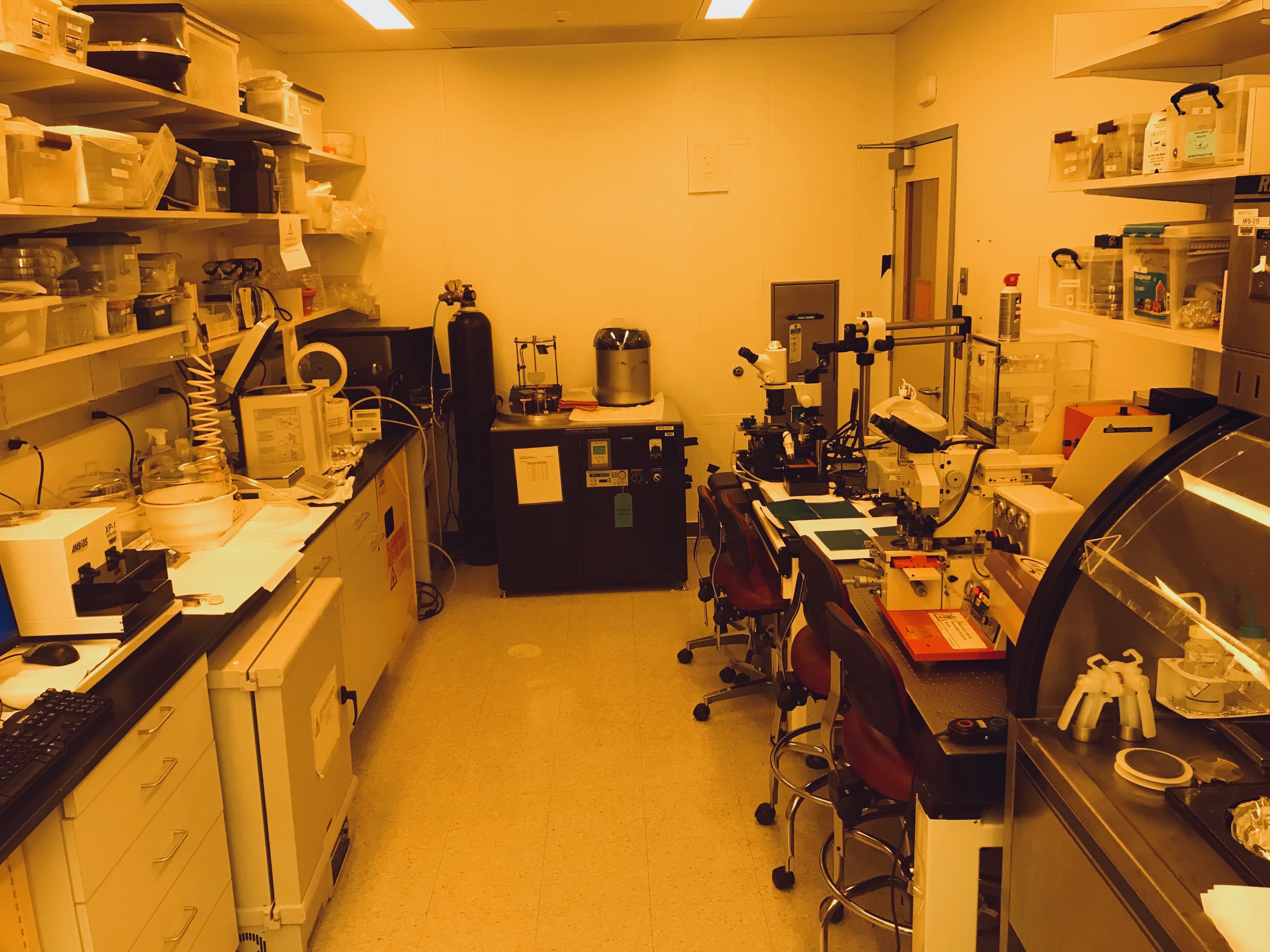
In the sunlit Orkin Lab at Harvard Medical School, lab technicians diligently carry out their experiments, pipetting meticulously into Eppendorf tubes. Next door, in a darkened room, a team of researchers are  huddled around a fluorescence microscope, tracking how gene‑editing tools can restore crescent-shaped red blood cells into their healthy state—a pathway the Orkin team helped pioneer.

Like the Orkin Lab, countless biomedical research labs across the United States engage in lifesaving research every single day. Their research is now in jeopardy. Funding inconsistencies in the National Institutes of Health (NIH), including proposed cuts to indirect costs and the halt in federal funding due to the current government shutdown, threaten to stall progress and could have lasting detrimental effects on both the ongoing research and the communities that rely on it, including Andover.

In April, the NIH cancelled $800 million in grants that it had already approved because the projects didn’t align with the Trump administration’s policies. In July, a federal judge then ruled that the cuts were unlawful, which restored research funding. According to the Boston NPR station WBUR, the US Supreme Court ruled that the NIH can withhold the grants in August.

In addition to withholding the grants, the Trump administration is proposing to significantly reduce funding for “indirect” costs of research, supported by the narrative that the funds “were largely administrative bloat, unrelated to the costs of research.” According to the Harvard Crimson, these indirect funds include costs such as lab construction, research equipment, hazardous waste removal and “countless other very real and necessary costs of research.” For institutions in our own backyard, the impact is tangible: Harvard University stands to lose hundreds of millions of dollars, a blow that could ripple across its affiliated hospitals—including Boston Children’s Hospital, Brigham and Women’s hospital, Dana-Farber Cancer Institute, Massachusetts General Hospital, and many more. Across the country, other US institutions stand to lose billions more.

To fully understand the effects of the funding cuts, it’s important to start at the source: with the research itself. Research is a long, iterative process, full of ideas that start small and experiments that may or may not work. Unlike labs and experiments in school, where the outcome is clearly defined and predetermined, research can be filled with dead ends and uncertainties.

It often begins with something as simple as an idea. Dr. Nathan Crook, an associate professor in the Department of Chemical and Biomolecular Engineering at North Carolina State University, described a project’s start as the moment you first think of a concept, and the end as the moment you stop actively working or thinking about it

“Normally, you or someone in your lab has a flash of insight… at these early stages, you usually don’t have dedicated funding for it,” he said. Early experiments are often small-scale pilot tests that can be supported by seed-funding (typically around $10,000) from the university, or a research foundation. More senior researchers may have access to discretionary funds – “rainy day” funds to use on early projects that aren’t bound by any specific research question.

Dr. Sara Smaga, an AAAS Congressional Science and Engineering Fellow and former Executive Director at the NSF Center for Genetically Encoded Materials, added that this initial stage is the beginning of a longer iterative process.

“In academia, faculty choose what topics they want to study…often a student will collaborate to design their project within their advisor’s topic area,” she explained. “The results of each experiment generate new questions, leading to further hypotheses, even if the initial result is ‘nothing happens!’”

Each experiment can quickly expand into multiple interconnected projects. Each project requires more resources, which are obtained by funding, typically in the form of research grants.

“Let’s say the pilot test goes well, and you get some interesting data,” Crook said. “You will then likely apply for a ‘normal’ research grant using those results as preliminary data. Usually the cool projects are kind of crazy, and the grant reviewers won’t believe that you will be able to do what you are proposing unless you have some sort of proof-of-concept that it is working.”

These grants can come from a variety of sources, including private foundations (such as the Gates foundation or the Chan Zuckerberg Institute), federal funding, internal university funding, state grants, or industry funding. 

“Generally, a Principal Investigator (usually the senior faculty member overseeing the lab), will craft a proposal describing what they’d like to study and why, and submit to a funder,” Smaga said. “After submission, proposals are reviewed by a panel of experts in the field, who evaluate each proposal for feasibility and impact. Not every proposal is funded, and sometimes it takes multiple tries to write a proposal that gets chosen for funding.”

If a proposal isn’t funded right away, researchers often continue the project on the side, refining their ideas and re-applying for grants until they can secure official funding. Once secured, labs can expand, hire more researchers, and pursue the project in earnest. Ultimately, the most significant source of funding for research projects—especially in academia—comes from federal funding, typically the NIH.

“Most of the funding in every lab I’ve ever been a part of has come from federal funding,” Smaga said. Crook agreed, stating that “the most important [source of funding] by dollar amount, are federal grants,” and that “federal grants have funded 77 percent of the research in [his] lab.”

This reliance on federal support means that any disruptions in the grant cycle—whether from delays, government shutdowns, or the proposed cuts to indirect costs at agencies like the NIH—can ripple far beyond the walls of a single lab, outpouring from academia to industry, and eventually, impacting the lives of citizens. The money from NIH funding is a key part of funding early-stage projects, like projects being worked on by Smaga and Crook, laying the foundations for industry to develop novel therapeutics. 

“Just one example: NIH-funded research on bacterial immune systems gave us gene editing, which is now being used to cure sickle cell and rare genetic diseases,” Smaga said.

Jackie Thompson, who works on targeted cancer treatments at Takeda Pharmaceuticals in Cambridge, agreed. “My current work involves developing cell and gene therapies for cancer,” Thompson said. “These treatments rely on decades of foundational research…that was often NIH-funded.”

For communities like Andover, where students and educators are deeply connected to Massachusetts’ vibrant research ecosystem, those losses hit especially close to home. Sarepta Therapeutics, a biotechnology company with an office in Andover, develops gene therapies that depend on the same fundamental research NIH grants have long supported. 

At AHS, the BioBuilder club gives students hands-on experience with synthetic biology research, and the opportunity to work on projects that can be published in a student research journal. While BioBuilder opens doors for aspiring scientists, those doors exist within a larger research ecosystem that relies on consistent federal funding.

“It’s not something that you can just reinstate the funding and think that things are going to pick up as normal,” said Dr. Lindsey L’Ecuyer, the advisor of Andover High School’s BioBuilder club. “When people set up a lab somewhere else, they’re not coming back… it’s going to make it really hard for us to come back from that.”

L’Ecuyer sees the loss trickling down to high school classrooms, mentorship programs, and the students who might have been inspired to pursue science in the first place. “It feels like we’re losing a whole generation of people that would be coming to do research in the U.S.,” she said. “America has been a leading country in scientific research, and it’s going to make it really hard for us to come back from that.”

Crook agreed. “Other countries certainly aren’t reducing research funding, and guess where top scientists—even US citizens—will go? It really hurts our country’s economic…and actual…security to reduce research funding.”

Smaga also worries that America could lose a generation of scientists, and she’s already seen the early signs. “This past cycle, we saw graduate programs responding to funding freezes and future funding uncertainty by admitting fewer students,” Smaga said. 

Biomedical research supports far more than scientific discoveries and the university labs that make them: according to the nonprofit United for Medical Research, every dollar of NIH funding generates about $2.56 in economic activity. The stakes of losing consistent funding are clear in places like the federally funded Orkin Lab at Harvard, where gene-editing research is already transforming lives. The lab is a clear example of how federal support fuels the discoveries that save lives, and it continues to inspire students and scientists to pursue the next breakthroughs. 

“It’s a challenging time to be in biomedical research, but I’m still optimistic about the field,” Thompson said.

“For students who want to get into science, the advice is simple: start early, get involved, and follow the questions that excite you,” she said. “Even sending an email to a professor whose work interests you can open doors. Despite the obstacles, the next generation of scientists has a real shot at making a difference—and it could be your curiosity that drives the next big breakthrough.”

Continue reading
Student-Hosted Video Game Hackathon Scheduled for Late September
  • September 22, 2025

Anushka Dole || Online Editor

Daydream Andover is a two-day hackathon for high school students that will be held at Merrimack College on September 27 and 28, with prizes available for the winning teams. 

At a hackathon, students come together to code a project over a short period of time. Daydream is a game-jam, which is a subcategory of a hackathon, where students will collaborate to create a video game during the event.

The hackathon is being organized by a team of three students, AHS seniors David Shi and Jessie Wang, as well as Emily Fang, a senior from Phillips Academy. Designed to be beginner friendly, Wang, Shi, and Fang are hosting workshops for beginners during the event to give them the tools they need to build their projects.

“We’ll teach them how to make a project on Godot, one of the simplest languages to make a game… we run workshops, and then we let them code,” Wang said. She added that artists and musicians are also encouraged to come to Daydream, as their contributions are essential to designing a game.

The first day of Daydream runs from 10am to 8pm, and students are encouraged to start their games the moment they arrive. Teams of up to four people are allowed, and team selection can happen at any time during the event. Each game will follow a set theme which will be announced on the day of the event.

“We get to pick one out of the ten themes that are sent to the organizers, but those haven’t been released [to the public] yet…basically, it’s a mystery,” Wang said.

Amenities will also be provided for coders during the events, including lunch and dinner on both days. There will also be prizes for the top three teams after being judged by the organizers. 

Wang, Fang, and Shi all came together to host the event out of a shared passion for hackathons, bringing Daydream to Andover by working through the California-based nonprofit Hack Club. 

“We had the best time ever [at Shipwrecked, a hackathon held at Cathleen Stone Island]. I met friends that I never thought I would meet… [hackathons] opened my mind to new ideas, it’s a very valuable experience,” Wang said. 

Shi agreed, adding that “you get to learn how to build a lot of cool things, and make lasting connections.”

When asked what they hope students will gain from the event, Fang stated that she simply hoped that they would “gain a new friend,” as well as get their foot into the “doorway into programming.”

Daydream is accepting sign-ups until the day of the event, at this link.

Continue reading
CollegeBoard Scores 1/5 on AP Testing Administration
  • June 9, 2025

“Once you enter the start code, you may begin.” With these words, hundreds of AP Psychology students at AHS expected to start their AP exam. Instead, they were greeted by a laggy, glitchy BlueBook testing app that refused to cooperate. For the students who were unable to coax the app into functioning, the exam was delayed to May 21—a poor solution for students who spent a whole year preparing for that moment. 

We at ANDOVERVIEW believe that the fragile testing infrastructure of CollegeBoard is absolutely unacceptable. One would assume that a nonprofit organization that claims to be “paving the path for college success” would ensure that its testing platform relies upon servers that are able to handle the increased traffic on testing day. CollegeBoard provided very little consolation to the adrenaline-crashing students. “Most students have had a successful testing experience, with more than 5 million exams being successfully submitted thus far,” the organization defended. The statement was tellingly short—PR representatives at CollegeBoard couldn’t be bothered to devote any longer than a five-minute coffee break to drafting this “apology.” 

Unfortunately, technical glitches are not the only issues that CollegeBoard has encountered this AP season. After a slew of hate comments were slung in author Namwali Serpell’s direction, she discovered that the vitriol was directed towards one particular passage in one of her books. The infamous “Look at Me” passage was recognized by this year’s AP Lang students as an indecipherable jumble of content followed by some seriously difficult multiple-choice questions (MCQs). After learning this, Serpell revealed that CollegeBoard had included the passage in the test without her permission and distorted its meaning in the MCQs that followed. Adding insult to injury, Serpell also clearly stated that she was against standardized testing as a concept. As of late May, CollegeBoard had yet to address these comments.

The negligence of CollegeBoard has created a sorrowful state of affairs for those looking to take advantage of the benefits of AP courses and exams. To no one’s surprise, the corporatization of education has introduced far more harm than benefit to all involved. We can only hope that CollegeBoard will hear and fix some students’ criticisms.

Continue reading
Robotics Team Competes in World Championship
  • April 29, 2025

Avery Slaughter || STAFF WRITER

The week before April break, 4410 ARC Lightning competed in the FIRST Championship in Houston, Texas. The team ended their season as quarterfinalists in the international competition.

Prior to this FIRST Tech Challenge (FTC) season, none of the four Andover Robotics Club (ARC) teams had qualified for the world competition. The FIRST Championship, hosted annually, brings together teams from all across the globe to compete in one of four divisions. Throughout the three-day event, Lightning performed exceptionally well in the Jemison Division. Along with a personal high score of 427, they concluded multiple matches with scores in the top 0.12% worldwide. Lightning was also awarded the Second Place Control Award for their impressive programming.

“I think the team all feels that worlds has surpassed all our expectations,” sophomore Lightning member Jeremiah Chou said. “We went from not even knowing if we would make it to states, to being a first pick for playoffs at worlds and  finishing with a winning record.”

Every year, fewer than five percent of FTC teams qualify for the FIRST Championship. Given the numerous milestones achieved at the competition, Lightning members expressed well-earned satisfaction and pride in both their performance and general progression as a team.

“I believe that any ranking at worlds would have really been a win for ARC,” Lightning sophomore Rohit Perugupalli said. “We hadn’t been there before […] as we progressed, we did become more and more confident, leading us to gain a very respectable position.”

Despite the hour difference between Andover and Houston, many AHS students were cheering on Lightning over the course of the competition. Several of Lightning’s matches occurred during H-Blocks, lunches, and after school hours, so supporters could watch them compete in real time.

“Seeing [Lightning] in their matches during H-Block was an incredibly proud experience because they’ve come so far,” sophomore Connor McGovern said. As the leader of 24256 ARC Sandstorm, AHS’s rookie team, he witnessed Lightning’s success throughout the year first-hand.

With plans to continue outreach for ARC into the summer, Lightning isn’t stopping with the school year. While the 2024-2025 FTC season concluded with the FIRST Championship, Lightning has no intention of slowing down.

“Now that we know how it feels to be at worlds, we are only going to push for more next year,” Chou said.

Continue reading
Environmental Initiatives Take Hold in Andover, at AHS
  • March 17, 2025

Anushka Dole || ONLINE EDITOR

The Andover Green Advisory Board has taken on several initiatives to increase the overall sustainability of AHS and the town of Andover as a whole.

The advisory board was created around 2008 by the then-Director of Planning and Land Use, Paul Materazzo. According to the town of Andover’s website, the intent of the board was to “provide support and advice, which contribute to practical environmental solutions, to various town boards and town departments in Andover”. Members on the board are appointed by the Town Manager. 

Environmental Science teacher Melanie Cutler is one of six members serving on the board currently, and she articulated the goals of the board in more detail.

“The main role [of the board] is to advise [the] town government in improving the environmental sustainability of our town,” she said. “That includes things like energy reduction, pollution reduction, and decreasing water use.”

One of the board’s most significant efforts in recent times has been supporting the construction of the new, green West Elementary school building.

“For the new West Elementary School, the [board] was involved early in the planning process,” Cutler said. “Some [board] members attended public planning meetings with the architects to encourage environmental sustainability features in the design.”

Designed by Cambridge architectural firm SSMA, the new school building underwent a 36.7% carbon reduction compared to the original building. The building is also 100% electric and ready to be net zero. 

Thanks to the board’s efforts, Andover has been designated as a “green community” by the state, which has opened up opportunities for grants that have been used to reduce energy consumption in schools and town buildings. These grants have enabled the replacement of traditional street lights with energy-efficient LED lights.

In addition to the grants earned by the green community designation, the board works with Dr. Losick Yang, Director of Sustainability, and the Energy Director Janet Nicosia, to apply for new grants.

“We do what we can to support [Yang] and help her in her efforts,” Cutler said. “She’s the official town employee, and we are the volunteer group that talks with the different town departments to see how we can help them do things more sustainably.” 

The board’s initiatives also focus on enhancing environmental education and improving indoor air quality.

Because of the availability of environmental education, clubs such as the Environmental club and the Garden club have flourished at AHS (see sidebar). 

Students in AHS courses, such as ESIC, also help contribute to the goals of the board. ESIC is the Environmental Sustainability Internship Course, and it is a course for seniors who would like to conduct an environmental project over the course of the year. A particularly interesting project from ESIC, from 2015, involved students studying indoor air quality at the high school. They investigated volatile organic compounds (VOCs).

“There are a whole bunch of things that can reduce air quality in schools… VOCs are one,” Cutler said. VOC stands for volatile organic compounds, and they are chemical fumes that you can smell coming from things like paint, furniture, or flooring. The study conducted at AHS revealed that there are no VOCs at AHS, which is a major step towards indoor air quality improvement.

Continue reading
Andover Robotics Club Competes at State Championships
  • March 17, 2025

Christina Saad || STAFF WRITER

In past months, each of Andover High School’s Andover Robotics Club (ARC) teams have won or earned an award at their respective qualifiers, securing them a spot in the upcoming FIRST Tech Challenge (FTC) state competition.

There are multiple ways to qualify for states. Teams get in by hosting a qualifier, winning the competition on the field, or winning the Inspire Award, which is given at each qualifier to teams who show excellence both in and beyond their robot. The state competition will consist of winners from every qualifier along with winners of the Inspire Award­­ and hosts, so the games will naturally be more competitive.

“This is the first time ever that we’ve had four teams qualify off of merit alone,” said senior and ARC President Aaryan Deshwal.

In the past, teams have qualified through merit as well by hosting competitions, but this is the first time each team—including the new freshmen team Sandstorm—has qualified only by winning or earning an award at their qualifiers.

The Massachusetts State Championship will be held on March 9 at the Wentworth Institute of Technology in Boston. Each team is adjusting and improving their robot before the competition. They’ll be practicing controlling their robot manually, writing a script to present to the judges, and making changes to their robot’s build and code.

At their qualifier on February 8, ARC Sandstorm won both the Winning Alliance Captain and Control Award. The Winning Alliance Captain Award is given to a team if their chosen alliance—two teams that compete together—wins the qualifier. The Control Award is given to the team with the best autonomous system and sensors in the competition. 

“This is absolutely incredible, considering that they’re all rookies. It’s their first year and they won the entire competition, so it was a really proud moment for our entire club,” said Deshwal. 

At the same qualifier, ARC Thunder won the Inspire Award. The award acknowledges traits like teamwork and collaboration, as well as outreach in the community.

“It’s an award for a team that is hitting home runs beyond just winning the competitions on the mat,” said ARC advisor Stephen Sanborn.

ARC Hailstorm and ARC Lightning both won the Inspire Award at their qualifiers, as well.

Continue reading
Grounds for Concern: Caffeine addictions that plague the community are keeping students up at night
  • March 8, 2025

Areeta Faiz || STAFF WRITER

AHS sophomore Jiya Jotwani has perfected her beloved Starbucks order: a grande iced sugar cookie almond milk latte, or perhaps a peach iced green tea. She says they keep her chronic procrastination in check, in addition to being a sweet treat to enjoy after a long day.

The sun has barely risen when sophomore Adelaide McLean stops by Dunkin’ before school for her daily 20-ounce mocha latte. She had managed a good rest the night before, but the threat of a midday headache keeps her routine alive morning after morning.

Junior Lex Malsky, with a soft spot for energy drinks, reflects on his former addiction that led to a whopping four hours of sleep each night during his formative years. The 2020 “alternative” culture that was in reality quite popular featured Monster Energy, bearer of an infamous 160 milligrams of caffeine per can.

No matter who you are, the typical Andover High student is no stranger to late nights, heavy eyelids, and promises to oneself to “lock in” on sleep, only to get pushed back week by week. According to the Centers for Disease Control and Prevention (CDC), caffeine seems like the holy grail that would keep 73% of U.S. adolescents from slipping into despair. 

Billions of people around the globe are drinking coffee each day, and dangerous doses of caffeine are hardly ever consumed in one sitting. Still, the world’s most popular drug is far from harmless, and AHS feels its effects every day.

“One cup in the morning can help give you some energy throughout the day, but that’s really not what’s happening,” said health teacher Candice McVeigh. “That’s not how adolescents tend to use it.”

“I probably see a handful of students buying the same drinks every day, which isn’t many considering the population of the school,” said AHS cashier Pamela Anderson. “Overall, these drinks are very popular.”

According to Anderson, AHS began selling coffee to get students to class on time. “They were often tardy since they would go to Dunkin’ or Starbucks to get their coffee before school.” Taylor Pirog, the Andover Public Schools Assistant Director of Food Services, is concerned, however, that students may be buying too much in a day and it is not being regulated.

It’s no debate that often, caffeine is the only realistic way students can maximize the little time and energy they have. Of course, students aren’t drinking caffeine just for fun. Between study sessions, concerts, tech weeks, and early morning practices, coffee and energy drinks feel like survival tools more than anything. 

It’s a vicious cycle: when people become reliant on caffeine, it becomes part of their routine, and consistent use is exactly when it becomes harmful. “You’re going to sleep later, so you want to wake up later, yet you really can’t because you have priorities,” said McVeigh. “And the cycle keeps going because you use the caffeine to stay up the next night.”

Getting addicted doesn’t even always involve academic pressure or the caffeine itself; sometimes it just tastes good. The CDC reports that the growing popularity of energy drinks may be increasing caffeine intake among children and adolescents. Consumption of sweetened coffee drinks has also increased.“Especially with some of the larger drinks that people order, people don’t know how much caffeine is in there,” said McVeigh.

“I’m not sure how many milligrams there are,” confirmed McLean when describing her daily order. “It’s a 20-ounce drink, but there’s other stuff in there.”

On top of this are the mimickers of caffeine. Many energy drinks have products in them that do equally as much as, if not more than, what caffeine does. “Whether it’s taurine or guarana or other additives. Even just sugar,” added McVeigh. 

But perhaps one of the most costly consequences of the drug is simply how detrimental it is to your wallet. The school offers a few choices, ranging from a dollar-fifty iced coffee to a three-dollar Uptime. Some of the more intricate Starbucks drinks can end up being upwards of seven or even ten dollars. 

“In the last five to ten years, more and more of these refreshers have been popping up. They’re expensive, first of all, which is a waste of money. And it becomes a habit,’’ said McVeigh. Often, three dollars a day quickly turns into a sum much greater than necessary.

Headaches, moodiness, and fatigue are all well-known side effects of caffeine withdrawal. McLean, for example, gets eight hours of sleep every night. Even so, “if I don’t have coffee in the morning, my head starts to hurt later in the day,” she said.

“When I started drinking [Monster Energy] very often, it caused me to sleep even less, and I was very irritable at the time,” recalled Malski, demonstrating how the drug ultimately creates a routine that does the opposite of what it’s supposed to.

So, how do we become more cognizant of our intake and break the cycle? McVeigh suggests herbal teas, water with fruit, and things that are hydrating to help keep you more alert. Exercise and putting screens away before bed are both things that can help get into a better sleep pattern.

Lattes, refreshers, and energy drinks are undeniably delicious. More importantly, they feel like the easiest solution to remain motivated on days it’s hard to stay awake. These beloved beverages are the reasons so many of us take trips to coffee shops in the mornings and vending machines between classes. But as coffee culture continues to grow, students may want to ask themselves: Are they really in control of their caffeine habits, or is caffeine in control of them?

Continue reading
Lights, Camera, Andover!
  • December 13, 2024

By Kaveri Dole and Arshiaa Prem
STAFF WRITERS

In the sleepy town of Andover, where the pace of life is typically slow and uneventful, a recent event caused waves of excitement: the visit of international superstar Zendaya. The acclaimed actress, known for her roles in Spider-Man: No Way Home, Dune, and the hit series Euphoria, made a surprise appearance at Phillips Academy as part of a film called The Drama being produced by A24, the independent film company behind titles like Everything Everywhere All at Once and The Iron Claw. This visit left students and faculty in awe and highlighted Andover’s growing role in the film industry.

For many in Andover, the news of Zendaya’s presence was surreal. For AHS sophomore Pamela Chamnankit, the excitement began when she received a text from her sister in the middle of math class. What followed was a flurry of delirium as rumors spread like wildfire. By the end of the school day, it seemed that the majority of the student body at AHS was abuzz with anticipation. “It was so unexpected,” Chamnankit recalled. “People started talking about it, and by the time the day ended, I had to see her for myself.”

As soon as school let out, she and her sister dashed off to the Addison Gallery of American Art at Phillips Academy where the filming took place. After what seemed like a decade, but in reality, it was just over an hour, the moment had arrived. “I saw her walk out that door and I was like, ‘Oh my God, that’s actually Zendaya’,” Chamnankit said. “Nothing really happens here, it’s boring,” she added, in shock that Andover attracted such big celebrities. “I was so happy I was about to cry, I was shaking and was so nervous,” she said, remembering how she was screaming with the crowd.

The emotional reactions of students who witnessed Zendaya’s visit did vary. Phillips Academy freshman Kaylee Xie, who rearranged her class schedule to catch a glimpse of the star, described her experience as somewhat underwhelming. “It was kind of difficult to see because people were pushing, but it was still fun,” she said. 

While she admitted that the experience didn’t meet her expectations, Xie acknowledged the importance of being part of something so unique. “It was worth it because I actually got to see her. If I hadn’t, it wouldn’t have been worth waiting all that time.” 

She also said, “Some teachers changed their class plans so either their class could go see Zendaya or their class plan had to do with Zendaya.” It may be surprising that even teachers would disrupt their class for this, but Xie said, “Teachers had to do something about it because the students were getting too excited.” 

For AHS senior Dhwani Nair, Zendaya’s visit was a reminder of the power of pursuing one’s dreams. Growing up watching Zendaya on television, Nair expressed her excitement and awe upon seeing her in person. “It’s cool to see someone I always saw on TV in real life,” she said. “It reminds me of my goal to be a director and pursue a career in film.” 

Nair shared Chamnankit’s shock at the fact that such a big celebrity was coming to Andover; however, she was more shocked that the Addison Art Gallery was so well known. Contrary to Chamnankit’s opinion, she believes that “Andover has a lot to offer when it comes to filming for movies, [the town has] a diverse range of places to film.” 

Phillips Academy is no stranger to the spotlight. The prestigious school has long been a sought-after location for filming, with its scenic beauty and historic campus providing the perfect backdrop for Hollywood productions.  The 2010 film The Social Network with Andrew Garfield, which recounted the founding of Facebook, shot scenes on campus, as did The Invention of Lying (2009). Madame Web (2024), starring Sydney Sweeny and Dakota Johnson, was also filmed in Andover. 

Tracy Sweet, the head of communications at Phillips Academy, said Zendaya’s visit to PA displays a growing trend: Andover’s increasing importance as a filming location. 

Sweet confirmed that A24’s scouting team contacted the school as early as last summer to discuss filming possibilities. The students and faculty were excited about the filming process but also embraced the opportunity to witness a live production in action. “There was a lot of excitement on campus,” Sweet recalled, “and when the crew returned for a final day of filming, they made sure to have designated areas for students to gather and watch.” 

While filming on the PA campus doesn’t generate revenue for the school, Sweet noted that the film company covered all associated costs. The experience, she explained, brings positive energy and visibility to the academy and the town. 

Zendaya’s visit may have been a once-in-a-lifetime event for many, but it marks the beginning of Andover’s role in the larger film community. For the students and residents who witnessed her visit, it was a reminder that even the quietest of towns can hold big surprises and opportunities for those looking to make their mark in the world of film.

Continue reading
Digital Learning Requirement Changed for Class of 2028
  • December 13, 2024

By Christina Saad
STAFF WRITER

In past years, the requirement for Digital Learning was grouped with Fine Arts as a 1.5 credit graduation requirement. This meant if someone took all art courses, they wouldn’t have to take any digital learning courses. The School Committee decided last year that it would be better to have these classes separated from then on so that students could experiment in both departments.

“We want kids to be exposed to the arts,” Shereen Rancourt, the Executive Director of Secondary Instruction said, “and also be exposed to things like business and computer design, so that’s why it’s different for the Class of 2028 and beyond.”

In the Andover High School Program of Studies, courses grouped under Digital Learning consist of Business, Web and Game Design, Film and Video Production, Broadcast Journalism, and the recently added AP Economics class. However, some Digital Learning classes are grouped under multiple departments, so they may be found elsewhere. For example, Computer Science classes count as a Math credit or a Digital Learning credit.

CORRESPONDENT PHOTO / Ethan Nguyen
The Computer Science room.

“If you need it for one or the other, you kind of use it where you need it,” Rancourt said.

Although for some students taking the courses may just mean fulfilling a requirement, program coordinators and teachers emphasized its importance beyond high school.

“The decision… also came from some of our program coordinators who were interested in giving more options to students,” Assistant Superintendent Julie Riley said, “[to] test out things they were interested in before… applying to colleges, so people have more of an understanding of what they may want to go into.”

Marianne Bezaire, a technology teacher, explained how Digital Learning is an important life skill to have in this world. 

“Just like communication in general in math, I think digital literacy is important…,” Bezaire stated, “Not everyone needs to necessarily be learning the intricacies of Java… but I think it’s great if they can understand some of the concepts of logic and design.”

Continue reading