Lights, Camera, Andover!
  • December 13, 2024

By Kaveri Dole and Arshiaa Prem
STAFF WRITERS

In the sleepy town of Andover, where the pace of life is typically slow and uneventful, a recent event caused waves of excitement: the visit of international superstar Zendaya. The acclaimed actress, known for her roles in Spider-Man: No Way Home, Dune, and the hit series Euphoria, made a surprise appearance at Phillips Academy as part of a film called The Drama being produced by A24, the independent film company behind titles like Everything Everywhere All at Once and The Iron Claw. This visit left students and faculty in awe and highlighted Andover’s growing role in the film industry.

For many in Andover, the news of Zendaya’s presence was surreal. For AHS sophomore Pamela Chamnankit, the excitement began when she received a text from her sister in the middle of math class. What followed was a flurry of delirium as rumors spread like wildfire. By the end of the school day, it seemed that the majority of the student body at AHS was abuzz with anticipation. “It was so unexpected,” Chamnankit recalled. “People started talking about it, and by the time the day ended, I had to see her for myself.”

As soon as school let out, she and her sister dashed off to the Addison Gallery of American Art at Phillips Academy where the filming took place. After what seemed like a decade, but in reality, it was just over an hour, the moment had arrived. “I saw her walk out that door and I was like, ‘Oh my God, that’s actually Zendaya’,” Chamnankit said. “Nothing really happens here, it’s boring,” she added, in shock that Andover attracted such big celebrities. “I was so happy I was about to cry, I was shaking and was so nervous,” she said, remembering how she was screaming with the crowd.

The emotional reactions of students who witnessed Zendaya’s visit did vary. Phillips Academy freshman Kaylee Xie, who rearranged her class schedule to catch a glimpse of the star, described her experience as somewhat underwhelming. “It was kind of difficult to see because people were pushing, but it was still fun,” she said. 

While she admitted that the experience didn’t meet her expectations, Xie acknowledged the importance of being part of something so unique. “It was worth it because I actually got to see her. If I hadn’t, it wouldn’t have been worth waiting all that time.” 

She also said, “Some teachers changed their class plans so either their class could go see Zendaya or their class plan had to do with Zendaya.” It may be surprising that even teachers would disrupt their class for this, but Xie said, “Teachers had to do something about it because the students were getting too excited.” 

For AHS senior Dhwani Nair, Zendaya’s visit was a reminder of the power of pursuing one’s dreams. Growing up watching Zendaya on television, Nair expressed her excitement and awe upon seeing her in person. “It’s cool to see someone I always saw on TV in real life,” she said. “It reminds me of my goal to be a director and pursue a career in film.” 

Nair shared Chamnankit’s shock at the fact that such a big celebrity was coming to Andover; however, she was more shocked that the Addison Art Gallery was so well known. Contrary to Chamnankit’s opinion, she believes that “Andover has a lot to offer when it comes to filming for movies, [the town has] a diverse range of places to film.” 

Phillips Academy is no stranger to the spotlight. The prestigious school has long been a sought-after location for filming, with its scenic beauty and historic campus providing the perfect backdrop for Hollywood productions.  The 2010 film The Social Network with Andrew Garfield, which recounted the founding of Facebook, shot scenes on campus, as did The Invention of Lying (2009). Madame Web (2024), starring Sydney Sweeny and Dakota Johnson, was also filmed in Andover. 

Tracy Sweet, the head of communications at Phillips Academy, said Zendaya’s visit to PA displays a growing trend: Andover’s increasing importance as a filming location. 

Sweet confirmed that A24’s scouting team contacted the school as early as last summer to discuss filming possibilities. The students and faculty were excited about the filming process but also embraced the opportunity to witness a live production in action. “There was a lot of excitement on campus,” Sweet recalled, “and when the crew returned for a final day of filming, they made sure to have designated areas for students to gather and watch.” 

While filming on the PA campus doesn’t generate revenue for the school, Sweet noted that the film company covered all associated costs. The experience, she explained, brings positive energy and visibility to the academy and the town. 

Zendaya’s visit may have been a once-in-a-lifetime event for many, but it marks the beginning of Andover’s role in the larger film community. For the students and residents who witnessed her visit, it was a reminder that even the quietest of towns can hold big surprises and opportunities for those looking to make their mark in the world of film.

Continue reading
Digital Learning Requirement Changed for Class of 2028
  • December 13, 2024

By Christina Saad
STAFF WRITER

In past years, the requirement for Digital Learning was grouped with Fine Arts as a 1.5 credit graduation requirement. This meant if someone took all art courses, they wouldn’t have to take any digital learning courses. The School Committee decided last year that it would be better to have these classes separated from then on so that students could experiment in both departments.

“We want kids to be exposed to the arts,” Shereen Rancourt, the Executive Director of Secondary Instruction said, “and also be exposed to things like business and computer design, so that’s why it’s different for the Class of 2028 and beyond.”

In the Andover High School Program of Studies, courses grouped under Digital Learning consist of Business, Web and Game Design, Film and Video Production, Broadcast Journalism, and the recently added AP Economics class. However, some Digital Learning classes are grouped under multiple departments, so they may be found elsewhere. For example, Computer Science classes count as a Math credit or a Digital Learning credit.

CORRESPONDENT PHOTO / Ethan Nguyen
The Computer Science room.

“If you need it for one or the other, you kind of use it where you need it,” Rancourt said.

Although for some students taking the courses may just mean fulfilling a requirement, program coordinators and teachers emphasized its importance beyond high school.

“The decision… also came from some of our program coordinators who were interested in giving more options to students,” Assistant Superintendent Julie Riley said, “[to] test out things they were interested in before… applying to colleges, so people have more of an understanding of what they may want to go into.”

Marianne Bezaire, a technology teacher, explained how Digital Learning is an important life skill to have in this world. 

“Just like communication in general in math, I think digital literacy is important…,” Bezaire stated, “Not everyone needs to necessarily be learning the intricacies of Java… but I think it’s great if they can understand some of the concepts of logic and design.”

Continue reading
Swim captain reflects on value of sports as final season approaches
  • December 13, 2024

By Avery Slaughter
STAFF WRITER

Luke Suh, a senior at Andover High School, is entering his final year on the boy’s swim team as a newly-appointed captain.

While he won’t be continuing to swim competitively in college, the sport has played a vital role in his relationships and identity as a person.

Though he had been swimming competitively since first grade, joining the school’s team in his freshman year was a big adjustment. The focus on community was very different from what he was used to on his various club teams, but the change was an overall positive one. While club swim had a more individualistic approach with an emphasis on personal skills and abilities, the AHS team focused on how they made each other better.

“On the high school team, I definitely feel like I’m doing something more than just for myself,” Suh said.

The emphasis on being a cohesive team assisted Suh in finding many friends at AHS through swimming. This was especially true when he was an underclassman. The shift up to high school was made significantly easier by his position on the team.

In addition to gaining a sense of community, competitive swimming has also helped him build character and leadership skills. As someone new to AHS, the sport assisted him in finding his place in the school. Alternatively, as a sophomore and junior, it allowed him to develop perseverance and discipline in an environment removed from academics. As a captain, that responsibility will be emphasized, but he plans to meet the new challenge head-on.

“I’m supposed to be a good example and all that does definitely build character,” Suh said.

Like many of the sports at AHS, the boy’s swim team is a large commitment. During the season, they meet every weekday for around an hour and frequently meet on weekends as well. Despite the long hours on the weekdays and the occasional meetings during Winter Break, Suh has kept a firmly optimistic attitude regarding the crowded schedule.

 Suh said a student should do clubs and sports because they enjoy them, not because they feel obligated to do them. In addition to swimming, Suh also participates in DECA and the Quiz Team. Because of these three activities, he doesn’t have a surplus of free time. His mindset has helped him balance all of his responsibilities. 

“It’s a commitment that you make,” Suh said, “and so I just tell myself that I’ve decided to do this, and I’m going to do my best with whatever I’m assigned to do.”

While he still loves swimming, Suh won’t be continuing his competitive career in college. Regardless, he will continue to swim as a recreational activity. It helps him maintain his physical health, but, more importantly, there is another major benefit he gains from it.

“I’m doing [swim] because I enjoy it,” Suh said. “So I don’t care how much time I have to spend or how much sleep I lose. I don’t care. It’s just about doing well.”

Continue reading
How Much Pep Could a Pep Rally Rally, If A Pep Rally Could Rally Pep
  • December 13, 2024

By Jillian Slotnick
SPORTS EDITOR

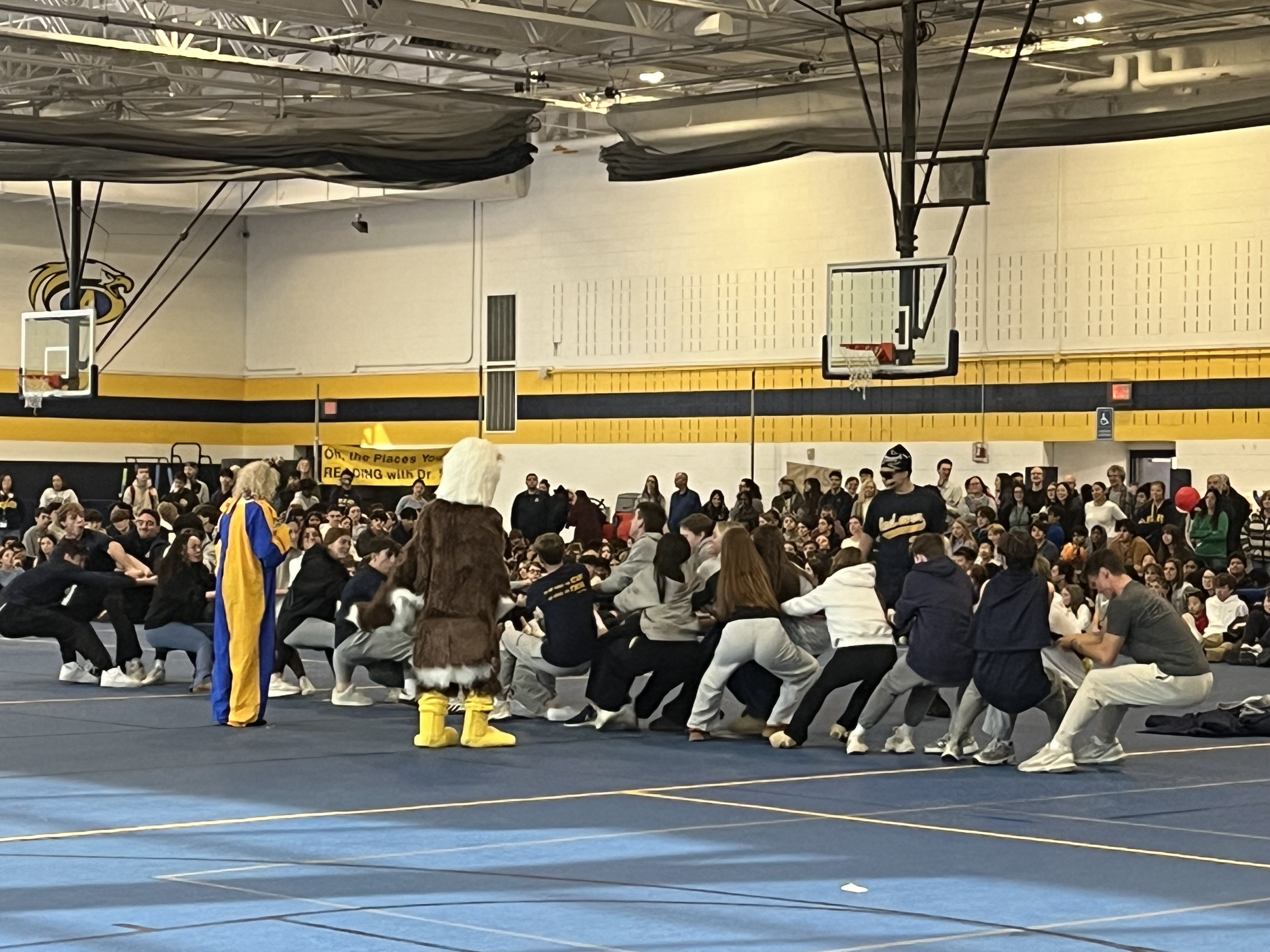
Student Government and the Jungle organized the celebration, which consisted of pie-eating contests, tug-of-war, and team competitions. This year, students took a major role in planning, as opposed to last year’s rally, which was mainly coordinated by Interim Principal Betty Taylor. The rally was attended by the entire school and had participation from students, teachers, and even Principal Jimmy D’Andrea. 

The pep rally is a tangible example of all the work student organizations, such as Student Government and the Jungle, do. Senior Salma Ali, a member of Student Government and one of the main pep rally organizers, said, “We want to get more people excited. A lot of people want to skip the last day or skip the pep rally, so we want to get people more excited, which is why we’re having the Jungle leaders as MCs. [Hopefully] they’ll get people hyped and push them to get involved and be a part of it for the next [few] years.”

Student participation is the heart of any successful pep rally, and at AHS, the energy students bring is unmatched. From chanting school cheers to yelling for their friends, the enthusiasm from the students sets the tone for the event. This year, a number of fall sports, from girl’s swimming and diving to golf, participated in the pep rally. The event planners hoped that competing in events like tug-of-war will serve as bonding experiences and demonstrate team unity. 

Unlike in past pep rallies, there was no teacher dance or speech from football coach Ernest Perry. Additional activities are the balloon relay, band performances, and Jungle Leaders also acting as MCs. These changes will hopefully allow for greater student engagement.

STAFF PHOTO/ Jillian Slotnick
Students collide during relay game.

The planning and care put into the pep rally is obvious, and reflected by the palpable excitement shown by the students during the event. Connor Acheson, a captain of the football team, said, “I love [the pep rally]. I think we should have more [of them]. I think the team and everybody in the school get super excited, and it’s a lot of fun: super high energy. And it definitely helps before the big game.”

Perry expressed a similar opinion. “The school really likes it and the players seem to like it [as well],” he said. ”Everybody’s really into it. The energy is great, especially so close to the game. I think it really gets us into that mindset of the Thanksgiving [game] and needing to give it our all because it’s the last time we’ll step on that field this season.”

According to Ali, the annual pep rally does not only increase excitement for the Thanksgiving Day football game, but also elevates overall school pride. By bringing the whole community together, it forms a stronger bond between AHS students. Even administrators have noticed the positive change pep rallies and the presence of the Jungle has on school spirit.

Athletic Director Wayne Puglisi said, “I think that the Jungle has had some great turnouts for our home football games. They’re very supportive of other sports [as well,] which is great to see since that’s not been the case in the past. I feel like school spirit is slowly coming back [after COVID and our changing leadership]. Just the way that students act in the Jungle, how they cheer, and what they do for the different teams and different programs; it’s pretty cool.”

Continue reading
Germs Gone Viral
  • December 13, 2024

By Samantha Sun
SOCIAL MEDIA EDITOR

As the crisp autumn air gives way to the chill of winter, the familiar sounds of sniffles and coughs fill the hallways of Andover High School. Inside, classrooms are sprinkled with empty tissue boxes, weary faces, and feverish temperatures. 

For many students, this is a yearly struggle: balancing rigorous schoolwork while battling illnesses that leave them drained and struggling to keep up.

Junior Aki French knows the struggle all too well. On a recent chilly Sunday, a dull headache settled in, followed by dizziness. “I noticed my head [started to] hurt [and] I got super cold,” French said. Outside, she bundled up in six layers, trying to fight it off despite the weather. Already, she suspected that the illness might be more serious than the average cold.

The confirmation came swiftly—through a COVID test, she discovered the coronavirus had struck for the second time, the first time being in 2021 over quarantine. French wasn’t surprised; a friend of hers had recently tested positive for COVID. French theorized she caught the virus from her friend. French’s first and second experiences were similar; her days were filled with fevers, headaches, and resting to recover quickly. However this time, the sickness felt more daunting as a junior in high school.

Finally returning after a week of recovery, she found herself with a mountain of work. “I missed three quizzes and two essays because I got COVID,” French said with a sigh. As a hardworking student taking two AP courses, she had to put in extra effort to catch up with the rest of her classmates. This meant staying after school for tutoring from her physics teacher, finishing quizzes during H-Block, and getting through homework as quickly as possible. 

“It was very hard to manage… I think I managed it,” French laughed, reflecting upon her efforts to catch up. “But a lot of teachers and my guidance counselor helped me to arrange the schedule of testing and homework.” This was something French gratefully advised all students to do: ask for help from counselors, teachers, and parents. 

Health teacher Candice McVeigh expressed a similar opinion. “It’s important to advocate for yourself if you are feeling overwhelmed,” said McVeigh. Oftentimes, getting support helps lessen the stress and burden of getting back into school and making up work. 

Cases like French’s are all too common. Students often find themselves buried under work after just a few days away due to illness. Due to less sunshine and being indoors more, it’s easier to contract an illness, McVeigh explained.

“Schedules tend to get busier with the change of seasons,” said school nurse Heidi Katz. “People get run down and self-care is often not high on the priority list.” 

The most common illness? The common cold, which prompts the most visits to the nurse’s office. The flu is the second most common contender at AHS.

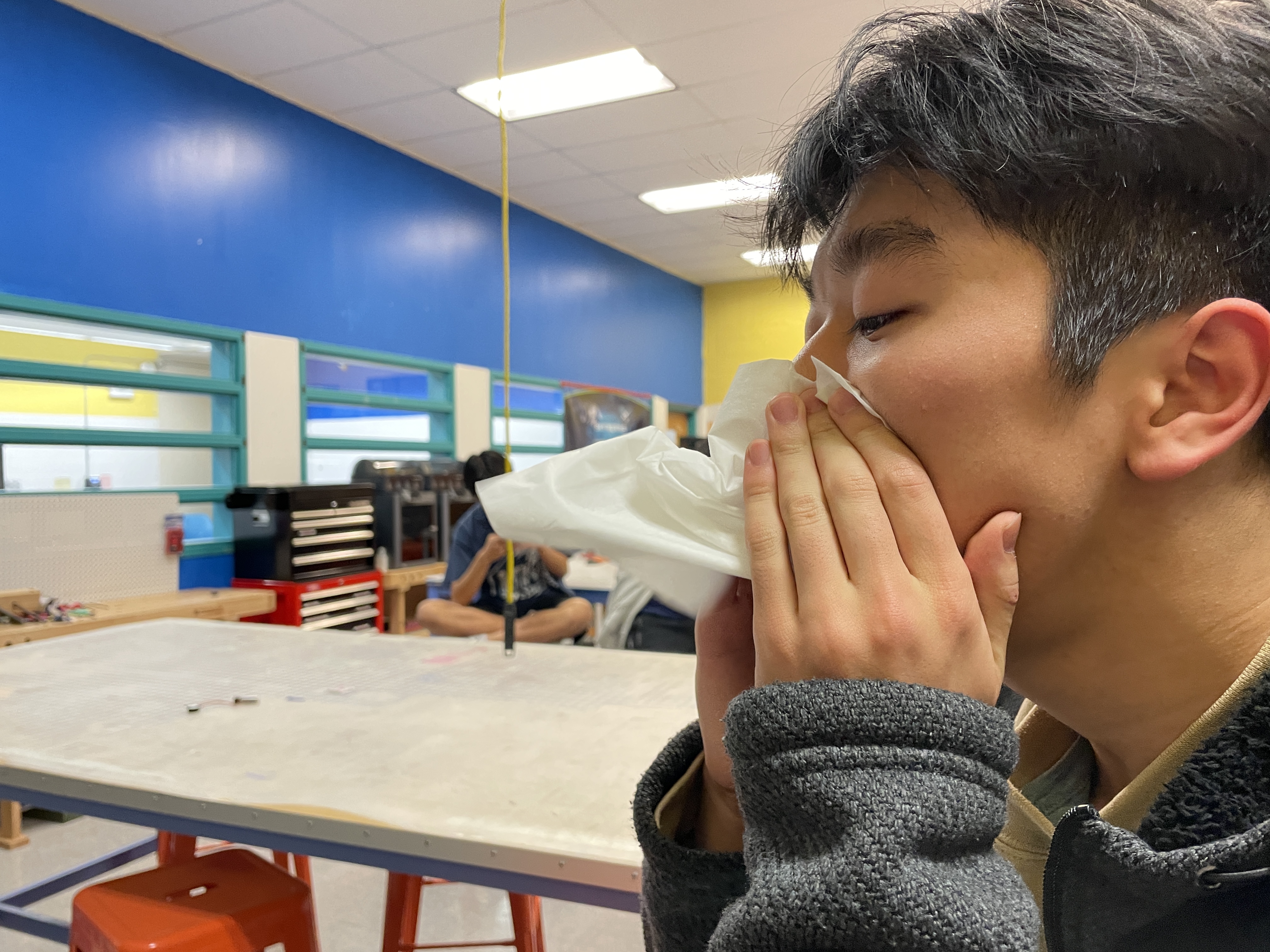
The flu and common cold are contracted through coughing, sneezing, or touching contaminated surfaces. The best ways to prevent them is by washing your hands thoroughly, getting lots of rest, and drinking enough fluids. There are also annual flu and COVID vaccinations, which can help lower the chances of catching them. 

“Everyone is so busy and anxious about missing school, clubs, sports, they don’t allow themselves to fully recover,” said school nurse Melissa Sucharewicz. 

While it can be nerve-wracking to miss a lot of school from being sick, if illnesses are not properly treated, they can potentially increase the length and severity of the sickness. It is best to let the body heal on its own before tackling school work, extracurriculars, or sports.

McVeigh observed that a lot of upperclassmen, especially those taking harder classes, often prioritize school work over their health. “First and foremost, I believe—maybe it’s because I’m a health teacher—that you have to take care of yourself to make sure that there is a balance [in your schedule],” she said. 

She emphasized that finding a balance includes taking care of homework assignments, having downtime, and taking care of the body properly. 

Finding time for each of these factors is the hardest part, as time management is not an easy task. Too much or too little of either of these can create a dysfunctional schedule. While schoolwork is a priority as a student, so is taking care of our health. It’s important for all students at AHS to remember that self-care is equally crucial as keeping up to date with homework and tests.

Continue reading
The Empowering Role that Principals Play
  • November 13, 2024

We are all in different places in our educational careers. Some of us are just starting high school, while others are getting ready to move on to college. But as we walk different paths forward, we have one thing that unites us; one thing that makes us all smile in the mornings, a constant presence in our lives. In the crowded hallways of AHS, we all can stand on common ground: our love of our new principal, Jimmy D’Andrea. 

We believe he is the key to raising school spirit and community at AHS. This year will be filled with a continuation of the joy that Jimmy has brought so far, and we can’t wait to see it. His enthusiasm is infectious, as we see him show up game after game and concert after concert,  Every morning when we hear Jimmy’s bright voice over the loudspeaker, when he shows up time and again to sports events, concerts, and club meetings, his love for AHS is clear. He has demonstrated true care and commitment to the student body, even in his admittedly short term, and we love him for it. 

Jimmy’s legacy at AHS has just begun, and we can’t wait to see him continue to build the school community.

Continue reading
“What do you think of the world?”
  • November 13, 2024

AHS History Department Tackles American Politics

Eva Liss

EXECUTIVE EDITOR

As the 2024 presidential election hovered in everyone’s minds, the Andover History Department continuously tackled difficult topics, hoping to improve students’ abilities to think critically about their world. 

During election years, courses such as World History, US History, and Democracy & Media Literacy face a unique challenge to teach students thoughtfully and neutrally. To face this challenge, teachers like Mary Robb and Brendan Gibson use homegrown frameworks and supervised discussion to encourage students, especially voting-age seniors, to become involved and informed decision-makers. The Massachusetts Department of Elementary and Secondary Education (DESE) also sets guidelines for what can and cannot be taught at the high school level. 

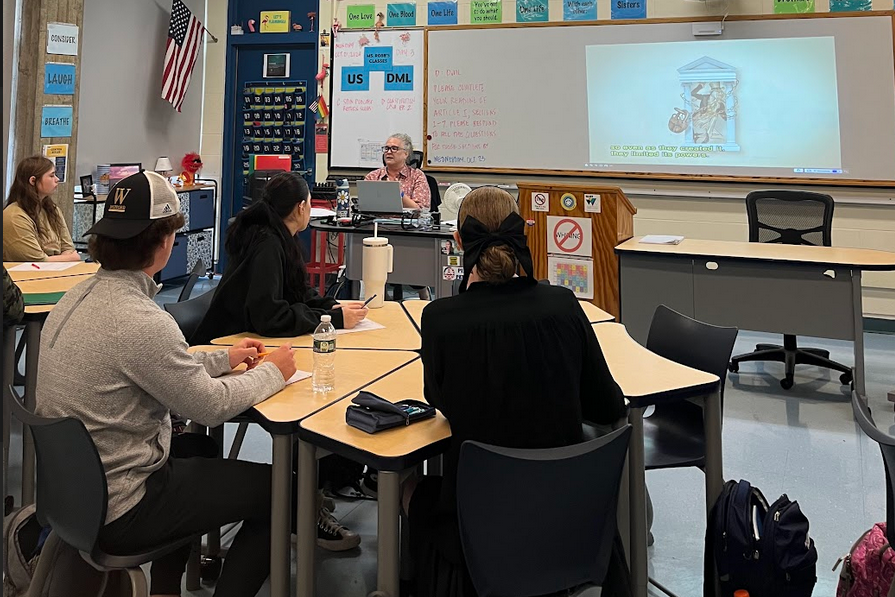
A major aspect of political awareness within history classes is active engagement with the current political environment. Democracy & Media Literacy, a course unique to AHS, aims to instruct students in being critical thinkers and decision-makers. Students in the class have regular news reviews, in which they research a current event from multiple news sources across the political spectrum and analyze how the differences found affect outlook on the event. 

Robb, who teaches multiple sections of Democracy & Media Literacy, said she believes the course is crucial to students’ development as active consumers of media, especially when it deals with political freedom. “One of the key skills our students sharpen [in this class] is their ability to recognize bias,” she said. “[They] then say ‘okay, now, what are the facts in this story?’ and [draw] their own conclusions.”

This is similar to strategies found in Gibson’s ninth- and tenth-grade World History classes, where students choose their own current events stories every 8-day cycle and prepare for class discussions on the topic. 

Gibson’s World History sections deal with both chosen current events and more complicated or controversial topics, such as gun violence, abortion, or the vice presidential debates. Gibson said he has not observed much controversy between students, and he believes students are naturally respectful of each other’s opinions. 

“I think students are still trying to learn about these issues by and large… If ever there is a contentious topic, I try to keep things as rooted in fact as possible,” Gibson said of the discussions he’s observed. 

Anna Bacchi, a senior in Democracy & Media Literacy, expressed a similar opinion. “I think we’ve all been very good so far at not getting straight-up angry at each other and what we’re seeing,” she said. “We usually try to express our ideas as our own and are able to disagree without yelling.”

“We focus more on policy than personality,” Gibson said when interviewed prior to the election.  “We [looked] at polling data from the seven main swing states [each cycle]… Polling is not a perfect science, but… it’s interesting to keep a [finger] on the pulse of these states which… largely [determined] the [election’s] outcome.”

Students in Democracy & Media Literacy also use the widespread media coverage of the presidential election. They explore political patterns found in the modern world through both research and class discussions. 

Assignments consisted of watching the presidential and vice-presidential debates, as well as taking notes on documentaries about the candidates. The framework students were provided for note-taking, created by history teacher Kathryn Reusch, goes deeper than simply observations. In it, students are asked to record policies the candidates discussed and their behavior: evasion of questions, criticism or insults, and whether their words were fact-checked and proven false. 

“I think [they have] really highlighted how separated our country is politically in comparison to previous generations,” Bacchi said on class discussions and analysis assignments. “I don’t think [they’ve] changed many of my political beliefs, but [they’ve] made me very conscious of how I talk about my opinions and ideas.”

Ultimately, history classes at AHS do not seek to convince students one way or the other. Instead, they are there to prepare students to engage thoughtfully with the world around them, especially as they grow up into a fraught political climate. 

“[Students should] be healthy skeptics [and] consciously thinking about what they know,” said Robb. “The goal is for them to know as much as they can about candidates [and] ballot questions so… they can take all that information and [decide] what they need and want from their government.”

Continue reading
Ballot Question Challenges Necessity of the MCAS 
  • November 13, 2024

Areeta Faiz

STAFF WRITER

Question 2 on the November 5 ballot sought to abolish the mandate that high school students must pass the Massachusetts Comprehensive Assessment System (MCAS) in order to graduate.

The MCAS has been a hotly contested topic for years now, and both proponents and opponents of Question 2 presented a variety of factors to consider. Passage of the ballot question would not change the administration of the test but would lift the requirement and likely some of the pressure associated with it. The shift would take effect immediately for this year’s senior class. 

ANDOVERVIEW went to press prior to Tuesday’s election results being finalized, so this article aims to capture how community members felt about the ballot question in the weeks leading up to this important vote.

Graduating isn’t the issue: according to the Massachusetts Department of Elementary and Secondary Education, about 99% of students pass the exam. So, one of the most important changes to consider in Andover is the effect of the requirement on results.

Alan Hibino teaches a range of courses in the math department from Algebra I to Statistics. He noted the importance of reliable data to help serve students, align curriculum, and ensure material is adequately but not excessively reviewed each year.

“Whether it’s a requirement or not, that data is valuable to… math teachers to help us shape our program of studies here at the high school.” Hibino hoped that “students would continue to take the administration of the MCAS seriously.”

This, however, might not completely be the case.

“I try to do my best, but I know a lot of people don’t,” offered sophomore Mina Kacemi. “If you take away the requirement, I feel like nobody would care at all. I hear a lot of people say that they just don’t try during MAP testing because it doesn’t actually impact them. I think the same thing would happen for MCAS.”

The Massachusetts State Secretary of Education, Patrick Tutwiler, expressed a similar opinion. “High school students will not take it seriously going forward,” he said, “so it won’t be a useful assessment anymore.”

The biggest effect felt by students at AHS is anxiety caused by the exam. Many students have expressed that the MCAS is at least somewhat stressful, perhaps more than it’s worth.

“I’m kind of stressing about the math one already, in the back of my mind,” said Kacemi, who is set to take her math and language arts MCAS tests this spring. 

“I am concerned about [high-stakes testing] in terms of the well-being of our students,” said Hibino.

Many supporters of Question 2 argue that the exams disproportionately affect students from low-income households, English Language Learners (ELLs), those with learning disabilities, and those who may otherwise struggle.

“It’s really difficult to do well in the MCAS due to the language barrier, even though this year I feel more confident,” said one ELL at the high school. He also suggests that doing one’s best does not have to be synonymous with pressure and that a singular test determining a student’s ability to graduate feels unreasonable.

Much of the debate, Hibino added, lies in whether the state truly needs a concrete measure of a student’s abilities. “Ultimately I think MCAS provides a basic standard; the basic ability to do fractions, for example, or to understand context for the English MCAS,” he said. “And I think a lot of these skills happen organically from the classes we take. So, the question is, do we really need a test to definitively prove that?”

“[Another] one of the things that we talk about in our faculty is the ‘vision of the graduate.’ What do we expect of a student that is graduating [from] Andover High? And so if not the MCAS… what [is] part of our vision?” said Hibino.

Tutwiler pointed out that the ballot did “not propose something as a replacement. All it [did was] deconstruct the current system…you’ll just have a local assessment and understanding of how students are doing,” he adds, “and I’m saying that’s not enough.”

Continue reading
AHS Students Travel and Serve with Global Pathways
  • November 13, 2024

Anushka Dole

ONLINE EDITOR

AHS students are going to Japan over February vacation and Costa Rica over April vacation as part of the Global Pathways program.

The Global Pathways program is an AHS club and three-year experience that is open to students starting sophomore year. This year, the Japan trip is open to all AHS students, while the Costa Rica trip is specific to Global Pathways students. 

Global Pathways is an immersive experience that allows students to explore international life and develop a global lens through which they can view the world. Over the course of three years, students embark upon at least one international travel experience, which can take place over a school trip or a trip with friends or family. 

However, the Global Pathways trips are different from a typical venture of casual tourism. Daniel Brennan, a staff advisor of Global Pathways, elaborated on the distinction between the two. “There’s a difference between a traveler and a tourist. When we’re tourists, we’re…using a lot of resources and not necessarily adding much to the place that we’re traveling to,” Brennan said. He went on to clarify that the goal of a Global Pathways travel experience is to broaden student perspective through community engagement in international communities.

“What we’re looking for in the program is more of an immersive experience where we’re…interacting with community members…and doing things that aid that community, ” Brennan said.

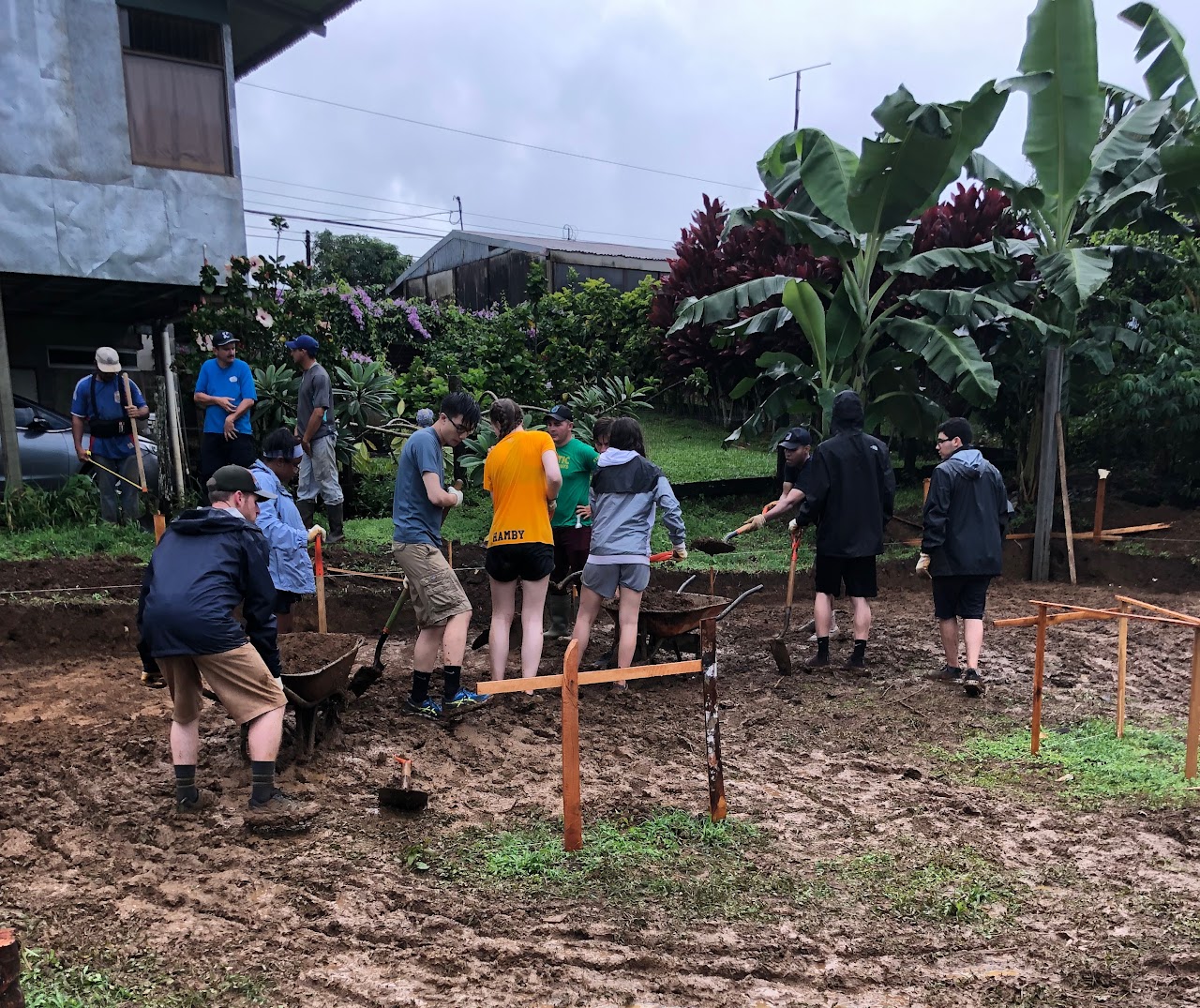
During the Global Pathways 2019 Costa Rica trip, students worked on a community service project that aimed to bring drinkable water to regions that didn’t have access to it, and during the 2024 Thailand trip, students worked in elephant sanctuaries. During the upcoming Costa Rica trip, students will continue the initiative. The Japan trip doesn’t have community service built into the travel plan, so Global Pathways students may seek to fulfill their required “glocal” – globally minded local service – elsewhere.

Even for students who are unable to partake in the international trips, various global activities are offered by the program. Judy Elkotory, a senior and one of the leaders of the program, detailed the many activities that were designed for the program over the years:

“We helped plan [the winter fundraiser]…we planned to do a movie night with hot cocoa in the cafeteria…. [and] we also started painting the rock…because our theme last year was saving the ocean.”

Each year, Global Pathways adopts a new theme centered around one of the seventeen of the United Nations (UN) sustainable goals, and student leaders like Elkotory design activities related to the theme. Elkotory mentioned that the program has also collaborated with the exchange program that brought international students to AHS.

“[We attended] Korean exchange H-blocks…and we got to do Ddakji, like [the] squares [game]…from Squid Game…[and] we had Vietnamese students also come in and talk about their school life back in Vietnam and their food and culture,” she said.

Global Pathways continues to draw new sophomores each year who are eager to embark on their global journeys. Connor McGovern, a sophomore and new member of Global Pathways, spoke about his enthusiasm for gaining a global perspective by joining the program. “I thought it’d be really interesting to talk to people from other countries and get to travel to other countries and do service… . It shows you how many different places there are in the world and gives you… a sense of your options for the future,” McGovern said.

Each student’s journey in Global Pathways is a unique experience, and this is by design. Brennan highlighted that ultimately, students are the ones to define their own adventures in the program. 

“We try hard to make it so that students can kind of make [the program] their own. We call it ‘walking their own global path’,” Brennan said.

Continue reading
Mice appearing in classrooms?
  • November 13, 2024

Staff and students debate a hygienically concerning event

Kaveri Dole and Arshiaa Prem

STAFF WRITERS

“Cloudy with a Chance of Meatballs” is an animated movie we all love, with various foods falling from the sky in a blissful buffet. Obviously, this is everyone’s dream, but how would you feel if the meatballs were a little less appetizing and a little more hairy?

Health teacher Betsey Desfosse’s freshman class was horrified when they saw dead mice on their floor, just inches from students. It was around 8:30 a.m. on an early October morning, and the students were still groggy and tired. Was it fake? Was it perhaps a meticulously placed practical joke? That is what prevented the class from “screaming bloody murder,” Desfosse said. That is, until ten minutes later when two students approached Desfosse asking about the creatures.

“I was a lunatic, I was screaming,” Desfosse said while recalling the incident. “I fell short in the bravery department that day.”  

However, Desfosse was not the only teacher who encountered these pests. Science teacher Jennifer Rodier also had similar experiences. Rodier valiantly threw away not one, not two, but three dead mice, all from Desfosse’s classroom, earning the title of Mrs. Desfosse’s knight in shining armor after running into the room after hearing her screams. Finally, Desfosse exclaimed, “That’s it, I can’t do this anymore!” and ran out the door.

“I get there are mice in the building and it’s starting to get cold and we eat snacks all over the place,”  Desfosse said. She was very logical after the fact, confirming, “This has never happened before but it’s not shocking.” 

Her theory is that a mouse likely gave birth, producing more offspring. However, she recalled a similar incident from about fifteen years ago, when a mouse fell out of a hole in the ceiling tiles and landed in a student’s backpack.

Freshman Ishwa Dharan, who was present in the health class where the mice reappeared, reflected on the experience. It was a total shock to her, so much so that it didn’t seem real. In fact, at first, she thought it was fake. “I started laughing because I didn’t know what to do,” she recalled. 

Her reaction highlighted another issue; students at Andover High School are unprepared for such situations and unaware of the health concerns associated with these pests. Without the proper knowledge of what to do in these situations, students are at risk of mishandling the animals in an attempt to kill or dispose of them, potentially contracting a disease.

The Centers for Disease Control and Prevention (CDC) points out the dangers of physical contact with vermin, which can be a threat to our students. “Contact with rodent droppings, urine, and saliva can spread by breathing in air or eating food contaminated with rodent waste.”  The CDC added that infestations of rodents through buildings are the main cause of disease spreading from rodents to people. In addition, many diseases carried in mice don’t show apparent symptoms, meaning there is no visual difference between an infected and a healthy mouse. These diseases range from bacterial, viral, and even parasitic and can be transmitted directly or indirectly. 

So what can we do to reduce the spread of these diseases? Candice McVeigh, a health teacher at AHS, advised community members “to start being mindful of the food we bring into classrooms and how we clean up after ourselves.” However, in her opinion, the mice aren’t a real issue unless the problem worsens. “All buildings this size have mice,” she says. The real concern is not eradicating the rodents, but instead keeping them under control. This mirrors Desfosse’s thoughts as well: “I don’t know how in a building this size with this many people and so much food that you wouldn’t have mice.” 

As for measures taken to combat this problem, Desfosse stated that rat traps have been set. However, they remained empty after a few weeks. 

These rodents are indeed becoming pests for our students and staff. They bring hygienic concerns and, in general, cause chaos and disarray. Mice or meatballs, you wouldn’t want either in your classroom, would you?

Continue reading