Theater Guild Presents You’re a Good Man, Charlie Brown on Time Crunch
  • May 18, 2025

AREETA FAIZ || STAFF WRITER

The cast and crew of Andover High School’s You’re a Good Man, Charlie Brown grappled with a tight deadline typical of a musical in the spring. This year, they performed their yearly show on May 8th, 9th, and 10th. 

You’re a Good Man, Charlie Brown is a musical based on the popular comic strip Peanuts, featuring familiar characters and a relatively small cast. Auditions ended up being held at the end of March, leaving about a month for the group to finalize their set, blocking, lines, and choreography. 

According to the show’s director Susan Choquette, there are several reasons for this turnaround. 

“When we participate in the Drama Festival, we never know how far in the process we’re going to get, [which] delays the start of the spring show,” she said, adding, “The Collins Center gets very, very busy in the spring, since a lot of dance studios do their recitals here.” 

Other seasonal events include AP testing and junior prom. “It is a challenging time to put a show together, no matter what you choose,” Choquette said.

The last time the Theater Guild performed a spring musical was 2021, slightly off schedule due to the pandemic. “We do a musical in the spring every four years, and other times we usually just do a regular play,” said Nina Bond, a longtime theater participant and sophomore playing Sally Brown.

“A regular [musical in the fall] takes about three months to rehearse and put together,” said sophomore Grace Armstrong, who took a break from her typical athletics to pursue the role of Lucy Van Pelt. As a principal character, Armstrong and others are required to stay at school for up to four hours nearly every day of the week. “I had to be off-book very, very quickly,” she said.

“I’ve been going over my lines, every day, every night, and making sure I’m prepared for every rehearsal,” Bond said prior to the show’s debut.

“There’s a lot of material, but we’ve been good about it,” said Gall Shapira, a sophomore who played Marcy in the ensemble. Shapira brought up another challenge regarding their roles: “We’re playing children, so we’ve been told that they move differently. Their facial expressions, their mannerisms are different, and we have to sort of embody that.”

Continue reading
Social Media Marketing Class Plans Snack Shack Raffle in AHS Media Center
  • May 14, 2025

Christina Saad || STAFF WRITER

The media center hosted a raffle on April 19 with a prize of five Snack Shack tickets. The raffle was planned by students from art and business education teacher Meghan Michaud’s Advertising and Social Media Marketing class. 

Three students from the class, junior Sophia Call, junior Sam Archiable, and sophomore Ellie Linehan, planned out the Snack Shack event. The prize winner for the raffle was Kai O’Sullivan.

Michaud’s original assignment was to break into small groups and develop a series of posts around a theme the group chose, which were then posted on the media center’s Instagram along a two-month timeframe.The goal of the assignment was to increase the library’s Instagram page from 700 to 1,000 followers. 

“I felt like it was a good idea for students to have some real-world application of how to use the skills that they were learning in Advertising and Social Media Marketing,” said Michaud.

Students first did an analysis of the library’s Instagram account to look at what kind of followers it had and ways it wasn’t achieving its goals.They also did a competitor analysis of other library and book-related pages to see what kind of content they were producing. The class met with library staff and looked at data the library had about the number of books in the collection and what genres of books students gravitate towards.

“We looked at some real data and they asked questions, treating the library as a client, as they would in a professional relationship,” Michaud said.

The class decided on what their content would like and what would be their brand colors so there was a consistency in the imaging they were sending out. They developed a two-month calendar plan to increase followers. They have surpassed their goal of 1,000 followers and amassed 1,120 followers as of May 12, and they still have a month left in their calendar.

Students said that one of the things that motivates students was getting breakfast and going to the Snack Shack. Call, Archiable, and Linehan looked at Instagram models where the way to enter some sort of contest to win a prize was to like and follow the page. They thought about what would be an incentive for students to win that was easy and achievable to access, and decided that the Snack Shack would be a great incentive for students to like and follow the Instagram page.

“My group’s thought process for choosing the raffle was trying to figure out some way in which we could get the whole school participating and excited about,” said Archiable.

The group looked where students were viewing other types of media to get them to check Instagram. They created and posted flyers all around the school, did announcements over the loudspeaker, and had a feature on AHSNews.

“We tried to post as many [flyers] as possible around the schools, as well as setting them up as 

‘art’ in the hallways,” Archiable said.

They also worked with staff in the cafeteria and the Food Services Department to secure a prize.

Continue reading
World Language Week Brings Global Films to AHS Students
  • May 6, 2025

Arshiaa Prem || STAFF WRITER

Each year, the World Language Department hosts World Language Week, an event celebrating different languages and cultures. As part of this tradition, students watch a carefully selected international film to experience storytelling from around the world. This year’s choice, The Door Into Summer, is a Japanese film chosen to reflect student interest in anime, manga, and Japan, especially following a school trip to Japan in February.

The department selects films in languages not taught at school, helping students hear a new language and observe how foreign films differ from American productions. According to AHS foreign language program advisor Peter Hall, who is involved in the selection process, past films shown include CODA, about a family that used American Sign Language to communicate, Dangal, an Indian movie about wrestling, and last year’s German film, The Teacher’s Lounge, which received mixed reactions but led to interesting discussions.

“The movie lets students hear another language and see how international films often have less predictable endings than American films,” said Hall.

According to Hall, the selection process considers multiple factors, including school appropriateness, cultural representation, discussion topics, and ratings from sites like Rotten Tomatoes and the Academy Awards. The department aims to choose movies students have not already seen, which is why student input has not been part of the process before—but it may be considered in the future.

Hall noted that The Door Into Summer was chosen because of its modern themes like robotics and artificial intelligence, which match student interests.

Freshman Mo Gearin said it “felt like a fever dream,” while Freshman Aarna Shah called it “fun and interesting to watch” and noticed its unique filming style. “It had a lot more transitions than what I’m used to,” she said.

Sophomore Arnav Chandrasekhar thought the plot twists were exciting and said the movie helped him learn more about Japanese culture. “I noticed there was like a blueish, mellow filter on the movie,” he said. “That was my favorite part of watching it.” Chandrasekhar also added, “I think this year’s movie was better than the German one last year.”

Freshman Reut Cohen-Yashar added that watching a foreign film showed her “how different movies can be in different cultures.”

Students have responded well to the event in the past, though opinions on each film vary. “Some movies are more popular than others,” Hall said. “Last year’s German film wasn’t a favorite, but it got students thinking about new topics.”

Continue reading
New Sophomore APs to Be Introduced in Fall of 2025
  • May 6, 2025

Avery Slaughter || STAFF WRITER

Andover High School recently announced two new courses being offered next fall, AP Seminar and AP Government. AP Seminar will take the place of the combined sophomore English and history class.

Both of the new classes are open to sophomores, making them some of the first APs for underclassmen. AP Government will be open to juniors and seniors as well, whereas AP Seminar is being implemented exclusively for sophomores. It will replace Modern World Studies, which combines the Modern World History and English 10 curricula into one larger joint class. Students and staff alike have expressed confusion as to how AP Seminar will be managed.

Though the name is being used to describe the new collective class, AP Seminar is formally the title of the English class and Modern World Studies is the name of the History class, though the latter is colloquially used to refer to the current combined course as a whole. While AP Seminar will be taken as an Advanced Placement class, students have the choice to take Modern World Studies for an Honors or College Prep credit.

It’s important to note that AP Seminar, which is an English course, is not exactly the same as English 10. Fundamentally rooted in developing research skills, the curriculum follows a slightly different path than its sister English course while still covering similar topics. According to the College Board’s description, “in AP Seminar, you choose real-world or academic topics to investigate. AP Seminar teaches you how to find and use evidence from experts, and how to present the case from your own perspective effectively, both through writing and multimedia presentations.”

“AP Seminar is a course designed to develop students’ skills in research, analysis, and communication,” Sara Sympson, a representative from College Board, said. “It encourages critical thinking and collaboration, preparing students for college-level work. The course can be organized in a variety of ways to best address student interests, state and/or country and district goals and requirements, and local school traditions and culture.”

Despite the new title, AP Seminar will not be changing much when compared to Modern World Studies. Michael McCarthy, advisor of the Social Studies program in Andover Public Schools, explained that the class will remain nearly identical to its predecessor. Stacy Giggie, program advisor for the English program for grades 6-12, agreed. There will be little change in the overall curriculum, but some of the learning material and assessments will be altered to match the newfound AP-level difficulty of the class.

Modern World Studies and AP Seminar cover important and sensitive topics, and it’s important to ensure they are both prioritized equally. When asked if he was concerned about one subject being emphasized over the other, McCarthy said, “Yes, a little bit, but I’m very confident that the teacher who is teaching it will ensure that the skills we value will be taught.”

AP Government will be offered as a full-year elective like many other APs at AHS. Given the importance of understanding the government as an American citizen, McCarthy suggested that it would be a valuable addition to the course offerings for students.

“We want students to be active citizens, to understand the local government, their state government, their federal government, and to see the government as agents of change,” McCarthy said.

Continue reading
The Underclassmen’s Race to College
  • May 6, 2025

Andover High School’s AP restrictions called into question by students, graduates

Avery Slaughter || STAFF WRITER

By the time the Class of 2028 first stepped foot in the lobby of Andover High School, it was abundantly clear that Advanced Placement courses were going to be off-limits for a while. During the student orientations that had occurred in the months previous, they had been told they weren’t ready for classes of such rigor; they weren’t mature enough and would have to wait until they were juniors to handle a responsibility so vast.

The rule barring APs seems innocent, but for some freshmen and sophomores, it is a cause of great stress. “After high school” is a concept that hopeful college prospects begin to consider as early as elementary school, and the inability to maximize APs as soon as ninth grade can be concerning with that in mind. That being said, the reasoning and logic behind the restriction is sound—how could underclassmen manage the workload and intensity of college classes, given the well-known academic difficulty of APs? Despite the good intentions, is it possible the act of minimizing that stress inadvertently causes more?

It’s important to note that two new APs are being introduced in the fall of 2025. These two courses include AP Seminar, open exclusively to sophomores, and AP Government, open to grades 10-12 (see sidebar for more details). AP US History and AP Java Programming was also made available to sophomores this year. These four courses are the only APs typically offered before junior year, though infrequent exceptions are made for students who demonstrate advanced proficiency in math and/or computer science.

For Shauna Murray, the question about APs is a loaded one. Working as both a high school teacher in New Hampshire and a School Committee member in Andover Public Schools, she’s deeply involved in the lives of students. Murray noted that the rules regarding APs and general course restrictions are not decided by the School Committee and are instead up to the discretion of the guidance department. The College Board also does not have a say in how the classes are run in individual schools beyond the administration of the AP exams. (Multiple attempts to reach Aixa de Kelley, coordinator of the guidance department, by email were unsuccessful.)

“I think there are some kids that are ready, but it’s really a student-by-student basis,” Murray said. “It’s tricky because you know the requirements are there for a reason, but maybe it could be a little bit more flexible.”

Current AHS students have varying opinions. Sophomore Connor McGovern expressed frustration with the policy and its possible implications on his future. He worried that his college chances were slimmer compared to future graduates of other schools with more lax restrictions and that ultimately it would damage his experience after high school.

“I think [the rule] probably does [hurt my chances],” McGovern said, “and you could also shorten the amount of years you have to take in college if you take a lot of APs in high school. I think about that.”

Canyu Li, who has eight APs under her belt as a senior, had an opposing view. She wondered if the stress she would have felt as an underclassman would have been insurmountable had she had the option to take APs, though she acknowledged that, when she was younger, she did wish to take them. Ultimately, she thought that the downside to taking these courses early on tends to outweigh the benefits, especially with college admittance in mind. She explained that, in her experience, colleges often compared you to other students in your school to ensure fair consideration in the admission process.

Many people were inclined to agree with that assessment, though former college admissions officer Jayne Jones suggested it was a bit more complicated.

“It all depends,” said Jones, now an AHS guidance counselor. “It depends upon the student, the college, and many other factors that make up a decision for admissions. Some more selective colleges want to see several AP classes, and less selective colleges may want to see a few APs, and still other colleges may be fine without any APs.”

While the freshmen at AHS were acclimating to the environment of the school this past fall, Diya Ganesh exited the bus she took from her lab at Northeastern University to her dorm. Having graduated from AHS in 2023, she had recent experience with how the AP restriction impacted her college experience. She took six APs herself, and she recognized that she was at a disadvantage in terms of college credits compared to her classmates, who had AP counts ranging from eight to twelve.

Jordan Altaffer, 2017 graduate of AHS and family friend of Ganesh, agreed at that moment. Though he had recently concluded his time at Georgia Tech, the toll his shortage of AP credit hours had taken was still present in his life. In addition to an increased amount of time filling his degree course requirements, taking more courses was financially inconvenient.

“If I had been able to take more [APs], I could’ve skipped my [college] freshman English classes and my freshman history,” Altaffer said. Not taking those courses would have both cut an entire semester from his college experience and minimized the cost of his classes.

Ganesh had similar sentiments. “People that are graduating sooner tend to get a higher priority in picking classes. […] I cannot emphasize how helpful having those credit hours ahead of time are,” she said.

The question of whether or not freshmen and sophomores should be able to take APs brings to light what Murray considered a larger social problem. How can high school students possibly have enough time in their lives to balance such hefty course loads and their own personal health? According to her, the “race to college” represents the flawed values in our society. Instead of prioritizing the well-being of students during the transition to adulthood and independence, we drive students to overwhelm themselves with academics to fulfill arbitrary requirements for further education.

“One of the things that is happening in society is that we’re pushing kids way too hard,” Murray said. “It’s just this vicious cycle of wanting to do more and wanting to achieve more.”

Continue reading
SCROLL: Day in the Life of a High Schooler
  • March 17, 2025

Anya Gorovits and Diya Manikandan || STAFF WRITERS

I jolt out of sleep as my alarm blares into my ears. My hand moves before my brain does, reaching for my phone. I quickly snooze the alarm and instinctively click to watch some videos—just a few to start the day. 

“STOP SCROLLING, If you want to be more productive, you need a morning routine.”

I blink at the screen. That sounds…important. I watch as a girl lists out five steps to increase productivity. I instantly forget steps one through four, but I think step five is “stop wasting time.”

I nod. Good advice. I watch another video. Then another; 20 minutes later, I’m still in bed.

Scroll.

History, first period. The teacher is lecturing us about the Constitution, but it sounds fake. I open my phone under my desk.


Is the Constitution even real?”

First result, a guy’s voice blares through my AirPods: “WAKE UP PEOPLE, the government doesn’t want you to know this, but the Constitution was actually written by time travelers!”

I look up to see everyone staring at me. Shoot, my AirPods never connected. The teacher sighs and continues on with the lesson. I look back at my phone.

Scroll.

Math class. I don’t understand anything. The room is silent, except for the teacher’s monotone voice and the sound of someone cracking their knuckles. What if she calls on me?

I ask to go to the bathroom and leave. In line, I open my phone. 


I return to class 12 minutes later. The teacher glances over at me from her desk.

“You okay?” she asks. I nod and slide into my seat. 

Scroll.

Time for lunch. I sit with my friends. We smile at each other and pull out our phones. Overlapping sounds from our phones accompany the background noise of the cafeteria. 

Someone finally looks up. “Did you see that—”

“Yeah, I saw it on TikTok,” I say. They nod and go back to scrolling. I take a bite of my wrap.

Scroll.

Gym class. The teacher says we need to exercise. 

I check my phone. One video says walking 100 steps a day is enough. The next says running can be bad for you.

I decide to sit down. 

Scroll.

Finally, I’m home. I open up a blank doc. My English essay on phone usage is due tomorrow. Time to focus. I set my phone on the other side of my desk. 

I type my first two sentences, occasionally glancing over at the chipped screen that stares back at me, daring me to pick it up. I begin to write, “Phone addiction is a myth. I would be able to survive without my phone–”

BZZZ. BZZZ.

Ignore it. I need to focus. I write another sentence, but the words just don’t sound right, even though they came from a video by a wellness influencer. Somehow, everything sounds better when it’s online.

I’m about to finish the end of my next sentence—

BZZZ. BZZZ. BZZZ.

Maybe it’s something important. It couldn’t hurt to check. 

My phone screen lights up. Oh, someone new requested to follow me. I should see who they are, check out their posts, where they go to school—

Scroll.

Four hours later, the three sentences from my essay stand alone. Meanwhile, I’ve watched 73 videos. A few of them were on tips for better writing though, so it’s basically studying.

Scroll.

My eyes drag lazily across the screen of my phone to check the time. Midnight. I should sleep. 

Another video will help me fall asleep. Just one more. 

Scroll.

It’s 3:00 AM, and my phone is snug against the indentation it’s made on my pinky finger.  

A pop-up interrupts the dancing cat on my screen…

 “Time to take a break? You’ve been scrolling for a while!” 

Sigh… 

Scroll.

Continue reading
Bledsoe’s Back is Back, Science Teacher Returns After Strenuous Surgery
  • March 17, 2025

Kaveri Dole || STAFF WRITER

Ralph Bledsoe, a beloved science teacher at AHS, recently took a two-month leave of absence due to surgery on his spine.

Bledsoe reluctantly left AHS from October 31 until December 20. This time included surgery preparation, a 5-hour surgery, and over a month of recovery.

“I could not [walk] without my feet disappearing [and it felt] like walking on stumps,” said Bledsoe. Bledsoe was having trouble simply walking from his car into the school, and had to get permission to park directly outside of his class to reduce the distance of this simple yet agonizing experience he had to overcome twice a day.

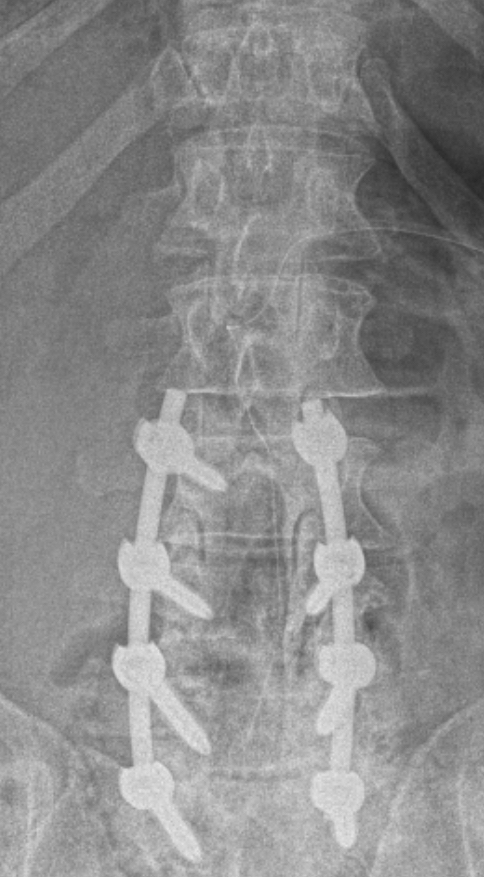
The source of this issue stemmed from Bledsoe’s spine, where three 

inter-vertebral discs were missing, causing movement in his vertebrae, leading to several issues.

At first, Bledsoe experienced extreme symptoms such as his legs and feet becoming numb after standing up still for prolonged periods, hindering his ability to walk and get around.

It became increasingly evident for Bledsoe that action would need to be taken. At first, he tried a chiropractor, who said that his symptoms were too severe and that he would need to turn to a surgeon.  

Bledsoe repeatedly expressed his gratitude for the extensive research that Massachusetts General Hospital had been doing. “Getting into Massachusetts General Hospital was one of the best things because they are a research teaching hospital,” Bledsoe said.

Researchers were using a new robot for Bledsoe’s case that read MRI bone densities to determine the best location for the eight screws that were to be inserted into his vertebrae. Thus guaranteeing the spinal structural support that Bledsoe had been lacking.

“On Halloween night I was carved like a pumpkin because the day of my surgery was Halloween day,” Bledsoe said regarding his lengthy five-hour surgery. “The operating room was as large as a physics lab but stuffed to the gills with equipment.” 

In Blesoe’s absence, He left his students under the instruction of Cole Hauser, a substitute teacher. “This is the first time I’ve had experience taking over someone’s class like that,” Hauser said. “I think it’s really good to help out where you can for teachers. These life events can take you by surprise.”

However, Hauser seamlessly handled the transition for freshmen in physical science between teachers, ultimately extracting a beneficial experience for himself and his students. “They made that transition really easy, ” Hauser said, referring to his students. “I enjoyed it and had a great time”

Hauser studied Marine Biology and teaching in college. However, he received glowing reviews from his students in his Physical Science class. “I think Mr. Hauser prepared us really well for his tests so I don’t think my education was really impacted,” said Ishwa Dharan, a freshman currently in Bledsoe’s physical science class.

“He makes the class really fun so I was just glad he was back,” Dharan said. It’s not a secret that Bledsoe is adored and revered by students and staff. “He’s a pretty happy guy,” said Sydney Steddom, a sophomore and a former student of Bledsoe.

Continue reading