AHS Setting for 8th-Grade Career Fair
  • April 29, 2025

Isabella Yan, Saarvi Deshwal, and Tommy Kruecker-Green || ARTS, LAYOUT, AND OPINIONS EDITORS

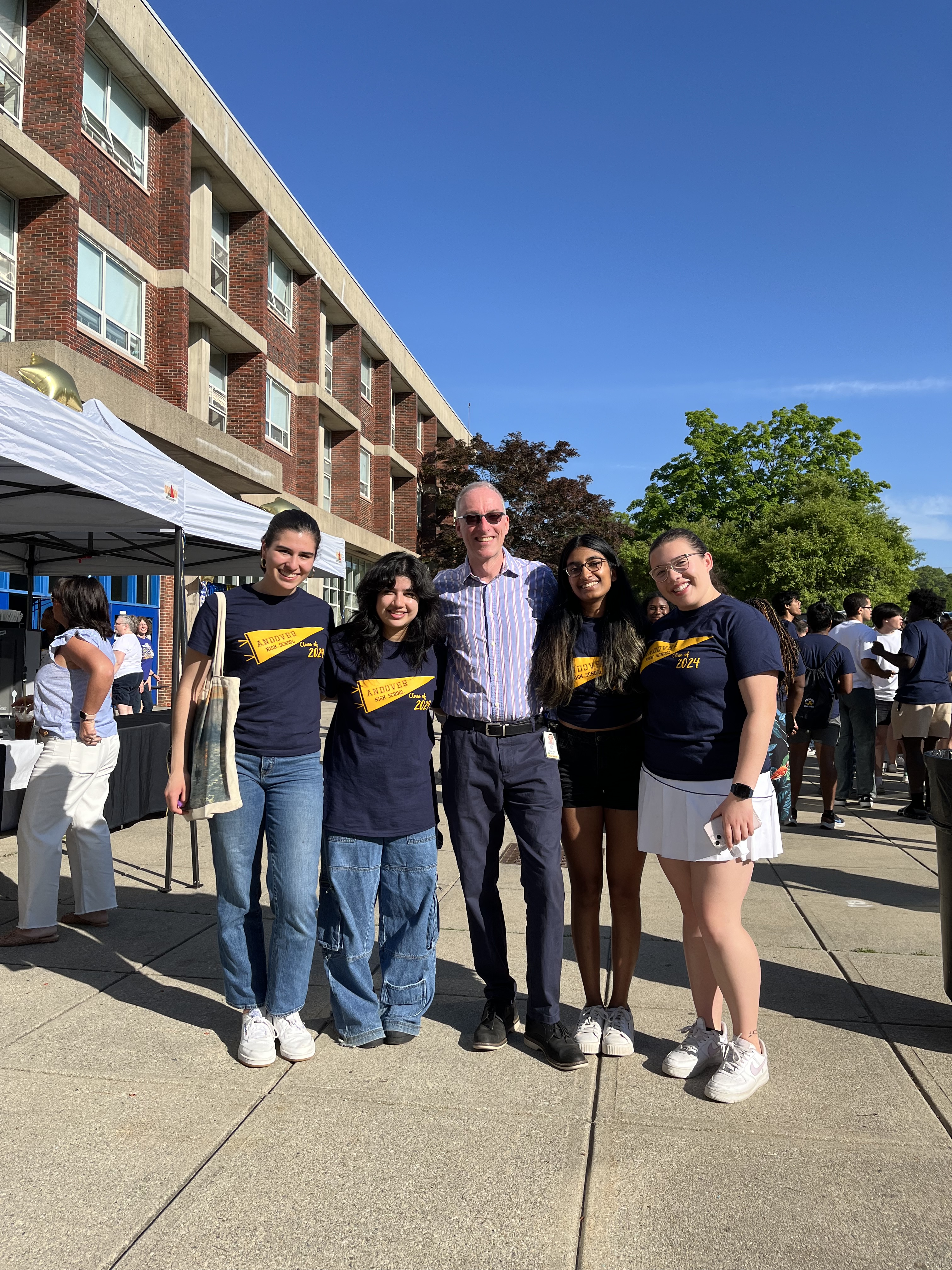
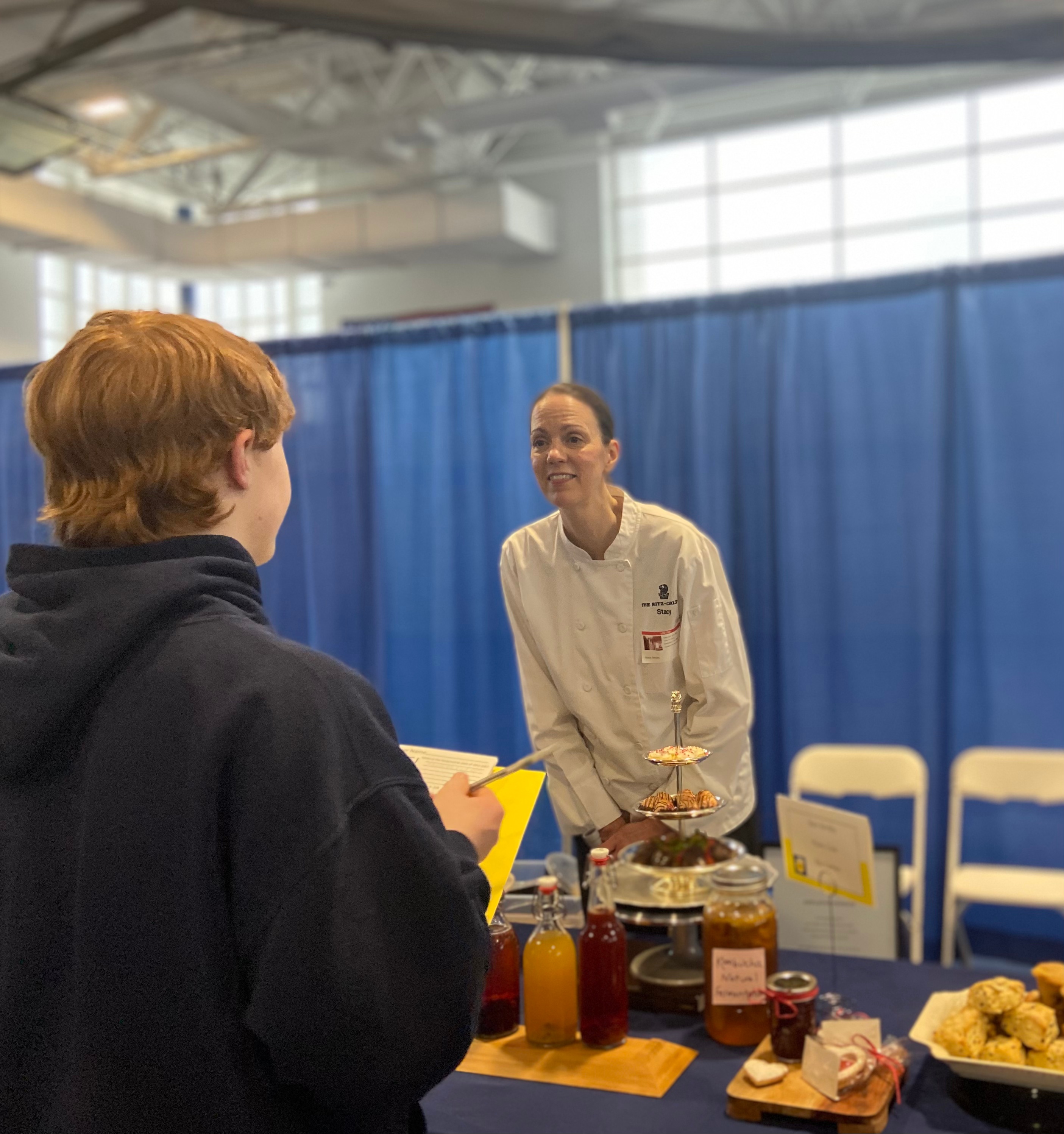
Andover High School hosted a My Career Academic Plan Fair (MyCAP) on April 15 for eighth-graders to explore career options before they enter high school. 

Eighth-grade students gathered in the Field House at AHS for the first-ever joint Career Day with all APS middle schools, organized through the MyCAP initiative, a Department of Education grant program. AHS collaborated with middle school and high school counselors, a team of educators, and volunteers to plan the career day. Prior to the fair, students were encouraged to do their own research on jobs that they are interested in. During MyCAP, students walked around with “passports” in which they could take notes of their discussions.

The purpose of the fair was to help rising freshmen gain insight into possible professions and career paths before they enter high school, so that they have a stronger idea of the courses they would like to take.

“[Students compiled] a list of careers that they’re interested in,” said Aixa de Kelley, Director of Guidance, and event coordinator. “Then they come here and find the careers for which they have questions to ask, and then they get a stamp.”

There were over 50 adult volunteers who shared their experiences from their various professions. Although smaller career days have been hosted at the middle schools in past years, this marked the first year that all three middle schools came together at the high school for a unified event. Volunteers answered questions students had and shared the proper education and experience requirements for their professions. 

Timothy Burgess, an electrician and a volunteer at MyCAP, shared, “[I hope to] inspire [students] that it’s not uncommon in a town like Andover to go to a trade school, because I went to West Middle, [and] it felt like there was a big stigma against going to a trade school.”

Another volunteer, Yissy Perez, a civil engineer and founder of construction company YCP Northeast, shared her motivation for sharing her career experience. “I would love to start a conversation early on. When [kids] hear engineering, they might think, well, that’s so difficult. And it is. But when something is fun, when you enjoy it, it’s worth it,” Perez said.

While studying at Tufts University, Perez enrolled in academically challenging courses, discovering her passion for engineering. She wants to share this experience with students and encourage more young women to pursue STEM professions. 

“I would love to see more women [pursue STEM]. In my view, especially when I’m working for another company, you don’t see this many women. It would be great,” Perez added.
Continue reading
Andover High’s DECA Transition
  • March 17, 2025

Arshiaa Prem || STAFF WRITER

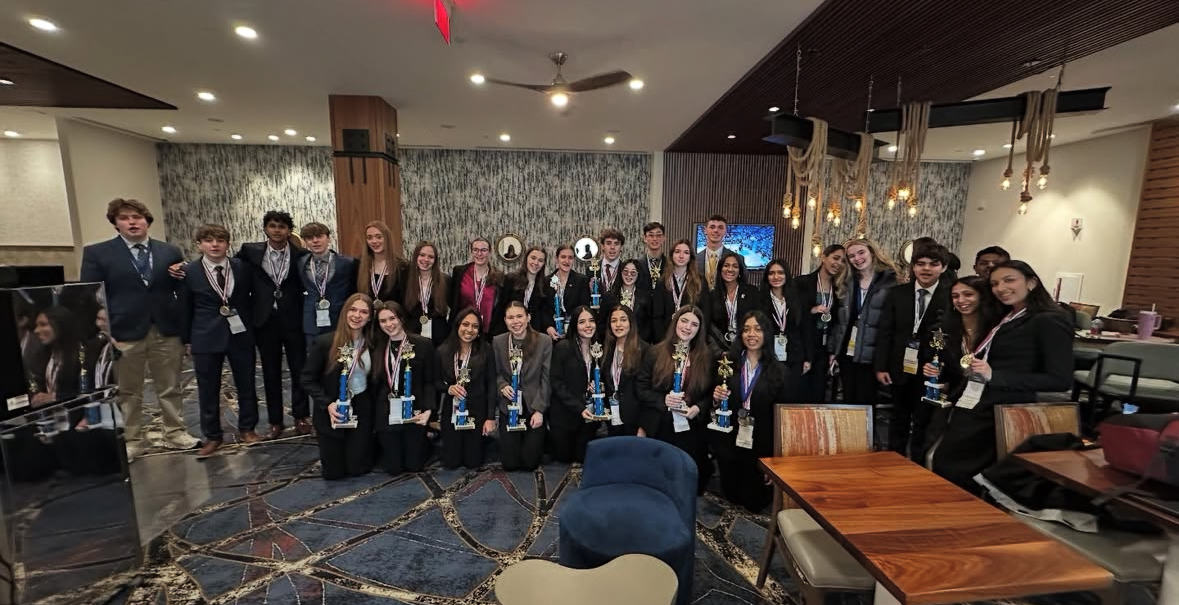
The DECA team changed their district from Boston to Lawrence over the summer.

The change in districts for DECA has received mixed reactions from both students and teachers. They now go against harder opponents and attend competitions in different locations than in previous years.

“I don’t know how much the district change has benefited, but it also hasn’t had a negative impact,” noted Kari Belson, a junior and three-year member of DECA. Belson said that facing strong teams, like Westford Academy, has encouraged members to work harder and perform better in competitions. 

The advisor of DECA, Business teacher Ashley Kinsman said, “The people in charge of DECA made district changes based upon enrollment for each district to make the sizes of each district closer.” She said they want all of the districts to have about the same amount of people competing.

DECA is a program that is designed for high school students who are passionate about business. It is a competition in which students prepare for one of three categories: role-plays and case studies, prepared events, or online simulations. DECA has many categories which include marketing, finance, hospitality, management, entrepreneurship, and personal money skills.

Kinsman believes that the change has had minimal impact on students. “You’re still getting the same level of competition,” she said. She views the change as potentially beneficial for students. District 5 (Lawrence) is slightly smaller than District 4 (Boston), so there’s just slightly less competition. 

Since each district decides when they compete, this year’s competition was held a month later than usual, which gave them more time to prepare. The extra time allowed leaders to work individually with more participants and provide guidance that some of the newer members hadn’t gotten the chance to receive before.

Marina Ten, a senior and co-president of DECA, shared her perspective from a leadership role. Her initial reaction to the district change was one of surprise, primarily due to the change in competition location. “The biggest thing about the district change is that you’re going up against schools that you’ve only really seen at states,”  Ten explained. “We were able to hold more meetings and provide more information to the members.”

According to DECA members, the new competition venue at UMass Lowell was nice too, having been described as less confined than previous venues. The new setup, which Ten described as having an “airplane hangar vibe,” provided a refreshing change and more freedom for participants. Ten stated that she was also pleased with the club’s success in the new district, saying that many members placed well in their competitions.

Continue reading
It’s OK to Make Mistakes
  • March 17, 2025

Isabella Yan || ARTS EDITOR

As a student, I’ve heard the phrase, “It’s OK to make mistakes” all too often in the classroom. Within education, failure is advocated as a stepping stone for learning and succeeding as a student. Failure allows you to target your weaknesses and teaches the resilience and determination necessary in the process of success. It’s essential to be able to embrace failure, especially in the broader context of tackling the hardships faced in life after graduation. It certainly is a true, well-intentioned, and encouraging phrase, but I struggle to believe it in its entirety.

It feels like everything is at high stakes. Good grades equate to a good college, which equates to a decent and stable life. If you mess up a single step along that road, your life will be doomed—or so it seems. While that is often far from reality, it’s hard for many students to see anything beyond that scope of vision as practical. As such, there’s a hyper-fixation on transcripts and the lovely combination of numbers and letters they provide to auction your potential as a student to colleges. 

“I don’t want to be penalized for making these mistakes, which puts a limit on my willingness to mess anything up,” said junior Sofia Fahkiri. When that is the environment that has been created, is it truly OK to make mistakes when every mistake is graded? As Fahkiri added, “It puts a pressure on students to always be perfect.”

The bar for failure has been set incredibly high and disappointment comes easily. Many students recognize any grades below an A-minus or B-plus as failure. “I’ve had tears. I’ve had breakdowns,” said chemistry teacher Sarah Fisher, referring to the reactions she has witnessed from students who received upsetting grades.

Often, the prospect of failure and the disappointment that it brings is so daunting that we would rather not try at all to step outside of our comfort zone. During class discussions, Fahkiri explained, “A lot of students are…scared to make mistakes so they’d rather not participate at all.”

This looming pressure to avoid failure has exhausted much of the joy in learning. It feels as though the question why do we learn? has been responded to wrongly. Of course, we should learn because it will benefit us to be able to apply our knowledge in meaningful ways as adults, but we should also learn because we want to.

The curiosity and hunger to learn are just not the same as they used to be when walking into an elementary school classroom that radiated an overwhelming excitement for knowledge. As high school students, many of us learn only as much as we are given. We do the bare minimum. We don’t learn what’s beyond the textbook because it’s not on the test. We learn as much as we need to do well on the test and can’t be bothered to dig further because that knowledge does not have an immediate purpose.

There’s a sense of satisfaction in overcoming failure, but I often notice that we as students focus so much on the result—the glamorous A-grade we received and how good it will look on college applications—that we fail to acknowledge the process it took to get there. As Fisher said, “[Students] get to that point and they’re like, okay, I did it. I got an A, moving on. It’s like, no, stop and smell the roses.”

So, are students really prepared to embrace failure in the real world? Last year I listened to a speaker, psychologist Jenny Wang who specializes in clinical psychology and mental health. Wang spoke at Phillips Academy, a school that is much more academically focused than AHS, and shared that many students who enter top institutions after high school often struggle when confronted with failure. Simple things like getting rejected from a job seem to gauge and destroy self-worth when you have been continuously shooting for and attaining perfection.

Whether it is failing at a recipe, failing at a relationship, failing at a business venture, or failing to meet a personal goal—we will continue to be met by failure after graduation. For good reason, educators will continue to preach that ‘it’s OK to make mistakes,’ but when students struggle to handle receiving a B grade, it raises a larger issue about our educational system as a whole. 

We’ve created an environment that treats failure as something that is catastrophic rather than instructional. In the pursuit of fostering the highest academically achieving and the most career-ready kids, we’re failing to teach students the most important lesson to success: that in the journey to get there, they will always be met by defeat.

Continue reading
Bledsoe’s Back is Back, Science Teacher Returns After Strenuous Surgery
  • March 17, 2025

Kaveri Dole || STAFF WRITER

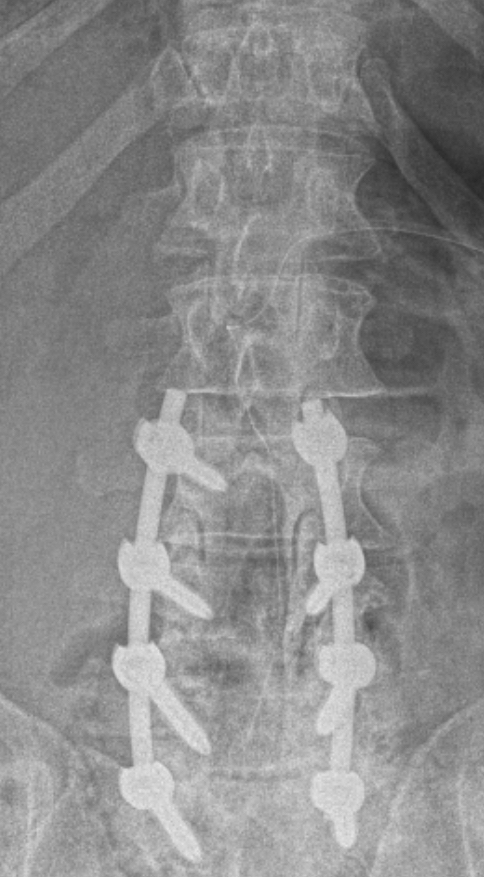
Ralph Bledsoe, a beloved science teacher at AHS, recently took a two-month leave of absence due to surgery on his spine.

Bledsoe reluctantly left AHS from October 31 until December 20. This time included surgery preparation, a 5-hour surgery, and over a month of recovery.

“I could not [walk] without my feet disappearing [and it felt] like walking on stumps,” said Bledsoe. Bledsoe was having trouble simply walking from his car into the school, and had to get permission to park directly outside of his class to reduce the distance of this simple yet agonizing experience he had to overcome twice a day.

The source of this issue stemmed from Bledsoe’s spine, where three 

inter-vertebral discs were missing, causing movement in his vertebrae, leading to several issues.

At first, Bledsoe experienced extreme symptoms such as his legs and feet becoming numb after standing up still for prolonged periods, hindering his ability to walk and get around.

It became increasingly evident for Bledsoe that action would need to be taken. At first, he tried a chiropractor, who said that his symptoms were too severe and that he would need to turn to a surgeon.  

Bledsoe repeatedly expressed his gratitude for the extensive research that Massachusetts General Hospital had been doing. “Getting into Massachusetts General Hospital was one of the best things because they are a research teaching hospital,” Bledsoe said.

Researchers were using a new robot for Bledsoe’s case that read MRI bone densities to determine the best location for the eight screws that were to be inserted into his vertebrae. Thus guaranteeing the spinal structural support that Bledsoe had been lacking.

“On Halloween night I was carved like a pumpkin because the day of my surgery was Halloween day,” Bledsoe said regarding his lengthy five-hour surgery. “The operating room was as large as a physics lab but stuffed to the gills with equipment.” 

In Blesoe’s absence, He left his students under the instruction of Cole Hauser, a substitute teacher. “This is the first time I’ve had experience taking over someone’s class like that,” Hauser said. “I think it’s really good to help out where you can for teachers. These life events can take you by surprise.”

However, Hauser seamlessly handled the transition for freshmen in physical science between teachers, ultimately extracting a beneficial experience for himself and his students. “They made that transition really easy, ” Hauser said, referring to his students. “I enjoyed it and had a great time”

Hauser studied Marine Biology and teaching in college. However, he received glowing reviews from his students in his Physical Science class. “I think Mr. Hauser prepared us really well for his tests so I don’t think my education was really impacted,” said Ishwa Dharan, a freshman currently in Bledsoe’s physical science class.

“He makes the class really fun so I was just glad he was back,” Dharan said. It’s not a secret that Bledsoe is adored and revered by students and staff. “He’s a pretty happy guy,” said Sydney Steddom, a sophomore and a former student of Bledsoe.

Continue reading
AP Econ Debuts at AHS
  • October 7, 2024

By Carissa Dessin
EXECUTIVE EDITOR

This course, taught by Digital Learning and Business teacher Ashley Kinsman, marks a significant shift from the school’s previous elective business courses.

Kinsman, who has previously taught electives such as Intro to Business Finance and Social Media Marketing, now teaches two sections of AP Econ. On top of this, Kinsman continues to teach one section of a class she taught years prior, Intro to Business. AP Econ covers both Microeconomics and Macroeconomics, offering students a challenging education in economic theory. 

Despite making the huge transition from unleveled classes to teaching an AP, Kinsman said she’s “really enjoying it.” One challenge she described is “staying on top of the students and going over the units beforehand, to make sure [she has] everything ready for them.”

STAFF PHOTO / Carissa Dessin
AHS has added an Advanced Placement (AP) Economics course to its business curriculum this year, providing students with a deeper understanding of economic principles.

AP Econ introduces students to complex concepts like the production possibilities curve and marginal analysis, which Kinsman integrates with real-world applications. She conducts classes in a way that maximizes engagement, spending the first part of class lecturing and then transitioning to “hands-on engagement experiences in class time, so students can see how it [relates] to different scenarios in their day-to-day life.”

Senior Gavin Mottley described the class as going really well so far. “Economics is new for me,” he continued, “but it’s a lot easier to internalize information even though it started out as a totally foreign language.” 

Mottley initially found interpreting two-way tables that demonstrate comparative advantage between countries challenging but gained clarification from Kinsman’s teaching method. “[She] had us work together in groups in a game that had us practicing exactly that. It helped me a lot because I got to work with my classmates; asking them questions helped [reduce] the confusion I had, and helping them when they needed it reinforced the ideas I was more comfortable with.”

Senior Arushi Biswas also reflected on the challenges and rewards of the class. She initially found the production possibilities curve and related graphs confusing but credited the summer work with helping her stay on track.

When it came to registering for the class last spring, Biswas was first drawn to the class because she was interested in pursuing a degree in business and wanted to get a feel for her future classes. “I think students should get educated in economics because it teaches you how the economy works, when to save and when to invest, how to make informed decisions,” she said. “It gives you a good understanding of society and policy.”

Looking ahead, Kinsman is eager to dive into more advanced topics and continue making the material of the course relevant to the students’ lives. She hopes for them to see how truly applicable all of the information that they are learning is in their lives. “I think it’s just really applicable to your day-to-day life like…we do a lot of economic theory, without really realizing that’s what it’s called.”

Continue reading
Remote Learning: Yay or Nay?
  • February 7, 2021

By David Irza & Rachel Irza

AHS Senior & AHS Sophomore

Nay

This last year has been a mess for everyone. From government workers to grocery workers, everyone has had to deal with the pandemic. Schools were closed, and businesses closed. With all of this going on, many people struggled to stay on top of schoolwork, bills, and other issues. In school, many students were having trouble in school, and I was one of them. Dealing with remote learning is extremely difficult, and it adds more stress to a busy day. Personally, I think AHS has had a poor performance catering to the remote students. They should consider a reassessment of the situation, and provide more resources to the cause. To start, the district gives remote students VHS classes for courses “not offered” through the high school. This is supposedly because of a lack of staff to teach all the classes. They resorted to a third party system, The Virtual High School (VHS). VHS offers a wide variety of courses, but the difficulty of the year long courses is ridiculous. As a senior this year, I enrolled in a Physics class, supposedly for high school students. It was the difficulty of a third-year college course. There was a lab, lab report, problem set, and quiz every week! The extreme rigor of this course caused me to fall behind in other classes, and use other class time to try and catch up in this VHS class. It was extremely frustrating, and I was extremely stressed in order to try to get my grade up. I spent all of my time after school trying to work on this course, and it is a poor reflection on how the class was run. Not to mention, the “instructor” was located in Nepal, which is a day behind us. I was not able to access for extra help. I was extremely disappointed in the set up of this course. Not only was VHS a significant issue. For world languages, AHS gives remote students the program, Idiomas, to learn their language of choice. However, to call it a course was a stretch. There was no teacher to student communication, and it took forever for the teacher to respond to emails. Assignments were given with poor instructions, and there were many assignments which weren’t graded properly. I am still waiting to hear about several grades for my course which were submitted before winter break! I don’t understand how the district thinks this program is good for remote students. I understand that COVID-19 is a widespread issue, and that everyone is going through a difficult time. However, I feel Andover should have grasped the situation much better than this mess of a program. AHS had an entire summer to figure out if they needed to hire extra staff, or if they needed to add extra programs to ensure the proper education of students. I find this experience as a remote student to be extremely disappointing, and this is a poor example of what AHS “stands for.” I hope the district learns from these mistakes and helps other students who are having issues.

Yay

Remote school seems like a walk in the park, but it does come with its own difficulties. I chose to participate in Remote Academy because I felt that going to school would be too risky during the COVID-19 pandemic. I had taken some classes online over the summer, so I felt I was well equipped to succeed. Remote school has presented issues that I did not anticipate. When I was in class last year, there was a fine line between school time and personal time. Remote learning has fractured this boundary. With no solid differentiation between home and school, I quickly found school work and academic pressures to be invading my personal space. Consequently, I needed to find ways to feel comfortable in both worlds. I managed to accomplish this by making time to do things I love, like artistic activities, reading, and playing games with my family. Virtual High School (VHS) is also a hot topic among many students. Some enjoy the classes, while others feel they are not worthwhile. I was introduced to VHS when I took geometry last summer. I found that learning a complex subject, such as math, is difficult within this program. The classes have no lectures, and there is no structured communication between the student and teacher. Therefore, it was up to me to learn the material on my own, with very little assistance. As a sophomore this year, I am enjoying my cybersecurity course through VHS. I have been doing well because I am interested in the material. Also, I have an instructor who has made herself accessible, so if I have a question, I receive a quick response. I feel I have learned more in this course in four months than what I absorbed in the geometry class I took last year. There have been many times when I have lost enthusiasm and motivation to learn remotely. I found the best way to tackle these issues is to take care of myself. When I feel worn out, I take time to decompress by reading a book or taking a quick walk in the neighborhood. I do miss seeing my friends in class. Seeing my friends over the internet isn’t the same as interacting with them in class. We don’t get to meet during lunch, chat in the hallway, or share a laugh during a class discussion. Though my friends and I meet over FaceTime to keep in touch, it’s not a fulfilling substitute for in-person socializing. Overall, I doubt that I will switch to hybrid this year. Although school is extremely important to me, the health and safety of my friends and family is my first priority. Remote learning has its drawbacks, but I am able to maintain peace of mind by staying home. I am hoping I will see everyone at school in September!

Continue reading