APS District Receives Nearly 2 Million in Federal Education Grants

Naomi Bloom and Eva Liss

STAFF WRITERS

Through the Massachusetts Department of Elementary and Secondary Education (DESE), the federal government has provided just under $2 million to help support Andover Public Schools, where the COVID-19 pandemic has left a lasting impact on students. 

The Elementary and Secondary School Emergency Relief Funds (ESSER) are federal educational grants given to aid schools during the pandemic. The first part, ESSER I, granted the Andover Public School district just over $150,000 issued in March of 2020. It was geared towards helping schools adapt to the pandemic and the switch to remote learning. The second grant, ESSER II, was passed in December of 2020, giving over $550,000. This grant was given to support schools in their attempts to reopen buildings and keep people safe, as well as to fund professional development, social emotional training, and academic support for learning loss. Andover has applied for an additional $1.25 million through the ESSER III grant, which is targeted at fighting learning loss and supporting students’ mental health in these challenging times. As the status of the pandemic and school districts’ needs are constantly shifting, the aim of the ESSER funds is also changing to match what is needed at the time. Some of this money still continues to fund the daily needs of APS schools, Andover High School included. 

“We hand out over 100 masks every day to students coming in; [there are new] desks coming in,” said AHS principal Caitlin Brown, speaking on how some of the money has been allocated. “We’re also running some preemptive programs to help students who may need some support, like academic support… where we’re helping them catch up in their work so they don’t get behind.”

As the aim of ESSER I was to help schools adjust to the pandemic and reopen, much of the grant was spent on devices for remote school, more desks for socially distant classrooms, cleaning supplies, and personal protective equipment (PPE). ESSER I has mostly been spent, although some of it is still going to daily supplies, such as the masks distributed at the doors of AHS each day. 

The second grant, ESSER II, was meant for a combination of combatting learning loss and contributing to daily school needs. As the focus of APS shifted from remote learning to hybrid learning and keeping students and teachers safe in that environment, so did what the federal money was being used for. The deadline for ESSER II’s spending is 2023, and currently it is being spent on daily supplies for AHS, salaries for substitutes caused by teacher absences due to the pandemic, and making sure ventilation is up to code. It is also being used to fund supplementary learning programs, such as before-school programs and academic enrichment, or social emotional learning (SEL) training for teachers. 

“This is a true mental health crisis,” said APS superintendent Dr. Magda Parvey, speaking of the emotional and mental state the pandemic has left on school communities. 

Fortunately, the district is looking to the third grant, ESSER III, as a possible solution. APS has applied for the grant, which, if spent by the deadline in 2024, would deliver over $1 million to the district. Much of this money would go to training for teachers, such as SEL training and how to help students who are struggling due to the pandemic. Brown also added that a main priority of APS schools always has been, and should be, meeting the needs of their students. “Based on what the survey said,” Brown stated, in regards to a survey sent out to families about what the funds should be used for, “there was a lot of support for more mental and social emotional support training… we’re still in this space and we really just want to be prepared and make sure we’re ready to meet the needs of our students and staff.”

The APS district also plans to use the grant as a supplement for learning, such as funding summer school programs if necessary. The pandemic is not over yet, and the funding may not be, either. “I don’t think we’ve seen the end results of the funding,” Brown said, “but I’m hopeful that it will continue to help out students.”

Related Posts

NEASC Visit Highlights AHS Goals
  • April 3, 2026

Anushka Dole || ONLINE EDITOR

Andover High School hosted a re-accreditation visit from the New England Association of Schools and Colleges (NEASC) from March 16-18, as part of a decennial review process designed to evaluate how well AHS supports student learning and identify areas of improvement. 

According to Assistant Principal Alicia Linsey, the process started during the 2023-2024 school year with a visit from the Collaborative Conference team, a group of visiting educators from across the New England area. In preparation for the visit, a team of AHS faculty members and administrators was formed.

“We picked out priority areas and presented those to this visiting NEASC committee … and they agreed with [our priority areas],” said biology teacher Lindsey L’Ecuyer, the AHS committee’s science department representative. 

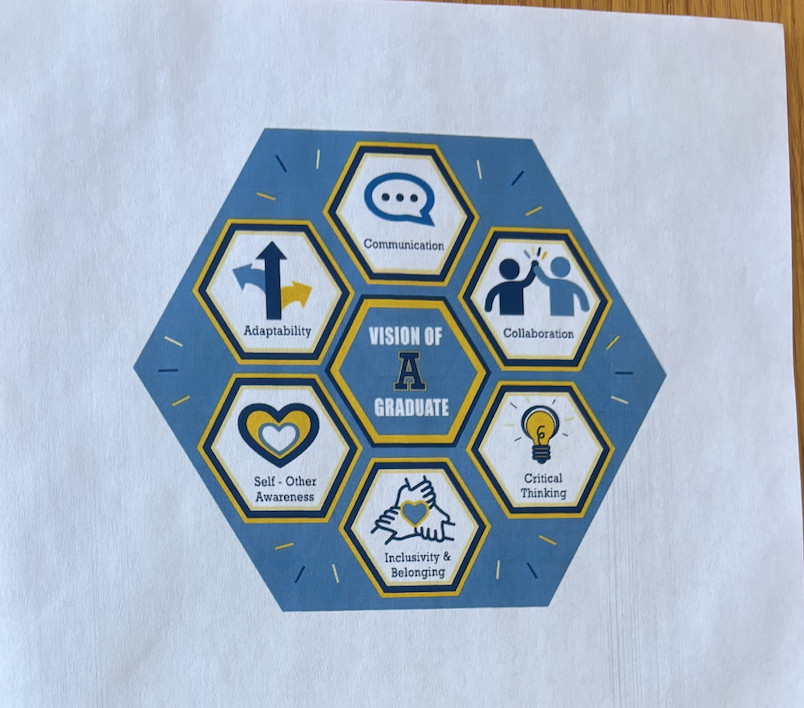
There were five priority areas that AHS pledged to work on starting in the 2023-2024 school year: developing the Vision of a Graduate, implementing consistent curricula throughout all departments, vertical/horizontal alignment across departments and throughout grades, promotion of school pride, and building infrastructure. 

The Vision of a Graduate outlines the skills and values that the school hopes to instill in every student by the time they graduate. 

Vertical alignment refers to improving coordination between teachers across grade levels to ensure student skills build progressively, while horizontal alignment emphasizes greater collaboration between teachers across departments. 

“[The committee is] working on … finding time in the school day for teachers to collaborate more,” L’Ecuyer said, adding that AHS has begun standardizing curricula to support this effort.  

“There are committees in the school that have been working on documenting curriculum in a consistent format for our core classes … freshman English, for example, [and] biology,” L’Ecuyer said. 

Linsey mentioned that students and parents also play a role in the accreditation process. A team of visiting evaluators—distinct from the Collaborative Conference team—conduct interviews to gather student perspectives on the school climate and learning experiences. 

Although the committee leads the reflection process, administrators are then responsible for implementing action plans based on their findings. In accordance with these plans, faculty members must provide evidence of integration of the district goals.

L’Ecuyer emphasized that NEASC accreditation is more about reflecting on and improving school processes than it is about recognition.

“It’s less of a badge as it is opening yourself up to reflecting on and documenting what you do well and what it’s like setting goals for your school,” L’Ecuyer said.

Beyond internal reflection and planning, the “badge” that the reaccreditation process provides does carry additional, tangible benefits for students. It reassures families and colleges that AHS maintains a rigorous academic program, and that it’s constantly working towards improving learning.

“My understanding is that colleges know Andover High School—they know what our programs are like,” L’Ecuyer said. “[Because] of [accreditation] … they know the kinds of students that graduate from here, and what skills that [they] have.”

Accreditation also plays a role in the school’s ability to receive funding.

“NEASC accreditation is required for eligibility to receive some private, state, and federal grants, loans, and other federal funds,” Linsey noted in an email.

Continue reading
AHS Students Intern at Addison Art Gallery 
  • April 3, 2026

Janaesa Macasaet || ARTS EDITOR

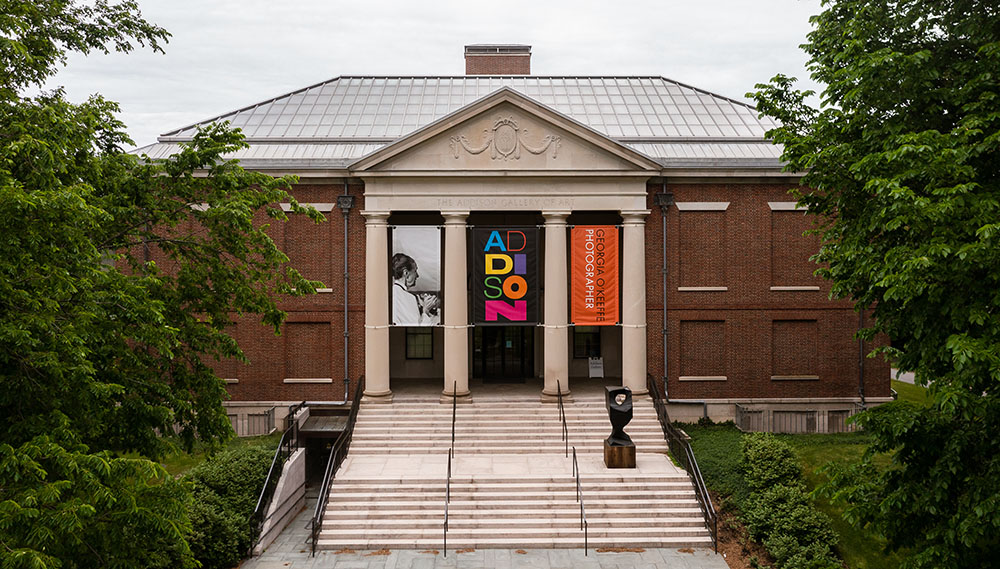
Andover High School students plan public events, research, and explain the history of artwork at the Addison Gallery of American Art as part of the Addison Community Ambassador Internship throughout the school year. 

The program is available to Andover High, Philips Academy, and Lawrence High students, and runs from the beginning of the school year through May, meeting weekly for two hours. Those interested applied through an online form and completed a brief interview. 

“Working in a professional art space has been different from my past experiences,” said junior Vivienne Tran. “I haven’t really ever gone to art galleries the way I do now and I think it’s really eye-opening.”

Interns design interactive programming based on exhibits, create artmaking workshops, or host Pop Up Talks, which are impromptu presentations explaining the creative process behind pieces. 

Junior Qiqi Wang said the hands-on aspects of the program sets it apart. “You’re actually making events that come to life,” Wang said. “But one challenge is communicating with your peers—you have to be a good group person.”

Interns not only work with fellow students but also with gallery staff, and learn to compromise, develop ideas with more intention, and articulate their thoughts. 

“We can’t always get our way with our ideas, but it’s part of the process, so it’s okay,” Tran said, adding that she also learned to be patient. 

Tran discovered the internship through photography teacher Erica Frisk, who encouraged her to apply. Wang, on the other hand, discovered the internship through National Art Honors Society. Although the two have previous art experience, their other skills and experiences, especially critical thinking, seem to have prepared them more. 

“AP classes prepared me because you need to see things for more than what they are,” said Wang. “An artwork’s message is usually more than what just appears on the canvas.”

Although neither student plans on pursuing an art-focused career, both have felt growth through the internship. Tran described the internship as a good way to develop hands-on skills that she may not attain in typical classes, and form new friendships with other interns. 

Program applications will re-open in the fall, and AHS students may again apply, no matter their skill level. “Be very open minded because [the program is] different to what it may seem like,” Tran said. “You don’t have to be necessarily artsy or an artist to be in this, you just have to be a thinker.”

Continue reading

Leave a Reply

You Might Also Like

Spanish Department to Host Day of the Dead Fair

  • November 12, 2025

Funding the Future of Science: Proposed NIH Funding Cuts Throw US Biomedical Research Into Uncertainty

  • November 4, 2025
Funding the Future of Science: Proposed NIH Funding Cuts Throw US Biomedical Research Into Uncertainty

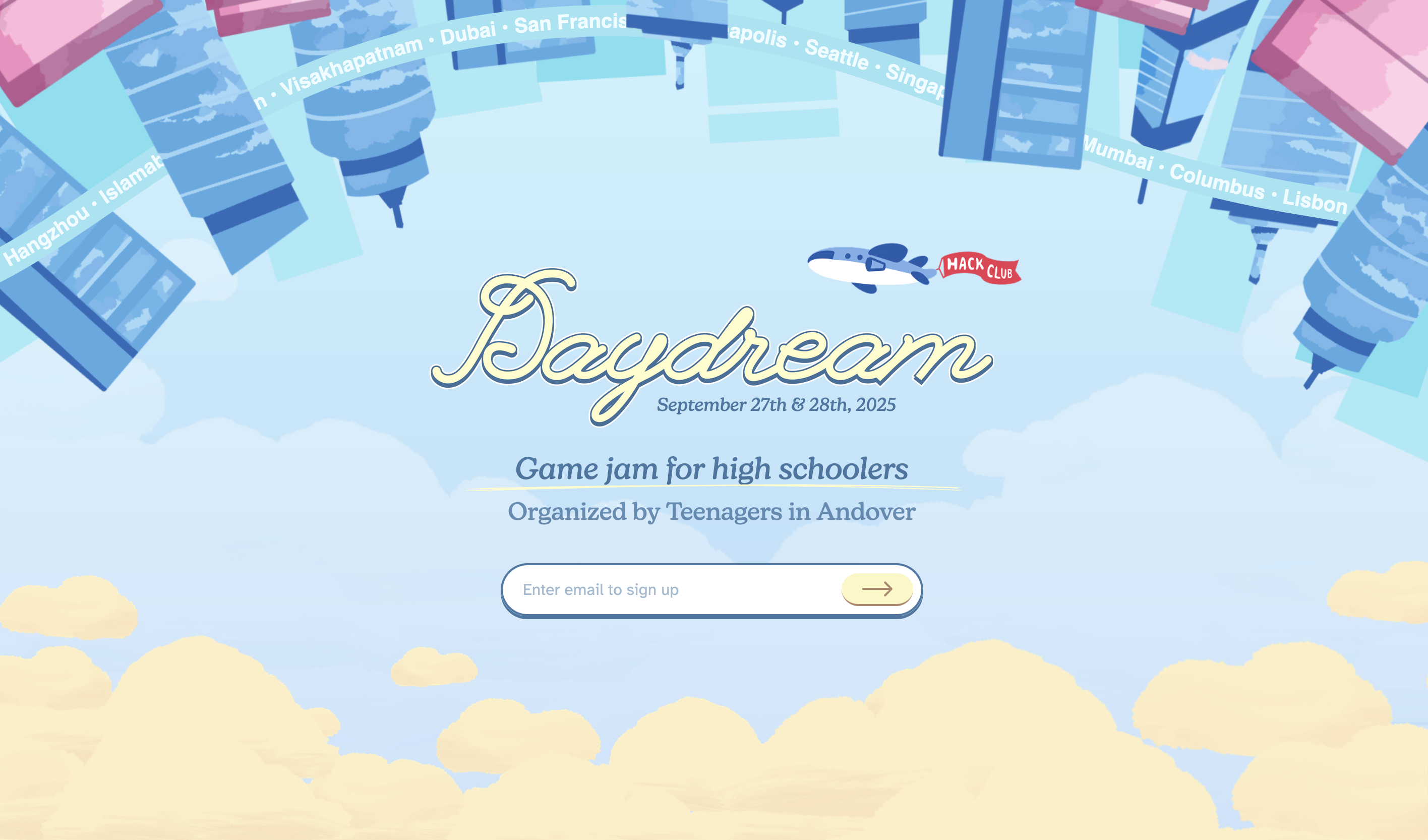
Student-Hosted Video Game Hackathon Scheduled for Late September

  • September 22, 2025
Student-Hosted Video Game Hackathon Scheduled for Late September

AHS Student Directs Coming-of-Age Film, ‘Horizon’

  • June 9, 2025

World Languages Coordinator Reflects On Career, Retirement

  • June 9, 2025
World Languages Coordinator Reflects On Career, Retirement

CollegeBoard Scores 1/5 on AP Testing Administration

  • June 9, 2025

Discover more from AHS NEWSPAPER

Subscribe now to keep reading and get access to the full archive.

Continue reading