Juniors Learn Real-World Budgeting at Credit for Life Fair
  • May 6, 2025

Abby Chachus || STAFF WRITER

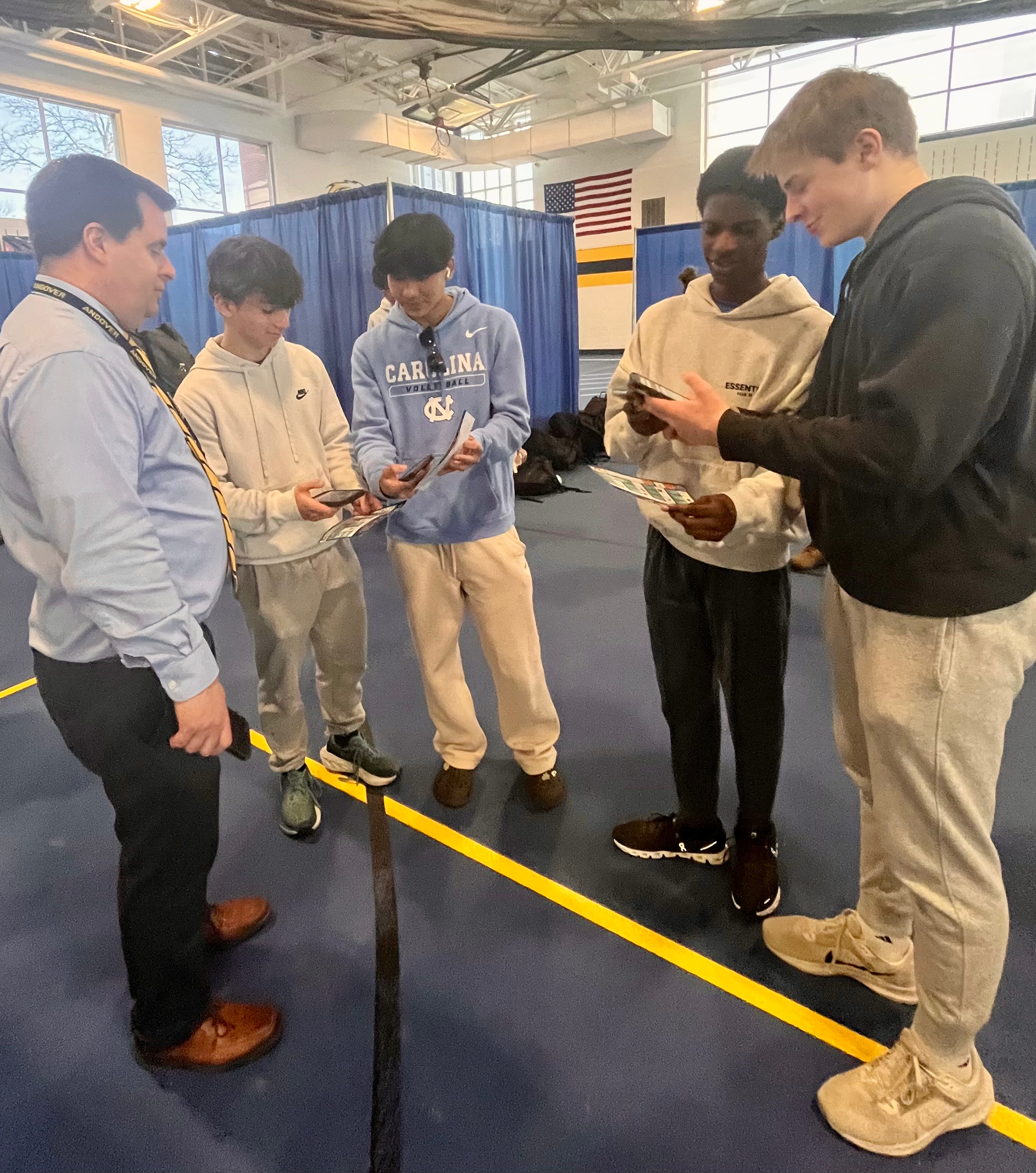
AHS hosted a credit for life fair on April 15th for all juniors in the field house. The Credit For Life Fair is a national organization that helps students budget for their lives. Students pick a job and through that job, they’re given a salary, and have to budget monthly. 

The students talk to experts about how to budget and what to choose when it comes to the kind of car that they want, and how much their car payment is going to be. They also need to consider the kind of housing that they want and what insurance they will need with the car and home they end up purchasing and how expensive that will be. 

“It gives students a perspective on all the expenses that their parents have to think about now,” said Principal Jimmy D’Andrea. 

  By simulating real-world financial decisions, the fair allows attending students to begin to understand the complexity of everyday expenses like housing, transportation, insurance, and food.  This perspective is meant to create a sense of maturity and responsibility in students.

Juniors  begin to step into the real world, facing new responsibilities and decisions about their futures. Whether considering college, or careers, they need to start considering the financial aspects of life. By participating in this fair, juniors start to understand the reality of finances. 

“I learned that you shouldn’t spend all your money on things that you already have,” said junior Smit Patel. “Save your money… Help people that really need the money, or just save it for the things you need.”

Showing students the consequences of spending all their money on things that ultimately aren’t necessary is important. According to Officer Thomas Paolera, it is also important to show that illegal actions people take, like drunk driving, can not only affect their reputation but their financial life.

“[At one station,] I [had] drunk goggles and 
I put kids through field sobriety [tests to] show them that OUI lawyers can cost you anywhere from $3000 to $4,000. We also talked about tickets and the cost of those as well,” said Paolera. 

“[We hope students] are going to be more aware of how to manage a budget,” said Michael McCarthy, the program organizer and Andover’s social studies program adviser. “They’re going to begin to choose jobs according to their passion as well as economic viability.”

McCarthy expressed believing in the importance of preparing students for life beyond high school by encouraging financial awareness and intentional career planning. “In the future, they’ll be better prepared to balance a budget,” he said. 

“It’s important to know that money’s just not gonna come to you,” Patel said. “You gotta earn your money, you gotta work hard.”
Continue reading
APS District Receives Nearly 2 Million in Federal Education Grants
  • January 13, 2022

Naomi Bloom and Eva Liss

STAFF WRITERS

Through the Massachusetts Department of Elementary and Secondary Education (DESE), the federal government has provided just under $2 million to help support Andover Public Schools, where the COVID-19 pandemic has left a lasting impact on students. 

The Elementary and Secondary School Emergency Relief Funds (ESSER) are federal educational grants given to aid schools during the pandemic. The first part, ESSER I, granted the Andover Public School district just over $150,000 issued in March of 2020. It was geared towards helping schools adapt to the pandemic and the switch to remote learning. The second grant, ESSER II, was passed in December of 2020, giving over $550,000. This grant was given to support schools in their attempts to reopen buildings and keep people safe, as well as to fund professional development, social emotional training, and academic support for learning loss. Andover has applied for an additional $1.25 million through the ESSER III grant, which is targeted at fighting learning loss and supporting students’ mental health in these challenging times. As the status of the pandemic and school districts’ needs are constantly shifting, the aim of the ESSER funds is also changing to match what is needed at the time. Some of this money still continues to fund the daily needs of APS schools, Andover High School included. 

“We hand out over 100 masks every day to students coming in; [there are new] desks coming in,” said AHS principal Caitlin Brown, speaking on how some of the money has been allocated. “We’re also running some preemptive programs to help students who may need some support, like academic support… where we’re helping them catch up in their work so they don’t get behind.”

As the aim of ESSER I was to help schools adjust to the pandemic and reopen, much of the grant was spent on devices for remote school, more desks for socially distant classrooms, cleaning supplies, and personal protective equipment (PPE). ESSER I has mostly been spent, although some of it is still going to daily supplies, such as the masks distributed at the doors of AHS each day. 

The second grant, ESSER II, was meant for a combination of combatting learning loss and contributing to daily school needs. As the focus of APS shifted from remote learning to hybrid learning and keeping students and teachers safe in that environment, so did what the federal money was being used for. The deadline for ESSER II’s spending is 2023, and currently it is being spent on daily supplies for AHS, salaries for substitutes caused by teacher absences due to the pandemic, and making sure ventilation is up to code. It is also being used to fund supplementary learning programs, such as before-school programs and academic enrichment, or social emotional learning (SEL) training for teachers. 

“This is a true mental health crisis,” said APS superintendent Dr. Magda Parvey, speaking of the emotional and mental state the pandemic has left on school communities. 

Fortunately, the district is looking to the third grant, ESSER III, as a possible solution. APS has applied for the grant, which, if spent by the deadline in 2024, would deliver over $1 million to the district. Much of this money would go to training for teachers, such as SEL training and how to help students who are struggling due to the pandemic. Brown also added that a main priority of APS schools always has been, and should be, meeting the needs of their students. “Based on what the survey said,” Brown stated, in regards to a survey sent out to families about what the funds should be used for, “there was a lot of support for more mental and social emotional support training… we’re still in this space and we really just want to be prepared and make sure we’re ready to meet the needs of our students and staff.”

The APS district also plans to use the grant as a supplement for learning, such as funding summer school programs if necessary. The pandemic is not over yet, and the funding may not be, either. “I don’t think we’ve seen the end results of the funding,” Brown said, “but I’m hopeful that it will continue to help out students.”

Continue reading