Jillian Slotnick
CORRESPONDENT
The district was not supporting recycling and composting in the cafeteria at the start of this year because compostable lunch trays and silverware are not as accessible.
As of January 3rd, 2022, recycling has returned to the cafeteria.
According to Melanie Cutler, a member of the green advisory board and an environmental science teacher at Andover High School, about 60% of all cafeteria waste at Andover High can be recycled or composted, but because of supply chain issues, almost everything was being trashed this year. Principal Principal Brown recalled that last year when there were two different lunch rooms, it was difficult just getting the lunch materials to each lunchroom so there was no discussion surrounding composting and recycling bins being brought back. This year, even though everyone is in the same lunchroom, there was no composting or recycling happening at the beginning of the year.
“I was told the district would not be supporting compost this year [and] I was very disappointed in that,” said Cutler. “It took us a very long time to get compost in the high school in the first place. We spent years on it so it’s very frustrating.”

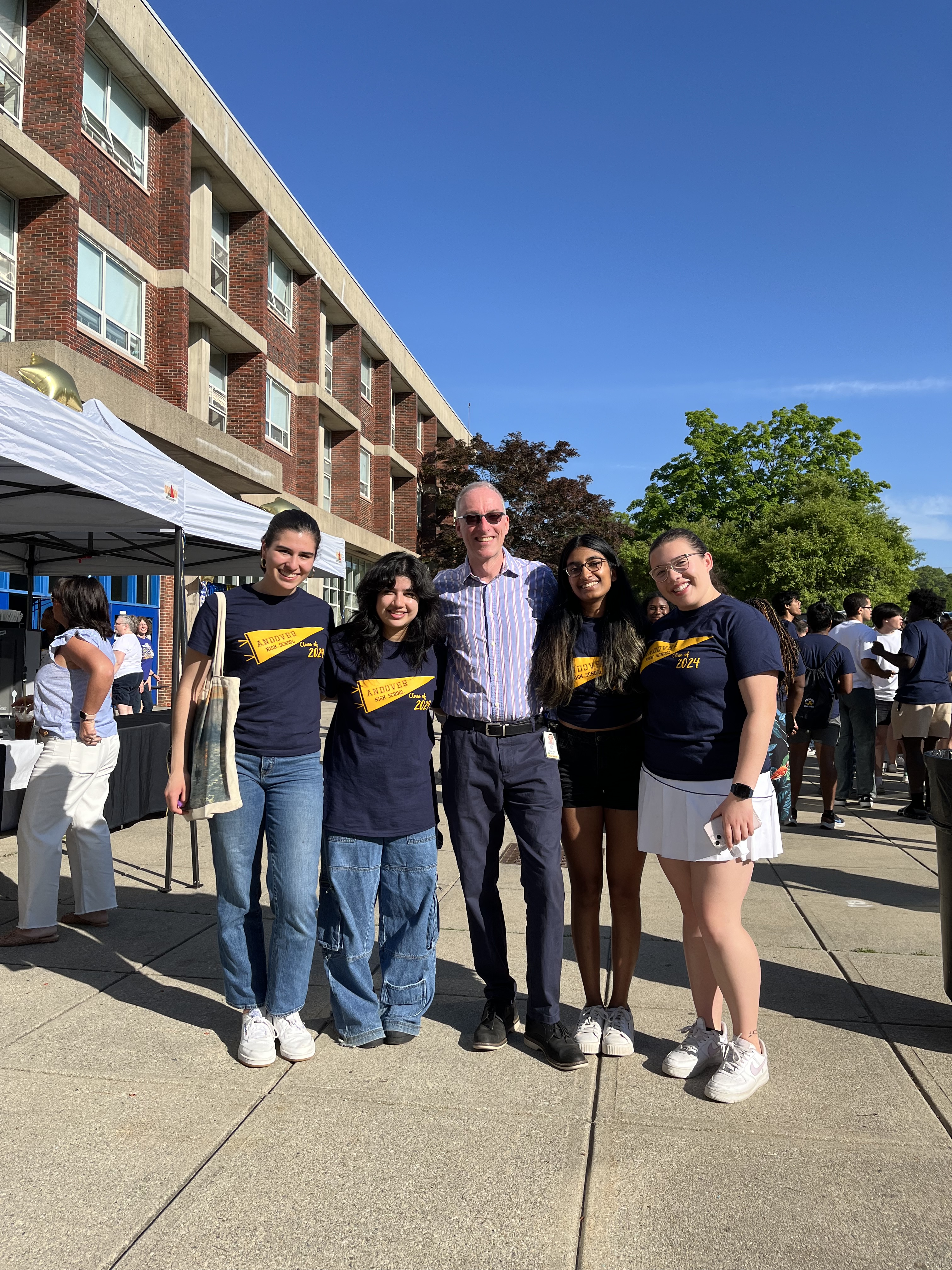
Sophomore Anat Briskin standing next to the new recycling bins at lunch
Senior Eva McKone, head of the Environmental Club at Andover High said, “Not having any composting leads to a lot of waste in our environment.” She went on to say that “It takes hundreds of years [for trash] to actually break down and it’s just kind of left in piles. If we did have a compost system it could be reused for plants and fertilizing [and] for recycling; everything we use in the cafeteria could be given a second life.” According to National Geographic, 5.25 trillion pieces of waste are in the ocean at this moment and over 100 million animals are killed by it each year.
Even when we did have both composting and recycling bins, many students were still contributing to the problem by not putting their waste in the correct bin. Approximately four years ago, when AHS first got composting and recycling bins, parents volunteered to make sure students put their waste where it was supposed to go. Once COVID started, the parent volunteer program was stopped and students didn’t take the time to sort their waste anymore. “Our lunches are so short, people prefer to, and I understand, sit and eat lunch with their friends,” said Cutler. “You don’t want to spend five whole minutes sorting your waste. It’s a lot easier for everybody, when the bell rings, to get up, dump their lunch, and run.”
When students just dump their waste, that causes contamination. Contamination is when waste is sorted into the wrong bins (compost in recycling bins, trash in compost, etc.). When this happens, the batch of waste that is contaminated has to be thrown out and the school pays a fine. Brown urged students, once composting and recycling is brought back, to make sure they are putting their waste in the correct bins. She went on to say that the school has to pay for the contaminated compost and recycling piles when they shouldn’t have to.
In regards to whether composting will be back at the high school, Brown said, “I was supposed to have a meeting [in November] with the cafeteria, the facility staff, Ms. Cutler, and some people from the town in terms of composting and recycling, and [we were supposed to be] trying to figure out the best way to start [composting] again.”