Time to Talk: Cameras On or Off?

By Phillippa Konow

STAFF WRITER

ILLUSTRATION / Phillippa Konow

I can remember it clearly. It was the middle of my Modern World History class. It was presentation day! We had worked on group projects for the Industrial Revolution all week, finding information on the revolutionary inventions. I was in the middle of presenting the first part of my project when I felt a pain in my chest. It hurt. While I’m trying to hide it, I hiccuped so loud, it could be heard from the other side of my house. My hiccups aren’t the normal quiet ones. No. Far from it. They sound like a goat bleating, so you can imagine the embarrassment I felt when my camera AND microphone are on, displaying my horrified, strawberry colored face to the 25 other people in the class. And. My. Teacher. 

Many students, like myself, dislike being on camera because it can be incredibly stressful. Many stress about the background around them, feel like everyone is secretly judging them, or become embarrassed when a parent or sibling walks by. Many of us have had those little times when we forget our camera or mic is on, and that wave of embarrassment washes over us. It’s normal! However, even with this system being in use for over a year, many, like myself, still feel it’s a very abnormal way to learn. Students and teachers are missing the in-person feel and the connections between each other, as well as the quick feedback environment. I certainly miss the engaging conversations in the classroom. 

“Online schooling is different,” said remote junior Mishaal Khan. “When we are sitting in a classroom a majority of the time, the students are all facing one way, toward the teacher. However, when we are on a Google Meet, everyone can see each other, and you never know when someone is looking at you.” 

Many students, like myself, can be very self conscious, and feeling like anybody could be staring at you can be very uncomfortable. However, there are also many students who don’t mind the cameras and actually find it difficult to concentrate with them off. For example, Shanon Chu, a remote sophomore, said, “It’s easier for me to get distracted when my camera is off.” Another student, who wished to be anonymous, commented, “I think cameras are important for both the students and the teachers. Remote learning is already hard due to distance, so by turning on our cameras, we can get a better sense of belonging so that we can feel like we [are in a] classroom.” 

Some students are neutral on the topic. Senior Alex Grenon said, “I feel uncomfortable having my camera on depending on how I feel that day… When other students have their camera on, I feel more comfortable having my camera on.” 

Many teachers dislike remote learning as it is harder to connect with students, especially when many have their cameras off. As the daughter of an educator, I have seen my father upset on occasions when his students don’t have their cameras on. Many teachers at the high school share the same reaction. Krista Hibino, a math teacher for remote and hybrid, feels that having cameras off makes it much harder to read the room. “It definitely helps me as a teacher when I can see people’s faces, and I don’t like talking to a screen or wondering if anyone is even listening.” 

Ralph Bledsoe, a chemistry and physical science teacher for remote and hybrid, added, “When I’m using the Big Blue Button and no one turns their camera on, I’m just talking to a computer and that’s just not right. I would like to see [the students] frankly… I’m not exactly going to go to their house and hit them on their head and make them turn on their cameras… but I would rather that they would have their cameras on.” Talking to a screen full of student icons can make an educator feel lonely. 

Toni Kirby, a social worker for AHS, has had many conversations with students this year about cameras. She said, “I would say about one-third of the students on my caseload have at least some concern about the camera being on, from being mildly uncomfortable being seen and talking on screen, to being petrified to talk and feeling almost paranoid about being judged by others.” 

Paranoia can be very restraining for a person and can cause a huge amount of anxiety and mistrust. I myself feel paranoid with the camera on. Kirby mentioned, “Some students have diagnosed mental health conditions that can make it very difficult to speak up in large groups… so communicate with teachers.” Teachers are willing to help their students feel comfortable during these calls which can be very stressful for some. Just reach out to your teacher and communicate what is going on. Also, reach out to your guidance counselor! They are a great resource for tips and tricks and can help reach out to your teachers as well. Kirby added, “I could see a student’s learning experience be diminished if they are so concerned about getting called on that they can’t pay attention to what’s going on in class.” 

I know that remote learning isn’t an ideal way of learning, but it is certainly a great option. You can still get the education you deserve and a bit of social interaction during the day. As a remote student, I find that it is great to see my fellow classmates’ faces because I get some sort of normal feeling. Even though the fact that I’m in my room doing classes on a computer and not in an actual classroom is a bit strange, it’s created a sort of constant which has helped a lot. 

Having anxiety myself, unorganized schedules and hectic environments can make my symptoms much more intense. However, other people have it differently. Anxiety is different for every individual which is why it is a serious thing. It can be almost mentally debilitating for many. If you are stressed with anything going on in school, whether it’s cameras during class or an assignment, communicate! Guidance counselors and teachers are willing to help. 

This is a difficult year for everyone, but we can get through this as a team. (I know it sounds cheesy and like a fortune cookie told you, but it’s true.) Remember to focus on the good things that have happened this year and remember the funny moments. I will always remember my goat-hiccup in the middle of my history presentation for how hilarious it was and how embarrassing it was… and how it is now in a newspaper article that everyone can read.

  • Related Posts

    Capstone Pass System Carries On
    • May 7, 2026

    JANAESA MACASAET || ARTS EDITOR

    Principal Jimmy D’Andrea has confirmed that passes that allow Capstone students to leave campus for research purposes will remain for the next year, denying rumors that they would be completely eliminated. 

    Seniors in the Capstone Research class spend the year answering a question through both qualitative and quantitative methods. These passes allow students to leave campus for primary research. They may interview professionals, complete case studies, run experiments, or utilize outside resources such as Memorial Hall Library using these passes. 

    Entering the school year, the status of the passes were initially unclear, concerning a number of students. 

    “Multiple students have met with me because there were rumors circulating that I wanted to get rid of the CAPS passes, which was not accurate,” said D’Andrea. “I just want to make sure that we knew if a student was leaving, and then making sure that they were getting back.”

    According to Capstone teacher Rebecca D’Alise, the passes were under review at the start of the year as school administration and staff worked through logistics. 

    “The status at the beginning of the year was ‘To Be Determined,’” said D’Alise. “As a CAPS team, we were asked to work with administrators to make sure that there were strong protocols put into place to make sure that students [were] able to utilize this unique experience while also adhering to school expectations and safety requirements.”

    Senior Kari Belson explained that at the start of the year, many students believed they would not have access to the Capstone passes at all. Belson’s project is focused on menstrual health education in elementary schools, which is greatly eased by the passes. 

    “For some people, it was an issue to not have those Capstone passes,” Belson said. “A lot of research, especially observational studies, can only happen during the school day.”

    After deliberation, passes were later made available, but the delay made it challenging for students such as herself, whose topic is focused on elementary schools, to start their primary research. “It was really important for me to have that opportunity,” she said. 

    Other students echoed the idea that Capstone passes are essential. Senior Claire Woodring emphasized that these projects benefit from real-world interaction that cannot be done inside the classroom.  

    “If a student can’t continue their research until they do an interview, or something similar that can’t happen in the school building, arguably more time is wasted by Caps students not doing anything in class because they can’t make any progress on their work in the classroom,” Woodring said. 

    Woodring added that while misuse may occur, the removal of passes would limit opportunities for meaningful research. “I think it’s important to keep in mind that this is a senior-only class,” Woodring said. “The people taking it are, or are about to be, adults, who are going to have to be responsible for themselves, and a special privilege like the Caps Pass is an opportunity to work on that.”

    The passes remain available, with a few changes made to the system. The process to request a pass has not changed—students and teachers have their own personal conversations if there is a need for a pass, often requiring the student to be in good academic standing in the class. 

    Otherwise, passes can now only be used during long blocks or last blocks to ensure that students come back to school on time; students must ensure that their interviews are held within safe locations; students must retrieve all of their items before signing out to leave. 

    “We just want to make sure that we know where students are and that they’re getting back to school,” D’Andrea said.

    D’Alise mentioned that another significant change involves the use of Memorial Hall Library during the secondary research phase. Previously, students were able to use the library for both primary and secondary research—now, passes can only be used for primary research, such as observations and interviews. 

    D’Andrea emphasized that the review process was for the system to be improved and for students’ safety to be maintained. 

    “I think the program has always been great. I had some questions about the process for the passes, and I think the collaboration with the teachers has been really positive,” said D’Andrea. “I’m a big supporter of the program because I think it’s great to give students an opportunity to do deep research in something that they’re interested in.” 

    D’Alise emphasized that the pass system enriches the Capstone course and has lifelong benefits. 

    “I would be extremely disappointed to see the [Capstone] pass eliminated from this class as it presents students with the opportunity to develop a number of skill sets beyond primary research, such as maturity, accountability, and responsibility,” D’Alise said. “These are skills that students will need as they leave AHS.”

    Continue reading
    SATIRE: The College Board, a Humble Hero
    • May 7, 2026

    AREETA FAIZ || SOCIAL MEDIA EDITOR

    In an era where billion-dollar corporations are being constantly scrutinized for their neverending greed, it can be hard to overlook the admirable and productive gifts they actually bring to the table. The College Board demonstrates through its charitable actions what it truly means to be a not-for-profit company in America (not to be confused with a nonprofit). Loved or loathed, it bestows upon us something you can’t put a price on: opportunity. And it makes sure that each and every one of us is able to enjoy it.

    Cynics may point out that the College Board makes over a billion dollars annually through AP exams, SAT registrations, and score reports. That being said, it’s important to remember that they are, at their core, not-for-profit, meaning that they aim to never prioritize revenue over students. 

    Take Advanced Placement (AP) courses, for example. For just $99, high schoolers receive the invaluable opportunity to demonstrate college-level rigor on a 1-5 scale, given they have the resources, teachers, funding, and capacity to do so. Of course, this only saves you more money in college: a similar, notoriously equitable system that keeps everyone’s well-being in mind.

    Or perhaps take the SAT. For just $68, plus a modest fee, or some additional modest fees, students are given the privilege to demonstrate their academic excellence in just two hours. Universally beloved, one simple standardized test on a Saturday morning allows anyone to easily take one big step towards their BigFuture! 

    Students who feel pressured to invest in College Board’s services should remember that universities only suggest, strongly encourage, or require the submission of students’ SAT scores. If an individual feels uninclined to take part, they are by no means at a disadvantage—opting out just means everyone else just gets to be at an advantage. And the best part is, there is no other option. That’s far from a monopoly.

    Critics wrongfully accuse the College Board of enjoying the benefits of a nonprofit organization while accumulating vast excesses of wealth. However, they fail to see the bigger picture: where else should this money go but the pockets of CEO David Coleman? While $1.6 billion may seem like a lot of money, your future is priceless, and tax exemption is a corporate right.

    Remarkably, the College Board has stayed true to its mission of college-readiness since its famously humble beginnings in 1899. Since 2019, they’ve graciously offered $23 million in scholarships to low-income students, a whopping 1.4 percent of their annual revenue. 

    Through its extensive dedication to philanthropy, the College Board proves to reflect the true meaning of education: accessibility, equity, and opportunity, a sentiment that every American student should cherish.

    Continue reading

    Leave a Reply

    You Might Also Like

    Spanish Department to Host Day of the Dead Fair

    • November 12, 2025

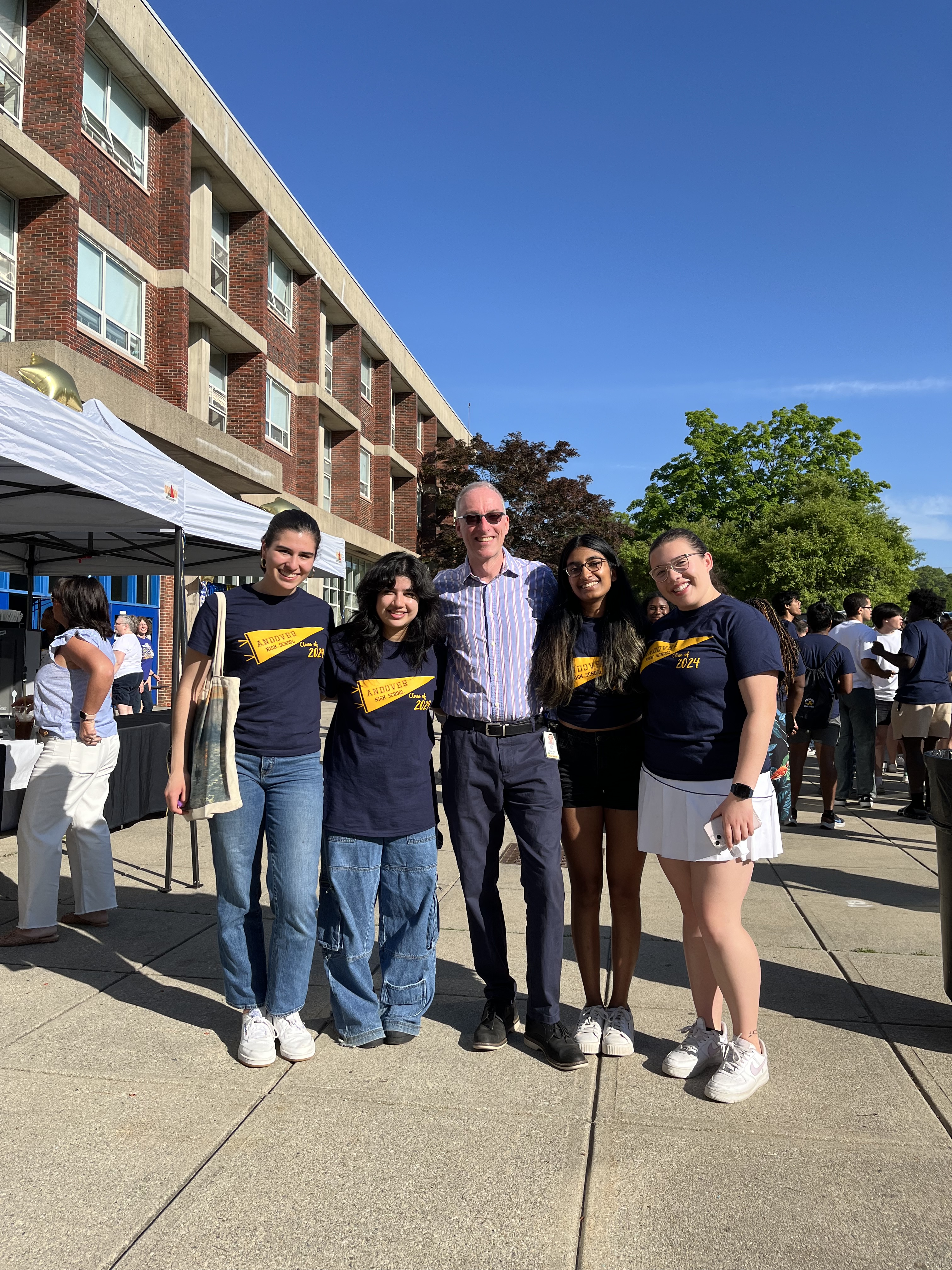
    Funding the Future of Science: Proposed NIH Funding Cuts Throw US Biomedical Research Into Uncertainty

    • November 4, 2025
    Funding the Future of Science: Proposed NIH Funding Cuts Throw US Biomedical Research Into Uncertainty

    Student-Hosted Video Game Hackathon Scheduled for Late September

    • September 22, 2025
    Student-Hosted Video Game Hackathon Scheduled for Late September

    World Languages Coordinator Reflects On Career, Retirement

    • June 9, 2025
    World Languages Coordinator Reflects On Career, Retirement

    CollegeBoard Scores 1/5 on AP Testing Administration

    • June 9, 2025

    AHS Student Directs Coming-of-Age Film, ‘Horizon’

    • June 9, 2025

    Discover more from AHS NEWSPAPER

    Subscribe now to keep reading and get access to the full archive.

    Continue reading