Spanish Department to Host Day of the Dead Fair
  • November 12, 2025

Areeta Faiz || Social Media Editor

A cultural fair celebrating the Day of the Dead will take place during H Block this Thursday in the cafeteria.

The fair will include a variety of hands-on activities, music, and food, allowing students to explore several popular Mexican traditions. The event has been organized by students from the Spanish Conversation Club led by teacher Sylvia Danos and AP Language and Culture classes taught by Indira Garcia. This will be Andover High School’s first year hosting this celebration.

“Students from all world language classes will have the chance to experience one of Mexico’s most meaningful and beautiful traditions,” said Danos.

Stations will include the traditional ofrenda (altar), calaverita (mini skull) painting, papel picado (colorful, decoratively cut paper), the classic Mexican game Lotería, and a chance to try traditional Mexican sweet treats.

Students can participate by signing up for the H3 block with their world language teacher, who will then bring them to the cafeteria where the fair will take place.

“This celebration reflects the values of love, memory, and cultural identity that are central to many Latin American traditions,” said Danos. She added that experiences like this help students appreciate the richness and diversity of the Spanish-speaking world while fostering empathy and global awareness.

Traditionally celebrated in Mexico and other Latin American countries on November first and second, Día de los Muertos honors deceased loved ones through family, music, food, and art. A key tradition is the creation of an ofrenda, or altar, decorated with photos, candles, and offerings to remember loved ones who have passed.

AHS has showcased the student-made ofrendas for the last seven years as a part of the World Language Department curriculum. This year, Danos and Garcia decided to go all out, believing that it is essential for students from other language programs to learn about this celebration.

Danos is excited to see students from diverse language backgrounds come together to celebrate culture, creativity, and diversity: “Enjoy music, crafts, food, and culture, all in one H Block!”

Continue reading
Funding the Future of Science: Proposed NIH Funding Cuts Throw US Biomedical Research Into Uncertainty
  • November 4, 2025

Anushka Dole || Online Editor 

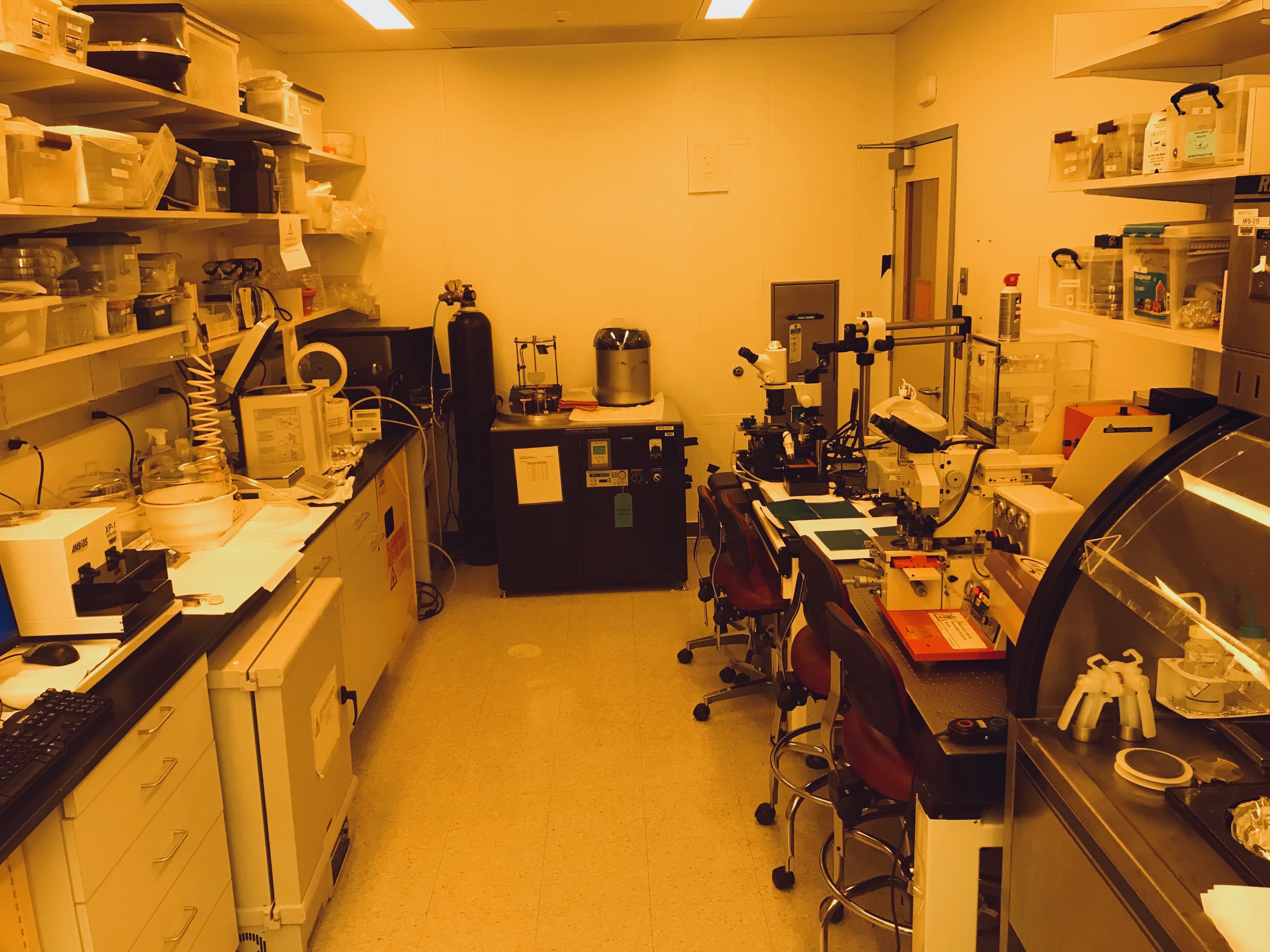
In the sunlit Orkin Lab at Harvard Medical School, lab technicians diligently carry out their experiments, pipetting meticulously into Eppendorf tubes. Next door, in a darkened room, a team of researchers are  huddled around a fluorescence microscope, tracking how gene‑editing tools can restore crescent-shaped red blood cells into their healthy state—a pathway the Orkin team helped pioneer.

Like the Orkin Lab, countless biomedical research labs across the United States engage in lifesaving research every single day. Their research is now in jeopardy. Funding inconsistencies in the National Institutes of Health (NIH), including proposed cuts to indirect costs and the halt in federal funding due to the current government shutdown, threaten to stall progress and could have lasting detrimental effects on both the ongoing research and the communities that rely on it, including Andover.

In April, the NIH cancelled $800 million in grants that it had already approved because the projects didn’t align with the Trump administration’s policies. In July, a federal judge then ruled that the cuts were unlawful, which restored research funding. According to the Boston NPR station WBUR, the US Supreme Court ruled that the NIH can withhold the grants in August.

In addition to withholding the grants, the Trump administration is proposing to significantly reduce funding for “indirect” costs of research, supported by the narrative that the funds “were largely administrative bloat, unrelated to the costs of research.” According to the Harvard Crimson, these indirect funds include costs such as lab construction, research equipment, hazardous waste removal and “countless other very real and necessary costs of research.” For institutions in our own backyard, the impact is tangible: Harvard University stands to lose hundreds of millions of dollars, a blow that could ripple across its affiliated hospitals—including Boston Children’s Hospital, Brigham and Women’s hospital, Dana-Farber Cancer Institute, Massachusetts General Hospital, and many more. Across the country, other US institutions stand to lose billions more.

To fully understand the effects of the funding cuts, it’s important to start at the source: with the research itself. Research is a long, iterative process, full of ideas that start small and experiments that may or may not work. Unlike labs and experiments in school, where the outcome is clearly defined and predetermined, research can be filled with dead ends and uncertainties.

It often begins with something as simple as an idea. Dr. Nathan Crook, an associate professor in the Department of Chemical and Biomolecular Engineering at North Carolina State University, described a project’s start as the moment you first think of a concept, and the end as the moment you stop actively working or thinking about it

“Normally, you or someone in your lab has a flash of insight… at these early stages, you usually don’t have dedicated funding for it,” he said. Early experiments are often small-scale pilot tests that can be supported by seed-funding (typically around $10,000) from the university, or a research foundation. More senior researchers may have access to discretionary funds – “rainy day” funds to use on early projects that aren’t bound by any specific research question.

Dr. Sara Smaga, an AAAS Congressional Science and Engineering Fellow and former Executive Director at the NSF Center for Genetically Encoded Materials, added that this initial stage is the beginning of a longer iterative process.

“In academia, faculty choose what topics they want to study…often a student will collaborate to design their project within their advisor’s topic area,” she explained. “The results of each experiment generate new questions, leading to further hypotheses, even if the initial result is ‘nothing happens!’”

Each experiment can quickly expand into multiple interconnected projects. Each project requires more resources, which are obtained by funding, typically in the form of research grants.

“Let’s say the pilot test goes well, and you get some interesting data,” Crook said. “You will then likely apply for a ‘normal’ research grant using those results as preliminary data. Usually the cool projects are kind of crazy, and the grant reviewers won’t believe that you will be able to do what you are proposing unless you have some sort of proof-of-concept that it is working.”

These grants can come from a variety of sources, including private foundations (such as the Gates foundation or the Chan Zuckerberg Institute), federal funding, internal university funding, state grants, or industry funding. 

“Generally, a Principal Investigator (usually the senior faculty member overseeing the lab), will craft a proposal describing what they’d like to study and why, and submit to a funder,” Smaga said. “After submission, proposals are reviewed by a panel of experts in the field, who evaluate each proposal for feasibility and impact. Not every proposal is funded, and sometimes it takes multiple tries to write a proposal that gets chosen for funding.”

If a proposal isn’t funded right away, researchers often continue the project on the side, refining their ideas and re-applying for grants until they can secure official funding. Once secured, labs can expand, hire more researchers, and pursue the project in earnest. Ultimately, the most significant source of funding for research projects—especially in academia—comes from federal funding, typically the NIH.

“Most of the funding in every lab I’ve ever been a part of has come from federal funding,” Smaga said. Crook agreed, stating that “the most important [source of funding] by dollar amount, are federal grants,” and that “federal grants have funded 77 percent of the research in [his] lab.”

This reliance on federal support means that any disruptions in the grant cycle—whether from delays, government shutdowns, or the proposed cuts to indirect costs at agencies like the NIH—can ripple far beyond the walls of a single lab, outpouring from academia to industry, and eventually, impacting the lives of citizens. The money from NIH funding is a key part of funding early-stage projects, like projects being worked on by Smaga and Crook, laying the foundations for industry to develop novel therapeutics. 

“Just one example: NIH-funded research on bacterial immune systems gave us gene editing, which is now being used to cure sickle cell and rare genetic diseases,” Smaga said.

Jackie Thompson, who works on targeted cancer treatments at Takeda Pharmaceuticals in Cambridge, agreed. “My current work involves developing cell and gene therapies for cancer,” Thompson said. “These treatments rely on decades of foundational research…that was often NIH-funded.”

For communities like Andover, where students and educators are deeply connected to Massachusetts’ vibrant research ecosystem, those losses hit especially close to home. Sarepta Therapeutics, a biotechnology company with an office in Andover, develops gene therapies that depend on the same fundamental research NIH grants have long supported. 

At AHS, the BioBuilder club gives students hands-on experience with synthetic biology research, and the opportunity to work on projects that can be published in a student research journal. While BioBuilder opens doors for aspiring scientists, those doors exist within a larger research ecosystem that relies on consistent federal funding.

“It’s not something that you can just reinstate the funding and think that things are going to pick up as normal,” said Dr. Lindsey L’Ecuyer, the advisor of Andover High School’s BioBuilder club. “When people set up a lab somewhere else, they’re not coming back… it’s going to make it really hard for us to come back from that.”

L’Ecuyer sees the loss trickling down to high school classrooms, mentorship programs, and the students who might have been inspired to pursue science in the first place. “It feels like we’re losing a whole generation of people that would be coming to do research in the U.S.,” she said. “America has been a leading country in scientific research, and it’s going to make it really hard for us to come back from that.”

Crook agreed. “Other countries certainly aren’t reducing research funding, and guess where top scientists—even US citizens—will go? It really hurts our country’s economic…and actual…security to reduce research funding.”

Smaga also worries that America could lose a generation of scientists, and she’s already seen the early signs. “This past cycle, we saw graduate programs responding to funding freezes and future funding uncertainty by admitting fewer students,” Smaga said. 

Biomedical research supports far more than scientific discoveries and the university labs that make them: according to the nonprofit United for Medical Research, every dollar of NIH funding generates about $2.56 in economic activity. The stakes of losing consistent funding are clear in places like the federally funded Orkin Lab at Harvard, where gene-editing research is already transforming lives. The lab is a clear example of how federal support fuels the discoveries that save lives, and it continues to inspire students and scientists to pursue the next breakthroughs. 

“It’s a challenging time to be in biomedical research, but I’m still optimistic about the field,” Thompson said.

“For students who want to get into science, the advice is simple: start early, get involved, and follow the questions that excite you,” she said. “Even sending an email to a professor whose work interests you can open doors. Despite the obstacles, the next generation of scientists has a real shot at making a difference—and it could be your curiosity that drives the next big breakthrough.”

Continue reading
Student-Hosted Video Game Hackathon Scheduled for Late September
  • September 22, 2025

Anushka Dole || Online Editor

Daydream Andover is a two-day hackathon for high school students that will be held at Merrimack College on September 27 and 28, with prizes available for the winning teams. 

At a hackathon, students come together to code a project over a short period of time. Daydream is a game-jam, which is a subcategory of a hackathon, where students will collaborate to create a video game during the event.

The hackathon is being organized by a team of three students, AHS seniors David Shi and Jessie Wang, as well as Emily Fang, a senior from Phillips Academy. Designed to be beginner friendly, Wang, Shi, and Fang are hosting workshops for beginners during the event to give them the tools they need to build their projects.

“We’ll teach them how to make a project on Godot, one of the simplest languages to make a game… we run workshops, and then we let them code,” Wang said. She added that artists and musicians are also encouraged to come to Daydream, as their contributions are essential to designing a game.

The first day of Daydream runs from 10am to 8pm, and students are encouraged to start their games the moment they arrive. Teams of up to four people are allowed, and team selection can happen at any time during the event. Each game will follow a set theme which will be announced on the day of the event.

“We get to pick one out of the ten themes that are sent to the organizers, but those haven’t been released [to the public] yet…basically, it’s a mystery,” Wang said.

Amenities will also be provided for coders during the events, including lunch and dinner on both days. There will also be prizes for the top three teams after being judged by the organizers. 

Wang, Fang, and Shi all came together to host the event out of a shared passion for hackathons, bringing Daydream to Andover by working through the California-based nonprofit Hack Club. 

“We had the best time ever [at Shipwrecked, a hackathon held at Cathleen Stone Island]. I met friends that I never thought I would meet… [hackathons] opened my mind to new ideas, it’s a very valuable experience,” Wang said. 

Shi agreed, adding that “you get to learn how to build a lot of cool things, and make lasting connections.”

When asked what they hope students will gain from the event, Fang stated that she simply hoped that they would “gain a new friend,” as well as get their foot into the “doorway into programming.”

Daydream is accepting sign-ups until the day of the event, at this link.

Continue reading
World Languages Coordinator Reflects On Career, Retirement
  • June 9, 2025

Avery Slaughter || STAFF WRITER

Peter Hall, program coordinator of World Languages at Andover Public Schools, is retiring this coming September. Hall has been working in the district for 35 years.

Hall’s career at APS commenced in 1995. Over the span of 27 years, he taught both French and Spanish at levels ranging from beginner to Advanced Placement before transitioning into the role of program coordinator in 2022.

Overall, his experience at APS has been a positive one.

“I am fortunate to say that I have enjoyed my years here,” said Hall. “I have had a lot of wonderful students who make each year a little different. […] It’s been a lifetime of memories and experiences.”

Over the years, Hall has worked with students in and out of the classroom in an effort to inspire interest in other cultures. His passion for foreign languages began in middle school, and he has since strived to share that enthusiasm with others. Hall traveled with students to France seven times as part of the French Exchange Program and led the Spanish Exchange Program trip once. Additionally, he chaperoned numerous other international trips offered by APS.

“As a language teacher it has been my passion to share my love for travel and learning about other cultures with students,” Hall said. “It provides an opportunity to get to know students outside of the classroom and broaden their perspectives on the world.”

Watching students grow as people throughout trips abroad has been one of his favorite parts of his job, Hall said. 

Moreover, his years of teaching have defined who he is as a person. Much of who he is has been shaped by his career in teaching, explained Hall. He plans on taking that educational mindset with him into the future.

Hall’s positive impact on the World Language Program hasn’t gone unnoticed by teachers who know him. Between his contributions to the various programs offered by the department, years of teaching multiple languages, and guidance as program coordinator, he will be missed in retirement.

“I think he’s a great person,” Spanish teacher Teresa Peralta said. “It’s hard for us to let him go, but I think each person has a mission and I think he’s ready [to retire]. We want to say thank you for all the work that he has done, and for teaching us as well.”

Continue reading
CollegeBoard Scores 1/5 on AP Testing Administration
  • June 9, 2025

“Once you enter the start code, you may begin.” With these words, hundreds of AP Psychology students at AHS expected to start their AP exam. Instead, they were greeted by a laggy, glitchy BlueBook testing app that refused to cooperate. For the students who were unable to coax the app into functioning, the exam was delayed to May 21—a poor solution for students who spent a whole year preparing for that moment. 

We at ANDOVERVIEW believe that the fragile testing infrastructure of CollegeBoard is absolutely unacceptable. One would assume that a nonprofit organization that claims to be “paving the path for college success” would ensure that its testing platform relies upon servers that are able to handle the increased traffic on testing day. CollegeBoard provided very little consolation to the adrenaline-crashing students. “Most students have had a successful testing experience, with more than 5 million exams being successfully submitted thus far,” the organization defended. The statement was tellingly short—PR representatives at CollegeBoard couldn’t be bothered to devote any longer than a five-minute coffee break to drafting this “apology.” 

Unfortunately, technical glitches are not the only issues that CollegeBoard has encountered this AP season. After a slew of hate comments were slung in author Namwali Serpell’s direction, she discovered that the vitriol was directed towards one particular passage in one of her books. The infamous “Look at Me” passage was recognized by this year’s AP Lang students as an indecipherable jumble of content followed by some seriously difficult multiple-choice questions (MCQs). After learning this, Serpell revealed that CollegeBoard had included the passage in the test without her permission and distorted its meaning in the MCQs that followed. Adding insult to injury, Serpell also clearly stated that she was against standardized testing as a concept. As of late May, CollegeBoard had yet to address these comments.

The negligence of CollegeBoard has created a sorrowful state of affairs for those looking to take advantage of the benefits of AP courses and exams. To no one’s surprise, the corporatization of education has introduced far more harm than benefit to all involved. We can only hope that CollegeBoard will hear and fix some students’ criticisms.

Continue reading
The Underclassmen’s Race to College
  • May 6, 2025

Andover High School’s AP restrictions called into question by students, graduates

Avery Slaughter || STAFF WRITER

By the time the Class of 2028 first stepped foot in the lobby of Andover High School, it was abundantly clear that Advanced Placement courses were going to be off-limits for a while. During the student orientations that had occurred in the months previous, they had been told they weren’t ready for classes of such rigor; they weren’t mature enough and would have to wait until they were juniors to handle a responsibility so vast.

The rule barring APs seems innocent, but for some freshmen and sophomores, it is a cause of great stress. “After high school” is a concept that hopeful college prospects begin to consider as early as elementary school, and the inability to maximize APs as soon as ninth grade can be concerning with that in mind. That being said, the reasoning and logic behind the restriction is sound—how could underclassmen manage the workload and intensity of college classes, given the well-known academic difficulty of APs? Despite the good intentions, is it possible the act of minimizing that stress inadvertently causes more?

It’s important to note that two new APs are being introduced in the fall of 2025. These two courses include AP Seminar, open exclusively to sophomores, and AP Government, open to grades 10-12 (see sidebar for more details). AP US History and AP Java Programming was also made available to sophomores this year. These four courses are the only APs typically offered before junior year, though infrequent exceptions are made for students who demonstrate advanced proficiency in math and/or computer science.

For Shauna Murray, the question about APs is a loaded one. Working as both a high school teacher in New Hampshire and a School Committee member in Andover Public Schools, she’s deeply involved in the lives of students. Murray noted that the rules regarding APs and general course restrictions are not decided by the School Committee and are instead up to the discretion of the guidance department. The College Board also does not have a say in how the classes are run in individual schools beyond the administration of the AP exams. (Multiple attempts to reach Aixa de Kelley, coordinator of the guidance department, by email were unsuccessful.)

“I think there are some kids that are ready, but it’s really a student-by-student basis,” Murray said. “It’s tricky because you know the requirements are there for a reason, but maybe it could be a little bit more flexible.”

Current AHS students have varying opinions. Sophomore Connor McGovern expressed frustration with the policy and its possible implications on his future. He worried that his college chances were slimmer compared to future graduates of other schools with more lax restrictions and that ultimately it would damage his experience after high school.

“I think [the rule] probably does [hurt my chances],” McGovern said, “and you could also shorten the amount of years you have to take in college if you take a lot of APs in high school. I think about that.”

Canyu Li, who has eight APs under her belt as a senior, had an opposing view. She wondered if the stress she would have felt as an underclassman would have been insurmountable had she had the option to take APs, though she acknowledged that, when she was younger, she did wish to take them. Ultimately, she thought that the downside to taking these courses early on tends to outweigh the benefits, especially with college admittance in mind. She explained that, in her experience, colleges often compared you to other students in your school to ensure fair consideration in the admission process.

Many people were inclined to agree with that assessment, though former college admissions officer Jayne Jones suggested it was a bit more complicated.

“It all depends,” said Jones, now an AHS guidance counselor. “It depends upon the student, the college, and many other factors that make up a decision for admissions. Some more selective colleges want to see several AP classes, and less selective colleges may want to see a few APs, and still other colleges may be fine without any APs.”

While the freshmen at AHS were acclimating to the environment of the school this past fall, Diya Ganesh exited the bus she took from her lab at Northeastern University to her dorm. Having graduated from AHS in 2023, she had recent experience with how the AP restriction impacted her college experience. She took six APs herself, and she recognized that she was at a disadvantage in terms of college credits compared to her classmates, who had AP counts ranging from eight to twelve.

Jordan Altaffer, 2017 graduate of AHS and family friend of Ganesh, agreed at that moment. Though he had recently concluded his time at Georgia Tech, the toll his shortage of AP credit hours had taken was still present in his life. In addition to an increased amount of time filling his degree course requirements, taking more courses was financially inconvenient.

“If I had been able to take more [APs], I could’ve skipped my [college] freshman English classes and my freshman history,” Altaffer said. Not taking those courses would have both cut an entire semester from his college experience and minimized the cost of his classes.

Ganesh had similar sentiments. “People that are graduating sooner tend to get a higher priority in picking classes. […] I cannot emphasize how helpful having those credit hours ahead of time are,” she said.

The question of whether or not freshmen and sophomores should be able to take APs brings to light what Murray considered a larger social problem. How can high school students possibly have enough time in their lives to balance such hefty course loads and their own personal health? According to her, the “race to college” represents the flawed values in our society. Instead of prioritizing the well-being of students during the transition to adulthood and independence, we drive students to overwhelm themselves with academics to fulfill arbitrary requirements for further education.

“One of the things that is happening in society is that we’re pushing kids way too hard,” Murray said. “It’s just this vicious cycle of wanting to do more and wanting to achieve more.”

Continue reading
Grounds for Concern: Caffeine addictions that plague the community are keeping students up at night
  • March 8, 2025

Areeta Faiz || STAFF WRITER

AHS sophomore Jiya Jotwani has perfected her beloved Starbucks order: a grande iced sugar cookie almond milk latte, or perhaps a peach iced green tea. She says they keep her chronic procrastination in check, in addition to being a sweet treat to enjoy after a long day.

The sun has barely risen when sophomore Adelaide McLean stops by Dunkin’ before school for her daily 20-ounce mocha latte. She had managed a good rest the night before, but the threat of a midday headache keeps her routine alive morning after morning.

Junior Lex Malsky, with a soft spot for energy drinks, reflects on his former addiction that led to a whopping four hours of sleep each night during his formative years. The 2020 “alternative” culture that was in reality quite popular featured Monster Energy, bearer of an infamous 160 milligrams of caffeine per can.

No matter who you are, the typical Andover High student is no stranger to late nights, heavy eyelids, and promises to oneself to “lock in” on sleep, only to get pushed back week by week. According to the Centers for Disease Control and Prevention (CDC), caffeine seems like the holy grail that would keep 73% of U.S. adolescents from slipping into despair. 

Billions of people around the globe are drinking coffee each day, and dangerous doses of caffeine are hardly ever consumed in one sitting. Still, the world’s most popular drug is far from harmless, and AHS feels its effects every day.

“One cup in the morning can help give you some energy throughout the day, but that’s really not what’s happening,” said health teacher Candice McVeigh. “That’s not how adolescents tend to use it.”

“I probably see a handful of students buying the same drinks every day, which isn’t many considering the population of the school,” said AHS cashier Pamela Anderson. “Overall, these drinks are very popular.”

According to Anderson, AHS began selling coffee to get students to class on time. “They were often tardy since they would go to Dunkin’ or Starbucks to get their coffee before school.” Taylor Pirog, the Andover Public Schools Assistant Director of Food Services, is concerned, however, that students may be buying too much in a day and it is not being regulated.

It’s no debate that often, caffeine is the only realistic way students can maximize the little time and energy they have. Of course, students aren’t drinking caffeine just for fun. Between study sessions, concerts, tech weeks, and early morning practices, coffee and energy drinks feel like survival tools more than anything. 

It’s a vicious cycle: when people become reliant on caffeine, it becomes part of their routine, and consistent use is exactly when it becomes harmful. “You’re going to sleep later, so you want to wake up later, yet you really can’t because you have priorities,” said McVeigh. “And the cycle keeps going because you use the caffeine to stay up the next night.”

Getting addicted doesn’t even always involve academic pressure or the caffeine itself; sometimes it just tastes good. The CDC reports that the growing popularity of energy drinks may be increasing caffeine intake among children and adolescents. Consumption of sweetened coffee drinks has also increased.“Especially with some of the larger drinks that people order, people don’t know how much caffeine is in there,” said McVeigh.

“I’m not sure how many milligrams there are,” confirmed McLean when describing her daily order. “It’s a 20-ounce drink, but there’s other stuff in there.”

On top of this are the mimickers of caffeine. Many energy drinks have products in them that do equally as much as, if not more than, what caffeine does. “Whether it’s taurine or guarana or other additives. Even just sugar,” added McVeigh. 

But perhaps one of the most costly consequences of the drug is simply how detrimental it is to your wallet. The school offers a few choices, ranging from a dollar-fifty iced coffee to a three-dollar Uptime. Some of the more intricate Starbucks drinks can end up being upwards of seven or even ten dollars. 

“In the last five to ten years, more and more of these refreshers have been popping up. They’re expensive, first of all, which is a waste of money. And it becomes a habit,’’ said McVeigh. Often, three dollars a day quickly turns into a sum much greater than necessary.

Headaches, moodiness, and fatigue are all well-known side effects of caffeine withdrawal. McLean, for example, gets eight hours of sleep every night. Even so, “if I don’t have coffee in the morning, my head starts to hurt later in the day,” she said.

“When I started drinking [Monster Energy] very often, it caused me to sleep even less, and I was very irritable at the time,” recalled Malski, demonstrating how the drug ultimately creates a routine that does the opposite of what it’s supposed to.

So, how do we become more cognizant of our intake and break the cycle? McVeigh suggests herbal teas, water with fruit, and things that are hydrating to help keep you more alert. Exercise and putting screens away before bed are both things that can help get into a better sleep pattern.

Lattes, refreshers, and energy drinks are undeniably delicious. More importantly, they feel like the easiest solution to remain motivated on days it’s hard to stay awake. These beloved beverages are the reasons so many of us take trips to coffee shops in the mornings and vending machines between classes. But as coffee culture continues to grow, students may want to ask themselves: Are they really in control of their caffeine habits, or is caffeine in control of them?

Continue reading
TEDxAndover Uplifts AHS Voices
  • December 13, 2024

By Janaesa Macasaet & Ariana Teasdale
STAFF WRITERS

A room full of people. A stage, bathed in light. The spotlight on Graham Igo. Murmurs spread throughout the crowd as the unexpected 15-year-old confidently strides out onto the stage. As cameras face him, he takes his spot in the middle. Clad in a professional blue velvet suit and tie, Igo captivates the audience’s interest. 

Igo spoke at the inaugural TEDxAndover event held at the Andover Country Club this past October. As he stepped on stage, Igo posed the question “how many of you have ever heard the term ‘be yourself’?” His speech, “The Cost of Fitting In,” featured personal anecdotes and skillful commentary on the societal pressures to conform, and the emotional effects of those pressures.

“I focused on others instead of myself, and when I did experience short-term satisfaction, I felt unfulfilled,” Igo said. “I was [just] doing what others were doing, which built up a lot of emotions.” 

TEDx events, different from TED conferences, are local and independently organized events. TEDxAndover is a newly established platform, organized by Andover resident Menka Hariani, that provides people with an opportunity to share meaningful ideas. Hariani was determined to create a platform in which she could empower diverse voices. Driven by a strong sense of purpose, she started working on the event application last year, and obtained the license for it in August. 

“As an organizer I was responsible for everything:” Hariani said, “finding the right speakers… pitching them… refining their scripts, finding the venue, all of the marketing… [in addition to] developing and designing the entire website.”

In just eight weeks, Hariani organized the first event, featuring five speakers and one performer. With overwhelming support from the Eagle Tribune and the AndoverMums Facebook page, the event was quickly assembled, and sold out with 100 people attending.

STAFF PHOTO/ Janaesa Macasaet
Organizer Menka Hariani introducing the first speaker.

“With very little time, and not having enough background in event management, there were a lot of challenges…,” said Hariani. “I feel very fortunate and lucky that I got to work with people who delivered very high quality…work and made it…successful.”

 Featured speakers presented on a range of topics, from health and well-being to life strategies. In the lineup was AHS sophomore Graham Igo. Sharing the stage with highly accomplished individuals—an Olympic gold medalist, a Harvard professor, two CEOs, and an NBA dancer—Igo was surrounded by those with far more experience. As a high schooler, he provided a unique, younger perspective. Drawing from his middle school days, he discussed his own struggles with identity and how he was pressured by peers to fit in. 

Even as a first-time formal public speaker, Igo was confident in his abilities to deliver a talk. In order to prepare, speakers work with volunteer coaches to completely memorize their speeches. After intense practice, Igo presented with ease.  

“I read my speech a million times,” Igo said. “Just went over it line by line, trying to remember each part.”

Igo was not the only AHS student on stage, however. Hariani’s daughter, sophomore Jiya Jotwani, was the host. Hariani proposed the idea, though Jotwani was still required to go through the application process, with the chance of being rejected. With note cards in hand, she warmly introduced the speakers, supported by friends in the audience. 

“At first it made me really nervous. I felt a lot of pressure to not mess up,” Jotwani said. “But then, when we took a break… all of my friends told me I did super good and so I felt a lot more confident.”

Though initially attending the event to support host Jiya Jotwani, sophomores Grace and Hannah Arnold were quite impressed with Igo’s courage. 

Grace Arnold said, “[Igo’s speech] was really interesting…because he’s speaking to a room of primarily adults, by himself, and…giving a speech on something that a lot of people might…not accept him for. I think that was a really good example to set.”

The journey to uplift Andover voices has yet to end, however. A full-day TEDxAndover event is scheduled for June 2025, with hopes for ten speakers and two performers regarding the topic of invisible threats, which are problems people often disregard as harmful.

Hannah Arnold, approached by Hariani, has newfound inspiration to deliver her own speech after seeing well-established speakers and fellow classmates gain the chance in a lifetime. From her own experiences, she’s interested in speaking on learning strategies as well as how to handle chronic pain as a longtime soccer player. 

Hariani encourages people of all kinds to speak. “When I am looking for a speaker, I am only looking for great ideas. I don’t care what the background of the person is, I don’t care where they’re coming from; I’m only looking for diverse voices and great ideas that are worth spreading,” she said. All she hopes for is to “strike conversation in the community”.  

Interested in being a TEDxAndover speaker? Applications open January 2025. Refer to tedxandover.com for more information. 

Continue reading
OPINION: Time to Ditch Test-Optional Policies
  • December 13, 2024

By Luka Oatman
STAFF WRITER

Test-optional college applications sound like a dream. Applying to your first-choice school without having to submit an SAT or ACT score is enticing. It feels nice not to worry about taking a test for your application. Realistically, though, students everywhere fall victim to the negative effects of this newly developed procedure.

Test-optional applications gained popularity during the COVID-19 pandemic. They were introduced as an option for students who were unable to take standardized tests due to the global restrictions at the time. Although test-optional policies were expected to be a temporary solution, they have since remained as an alternative for applicants who feel less confident in their test-taking abilities and wish not to declare their scores. What some students fail to recognize, though, is that in many cases it is more harmful than beneficial to withhold their scores when applying. In fact, it is often helpful to include an ACT or SAT score in situations where the applicant is uncertain.

The primary issue with test-optional applications is that their academics are more heavily scrutinized than those with a test score attached. William Hutchins, a guidance counselor at AHS, said, “What I usually say to my students is that if a school is test-optional, then other aspects of your application, such as your college essay, become more important.” The lack of a score gives admissions officers one less area of focus and increases the importance of a student’s transcript, admissions essay, and supplemental essays. Applicants are told that applying without standardized test scores will not affect their application results, and while it may be true that officers will not base their opinion on whether or not a student submits their results, their overall interpretation of the application will change if a score is not sent in and the weight of other aspects increases.

Applicants on a global scale face drawbacks from test-optional policies. Since 2020, some schools that implemented and maintained test-optional applications have seen a sizable rise in average scores for the SAT and ACT among their students. This is the result of selective submissions, only including scores that match or exceed the school’s average. As students begin neglecting to report lower scores, there is a steady increase in test result averages. This trend occurs when students stop including their standardized tests in their college applications out of fear that they do not measure up to the rest of the applicant pool. While some colleges avoid this by collecting test scores post-admission, many neglect to do so. Allowing students to apply with undeclared test results catalyzes this problem which, if it continues in this manner, will eventually render standardized test results as utterly meaningless numbers in a sea of schools boasting perfect 1600 average SAT scores.

Test scores function as an equalizer for college applications. Hutchins mentioned, “It can be tough sometimes to compare states against states, or schools against schools… If you have a 4.2 GPA at Andover, that’s not necessarily the same as a 4.2 GPA at North Andover.” He elaborated that standardized test scores do exactly what their title suggests by standardizing an aspect of the application process. The SAT and ACT exams are designed in such a way that they measure students’ capacity to take one similar exam and bypass factors such as teaching policies, available resources, or academic rigor that vary by school, and provide a simple, unchanging criterion for a college application.

I find that these combined effects of test-optional applications hinder the success of students and justify the eradication of the policy as a whole. Disallowing students from withholding standardized test scores would lead college admissions officers to view all applicants through the same lens. It would lower average scores at schools across the country and universally benefit students by increasing the likelihood of their results exceeding the school’s benchmark. 

I am guilty of refusing to provide my test results on some of my college applications, but each time I have chosen not to submit them, I have wished they were a required element. Test score mandates would not only reduce the stress of deciding whether or not to submit but would also create more opportunities for applicants of different strengths to be admitted to the college of their choice. I feel as though this obligatory report would diversify the applicant pool and greatly improve students’ acceptance probability, easing the process for people of varying academic success.

Continue reading
Warrior Friends Grows Friendships at AHS
  • December 13, 2024

By Diya Manikandan
STAFF WRITER

Warrior Friends is a completely student-run organization, aside from occasional assistance from gym teacher and advisor, William Beauchesne. Its members work towards helping neurotypical and neurodivergent groups form connections. The leadership committee meets weekly to decide activities and plans for the next club meeting. So far, Warrior Friends members have introduced themselves and gotten to know each other, played games, colored, and most recently, had a kickball tournament. 

According to a Harvard Health article on neurodiversity, the word “neurodiverse” refers to “the diversity of all people, but it is often used in the context of autism spectrum disorder (ASD), as well as other neurological or developmental conditions” (Baumer). 

Club president Jordan Shirley said, “I hope to normalize differences between people. I feel like people see certain individuals in the hallways and call them weird, but they are as normal as everyone else.” 

“The thing that I’ve noticed the most is the diversity of the population of students at school,” said Beauschesne. “Seeing some students be able to make friendships with certain other groups of students has been very gratifying in terms of developing friendships.”

Members of the Warrior Friends appreciate opportunities to meet new friends and make the neurodiverse community feel welcome. “[Warrior Friends] is a really cool experience to help people and make new connections,” said sophomore Samantha Cashman. 

Even from the few meetings held so far, familiarity is already forming between club members. “The biggest growth I’ve seen, as the weeks have gone by, is that just by meeting once a week, friendships are starting to establish and grow,” Beauchesne said. “This isn’t just in H Block; I’ve noticed this in the cafeteria, and in class, so people are now more connected with the neurodiverse community and they’re able to recognize them and include them in more.”

Senior club member Christina Preston encourages students to join the club. “It’s an amazing opportunity to build relationships and make these amazing kids feel seen and loved, and make them feel like a part of the school community,” she said.

Follow Warrior Friends at @warrior_friends_forever to get a glimpse of the club’s activities and see how you can join!

Continue reading