Questionable and Unnecessary Cafeteria Music

If you’ve spent any time in the cafeteria lately, you’ve probably noticed something a bit different—the music. And not just any music. Songs like CBAT (yes, that one) and other questionable choices are playing on a loop, often at a volume that makes it hard to think, let alone hold a conversation.

We at ANDOVERVIEW appreciate the thought that the addition of music could create an environment more conducive to student well-being. However, we feel that it does not offer anything positive to the school environment; in fact, it annoys more than it comforts or energizes. And what’s more, even if the music tracks were to be changed, students’ tastes in music vary greatly, so there will always be unhappy students who would prefer no music at all. We feel that a lack of music in the cafeteria was never a problem. It appears this is a “solution looking for a problem” kind of scenario.

Then there’s the volume, which is arguably more of an issue. At times, it’s so loud that you can hear it clearly from several classrooms away. Additionally, after school, it continues to play, making focus and work very difficult for some students who stay late.

Principal Jimmy D’Andrea commented that once volume and clarity issues are resolved with the sound system, a system where students can submit requests will be implemented. Although this may reflect the tastes of AHS students better, we believe it will still leave people unhappy, and is vulnerable to “trolling.”

The idea of music in the cafeteria was surely well-intentioned, and we appreciate that, but it is causing more frustration than enjoyment. Perhaps it’s time to consider if it’s even necessary at all.

  • Related Posts

    The Powerhouse of the School: How Jimmy D’Andrea’s Devotion and Spirit Energizes the AHS Community
    • June 5, 2026

    Samin Faiz & Areeta Faiz || STAFF WRITER AND SOCIAL MEDIA MANAGER

    “Good mornin’”

    “Helloo!”

    “Heyyhowyoudoin’?”

    A familiar, vaguely Southern cadence breaks you from your stupor. It’s 7:45 a.m. Groggily, you daydream about all the things you’d do to get back under the covers as you draw nearer to those dreadful blue doors.

    “How are you?”

    You take out an AirPod and offer the principal a friendly nod. You don’t consciously think about how you’re doing, but the smile you thought you forced seems to warm you up inside. He turns to greet the next student without losing an ounce of enthusiasm.

    Over the rustle of chairs and sleepy murmur of your classroom, the voice of Andover High School Principal Jimmy D’Andrea recites the pledge. Cheerily, he goes through his usual announcements, praising the recent accomplishments of your peers—just as he did on his Sunday call the night before.

    After Chemistry fries your brain, you decide to open Instagram and fry it some more. Before you can feast your eyes on Korean street food, four new stories from @andoverprincipal catch your eye: A comprehensive victory for the basketball team, upcoming state band competitions, an eventful show choir season—and now he’s in Houston with the robotics team?

    At long last, the lunch bell rings. You’ve barely scraped the last of your meal when a bubbly “Hello! Trash, anyone?” drifts into earshot. You look up, puzzled, to see D’Andrea—wait, wasn’t he just in Texas?—pushing a garbage bin as he navigates his way through the cafeteria.

    After school, he even set time aside for the two authors of this very piece—the ones who badgered him for an interview—minutes after hanging up from a meeting.

    You’re not even wondering how he does it anymore. The only question you have left to ask yourself is why?

    “Over February break, I spent one day at UMass Amherst with Science Olympiad. The following day, there was the state swim meet, followed by the state track meet. The following Monday, there were a couple of basketball games,” said D’Andrea. “On Tuesday, I was with robotics getting ready for the trip. Wednesday, we had basketball, and Thursday through Sunday, I was in Washington, D.C. with one of our robotics teams.”

    Somehow, the most difficult adjustment for him has little to do with his demanding schedule: “I will say, the biggest challenge is that this is the furthest North I’ve ever lived in winter.”

    D’Andrea is aware that things can get hectic at times. “But if you love what you do, then you really enjoy it;the students give me energy,” he beamed.

    His efforts are most notably documented on his Instagram page. Students, faculty, and families are fascinated all the same.

    “It’s super cool that he updates the accounts every hour of every day—I’m all for it,” said senior Kian Keyhan, the captain of the science team. “I know a lot of people outside of the Andover community who also follow the school, like AHS alumni or kids from other schools.”

    His active presence—both inside and outside the building—serves to make every student feel respected, valued, and seen. From the start, D’Andrea has devoted much of his time to turning that goal into reality.

    “My first impression was that he was genuinely excited to be here,” said Assistant Principal Alicia Linsey. “He took the time to listen, ask questions, and … all summer he held office hours to meet members of our community and learn more about AHS.”

    Engineering and math teacher David Strong, who is also a parent at AHS, notes D’Andrea’s efforts at making sure athletic, academic, musical, and artistic achievements are all adequately represented: “He’s very equal opportunity in terms of trying to provide a visible power.”

    One pattern D’Andrea noticed early on was that while students felt deeply connected to their extracurricular communities, they rarely ever felt that connection with the school. As a result, helping students feel part of something greater remains one of his top priorities. Encouraging a first-name basis plays an instrumental role in doing so.

    “He wants to really … build that connection with the new generation, with us teenagers,” Keyhan added.

    “It’s funny because I would say that has happened at every school where I’ve been,” D’Andrea said, though it initially started because students struggled with his last name, which wasn’t uncommon early in his teaching career.

    With his approachability, a truly special student-principal relationship blossoms at AHS. Try as you might, however, you can’t get D’Andrea to take credit as he humbly tilts the spotlight to the student body instead.

    “I’ve been extremely impressed,” he said. “I think our students are amazing. There are so many incredible things that are happening on a daily basis.”

    As a student-centered decision-maker, D’Andrea brings a high level of enthusiasm everyday, whether it’s in meetings, classrooms, or school events. In a school powered by the energy of its community, he is determined to create an atmosphere of compassion and keep pace as a catalyst for student ambition.

    “I’m sure all students would agree,” said Linsey. “What really makes Mr. D’Andrea stand out is his presence.”

    Continue reading
    Bubble, Bubble, Toil, Trouble: Failures of Scantron tests
    • May 7, 2026

    ADVIKA SINGH ll STAFF WRITER

    Are Scantrons a lifesaver or mistake? At Andover High School, the jury is still out. Many favor the quick results, while others say a few filled-in circles doesn’t show what a student really knows. As we keep bubbling in answers, one big question remains: Are we choosing easy grading over critical thinking?

    Let’s be realistic: teachers are human. They need sleep and aren’t trying to decipher every student’s chicken-scratch handwriting. For those managing classes the size of a small village, Scantrons aren’t just a tool but a life raft.

    “When you have large classes taking large, multiple choice tests, Scantrons can help speed up the grading,” forensics teacher Cole Hauser noted. He suggested the efficiency of the exam benefited both students and teachers: “There’s a quick turnaround on feedback for the assessment. Students are able to see how they did almost right away which can be helpful, especially for students who feel a lot of post-test anxiety.”

    In contrast, English teacher Jennifer Percival chooses to skip the bubbles entirely, believing English should focus more on skill development. “I suppose if I gave Scantron tests, feedback would be faster, but I also think … it would be difficult for me to ‘see’ a student’s thinking,” said Percival. “Unless part of the assessment required students to defend their answers, I wouldn’t be able to see the thought process.” 

    Furthermore, I believe using Scantrons for subjects such as English and math is unreasonable. English relies on subjectivity and the ability to defend an opinion, none of which is captured by filling in a bubble. Similarly, in math, the process of solving problems is often more important than the answer. When we use Scantrons, we shift focus from critical thinking to luck and accuracy. Education should be focused on our ability to demonstrate intellectual growth and the ‘why’ behind answers, and not centered on a score spit out from a machine.

    The subject a teacher instructs often determines the practicality of Scantrons. While many educators appreciate the efficiency they bring to subjects requiring memorization, like science or social studies, freshman Maria Barsegov believes some classes are a better fit for the technology than others. “It’s okay to use Scantrons for social studies because there isn’t solving or thinking, but that it’s unfair to use for math or English,” she observed. In her view, subjects that involve showing work should allow students to demonstrate their abilities.

    The student body at AHS is just as split as teachers. While teachers focus on “feedback” and “efficiency” students are more concerned about how the format affects their actual grades. The biggest complaint among students is the lack of partial credit. On a Scantron, you are either 100 percent right or 100 percent wrong.

    As a student, I’m familiar with Scantron exams, and to put it bluntly, I detest them. While I empathize with teachers who are tempted by prospects of a lighter workload, these benefits are outweighed by academic costs for students. For struggling students, partial credit is often the line between a C and a D+ or a C+ and a B, and losing that opportunity greatly alters your overall grade.

    Junior Adelelaide Buzay found Scantrons stressful. “Scantron tests are efficient but don’t allow room for mistakes. I find them confusing,” she stated. This sentiment is common among students who believe Scantrons to be unfair. An anonymous freshman shared a story about a teacher reliant on Scantron exams: “I have a teacher who gives no partial credit and only does multiple choice and … her tests only have a few questions which makes it harder.” When a test only has ten to twenty questions, each bubble carries a massive weight. Without room for partial credit, students are left distressed.

    Despite concerns of fairness and partial credit, the siren song of Scantrons still calls to many. For some, the stress of waiting weeks for a teacher to grade something is more dreadful than the grade itself. Freshman Bhavika Sharma stated, “ I like Scantron exams because the results return quickly.” In a high-pressure environment, this nearly-instant feedback allows students to see their mistakes without the anxiety of a long wait.

    It’s ironic for students to be told to think outside the box, when only being rewarded for filling it in. It’s better if a teacher is reading your work because the machine can only see lead marks on a paper, and not the person holding the pencil. A Scantron can’t see the logic, effort, or the ‘almosts’ defining how people actually learn. We’ve built a culture that values convenience over students’ abilities. By handing grades over to a machine, we aren’t just losing partial credit but the most important part of education: growth.

    Continue reading

    Leave a Reply

    You Might Also Like

    Spanish Department to Host Day of the Dead Fair

    • November 12, 2025

    Funding the Future of Science: Proposed NIH Funding Cuts Throw US Biomedical Research Into Uncertainty

    • November 4, 2025
    Funding the Future of Science: Proposed NIH Funding Cuts Throw US Biomedical Research Into Uncertainty

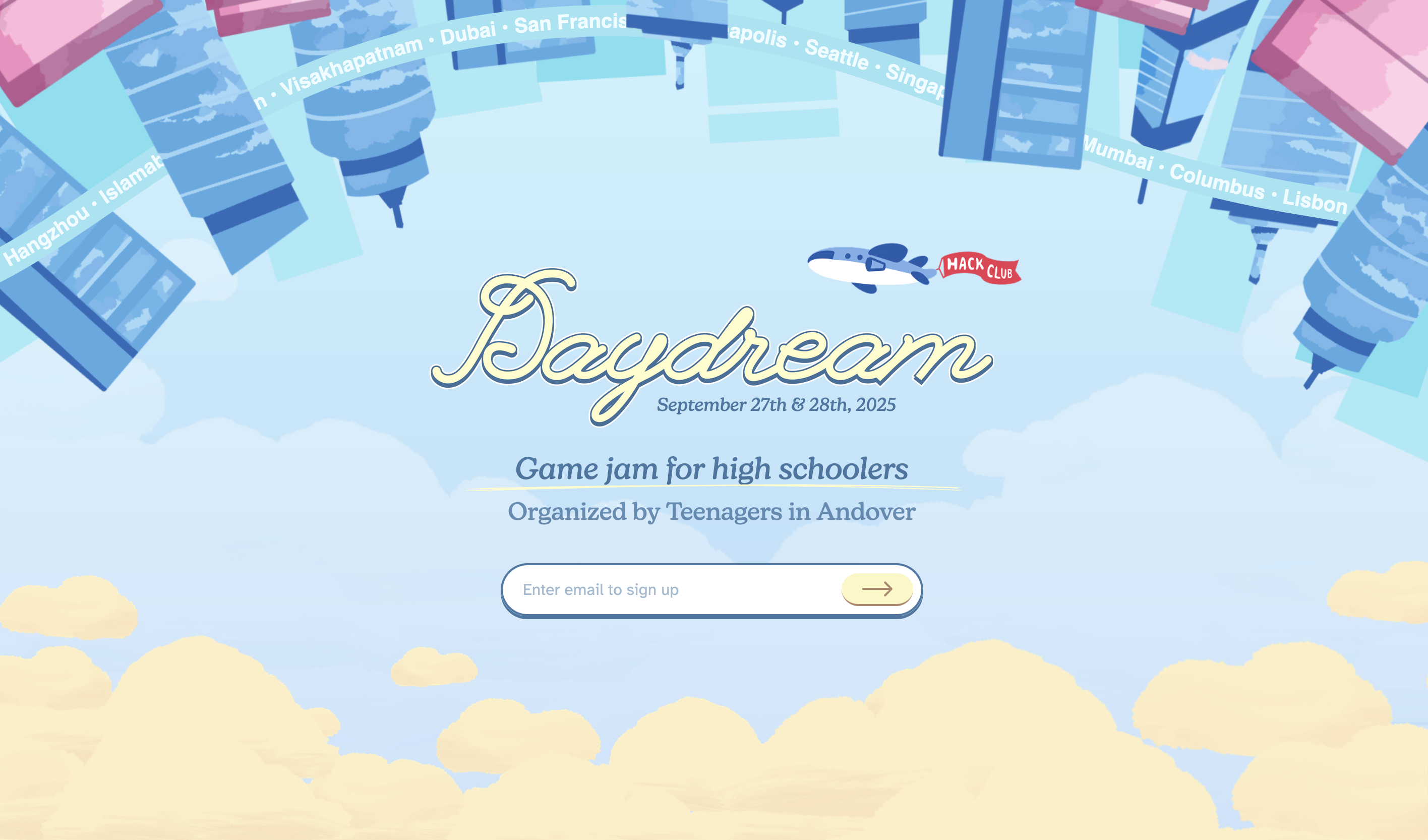
    Student-Hosted Video Game Hackathon Scheduled for Late September

    • September 22, 2025
    Student-Hosted Video Game Hackathon Scheduled for Late September

    World Languages Coordinator Reflects On Career, Retirement

    • June 9, 2025
    World Languages Coordinator Reflects On Career, Retirement

    CollegeBoard Scores 1/5 on AP Testing Administration

    • June 9, 2025

    AHS Student Directs Coming-of-Age Film, ‘Horizon’

    • June 9, 2025

    Discover more from AHS NEWSPAPER

    Subscribe now to keep reading and get access to the full archive.

    Continue reading