EVA LISS || EXECUTIVE EDITOR
On Tuesday March 25, Andover voters elected new School Committee members Jake Tamarkin and Chris Shepley, replacing incumbents Sandis Wright and Emily DiCesaro.
Though this election will mark the first time either Tamarkin or Shepley will hold a political office, both were backed by the Andover Education Association (AEA). Both are very pleased at the outcome of the election, and expressed a desire for substantial change in Andover Public Schools’ (APS) operation, as well as the school system’s principles, indicated in part by their endorsement by the AEA.
The election was also the object of statewide attention, with newspapers such as the Boston Globe reporting on the involvement of outside funding organizations such as the Massachusetts Teachers Association (MTA) in providing funding for Tamarkin and Shepley, as well as Massachusetts Republican Party’s support of Shepley.
On the eve of the election, the Globe stressed the involvement of such contributors as a signal of what seems to be increasing mainstage political involvement in local governments, reporting the election as a “harbinger of what’s to come… as groups, such as the MTA, expand their influences into what once were hyperlocal affairs.”
But for APS, no matter how much attention the election garnered statewide, there will still be hyperlocal results.
As challengers, both newly-elected members bring fresh perspectives to the table.
Tamarkin hopes his background in finances as the CEO of an investor-backed insurance group as well as a corporate strategist at various banks will give him a unique edge to manage budget deficits.
“After [the events of last year], I realized my skills actually could help improve things,” said Tamarkin, referencing last year’s AEA strike. He also referenced the plans for a new high school building, and stated, “[The plans did not apply] the level of finance expertise that I would’ve expected for a $500 million construction. Those were the things that… made me realize that… I could be helpful to town leadership.”
These deficits have in recent years plagued the district, and attempts to manage the budget by last year’s School Committee were met with a five-day strike—the memory of which follows administration-teacher relations, and which Tamarkin hopes to help the district heal from in his time in office.
“[A] step toward doing a lot of the other things I want to do, including healing the relationship with the union,… is to align with the rest of… the school committee,” Tamarkin said. “[I’m aiming for a] good [environment, where] we all trust and respect each other and work well together, and then can extend that out [in] expanding circles—to the… administration, and then with the teachers.”
This cycle of healing that Tamarkin hopes to perpetuate was echoed by Shepley, who expressed a desire to redirect the School Committee’s focus to student- and parent-focused planning.
“The biggest area we should be investing in is the classroom,” Shepley said. He emphasized his dedication to current APS debates, such as redistricting—which would aim to more fully utilize the capacities of the new West Elementary building—as well as an increase in middle school class sizes due to positions being left unfulfilled in an attempt to reduce the district’s budget deficit. “[We should be] giving residents a voice in those sorts of decisions and increasing the School Committee’s transparency.”
When it comes to bringing issues to light, Tamarkin believes that one of the more prominent concerns he’d noticed as a financial expert and politically aware Andover resident is the decline in enrollment APS has experienced over the past decade. This topic rose in public awareness in conjunction with last year’s educator strike.
“[The enrollment decline] is excessive and problematic,” Tamarkin said, which he hesitantly attributes to a need to make Andover more affordable and attractive for young families. “[It’s] happening faster than it is across the rest of the state… faster than it is across comparable districts [and]… faster in Andover than it is with higher ranked districts… It’s really hard to justify budget increases when the student population is going down.”
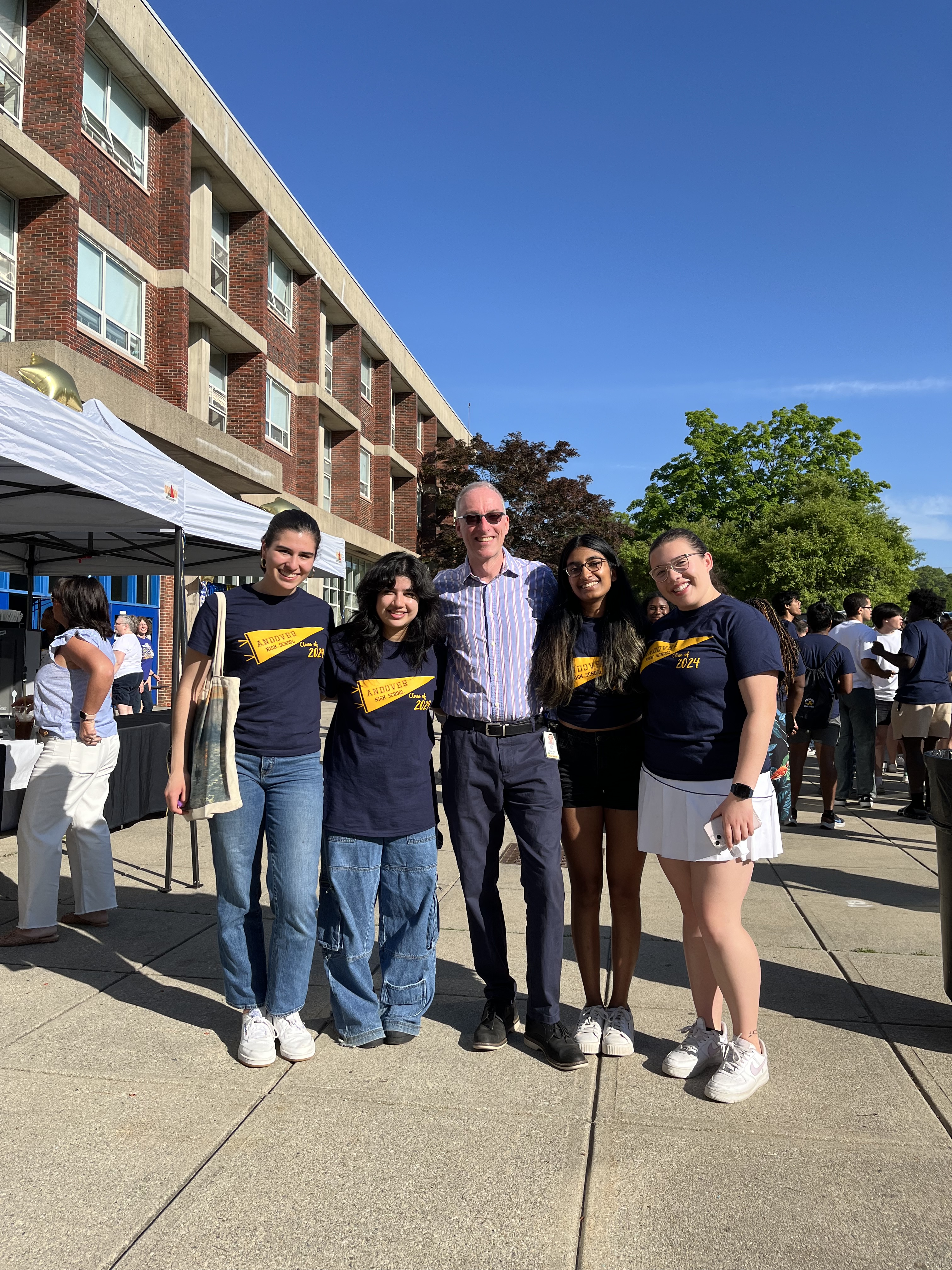
While both members are new to politics, 19-year-old Shepley, who some readers may remember as a member of the Andover High School Class of ‘24, believes his ability to bring a younger voice to the town’s leadership may open new doors.
“I think [my election] really speaks to what the voters want,” Shepley said. “A fresh perspective, my ability to speak as someone who’s been in the shoes of our students and has been through what they go through.”
The new members attended their first School Committee meeting March 27, where they elected Lauren Conoscenti, an incumbent whose term expires next year, as chair.