Navigating the Teacher Lottery: Addressing Grading Disparities in High School Education
  • April 4, 2024

By Tommy Kruecker-Green
STAFF WRITER

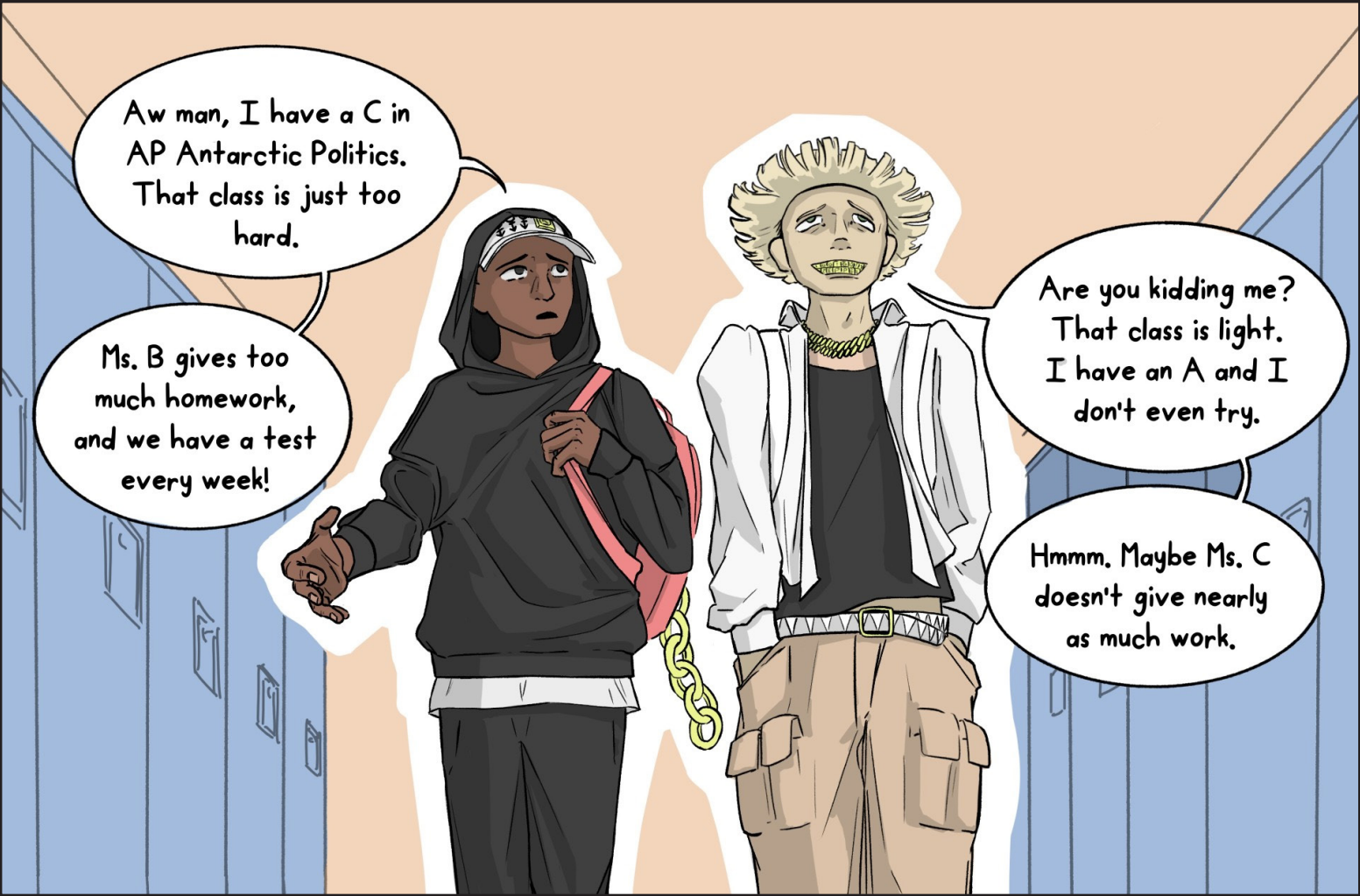
Since time immemorial students have braced themselves at the beginning of each new school year for the latest round of academic roulette as they are handed their class schedules. AHS students are no different. Will I get Professor Sprout for biology? Or Professor Snape for chemistry? Is Professor Lupin the new calculus teacher now that AP “Defense Against the Dark Arts” is no longer offered at AHS?

I have noticed a broad spectrum of opinions regarding teacher expectations. For many students, the coursework in a given class is more challenging compared to other classes at the same level. Conversely, there are those who report a significantly lighter workload compared to their peers taking equivalent classes. This is largely due to differences in teachers expectations. Inevitably, teachers have varying teaching styles, and to some extent, differing content. This is a good thing. However, to have considerable disparity in grading styles for the same course level feels problematic to many. One teacher’s idea of “exceeds expectations” is another’s “needs improvement”.

When teachers enforce much higher standards, obtaining a certain letter grade requires significantly more time and effort. With two students taking the same class and course level, but with different teachers, one may have to work twice as hard to get the same final grade. This is a concerning disparity.

Although some may argue that academic resilience requires some degree of inconsistency—or in other words, variety —course levels at AHS should already account for most differences in rigor.

The emphasis should be, indisputably, on learning rather than grades. Unfortunately, because of how the system is set up, the letter grade matters tremendously to students and families at the end of the day.

These grading differences have further negative impacts beyond just student stress and equity concerns. Students receiving “inflated” grades in classes with less rigorous expectations may struggle when they are later held to higher standards in college or the workplace. On the other hand, students in equivalent classes, facing heavier workloads and/or more stringent grading, have less time for extracurriculars, family, sleep, and other important aspects of adolescent development like contemplating existential angst and formulating a skin-care plan.

Moreover, with college admissions becoming increasingly selective, GPA carries greater weight than ever before. Class rank also plays a major role in academic scholarships and other opportunities. Two students with equal skills and work ethics should not have markedly different GPAs simply due to a “teacher lottery”.

Moving forward, teachers can do more to align grading expectations across sections of the same courses. Teaching styles can and should vary, in the interest of piquing students’ curiosity and engagement. Variety is the spice of life; if teachers taught the same way, school would be quite bland. However, the standard of assessment should be more consistent.

Still, this can be difficult, so the solution lies in transparently accounting for differences in idiosyncratic teacher expectations rather than getting teachers to grade the same way. This solution is used in countries with strong education systems like Canada: it entails publishing class averages on report cards. According to high school student parents Anna Chang of Ottawa, Ontario and Paul Cisek of Montreal, Quebec, Canadian high school report cards show percentage grades rather than letter grades. More importantly, they also list the class average for comparison. This context allows parents, teachers, counselors, and even college admissions officers to better interpret the meaning of students’ grades. For example, an 84% grade appears very competitive alongside a class average of 61%, whereas getting an excellent grade in a class with a 95% class average suggests that it was not difficult to meet the expectations in that class.

Showing class averages provides a helpful perspective when assessing academic rigor. An “easy A” class can skew perceptions of students’ abilities and undermine those taking equivalent courses with more rigorous grading schemes. Admissions officers reviewing transcripts can gain insight into ability and/or work ethic beyond simply the grades earned or the class level. Furthermore, by comparing class averages over time, teachers and administrators can track grading trends to identify issues like shifting rigor or grade inflation.

Of course, there may be drawbacks to disclosing class averages. Students struggling in a course may feel embarrassed or demotivated if their grades fall far below the average. Publishing averages could potentially create unhealthy comparisons and competition. (In extreme cases, it could lead to rampant sabotage, as students try to lower the class average by spiking fellow students’ Stanley Cups with sleep-inducing drugs before exams.) And teachers may also hesitate to share statistics that could invite questions about their grading tendencies being too lenient (“Ah, Mr. Dingleberry, the one who hands out A’s like Oprah giving away cars”) or too harsh (“Behold, the feared Professor Umbridge, with her blood-quill red pen”).

These risks deserve consideration. Still, used judiciously, class averages could provide more academic transparency and be used to benefit students and parents alike.
Continue reading
Caught in the Middle
  • February 29, 2024

By Tommy Kruecker-Green and Isabella Yan
STAFF WRITERS

As sophomores, our view of the future oscillates between daydreams and despair. One moment we envision delivering valedictorian speeches and accepting awards in our dream career. In the next, we sink into the uncertainty of plotting life trajectories without a map or compass. Who will I become? Can I afford college? What if I never figure out what career inspires me?

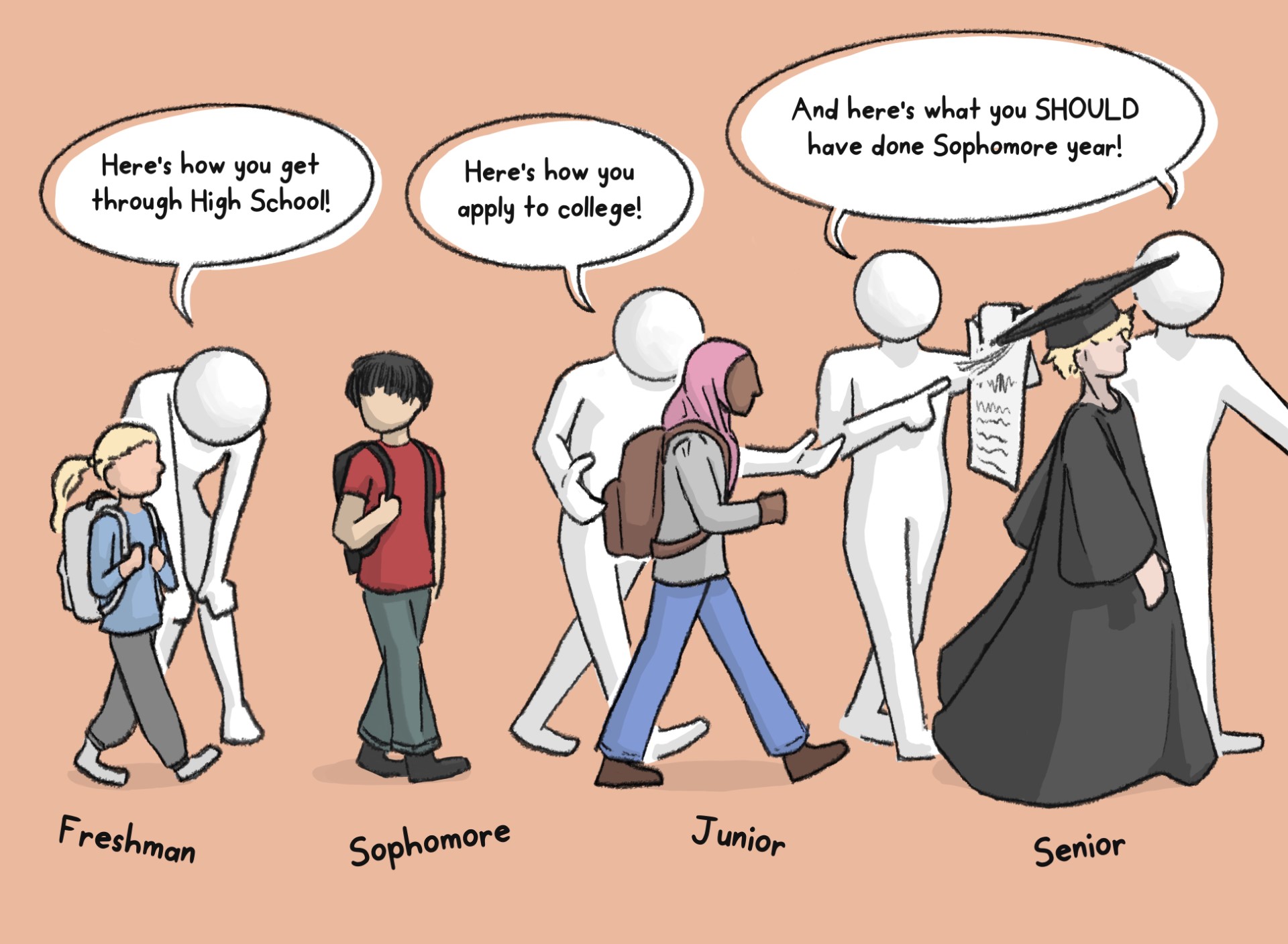
Interviews with tenth graders led to a general consensus: our school could do more in sophomore year to help students prepare for their futures. Counselors and teachers often devote the most attention to freshmen adjusting to high school and upperclassmen applying to college. Sophomores inhabit an awkward middle ground—no longer wide-eyed but not ready to prepare ourselves for graduation’s looming deadline. 

From the school’s perspective, limited career advising for sophomores prevents overburdening students and counselors alike. With over a hundred students apiece, counselors prioritize helping those most in need of support. “[Sophomores] are not as needy as a group,” explained counselor Jayne Jones. “You are not applying to college right now, you are not creating a college list, you are not needing a recommendation per se… Sophomores are just sort of left a little bit because they can be left.”

This is a fair point. However, what we choose to participate in during sophomore year holds much greater weight given today’s ultra-competitive admissions landscape. With more students applying for limited spots at top institutions, colleges increasingly seek evidence of commitment and leadership from prospective applicants’ earliest high school years. Admission officers don’t expect us to have life figured out at fifteen or sixteen, but they want signs we’re purposefully sampling activities aligned with our emerging strengths and passions. The stakes feel uncomfortably high for sophomores who are simply hoping to discover their interests, and the hard truth is that involving ourselves with the “right” organizations now can make or break our candidacy down the road. As anxious as it makes students to strategize so far ahead, not scoping out extracurricular opportunities with admissions checkboxes in mind means losing a prime chance to build the “hook” that gets us noticed from the overflowing stacks of applications.

It is because of this intense pressure that sophomores feel they need more personalized guidance on extracurriculars and future planning. Sophomore Eva Nguyen summarized the common sentiment: “Counselors can do more to open up the door to students for discussion about their futures.”

A lack of early career planning is felt especially strongly by sophomores Pranav Yadla and Noor Bhatti, who come from immigrant families without experience with the American college system. 

“I have no idea what colleges want; I didn’t even know what the process was, [so] I had to find it out myself,” said Yadla. Like many students with immigrant parents, his parents received a college education outside the U.S. where there is a completely different admission system.

Over the last few decades, college admissions in the United States have changed tremendously, including significantly higher tuition and changes to general application expectations. These are critical factors that sophomores who intend to attend college should begin to consider.

In a maze of unfamiliar requirements, many sophomores whose parents “don’t know anything” turn to outside sources such as advice from college friends, the internet, or even private college counselors. But, astronomical costs put the latter out of reach for most. Somehow, students from families new to America must solve a complex puzzle missing half the pieces.

More robust sophomore advising would benefit every tenth grader. But this could overburden the already strained counseling department. Perhaps the answer lies in empowering students to self-organize the guidance lacking from formal administration sources. Students could lead group discussions on college essay writing, scholarship opportunities, or lessons learned from older siblings now in college. Retired teachers may volunteer to moderate these student gatherings and offer their advice.

For students from immigrant families, group sessions could help decipher unfamiliar aspects of American college prep: differences in application timelines and requirements between the U.S. and other countries, a breakdown of key standardized tests like the SAT, or nuts and bolts overviews detailing how financial aid functions here. These sessions don’t need a lot of funding—they could operate on a shoestring budget or by student volunteers.

Until we start troubleshooting ways to do more with less, sophomores will continue to be caught in the middle, dangling between childhood dreams and adult decisions. Like trapeze artists without a net, we twist anxiously in the space between launch and catch. The time has come for schools to position the mesh—a safety net of supportive guidance.

Continue reading
OPINION: Homecoming Revival Faced with Mixed Spirit
  • December 5, 2023

By Melody Tang and Grace Wang
ONLINE EDITOR AND STAFF WRITER

AHS’s first homecoming in over 20 years took place this October. From Monday’s Color Wars to Friday’s Andover Gear Day, people participated to show their AHS spirit. On Friday, October 20, AHS took home a close victory by two points at the homecoming football game against Central Catholic. Amidst it all, two divisions emerged. Although some thoroughly enjoyed themselves during the week of festivities, the overall absence of school spirit made homecoming week disappointingly lackluster.

The spirit was missing from the general student population. When compared to the overwhelming spirit and participation of other schools, AHS just doesn’t measure up. However, the lack of school spirit isn’t a problem generated by poor execution of homecoming. Instead, the subpar homecoming results are created by the culture culminating over the past few years at AHS. Students lack AHS pride. 

ILLUSTRATION / Xander MacKay

Except, it doesn’t have to be all negative. Many students and teachers did participate in celebrating homecoming. Though it may not have been overwhelming, it’s definitely a step up from the past. This homecoming could be the gateway to bringing back AHS pride. People did participate, and people did have fun. But how can we make the experience more universally enjoyable?

Kicking off the week, we had class colors on Monday. Then, we had Adam Sandler Day on Tuesday, Country versus Country Club Day on Wednesday, Tropical Day on Thursday, and Andover Gear Day on Friday. Each day was unique and creative, garnering mixed opinions. 

“I thought spirit week was pretty cool…we haven’t had a school-wide one like that since I’ve been at AHS,” said junior Shreya Desai. “It was a fun way to have some school spirit…I did love Country versus Country Club Day…I liked Spirit Week and hope we can do it more often.” 

“The themes were definitely different from what I’ve seen in the past,” said Senior Sanchita Swamy. “Country versus The Country Club was so odd, and class color didn’t work because people either didn’t care or wore the wrong thing.” 

“Spirit Week was boring and stupid. No one in the grade–even our teachers–did anything for Spirit Week. Maybe 12 out of 400 freshmen participated,” stated freshman Alex Nguyen.

“Not a lot of people dressed up for Spirit Week, mostly just seniors did, but even then, it wasn’t the majority,” said Senior Board member Anton Shvets. “I don’t think it had a staggering impact.”

On the bright side, we cannot forget to mention the proud victory against Central Catholic at the homecoming football game. AHS beat Central Catholic by two points, and the tight victory should be celebrated. 

Still, homecoming just didn’t feel special enough. “It was HOCO, but, to be honest, there was nothing special about the game. Like, I wouldn’t have known it was HOCO if it wasn’t on the board,” said Senior Anton Shvets. 

How can we generate more excitement? How can we create a more united atmosphere? How can we make our high school events even more special? With AHS’ dwindling spirit, it’s all the more important for events like this to bring the school together. 

The well-known dance celebrated by high schools nationwide was planned with a Hollywood theme for a grand reintroduction, complete with a DJ from Boston’s Kiss108 music station.

The idea of re-establishing homecoming was mostly suggested by current juniors and seniors. “We’ve been here the longest without one, and we wanted (to have it) one year… so that the freshmen and sophomores could continue that legacy,” said Aeyah Elbasiony, one of the student coordinators who planned the event along with the help of a group of parent volunteers.

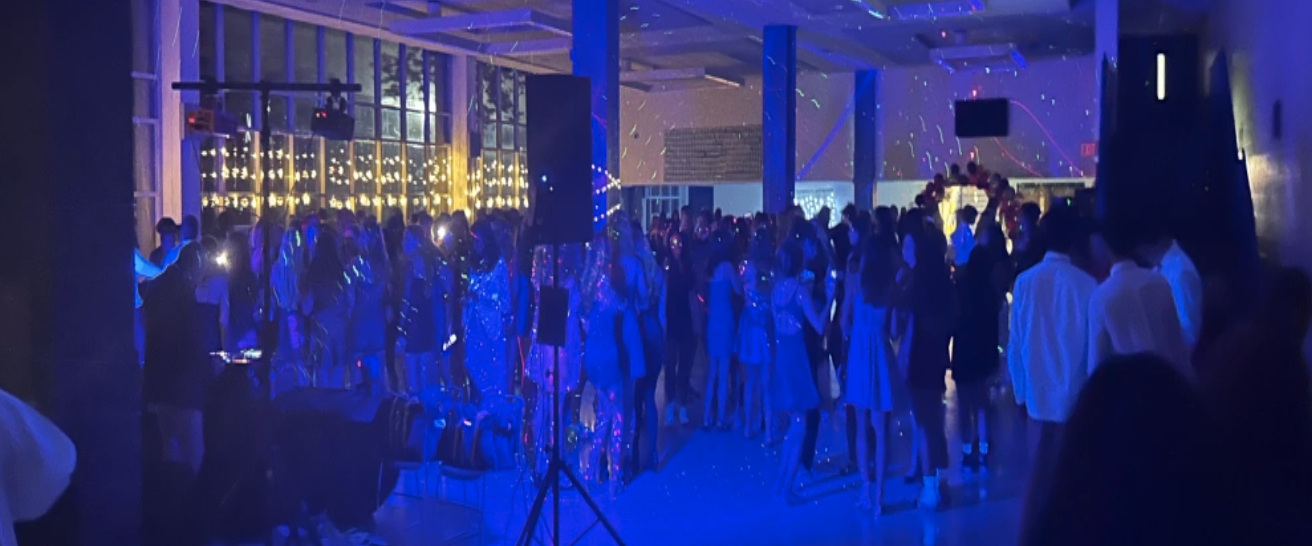
“I expected a lot more people,” said senior Raghav Tewari. “I thought there would be more seniors coming too… I mostly saw sophomores and freshmen.” While Aixa Hilario De Kelley stated over 300 tickets were sold, it is difficult to confidently say that over 300 attended the dance. The cafeteria was far from packed, and it is ironic how the grades that were most excited about the event ended up having the lowest turnout. 

If all the students who purchased tickets did show up, the mood was severely lacking for an over 300-strong army of students. “It felt very separated like everyone was just in their own groups,” remarked Shvets. Students huddled separately in small bunches, and dancing was minimal. Even with the blasting music, most attendees seemed to be at a refined banquet rather than a raving dance. 

STAFF PHOTO / Melody Tang
Members of all grades attend Homecoming in the school cafeteria.

Nguyen commented, “Less than 20% of freshmen went to homecoming–I knew maybe four people who went. I’m telling you, no one was excited.”

“Some people were really excited,” said Desai. “Most were not fans of the fact that it was every grade, so that’s why they didn’t go.” 

While the return of homecoming was indeed a monumental event to celebrate, the lack of school spirit lessened the grandeur of its return. The overall participation for Spirit Week and turnout at the football game and homecoming dance revealed AHS’ biggest challenge: spirit. In preparation for future school events, let’s try harder as a student body to craft more vibrant and unforgettable experiences that truly capture the wonders of Andover High.

Continue reading
A Call to End the Home-Economic Recession
  • May 2, 2023

Brandon Nguyen
STAFF WRITER

Say you’re driving on the highway, when all of a sudden your tire gets punctured. You know you have a spare one in the trunk, but how exactly do you change it? Or, you just got a new jacket, and as you’re putting it on you hear a massive RIP down the back. You find a needle and thread, but actually fixing your coat is another issue. Maybe you’re home alone and you get a little hungry. You rummage through the pantry to find instant ramen packets, to no avail. What happens when cooking is your only option?

ILLUSTRATION / Brandon Nguyen

 These were a handful of many experiences of Sophia Nguyen, an Andover High School alum and a freshman at Northeastern University. “From my first few months away from home, I realized how unprepared I was for just everyday things,” said Nguyen. “I’m lucky to live so close to home. I couldn’t imagine living somewhere like California and having [my car] break down.”  

There’s a simple solution to teaching these skills: Family and Consumer Science (FCS) classes. Previously called “Home Economics,” FCS classes are designed to give students the necessary, non-academic skills to live on their own. They  teach students basic life skills, including cooking, nutrition, home management and upkeep, sewing, budgeting, and child and family care. At AHS, there are a couple classes focused on life-skills: the Financial Literacy elective teaches money management, taxes, and insurance, and various business classes teach how to start a resume and communicate with employers. But, many students feel that those classes are not enough to equip students to live on their own. 

The history of FCS and Home EC classes is complicated, with them becoming popular in the 1940s. They divided people by sex, with girls usually learning childcare, while boys took woodworking and shop classes—all to prepare kids to fit into conventional gender roles. However, many changes to FCS courses have happened over the past 60 years, including the Civil Rights Act of 1964, which allowed people of any sex and background to participate in all domestic education classes. But as the workplace became more accessible for everyone, regardless of gender, schools began to prioritize higher education instead of FCS classes. 

Focusing on preparing students for professional careers is important, but academic careers and domestic labor are not mutually exclusive. As AHS students choose to leave the house after high school, many have said they feel unprepared to live on their own. “The curriculum at AHS feels more focused on business and STEM classes,” said Charlie McNally, a sophomore at AHS. “While they’re good skills to have, they really only help in a work environment, and nowhere else.” 

Zoie Zeng, another sophomore at AHS, said, “There’s so many responsibilities we have once we’re adults that we don’t learn about. To be honest, I don’t know the first thing about taking care of myself. I don’t even know how to cook.”

While some have brought up how the skills taught in FCS classes can be learned at home, there is a benefit to having life skills be taught in schools. “Both my parents work full time jobs; if I wanted to learn something I’d have to go to the internet,” said Nguyen. “That can work for some, but a hands-on experience is probably much more engaging and keeps people safe. Having someone there to inform and correct mistakes could be much more beneficial than the internet.” 

Emily Tsai, a sophomore at AHS, also mentions how while online learning is possible, it’s also helpful to have a class to “give students the motivation to actually learn something.” 

Tsai also brought up how subjects learned in academic classes can be incorporated into FCS classes. “My father was able to do Home EC courses in high school… and in the plumbing course, they were able to demonstrate topics like series and parallel circuits by creating a solar-powered water heater,” said Tsai. Depending on if they used a series or parallel circuit, students were able to see which one made the water heat up more efficiently. “It seemed like a much more interesting way to demonstrate the topics that we learned in Physical Science, instead of using the janky kits.” 

As for how likely FCS classes can be added to the AHS curriculum, it seems the possibility may be growing. According to Principal Brown, “[AHS] is looking to hear from students on what they want to have out of their high school experience.” This is part of the “Vision of a Graduate” work the AHS administration is doing, as they define what our community wants an AHS graduate to be. “The idea of the Vision of a Graduate is that the skills taught at AHS would be part of our DNA. Everything that we do would be based on what that vision of a graduate is,” said Brown. “As we do the planning around a renovated or new school, a maker space that would allow for more hands-on work is definitely in the design.”

Whether or not students are ready for life in the real world is a question that is on the forefront of the minds of students, teachers, and administrators at AHS. But one thing is certain: FCS courses can offer students new confidence when it comes to entering life beyond high school. “Independence can be really daunting, but with the right guidance, living on your own can feel more like walking down a hill than jumping off a cliff,” Nguyen concluded.

Continue reading
Micro or Macroaggressions?
  • March 20, 2023

By Carissa Dessin
STAFF WRITER

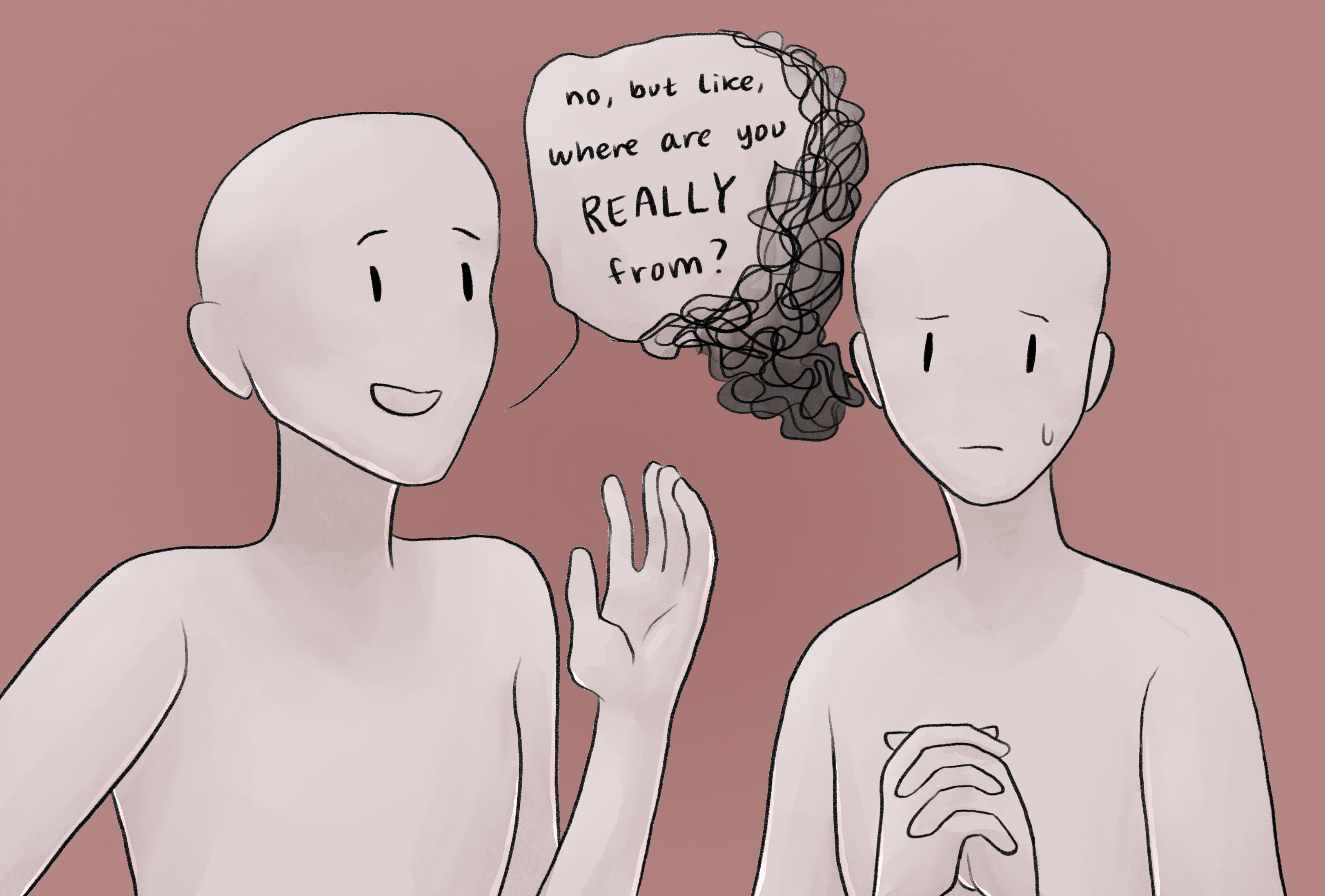
Imagine trying to make conversation with your dentist and they ask you where you’re from. You respond to this seemingly harmless question with your birthplace: Cape Cod. They respond, “No, where are you really from?”

This is the story of mixed-race history teacher Kathryn Reusch. 

Imagine walking into a restaurant with your black father and white mother and having all eyes turn to you at once. The stares from people as you walk down the street with your father, all of them wondering why the two of you would be together.

These were the stories of biracial senior Quinn Dowe.

Now try to imagine your hair being repeatedly being grabbed at and prodded after telling the person to stop and having your hoop earrings being pulled off and clipped back on despite your multiple objections. 

This is what happened to black sophomore Sofía Durán-Clark.

ILLUSTRATION / Naomi Bloom

While these stories may seem outlandish and rare, these experiences happen a lot to people of color in today’s society, often in the classroom. These instances, called microaggressions, are far too overlooked and much too common. The ignorance of this behavior must be stopped. 

According to Oxford Languages, a microaggression is defined as a statement, action, or incident regarded as an instance of indirect, subtle, or unintentional discrimination against members of a marginalized group such as a racial or ethnic minority. When you make an assumption about someone based on their race, you are being microaggressive. If you create an environment where a minority feels unsafe, you have probably been microaggressive.

As serious as microaggressions are, the prefix “micro” devalues the feelings and experiences of those being mistreated. The word implies that the action is small and harmless when it can seriously negatively affect a person. “It can make you feel like an outcast,” said sophomore Nyeema Lewis. Reusch said that these experiences “leave [her] thinking and thinking and thinking about it,” which is just unfair. People can just move on in their lives after saying something offensive while the victim has to live with what they said. Just because these acts are labeled as “micro” does not make them any less innocuous. 

Durán-Clark shares that whenever she experiences a microaggression, she feels like she becomes the center of attention, in a bad way. She describes it as a “zoo-like experience,” which shows how blind people are to how their actions are affecting people. Dowe agreed, suggesting that some “people are just so locked in their own shell,” they feel the need to comment on anything or anyone that looks different. “They kind of think of us like animals,” said junior Alice Segun-Oside. These actions seem to be under the guise of curiosity and innocence, but “some people just don’t understand that a lot of what they’re doing is rooted in racism,” said Durán-Clark.

Janay Cox, sophomore, calls it “crazy how people can be so ignorant and bold.” The lack of self-awareness that people can have is truly shocking to the point where you’re asking: “How can they not know?” Lewis makes a good point: “People are ignorant and ignorance is bliss.” The less people know, the better, apparently, because then they can continue in their ignorant ways and actions.

Hearing these events happen over and over again definitely brings to the table a question of how this problem could be stopped. Sophomore Judy Elktory called on all educators to “not [share] single stories” when describing a certain culture or ethnic group. A single story is a generalized perception of a person, place or thing. “You never really get to learn about how beautiful a culture is,” said Elkotory. Getting rid of these one-sided perspectives would be a great way to prevent microaggression by eliminating ignorance, stopping the problem before it starts.

Now, what happens when the problem does start? What happens when that uncomfortable environment is created? The solution, it seems, is immediate correction and repercussion. “When it happens, fix it immediately, instead of letting it continue to happen,” Lewis states. Whether it is speaking up and correcting when you or someone else has been aggressed upon or, if you aren’t comfortable doing so, telling someone who will be able to more comfortably speak up and correct the aggressor. Junior Ismael Rodriguez had the same opinion, and stated that “being lenient towards it will allow it to continue.” 

While microaggressions and racism are never easy topics to talk about, it is an absolutely necessary discussion to have. The potential discomfort does not outweigh the problem that is all-too-normalized. The lack of open communication and education is the main cause of this problem of ignorance. Therefore, the only logical solution would be to do the opposite and begin combating ignorance before it begins. 

The discomfort that comes with talking about race does not mean ignorant and uneducated people should continue their unintentional reign of abuse.

Continue reading
Climate Change: An Opinion
  • February 13, 2023

By Anushka Dole
STAFF WRITER

Climate. Change. On their own, these words are as common as any others; something not worth a second thought in the busy commotion of our daily lives. Yet, when these unassuming words are put together, they create a bombshell of a phrase that threatens to destroy the very fabric of our society. The topic itself is shrouded in controversy, and discussions often end poorly. However, it doesn’t have to be this way. We must open up the conversation if we are to solve this issue. 

“Biodiversity is in crisis, the climate is in crisis, there’s going to be big, big changes in the 21st century, and I think it’s really important that people know and understand,” said Alexis Valenti, who teaches environmental science at Andover High School.

In order to truly understand climate change, asking questions is essential, and one of the key questions in many of our minds is, “Why is it so hard to get rid of climate change?” 

Melanie Cutler, who teaches AP Environmental Science and the Environmental Sustainability Internship Course (ESIC) has the answer. “The biggest challenge,” she said, “has been that, for whatever reason, fighting climate change has become a more political issue than it needs to be.” Indeed, as per Truthout News, in the US Senate, one in every four senators holds investments in the fossil fuel business. The giant industry has generated nearly $2 trillion in profits since 1990, making it very lucrative to invest in. 

Besides the political snags, there are also scientific issues to contend with. The problem lies at the heart of modern living: almost all the contemporary comforts we enjoy are fueled by fossil fuels. Everything, from our TV to home heating to transportation, relies on fossil fuels—even things we wouldn’t normally consider, like concrete (the world’s third largest emitter of CO2, according to the BBC.) 

One may argue, “Why don’t we just shut down the production of oil as soon as possible?” Though it may seem like the obvious solution, implementing it is not as simple as it seems. The renewable energy technology we have right now is just not up to the mark. Scientific advancements, along with political coordination, must be made if we are to use entirely renewable energy.

Fortunately for us, there is no shortage of ideas in searching for solutions. Valenti and Cutler both have insightful thoughts on ways that society as a whole could tackle this problem. “Environment shapes behavior, so if you want people to behave in a certain way you have to set up the environment… to make it easier to do the right thing,” said Valenti. An excellent example she gave was that in New York City, “many people… don’t own cars because of the high costs and big hassle of owning and driving a car there; it’s much easier to walk and take public transportation.” 

For Cutler, the biggest thing that American society can change in order to contribute to solving climate change is “wean ourselves off of fossil fuels and switch towards renewable.” In addition, she said “we need to improve our whole electricity grid and develop a lot more battery technology to store wind and solar power.” In this aspect, there is good news: according to a recent article from the Boston Globe, carbon emissions from the national electric grid have fallen—a sign that innovations are being made thanks to the coordination of science and politics. If political leaders give science the funding it needs, it is possible to revolutionize renewable energy technologies. 

Climate change is a wide-reaching problem with dire impacts, but that doesn’t mean we should lose hope. “The most important thing is to help people understand we need to be more conscious of how we live,” Valenti said. Spreading awareness and taking action are things that we can all do together, whether it be through participating in our school’s Environmental Club, using a carbon footprint calculator to find and eliminate our personal emissions, reducing our meat consumption, or even bringing a zero waste lunch. We can also lobby our local and state governments to act for climate change. Our involvement and enthusiasm is what will propel us forward. 

The pursuit of science and politics will be essential in tackling global warming, and our school has opportunities for education here as well, including the Intro to Environmental Science course, Advanced Placement Environmental Science, and ESIC. There are a number of ways we can contribute to combating climate change in our own town, and perhaps use the same skills to improve larger communities.

As Cutler eloquently phrased it, “For every problem we talk about, we talk about lots of solutions, and there’s lots of good news on the horizon.”

STOCK PHOTO / Climate change

Continue reading
OPINION: Socrates v. Students?: AHS Speaks On Socratic Seminars
  • January 13, 2023

By Carissa Dessin
STAFF WRITER

The Socratic seminar. The place where students share ideas, ask questions, and get clarification on a piece of literature. A place that some students love and some hate.

Socratic seminars can be terrifying to an anxious or unprepared student. Heads snapping towards you once you open your mouth, the anxiety of a teacher asking you to speak up so the whole class can hear, the silence that fills the room after you speak as if nobody understood the words that left your mouth. 

ILLUSTRATION / Naomi Bloom

“It’s an essential technique for the English classroom,” English teacher Brian Shea said. 

Shea’s reason for doing Socratics is simple: “The reason, really, is so it’s not just me talking all the time.”

Sophomore Lucy MacLean is not a fan of Socratics, but she “would rather do a Socratic seminar than write an essay.”

Socratics have fewer criteria than an essay would, since students are mostly graded on participation. Essays may have an abundance of requirements, such as an outline, a certain number of paragraphs and pages, font size, heading, and more. These things can cause students to lose sight in what they are doing, which is showing understanding of a piece of text. Socratics don’t seem to need that much preparation besides bringing in questions or discussion points, which could lead to more analytical thinking from students.

“[They] can cause stress and nerves for students who are less comfortable speaking in large groups,” said sophomore Piper Gorsuch, who empathized with the students who disliked or felt uncomfortable during Socratics. “For some students, the benefits might not outweigh the stress.”

Gorsuch herself has mixed feelings on the matter. The idea of Socratics and the preparation stresses her out, but her previous experiences have been nothing short of enjoyable. She is able to relate in some way to those quieter students, saying, “When I don’t know as many of the people, I feel less comfortable speaking up.”

It just so happens that a lot of students don’t have a strong positive or negative-opinion. Many have mixed feelings about them, like sophomore Chloe Gibson. “It’s nerve-wracking and scary having to jump into a discussion,” she said. “But it’s nice to hear classmates’ opinions.” 

This is true, hearing a classmates’ opinion is a nice refresher from always hearing a teachers’, but some students may take things too far. There are some students that tend to dominate the conversation and speak over quieter classmates that just want to get their participation points. This could damper the mood of any student and discourage them from speaking. But it mostly encourages students and causes them to be more assertive which is a quality that is very crucial in life and adulthood. 

“Whether or not they like them is not the point,” Shea said bluntly. “It’s more teaching them that skill so they can be successful in other areas.” 

He pictured a scenario where the student was at a table with their future employer and colleagues, having to brainstorm and share ideas. The employer expects them to be able to contribute to the discussion and be comfortable speaking in the conversation. 

“I want you to feel like you’re prepared to engage in that discussion because that’s a career,” Shea started. “You’re not just talking about a book in class, you are engaging in a sharing of ideas and questions. If you don’t speak up, you’re not going to be noticed and you’re not going to get that promotion or you’re not going to get that raise or you’re not going to get that job.”

Sophomore Bailey Heckman agreed, “[They] help you learn how to have a real important discussion that will benefit you later in life.” 

For the students that truly hate Socratic seminars, is there an alternative? Is there a way to share your opinion without all the preparation and stress?

There just may be.

They’re called dialogic conversations. They are an exercise used in history teacher Mary Robb’s classes where students discuss topics based on personal experiences rather than a piece of literature or a character.

The group gets a prompt and the students get five minutes to think and write about their answer. Then, each student gets two minutes to share their experience with that topic. “There is an option to pass if students are not comfortable with sharing. A student who chooses to pass would hand in a written response,” Robb said, providing an alternative that might calm the nerves of anybody who was worried about sharing out loud. 

Instead of the student speaking on a book that they may not understand or relate to, they are speaking from personal encounters. This provides a less stressful time for students and an overall good experience for students to share their feelings and experiences where they wouldn’t normally be able to. 

But what brings ease to one student might bring stress to another. Some students might be too scared to share personal information with others, and while they do have the option of a pass, it still creates an all-eyes-on-them moment. Then again, it will be difficult for them to open up and speak about their experiences later in life if they don’t start early.

Now, comparing Socratic seminars and dialogic conversations wouldn’t be fair. They are two completely different activities that require a different side from the students. Dialogics ask a student to pull from their own brain and their own experience and Socratics ask them to analyze a piece of literature and show understanding through asking questions, answering questions, and providing backup with quotes.

Though the two exercises are very different, both require the bravery from students to put themselves on center stage and speak their mind.

While Socratics are stressful and require a lot of preparation, they are important. They help prepare students for the real world and teach a lot of the essential skills they need to succeed. Shea brings up a good point; it’s not whether they like it or not, it’s a matter of if it is necessary to succeed.

Continue reading
OPINION: H1: Keep or Scrap?
  • November 22, 2022

Vismay Ravikumar
STAFF WRITER

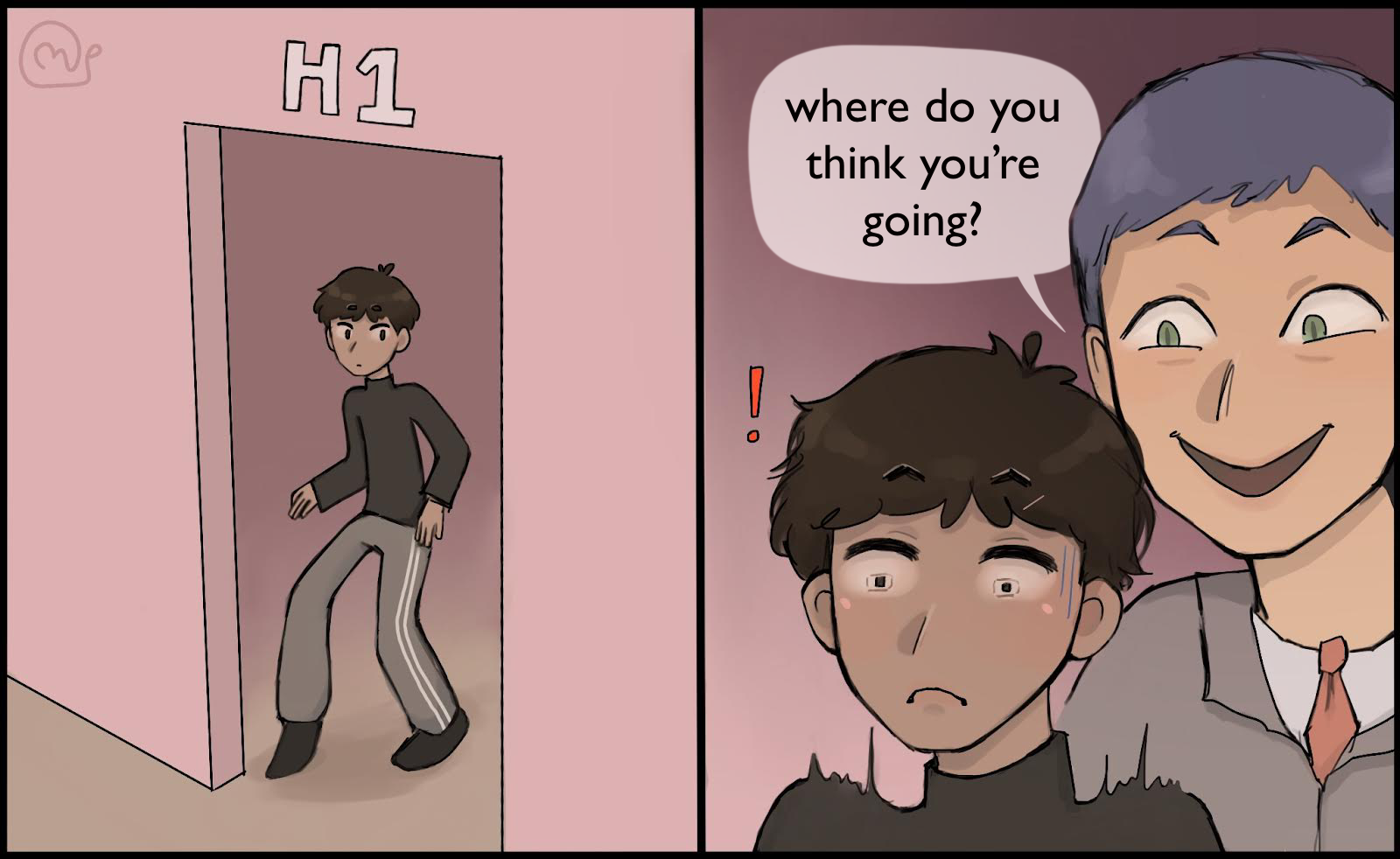
H1 has been a polarizing topic among students and faculty alike. The question stands: Should we keep the agendas, modify them, or get rid of them altogether?

Ever since Andover High School transitioned to the 7+H schedule, H blocks have been a saving grace for many students. Mirroring “flex” periods that are offered in middle school but with more flexibility, H blocks give students a chance to meet up with teachers, receive extra help, do make-up work, and collaborate on group projects during school hours. However, this ability is limited only to blocks H2 through H5. H1 remains an advisory block, with detailed agendas compiled by an advisory board of 20 faculty members designed to build school community and provide grade-specific instruction.

Alicia Linsey, the Clinical Coordinator at Andover High and soon-to-be assistant principal, is overseeing a revamp of the H1 block. Linsey sees H1 as a space to foster a greater sense of community among students and faculty. According to her, H1 time is “focused on grade-specific programming that encourages community building and cultivating positive peer and faculty relationships.” Through community-building activities and grade-specific agendas, Linsey hopes to build camaraderie within the school and prepare students for upcoming milestones in their high school careers.

This year, the H block team is planning to implement a system where each freshman H1 receives three to four upperclassmen ambassadors who provide mentorship and guidance and meet with their group once every month. Through this system, freshmen can receive advice from upperclassmen that will better prepare them for high school and have a resource they can reach out to with any questions.

Despite many efforts to improve H1 over the previous years, students and faculty are split over the role of H1. Senior Rishi Gujjar “doesn’t see the point in it, usually, most of these could be addressed with a simple email rather than having an entire class block dedicated to it.” If carried out correctly, these activities can benefit students, but if they span the whole block, they tend to take away time from students who need to study for tests and catch up on assignments.

ILLUSTRATION / Melody Tang

When asked about the intended purpose of H1, Nicole Campbell, math teacher at Andover High, said that it is meant to provide “regular” teachers and peers that students see throughout all four years of high school, allowing them to meet people who they otherwise wouldn’t have met. However, students tend to stick with the people they know and hesitate to branch out to meet others. Furthermore, some H1 teachers are difficult to approach, discouraging students from reaching out to them. To make themselves accessible, teachers need to facilitate conversation and establish themself as a resource rather than authoritarian.

H1 agendas often lack material specific to each grade. Course selection is a mundane task that students already know how to do by junior and senior year, and this time would be better spent on grade-specific topics, such as college admissions for seniors or the college search process for juniors. Thus, H1 agendas are often of little value to students and need to be overhauled to make the block worthwhile. 

Student engagement during H1 has been amiss. Campbell remarked that “honestly… [students] are engaged with each other” as opposed to engaging with the H1 agenda. Campbell recommended that H1 agendas should be made shorter to deal with this issue.

Junior Kyle Huang concurred with this lack of student engagement during H1. According to Huang, H1 often lacked a sense of invigoration among students and has a “forced” feeling associated with it. Frankly, students don’t get anything out of filling out forms and doing personality tests that have little or no value to them. 

Meghan Michaud, art teacher and a member of the H1 advisory board emphasized her commitment to adding activities that aren’t simply “fill out this form – see how you rank”. Freshman and sophomore H1s this year worked together on a puzzle, where they each designed an individual puzzle piece and put them all together: a short community-building activity that builds teamwork without taking too much time away from students.

In particular, Michaud mentioned the cookie-decorating activity done in previous years, and how it was a bonding experience for them as the whole H1 had to work with one another making the cookies. Regardless, anything involving food is sure to pique students’ interests.

The likelihood of H1 going away is very slim, as it does let students meet peers that they wouldn’t have met otherwise, and is an effective method of communication between students and the administration. However, numerous issues have plagued it: namely, a lack of student engagement and relevant material. To combat this, H1 agendas should be made shorter, interactive, and more pertinent to each grade so that students not only get more out of it but have time to catch up on schoolwork.

Continue reading
FAREWELL COLUMN: Looking Forward
  • May 23, 2022

Camille Storch
CO-EDITOR IN CHIEF

When I first stepped foot into Andover High School my first day of freshman year, I had a rush of emotions hit me like a wave. I felt scared, nervous, and confused, apprehensive about being able to make new friends, settle into a new environment, and enjoy my four years. I had a feeling in the back of my mind that the time would fly by extremely quickly, yet in the moment, just the first quarter of freshman year alone felt daunting. 

Throughout freshman year, I made more friends than I thought was possible, and joined different clubs and extracurricular activities, where I met even more people, including both students and teachers. I also was hit with a blunt reality of time management, and the inevitable struggle for balance between school and social life, a balance that probably will never be equal.

Sophomore year, I began to hit my stride, settling into a comfortable rhythm between running cross country after school, staying on top of my classwork, continuing to make progress taking piano lessons, and hanging out with friends. I was able to get involved in more clubs, including Mock Trial, which became a favorite part of my weekly routine. In addition, I found myself dealing with a knee injury from running and learned how to deal with the obstacles and annoyances of being unable to do something I love. 

COURTESY PHOTO / Camille Storch
Storch celebrates her senior night for cross country alongside fellow senior captains

March of sophomore year, I, along with the rest of the world, was faced with a new obstacle, greater than any obstacle I had ever faced; being in quarantine at home. With COVID and the first couple of months of at-home learning, I was able to adapt to a new way of taking in information and simply living. Being online for school had its benefits, but I also struggled with staying on top of my work if no one was there to enforce it. I got to see friends over Zoom, but that was nothing compared to hanging out with friends in real life. During these spring months stuck at my desk, the only motivator for me to keep going with school was the anticipation of summer. Even though the country was still very much shut down, I couldn’t wait for free time to just be outside, take bike rides and walks with friends, and go to the beach. 

Junior year, I began to start looking at schools to check out prospective colleges and locations I either liked or didn’t like. At the same time, many of my friends who were seniors were making their college decisions, which piqued my curiosity in the entire process. I began to spend a lot more time with these friends, trying to make the most of our time together before they graduated. With school being hybrid, I only got to see half of my school, which meant only seeing half of my friends when I was in the building. Lunch time is normally a time when I can sit and talk with everyone, not just the kids in my exact lunch block class, but instead, I was only in the Dunn Gym, eating my lunch at a desk six feet away from the next, during the same two blocks each week. As I entered the summer post junior year, I was swept up with working at my family’s bakery, working on my college essay, and trying to wrap my head around entering my last year of high school. 

Now, as I complete my senior year, I am grateful for all of the opportunities and fun experiences that have been provided to me as a result of being part of the Andover High community. I have worked hard this past year, but I finally feel that my hard work and effort has paid off, and I am looking forward to the future. I know it sounds cliche, but our high school years truly do fly by in a blink of an eye, and as Ferris Bueller once said, “Life moves pretty fast. If you don’t stop and look around once in a while, you could miss it.” When I look back after four years of high school, the memories, experiences, learning curves, and growth makes it a time worthwhile.

Continue reading
EDITORIAL: College Decisions Causing Stress
  • April 7, 2022

High school seniors across the world are currently having to grapple with a major decision that will play an important role in their further education. For some students, deciding where to go to college is simple; they have known their whole lives they are destined to go to this place, or they toured a specific school junior year and knew it was the one. Yet, for others, the choice can be quite stressful to map out.

Due to the COVID-19 pandemic, there has been significant changes to the admissions process — specifically, the removal of the requirement for students to submit standardized testing scores. Since students did not have to submit scores, many decided to apply to more schools that might have originally been out of reach. As a result, universities this year have received record numbers in terms of applicants.

In addition, many universities over-accepted the Class of 2021 last year, therefore they are having to accept less students this year in order to restore their undergrad population. 

All of these contributing factors have led to a stress overload for seniors. Students this year are facing unexpected rejections more often than before.

As it is expected the next few years will be impacted by the pandemic, there will continue to be a need for resources for the rising seniors. In the future, we hope to be able to find more accessible ways to connect with guidance counselors and access helpful, basic resources

that will outline exactly what rising seniors need to fill out with specific information. For example, seniors and their parents did not know what the CSS profile or FAFSA is or how to fill them out. Many students do not know what things we should be doing since freshman year to help make applying to colleges easier in the future.

We believe that having more time and meetings with guidance counselors since freshman year. These meetings can consist of figuring out what the student wants after high school and making sure they are on the right track for that. In addition, having a platform that students can access as early as ninth grade, with all the college information and checklists could truly help.

Editorials represent the opinion of the ANDOVERVIEW staff as a whole.

Continue reading