Brandon Nguyen
STAFF WRITER
Say you’re driving on the highway, when all of a sudden your tire gets punctured. You know you have a spare one in the trunk, but how exactly do you change it? Or, you just got a new jacket, and as you’re putting it on you hear a massive RIP down the back. You find a needle and thread, but actually fixing your coat is another issue. Maybe you’re home alone and you get a little hungry. You rummage through the pantry to find instant ramen packets, to no avail. What happens when cooking is your only option?

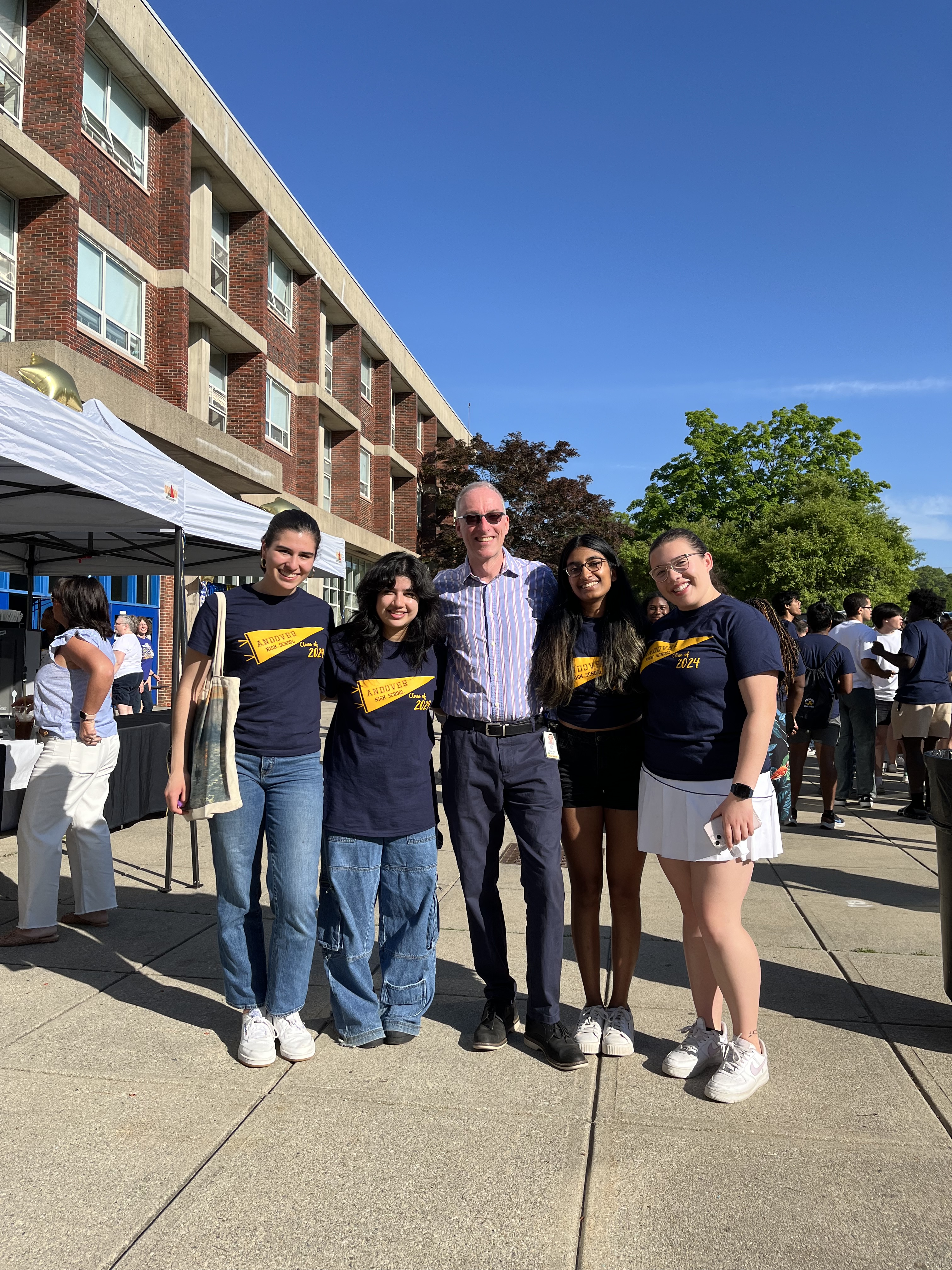
These were a handful of many experiences of Sophia Nguyen, an Andover High School alum and a freshman at Northeastern University. “From my first few months away from home, I realized how unprepared I was for just everyday things,” said Nguyen. “I’m lucky to live so close to home. I couldn’t imagine living somewhere like California and having [my car] break down.”
There’s a simple solution to teaching these skills: Family and Consumer Science (FCS) classes. Previously called “Home Economics,” FCS classes are designed to give students the necessary, non-academic skills to live on their own. They teach students basic life skills, including cooking, nutrition, home management and upkeep, sewing, budgeting, and child and family care. At AHS, there are a couple classes focused on life-skills: the Financial Literacy elective teaches money management, taxes, and insurance, and various business classes teach how to start a resume and communicate with employers. But, many students feel that those classes are not enough to equip students to live on their own.
The history of FCS and Home EC classes is complicated, with them becoming popular in the 1940s. They divided people by sex, with girls usually learning childcare, while boys took woodworking and shop classes—all to prepare kids to fit into conventional gender roles. However, many changes to FCS courses have happened over the past 60 years, including the Civil Rights Act of 1964, which allowed people of any sex and background to participate in all domestic education classes. But as the workplace became more accessible for everyone, regardless of gender, schools began to prioritize higher education instead of FCS classes.
Focusing on preparing students for professional careers is important, but academic careers and domestic labor are not mutually exclusive. As AHS students choose to leave the house after high school, many have said they feel unprepared to live on their own. “The curriculum at AHS feels more focused on business and STEM classes,” said Charlie McNally, a sophomore at AHS. “While they’re good skills to have, they really only help in a work environment, and nowhere else.”
Zoie Zeng, another sophomore at AHS, said, “There’s so many responsibilities we have once we’re adults that we don’t learn about. To be honest, I don’t know the first thing about taking care of myself. I don’t even know how to cook.”
While some have brought up how the skills taught in FCS classes can be learned at home, there is a benefit to having life skills be taught in schools. “Both my parents work full time jobs; if I wanted to learn something I’d have to go to the internet,” said Nguyen. “That can work for some, but a hands-on experience is probably much more engaging and keeps people safe. Having someone there to inform and correct mistakes could be much more beneficial than the internet.”
Emily Tsai, a sophomore at AHS, also mentions how while online learning is possible, it’s also helpful to have a class to “give students the motivation to actually learn something.”
Tsai also brought up how subjects learned in academic classes can be incorporated into FCS classes. “My father was able to do Home EC courses in high school… and in the plumbing course, they were able to demonstrate topics like series and parallel circuits by creating a solar-powered water heater,” said Tsai. Depending on if they used a series or parallel circuit, students were able to see which one made the water heat up more efficiently. “It seemed like a much more interesting way to demonstrate the topics that we learned in Physical Science, instead of using the janky kits.”
As for how likely FCS classes can be added to the AHS curriculum, it seems the possibility may be growing. According to Principal Brown, “[AHS] is looking to hear from students on what they want to have out of their high school experience.” This is part of the “Vision of a Graduate” work the AHS administration is doing, as they define what our community wants an AHS graduate to be. “The idea of the Vision of a Graduate is that the skills taught at AHS would be part of our DNA. Everything that we do would be based on what that vision of a graduate is,” said Brown. “As we do the planning around a renovated or new school, a maker space that would allow for more hands-on work is definitely in the design.”
Whether or not students are ready for life in the real world is a question that is on the forefront of the minds of students, teachers, and administrators at AHS. But one thing is certain: FCS courses can offer students new confidence when it comes to entering life beyond high school. “Independence can be really daunting, but with the right guidance, living on your own can feel more like walking down a hill than jumping off a cliff,” Nguyen concluded.