ChatGPT: The AI Genius

By Anika Nagle and Anushka Dole
STAFFWRITERS

ChatGPT (Chat Generative Pre-Trained Transformer), a public AI trained on vast quantities of internet literature, has taken schools across the world by storm. In just two months, its user base skyrocketed to 100 million, shattering the previously held record of one year and two months set by Google+. Its numerous capabilities include writing essays, writing primitive programs, solving advanced math problems, and answering questions. However, with this easy access to solutions, comes the responsibility to use this technology properly; a responsibility some fear we can’t trust everyone to fulfill.

Dr. Robert Michaud, a history teacher, believes that ChatGPT will not “replace the human voice, [or] the human experience.” Michaud teaches AP US History. He demands the best from his students, and ChatGPT does not meet his standards. “Most of the ChatGPT examples of text that I have seen [are] usually grammatically correct, but none of it is incredible writing either,” Michaud said. 

Moreover, when testing this AI platform, Michaud encountered undisputable errors. “Like any historical source, if you accept it as complete truth without questioning it and doing further research, that’s where you are doomed,” Michaud said. However, he does acknowledge ChatGPT’s usefulness and has tentative plans to incorporate ChatGPT into his curriculum. “This is a tool that’s going to be out there, which people are going to use in the real world, so let’s play with it a little bit and see how and if it could help us,” he said.

Stacy Giggie, an English teacher, has a similar opinion regarding this technology. “It’s not surprising that [AI]  is the new frontier of search engines, but at the end of the day if you don’t know the question to ask you are not going to get the right result,” she said. “I don’t think [ChatGPT] can do the real thinking for you, but there is the danger of it doing a bit more than you are used to.”

Giggie has firsthand experience using this AI platform and often utilizes ChatGPT’s numerous features to aid in her teaching. “I might ask [ChatGPT] to curate a list of contemporary poems that pairs with Romeo and Juliet. Or I have asked it to write a sample paragraph to a reflection question I’ve given students,” Giggie remarked. “I’ve always looked at it skeptically though. I don’t trust what I get from the AI, so I’m going back through it and making sure it’s accurate.” 

ChatGPT delves into the field of programming and can write code for virtually any situation presented in a prompt. Dr. Marianne Bezaire teaches many programming classes offered at AHS and she believes cheating via ChatGPT is a valid possibility. “There’s only so much that I can do to prevent [cheating]… I try to teach people, what is the ethical way to make use of resources available to you,” she said.  

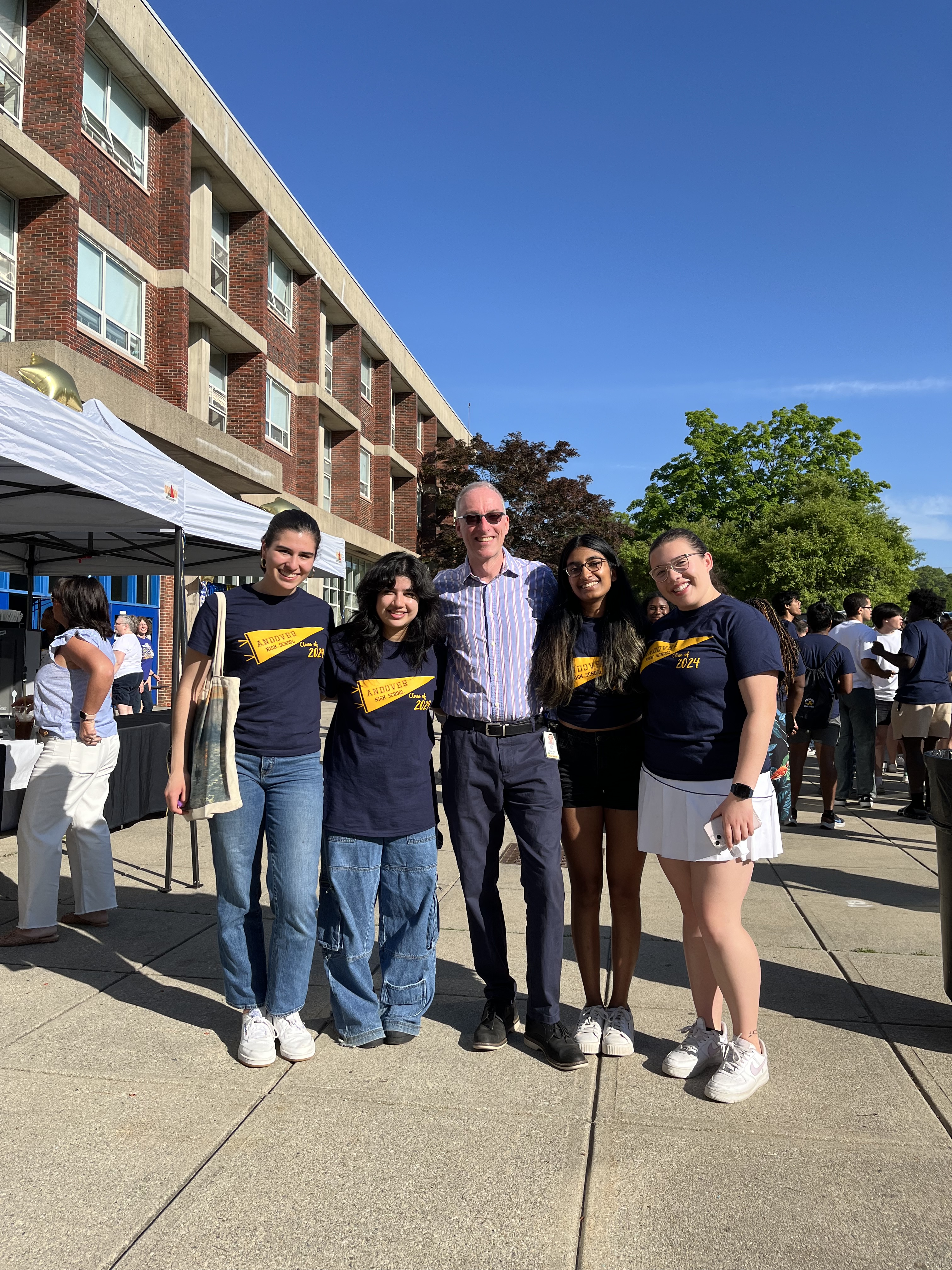
STAFF PHOTO / Anika Nagle
An AHS student using ChatGPT.

ChatGPT also has numerous benefits in the field of programming and can make coding accessible to a wider variety of students. “In the future, [AI] could be an integral part of how we develop computer programs,” said Bezaire. She plans to “shuffle the curriculum around so that [students] can spend more time [learning about AI] because it’s such an important topic.”

ChatGPT is a popular platform for students in AHS. Some students use this AI simply for fun, testing questions such as “Which comes first the chicken or the egg?” to which they receive “interesting” responses. Others use this technology to answer questions–simply for curiosity’s sake or elaboration on a challenging topic at school. Others suggest it is unclear where exactly the line between cheating and learning lies. For instance, is asking ChatGPT to cite sources from a list of URLs constitute cheating? How about asking it to find a synonym or run a grammar check? Could a student ask ChatGPT to summarize a dense and lengthy primary source?

While the use of ChatGPT has raised concerns about cheating, new AI-powered cheating-prevention software is being developed to address this issue. As Michaud pointed out, it’s important to remember that the development of technologies such as the search engines and multilingual translators didn’t end learning, but rather made it more accessible and efficient. Similarly, ChatGPT has great potential for education and can enhance the learning experience. As long as measures are taken to prevent misuse, the benefits of ChatGPT in education can outweigh the risks.

Put yourself to the test: would you have guessed that most of the previous paragraph was written by ChatGPT? 

Related Posts

AHS Class of 2026 Graduation: A Sentiment of Gratitude
  • June 11, 2026

Abby Chachus & Kendall Murphy || STAFF WRITERS

A hush falls as a sea of navy gowns, a rising tide of Andover High School graduates enters the Tsongas Center just before 5 o’clock on June 1, 2026. There is something distinct about moments like these. A goodbye that is bittersweet among both the audience and the seniors. 

According to Graduation Committee member Ella Murphy, it is a goodbye to “Halloween costume competitions that never disappoint, lunches, wrap lines and vending machine trips,” seemingly inconsequential things, but the memories will stick with all of the students as they move on to their future endeavors.  

The graduation speakers shared the value of these moments and their gratitude for the people that helped them along the way. As the ceremony commenced, the opening speakers Zachery Pan and Murphy welcomed everyone and encouraged them to acknowledge their shared experiences at Andover High School. “These moments, these memories, these faces. None of us got here alone.” said Pan.

Their speech gave time to deliver some truly meaningful thank you’s, “beyond the formalities” as Murphy put it, to the teachers and staff that showed up each day with “patience, support, and dedication.” Furthermore, they recognized that this gratitude is not solely meant for the significant ceremonies. 

“Gratitude is kind of strange. We tend to save it for the big moments. The ceremonies, the stages, the audiences,” said Murphy. 

“But let’s be honest—the people who actually changed your life probably weren’t standing on a stage when they did it,” continued Pan.

They concluded the speech with a request to the graduates to thank those who changed their lives in both the big and small moments, even if it feels unnecessary.

Before graduation, other seniors expressed similar thoughts, like reflecting on the journey that got them to where they are today. 

“To all my teachers: thank you for everything. I would not be here without any single one of you.” said Christopher Reardon.

Thomas Enman advised underclassmen to “just enjoy every little minute you get at AHS.”

Vignesha Jayakumar, class essayist and valedictorian, echoed this same sentiment of appreciation, reinforcing Reardon’s message about the lasting impact of teachers and support systems. “We were galvanized from a community of supportive teachers and staff who didn’t just teach us subjects, they taught us how to think, how to question, how to care,” said Jayakumar.

He also mentioned the importance of one learning from their fellow graduates. “We learned as much from each other in the hallways and the bleachers as we did in the classroom,” he said. 

After Jayakumar, Graduation Committee members Ben Pelt and Kari Belson spoke. First, Pelt announced the Class of 2026’s class gift to AHS. Next, Belson named Scott Armstrong the 2026 Distinguished Citizen (see page 4).

When Principal Jimmy D’Andrea took the stage, he, like all the other speakers, expressed the value of gratitude, a central theme that resonated throughout the ceremony. He began by thanking each group that got each member of the graduating class to where they were standing in the Tsongas Center, about to leave the comfort of being an AHS student and moving onto becoming alumni, highlighting the strong support system and sense of community that defined the graduating class’s journey.

He also encouraged each graduate to “personally reach out and thank those individuals who made a difference in [their] lives,” reinforcing the ceremony’s message of appreciation, reflection, and recognition for the people who helped shape their high school experience.

Interim Superintendent Keith Taverna encouraged graduates to continue to make the community proud with the positive impact they will bring to the world.

To conclude the ceremony, Graduation Committee members Chloe Ahn and Margaret Farabaugh brought everyone together one last time. “Tonight we stand together because of the strong and spirited community we have built,” said Ahn.

Ahn concluded, “As we become graduates of Andover High School, we step into the world with purpose, passion, and pride… Congratulations class of 2026!”

Continue reading
Students, Faculty Travel to Scandinavia Over Spring Break
  • June 11, 2026

Samin Faiz || STAFF WRITER

Forty-two Andover High School students and seven chaperones visited Scandinavia this April.

After a six-hour flight from Boston to Reykjavík, Iceland, followed by a two-hour flight to Oslo, Norway, the group began their ten-day-long tour the Thursday before spring break. Through a combination of bus rides, overnight ferries, and countless miles on foot, the group made their way through five Northern European countries: Norway, Denmark, Sweden, Finland, and Estonia.

“I’ve been traveling with students since 2005, so this might be my 17th tour,” said Brian Shea, English teacher, organizer, and chaperone of the trip. “We’ve now done all of Europe, so Northern Europe was sort of our last frontier.”

Apart from the chaperones, the group was accompanied by a tour director named Yulia, whom Shea worked closely with to structure the daily itinerary and ensure a smooth trip.

In Scandinavia, English is widely spoken, so the language barrier was never a problem for the group. Sometimes, however, the students made connections in ways that transcend the spoken word.

“I played soccer with a bunch of people in Sweden,” recalled Hannah Arnold, a junior who participated in the trip. “That was probably the highlight of the trip for me.”

Arnold is no stranger to international travel. Just two months earlier, in fact, she joined her classmates on another school trip to Peru over winter break. However, for her twin sister, Grace Arnold, this was a brand-new experience.

“I met a lot of new people that I’ve never met before, especially people not in my grade,” Grace said. “It was really nice because I met a lot of great people through that and got to spend time with people I wouldn’t usually get to spend time with.”

The trip offered a flexible balance of group tours and independent exploration. “We had a lot of free time,” Grace noted. “We got to explore cities on our own and shop where we wanted. As long as you stayed in groups of three or more, you were free to roam the city.”

Students observed the region’s distinct economic models. Through agreements within the European Union and the Nordic Council, higher education is heavily subsidized or entirely free for regional citizens.

“It’s really interesting. They tax wealthier people a lot more and their overall tax rates are a lot higher,” one student observed. “The way they reinvest money back into infrastructure contributes to stronger public infrastructure. Education and health care are free, and they even offer stipends to cover the cost of living. Essentially, you pay a lot of taxes, but you get a lot in return.”

Students also noticed the societal impact of these safety nets. “Their unhoused population is significantly lower. If you want help, those systems are available to support you.”

The travelers’ curiosity and maturity left a strong impression on the faculty.

“These kids were wonderful,” said Shea. “All of the students were engaged. They were paying attention. They were enjoying it. They were wonderful travelers. To me, that was the biggest thrill.”

With the preparations for next year’s destinations already underway, the future of travel programs at AHS seems to be brimming with opportunities.

“Next year, we have two tours,” said Shea. “We’re running one tour to Barcelona and Madrid in February, and then we’re running another tour to Greece in April.”

Such opportunities are often highly selective at other schools, but luckily, these trips remain open to the entire student body at AHS.

“There’s no application process,” Shea emphasized. “We’re not looking at grades. We’re not looking at behavioral records. Anybody can sign up when we offer these tours. I put them out there, and I’m like, ‘If you want to go, come.’”

Continue reading

Leave a Reply

You Might Also Like

Spanish Department to Host Day of the Dead Fair

  • November 12, 2025

Funding the Future of Science: Proposed NIH Funding Cuts Throw US Biomedical Research Into Uncertainty

  • November 4, 2025
Funding the Future of Science: Proposed NIH Funding Cuts Throw US Biomedical Research Into Uncertainty

Student-Hosted Video Game Hackathon Scheduled for Late September

  • September 22, 2025
Student-Hosted Video Game Hackathon Scheduled for Late September

World Languages Coordinator Reflects On Career, Retirement

  • June 9, 2025
World Languages Coordinator Reflects On Career, Retirement

CollegeBoard Scores 1/5 on AP Testing Administration

  • June 9, 2025

AHS Student Directs Coming-of-Age Film, ‘Horizon’

  • June 9, 2025

Discover more from AHS NEWSPAPER

Subscribe now to keep reading and get access to the full archive.

Continue reading