Town Tests One-Way Lincoln Street

Clara Strong

STAFF WRITER

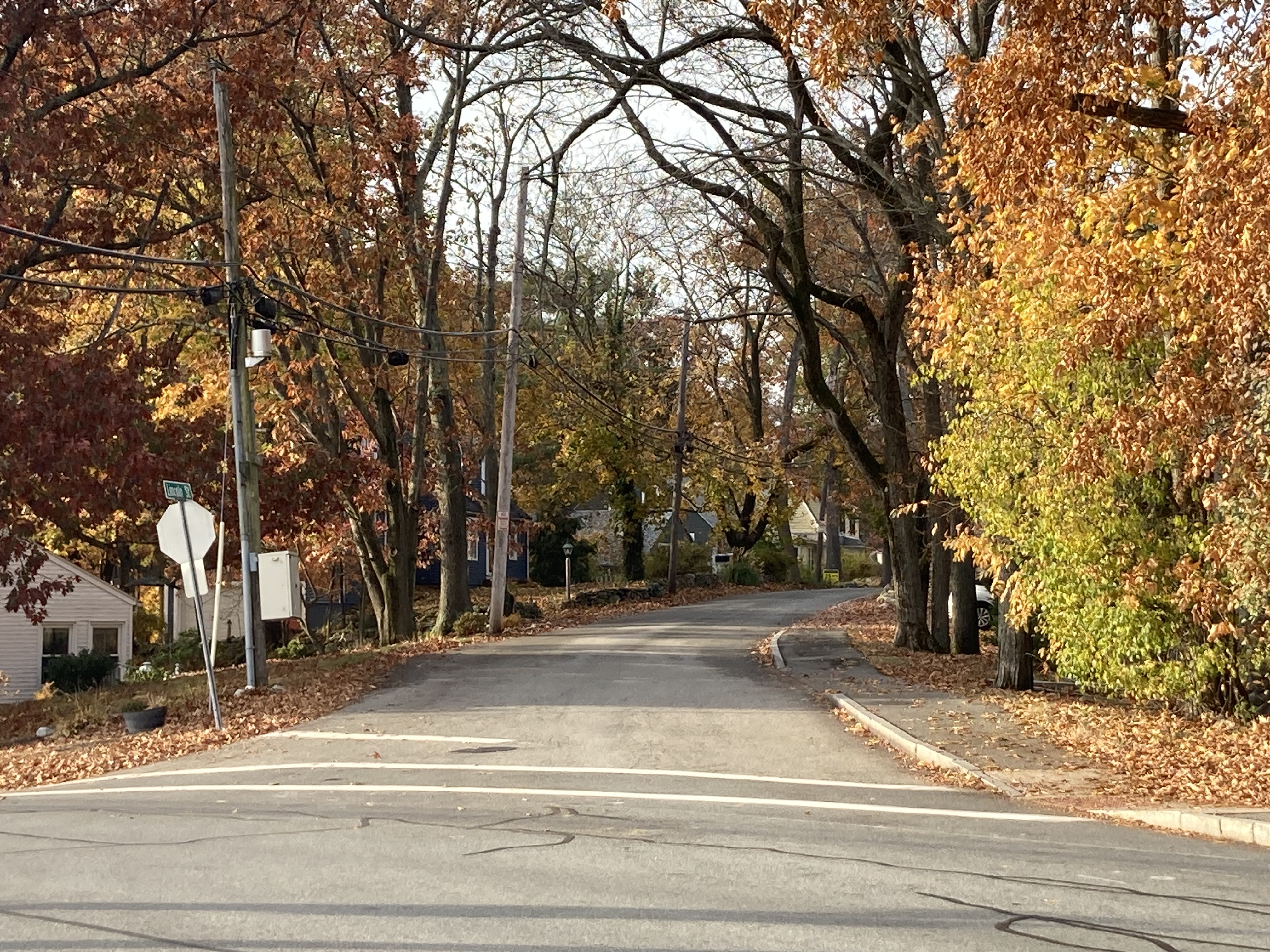
Lincoln Street, opposite the high school entrance, was converted to a one-way street for a trial period recently. However, while town officials commended the pilot, the testing is far from over.

After Andover residents voiced concerns for the safety of kids walking or biking to school, one lane of Lincoln Street was closed off for a month to see how it would affect traffic and safety. Between August 19 and September 22, people could travel along Lincoln Street only toward the high school. Many town officials believe it improved the safety of the street.

“Anytime you can provide a safe passage for anyone to walk, I think it makes it safer,” said Paul Materazzo, Andover’s Director of Planning and Land Use. “We want to provide safe passage, so kids feel like they can walk to school, right? I mean, it seems ridiculous to me [that you might] live that close, but your parents don’t feel comfortable when you walk to school because the infrastructure is bad.”

Materazzo suggested a permanent solution he believes would make kids much safer. He said a good fix would be a shared use path with a curb on Lincoln Street, which would be one-way due to lack of space for two safe lanes.

According to Safety Officer Glen Ota, a shared use path is “a minimum of 8 feet wide, [accommodating] bicycles and pedestrians at the same time.” Materazzo explained, “It’s essentially… a wider sidewalk along the entire length of [Lincoln Street] that allows people to feel comfortable walking or biking.”

Although this may seem much safer, not everyone is happy with the change.

“I absolutely hate [Lincoln street being one-way],” said Mo Gearin, a freshman who has been walking to school on Lincoln St for years. “I believe that it is way more dangerous, and often cars and trucks are taking one-ways for granted and not acting road-safe. If anything, if we make it one-way, we should be going in the other direction. In mornings, cars are cutting into traffic during dropoff, and they’re being way more dangerous than they should be.”

Kaila Bloom, a senior at AHS who also walks to school on Lincoln Street, was neutral about the change. However, both students cited speed as a major issue on the road.

“I don’t think it’s a matter of the cars going by each other, I think the bigger issue is speed. Like, you see some cars just flying through,” Bloom said. Gearin thinks the change to one-way affected the street more. He clarified, “Cars often will ignore speed limits on one-way streets because there are going to be no cars coming in the other direction.”

According to Ota, the data shows something different. He said there were two studies on the speed of cars on Lincoln Street, one when it was two-way and the other when it was one-way. There was little difference in the speed of the cars and, apart from a few outliers, everyone followed the speed limit. However, he presented a possible explanation for Gearin’s concerns.

“When you’re walking down a road,” he said, “and a car’s going by you at 25 mph, it may feel like they’re going 50. Just because… perception of speed is off.”

Even without pushback from residents, there is still a lot of testing to be done before any decisions can be made. According to Materazzo, some projects like this take years to be made permanent.

In the meantime, Thomas Paolera, AHS’s School Resource Officer, urges drivers to do what they can to make Andover a safer town to live in. Specifically, he strongly advises students against distracted driving. 

“Put the phone on do not disturb, or put it away, whatever works best for you,” Paolera advised. “It’s Massachusetts’ ‘hands free’ [law] now, and the phone is incredibly distracting…  please do not use your phone at all while you are driving.”

  • Related Posts

    Remembering Ms. I For The Right Reasons
    • May 7, 2026

    SAMIN FAIZ || STAFF WRITER

    There is a classroom at Andover High where students think twice before whispering while the teacher is talking. They compete for her approval like jesters before a king. Each assignment feels like defusing a time bomb. In fact, if a bomb were to go off during a test, nobody would flinch—their grade is more important to them than their limbs staying intact. Okay, maybe not literally—but it can feel that way when the stakes are high.

    But who is the legend behind all the stories?

    “It’s not just about teaching chemistry,” said Bettyann Iannuccilli, longtime chemistry teacher at AHS. “It’s about getting your students ready for the real world.”

    At the end of this school year, we are not only losing 405 beloved seniors from our school—we are losing what much of the AHS community—students and faculty included—consider to be a “school mom.” Formidable though she may seem at first glance, it’s important to remember her for the kind soul that she is.

    “AHS has been my family for 34 years,” recalled Iannuccilli. “I got into this profession because I wanted to make a difference to students—and hopefully I’ve done that. But it’s very difficult to please 100 percent of the people 100 percent of the time.”

    No matter who you had for general chemistry, you were bound to have heard of “Ms. I.” Her class is not easy, and she’s well aware of it.

    “I hope my students know that even though I may be strict in the classroom and hold high expectations, I try to do it in the fairest way possible.”

    Her students take satisfaction in the rigor of her class, much like the empowering euphoria that comes from solving a puzzle.

    “I personally enjoy her class … it’s challenging, but it’s also interactive and engaging,” described Anika Nagle, a current student in Iannuccilli’s AP Chemistry class. “I think the workload is reasonable, it’s definitely not light, but for a class like chemistry that requires a lot of technical knowledge, I think it’s very well balanced.”

    This is a classroom where warriors are made, and Nagle wasn’t the only one who was fond of her transformative experience in Iannuccilli’s class.

    “Even though I was her student, I often felt respected and treated like a friend when I spoke with Ms. I,” said Daniel Shin, a former AP Chemistry student of Iannuccilli and Class of 2025 graduate. “She never patronized me despite being a teenager.”

    A freshman at Columbia University, Shin is no stranger to rigorous academics. Fortunately, he has a little something handy that functions as both a keepsake and a study tool:

    “I’ve missed my last 9 lectures for chemistry in college and I still have an A in the class. I just go through my AP Chem notebook that I kept from high school.”

    Despite attending such a prestigious university, Shin has not forgotten Iannuccilli’s exceptional teaching ability.

    “The professors here are pure researchers who aren’t good at teaching concepts and I 100 percent believe she can outteach most of the faculty here in the chemistry department.”

    Over the years, Iannuccilli has accumulated extensive experience in the AP Chemistry department. With her guidance, newer teachers are able to make a seamless transition into the demands of the course.

    “I respect her a lot as a colleague,” said Sarah Fisher, a fellow chemistry teacher and close friend of Iannuccilli. As this is her first year teaching AP Chemistry, she is set to take over both sections next year. “[Iannuccilli] has been helping me with materials, timing, and that sort of thing, which has been super helpful.”

    Though professional and deeply supportive, the relationship between the two has not been limited to within the classroom doors.

    “We’ve hung out outside of school before,” recalled Fisher. “Once she actually took me to a casino. When I go to a casino, I have a policy: I take like 20 bucks and when it’s gone, it’s gone—and then I just kind of wander around and do my own thing. If I remember correctly, she actually put some money into the machine and told me to keep playing.”

    There seem to be endless layers to Iannuccilli’s personality, and nowhere is that more evident than in her own classroom. There’s a saying: “Not all heroes wear capes.” By the same token, not all “villains” of the story dwell in an evil labyrinth—which may explain the kitten-themed calendar hanging on the bulletin board behind her desk. Beside it is a collage of newspaper clippings, handwritten letters, and other meaningful items honoring her past and present students.

    “I like to cut out pictures of my students playing in their sports games, concerts, and plays then put them on my wall,” beamed Iannuccilli.

    Teaching at Andover High for 34 years has its perks—some of which can get quite interesting.

    “I’ve received some really touching e-mails from kids who graduated quite a long time ago and have shared how I influenced their life in a positive manner,” said Iannuccilli. “And it’s kind of funny, but a couple of them have turned out to be chemistry teachers, too.”

    Yeah, that is quite funny—but it’s more surreal than anything. 34 years is a long time. To put that into perspective, consider the average generation time of 26.9 years. The meaning of this, you ask?

    “I’ve had a few students who got to know each other in my chemistry class who eventually got married. Now I have their kids,” giggled Iannuccilli, as if it were a common phenomenon among teachers.

    As the end of the year draws nearer, the news is starting to settle in for some—Iannuccilli included. Thus, retirement life for her is starting to come into focus.

    “I have little projects I need to do at my home and at my beach condo. So, those are a few things I’ll start doing. And I have to be busy, so chances are I’m going to get a part-time job doing something.”

    At the end of the day, Iannuccilli is on track to finish the year—as well as her career—with something very special in mind:

    “This is the most rewarding profession there is.”

    Continue reading
    A Numbness We Can’t Afford
    • May 7, 2026

    ANYA GOROVITS || OPINIONS EDITOR

    In the 365 days of 2025, the U.S. saw 407 mass shootings.These shootings were part of a broader gun violence crisis that caused tens of thousands of deaths across the country, including 226 children and 1,038 teens killed in mass shootings alone, according to the Gun Violence Archive’s official 2025 report.

    Most Americans are aware of this stark reality: they’ve watched these numbers rise each year for decades. They watch countless shootings shown hurriedly on the news before returning to their daily lives. In school, students briefly discuss the latest tragedy in their history class before returning to the standard curriculum. Legislators put out quick statements before quickly moving on.

    “[Mass shootings] have become a symbol of American culture and American freedom,” said sophomore Ari Friedman. Indeed, they’ve become almost synonymous with America’s identity, present in our history since the 1966 University of Texas Tower Shooting. On the World Population Review’s mass shooting map, most countries report 0–10 mass shootings from 2000–2022. The U.S. reports 109.

    A pivotal moment for modern school shooting conversation was the Columbine shooting of 1999, during which two students killed 12 classmates and a teacher. The event fundamentally reshaped how schools, law enforcement, and the public regarded gun violence.

    “When Columbine occurred, that was a time that really changed the national consciousness,” said AHS Principal Jimmy D’Andrea. Then came Sandy Hook in 2012, a shooting at a Connecticut elementary school that killed 20 first graders and 6 staff members. Rather than a turning point toward action, this shooting marked a new stage: acceptance. News of recent shootings no longer came as a surprise, and such stories quickly stopped making headlines.

    Today, school-age students all around America have become used to yearly ALICE drills. 

    “The fact we even have to do these drills is dystopian, but I’ve usually just gone with it. It’s a fact of life,” said sophomore Ari Friedman.

    School shootings should never be a fact of life.

    “You can’t allow it to numb you, because that’s how things that aren’t normal become normal,” said junior Grace Arnold. Yet that is exactly what has happened. This country has watched children be killed in their classrooms, again and again, and decided that the right to own a gun matters more than the right of a child to survive the school day.

    Though communities advocate for “policy not prayers” after each major shooting, nothing ever seems to reach Congress. Around 90 percent of Americans support universal background checks, yet they haven’t been passed, killed by political opposition funded by gun industry lobbying. 

    “Profits matter more than people in America,” said AHS history teacher Fred Hopkins. He described how the Second Amendment’s true purpose has become severely distorted. Originally written to enable collective militia defense in a newfound country with limited defense capabilities, the amendment is now interpreted as the right of every American to own murderous weapons. 

    Beyond gun legislation, school shootings are driven by a crisis in mental health and an American culture that seems to value silence over support.

    Today, America’s emphasis on individualism has created an outlet for violence. AHS junior Tyler Bates expressed that this individualism discourages struggling students from asking for help, leading to their desire for violent expression.

    “If people are still angry, this anger and aggressiveness will come out one way or another,” said AHS French teacher Olga Kostousova, who believes that gun restriction laws are very necessary, but they work only if we also address the deeper cause of violence.

    Ending this crisis requires both stronger gun legislation and a cultural reckoning around mental health. It requires universal background checks, and real investment in mental health resources at the community level. It requires a culture that stops making shooters famous and starts recognizing people in crisis before it’s too late.

    Most of all, it requires refusing to be numb. Many people today feel that there is not much that can be done on a legislative level to achieve peace for American children. They feel that just taking this horror as “a fact of life” is better and simpler than fighting for change. They believe that ordinary people have no voice and no ability to change this cynical symbol of America. Yet it is this belief that limits our ability to stand up for the lives of American children.

    “I absolutely have hope that change is possible. But people kind of have to wake up and choose to be affected by it,” said Arnold.

    In 2018, survivors of the shooting at Marjory Stoneman Douglas High School in Parkland, Florida, organized a national walkout that drew hundreds of thousands of participants. The pressure was enough to push Florida to pass its first significant gun restriction legislation in decades. So ordinary people, students especially, do have power. When enough people speak up, change does occur. But when we remain numb, we refuse change, and we let our schools remain war zones.

    Four hundred seven mass shootings in one year. Two hundred twenty seven dead children. 

    These are not statistics to scroll past. They are a demand, one that has gone unanswered because too many people have decided to stop asking for change. America, and Americans, have the power to choose differently. The true question is whether we will, before another classroom becomes a tragedy we forget by next week.

    Continue reading

    Leave a Reply

    You Might Also Like

    Spanish Department to Host Day of the Dead Fair

    • November 12, 2025

    Funding the Future of Science: Proposed NIH Funding Cuts Throw US Biomedical Research Into Uncertainty

    • November 4, 2025
    Funding the Future of Science: Proposed NIH Funding Cuts Throw US Biomedical Research Into Uncertainty

    Student-Hosted Video Game Hackathon Scheduled for Late September

    • September 22, 2025
    Student-Hosted Video Game Hackathon Scheduled for Late September

    World Languages Coordinator Reflects On Career, Retirement

    • June 9, 2025
    World Languages Coordinator Reflects On Career, Retirement

    CollegeBoard Scores 1/5 on AP Testing Administration

    • June 9, 2025

    AHS Student Directs Coming-of-Age Film, ‘Horizon’

    • June 9, 2025

    Discover more from AHS NEWSPAPER

    Subscribe now to keep reading and get access to the full archive.

    Continue reading