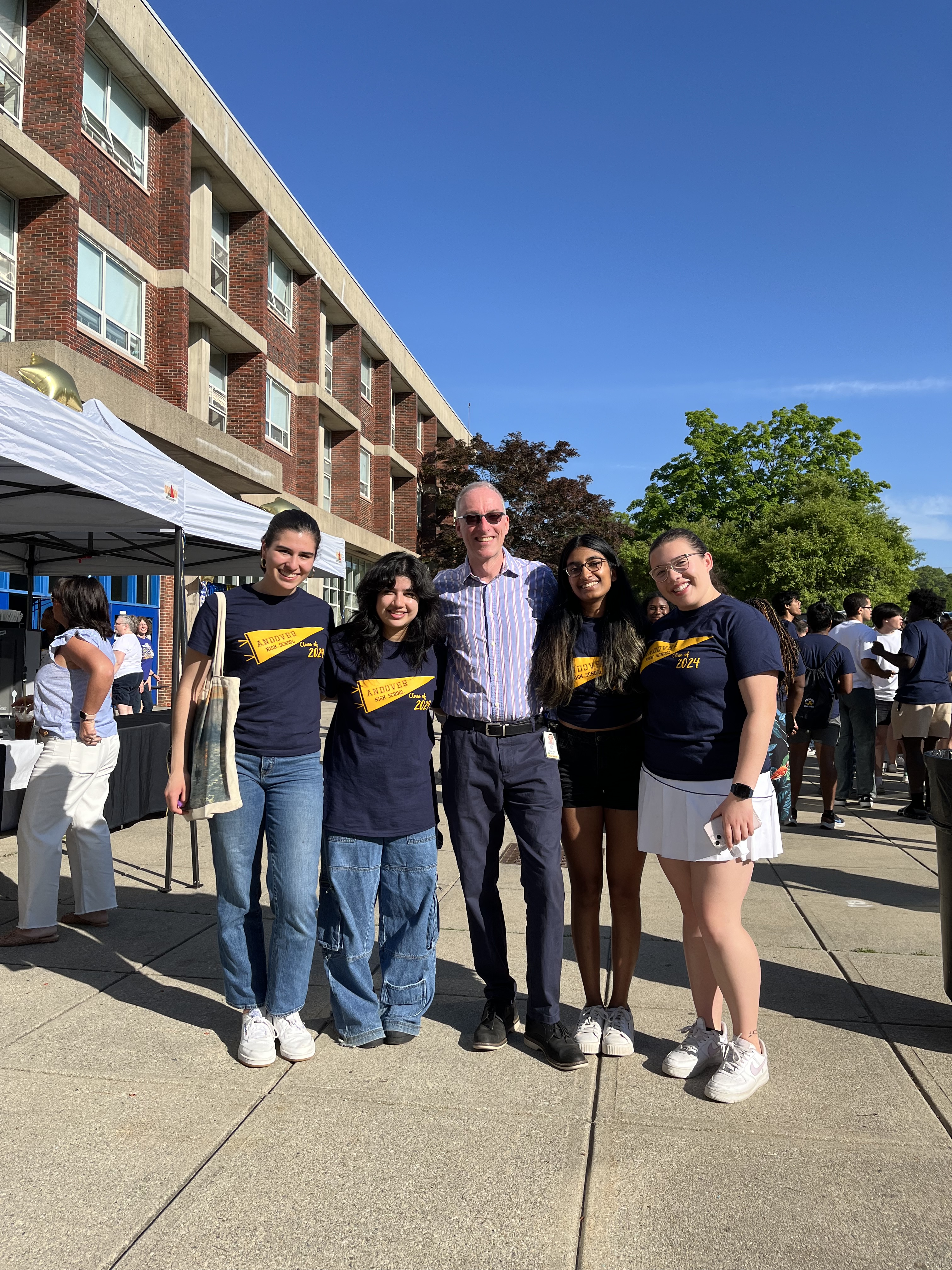
To the Class of 2024… 

College Application Advice from a Soon-to-Be Grad

By Naomi Bloom
MANAGING EDITOR

The senior class of 2023 is officially done with classes and is onto a week of senior activities and unwinding after four long years of high school. The rising seniors in the class of 2024 aren’t too far behind, but they have a large obstacle to overcome first, one the graduating class has already conquered: the dreaded college application process, just lurking beyond the horizon, if not already present. 

However, as overwhelming as the process may appear, it does not have to be that way. A lot of juniors haven’t even started thinking about post-high-school plans yet, but now is the best time to start to make sure that you don’t end up pulling all-nighters to speed-write supplementals later on in the year. So, without further ado: to the rising seniors, this article is for you.

One simple piece of advice that I would recommend to everyone is to start as early as possible. Even if you aren’t actively working on your CommonApp essay or the actual pieces to submit, trying to figure out what kind of college you would like to attend is a good thing to identify before the end of the school year and over the summer. What size college? Close to home? Any specific majors or programs? Simply refining what kind of college you prefer makes the college application process significantly easier down the line. 

Emma Pantazi, a senior, said that since applying early action to colleges increases your chances of getting accepted, it’s important to plan ahead. “Don’t wait until the first day of school to log into the CommonApp,” she said. “Fill out as much as you can over the summer.” “It will save you so much time since the beginning of senior year is often very busy for many students,” she said. 

Senior Rachel Irza added that she wished that she knew more about the CommonApp platform prior to applying, so perusing the website a bit before may also help make your application smoother. 

Additionally, while it’s easy to get caught up in ambitious dreams of going to an Ivy League college, it is also important to have realistic standards. Of course, that doesn’t mean you shouldn’t try to get into an Ivy, but remember that not getting into Harvard doesn’t mean you’re any less of a student; that applies to any college, really. Senior Diya Ganesh reinforced this. “Don’t take rejections personally,” they said. “It’s gonna happen, you’re not gonna get accepted everywhere.” Especially in Andover, a very competitive town that puts a lot of pressure on students to get into the highest ranked colleges, it’s important to remember that what matters the most at the end of the day is that the college you choose to attend is good for you, academically, socially, and financially. A tip to manage this is to apply to different colleges in a range of competitiveness—safety, meet, and reach schools. On Scoir, where AHS students can explore colleges, you can see what kind of school each would be for you, based on your GPA and standardized testing scores. But, do keep in mind that even if you aren’t a great test taker, it’s definitely not the end of the world: many colleges are still test-optional, and they will take into account your other strengths, whether that be academically or in extracurriculars. “You’re unique, your values and goals are so, so important and so, so different from everyone else’s,” said Ganesh. “Use that to your advantage in your applications and be confident in who you are. Confidence is key.”

While this may seem impossible, try not to stress yourself out too much. Regardless of what your post-college plans are, you will end up in the right place in the end. As long as you work on your application a little bit each day, you’ll never have to do too much work at once. “The college application process is a lot easier than everyone will tell you,” said Panatazi. “We’re teenagers, we like to complain. Know that everything is a lot easier than everyone makes it out to be.”

But, when things inevitably become at least a bit stressful at some point, remember that there is good at the end of it! Once applications are submitted, all you need to do is wait, and once you decide, it is really smooth sailing from there. Make sure to try and enjoy the last half of your senior year to the fullest. Try to spend time with your friends and family before heading off to college, and appreciate the last few months of high school. It’ll be over before you know it.

“I have enjoyed having a schedule full of classes that I am passionate about,” said Irza. “Being able to have a lot of flexibility with courses this year has made my senior year experience super fun and memorable.”

On another note, this will be my last year here, as well as my last year as part of the ANDOVERVIEW paper. It has been such a wonderful experience, and I am honored to have been the Managing Editor this year and have the privilege of working with such a talented group of writers. It has truly been a joy, and if you are considering joining Newspaper Production, I would absolutely recommend it! Congratulations to the graduating class of 2023 and have a great summer!

Related Posts

Spanish Department to Host Day of the Dead Fair
  • November 12, 2025

Areeta Faiz || Social Media Editor

A cultural fair celebrating the Day of the Dead will take place during H Block this Thursday in the cafeteria.

The fair will include a variety of hands-on activities, music, and food, allowing students to explore several popular Mexican traditions. The event has been organized by students from the Spanish Conversation Club led by teacher Sylvia Danos and AP Language and Culture classes taught by Indira Garcia. This will be Andover High School’s first year hosting this celebration.

“Students from all world language classes will have the chance to experience one of Mexico’s most meaningful and beautiful traditions,” said Danos.

Stations will include the traditional ofrenda (altar), calaverita (mini skull) painting, papel picado (colorful, decoratively cut paper), the classic Mexican game Lotería, and a chance to try traditional Mexican sweet treats.

Students can participate by signing up for the H3 block with their world language teacher, who will then bring them to the cafeteria where the fair will take place.

“This celebration reflects the values of love, memory, and cultural identity that are central to many Latin American traditions,” said Danos. She added that experiences like this help students appreciate the richness and diversity of the Spanish-speaking world while fostering empathy and global awareness.

Traditionally celebrated in Mexico and other Latin American countries on November first and second, Día de los Muertos honors deceased loved ones through family, music, food, and art. A key tradition is the creation of an ofrenda, or altar, decorated with photos, candles, and offerings to remember loved ones who have passed.

AHS has showcased the student-made ofrendas for the last seven years as a part of the World Language Department curriculum. This year, Danos and Garcia decided to go all out, believing that it is essential for students from other language programs to learn about this celebration.

Danos is excited to see students from diverse language backgrounds come together to celebrate culture, creativity, and diversity: “Enjoy music, crafts, food, and culture, all in one H Block!”

Continue reading
Funding the Future of Science: Proposed NIH Funding Cuts Throw US Biomedical Research Into Uncertainty
  • November 4, 2025

Anushka Dole || Online Editor 

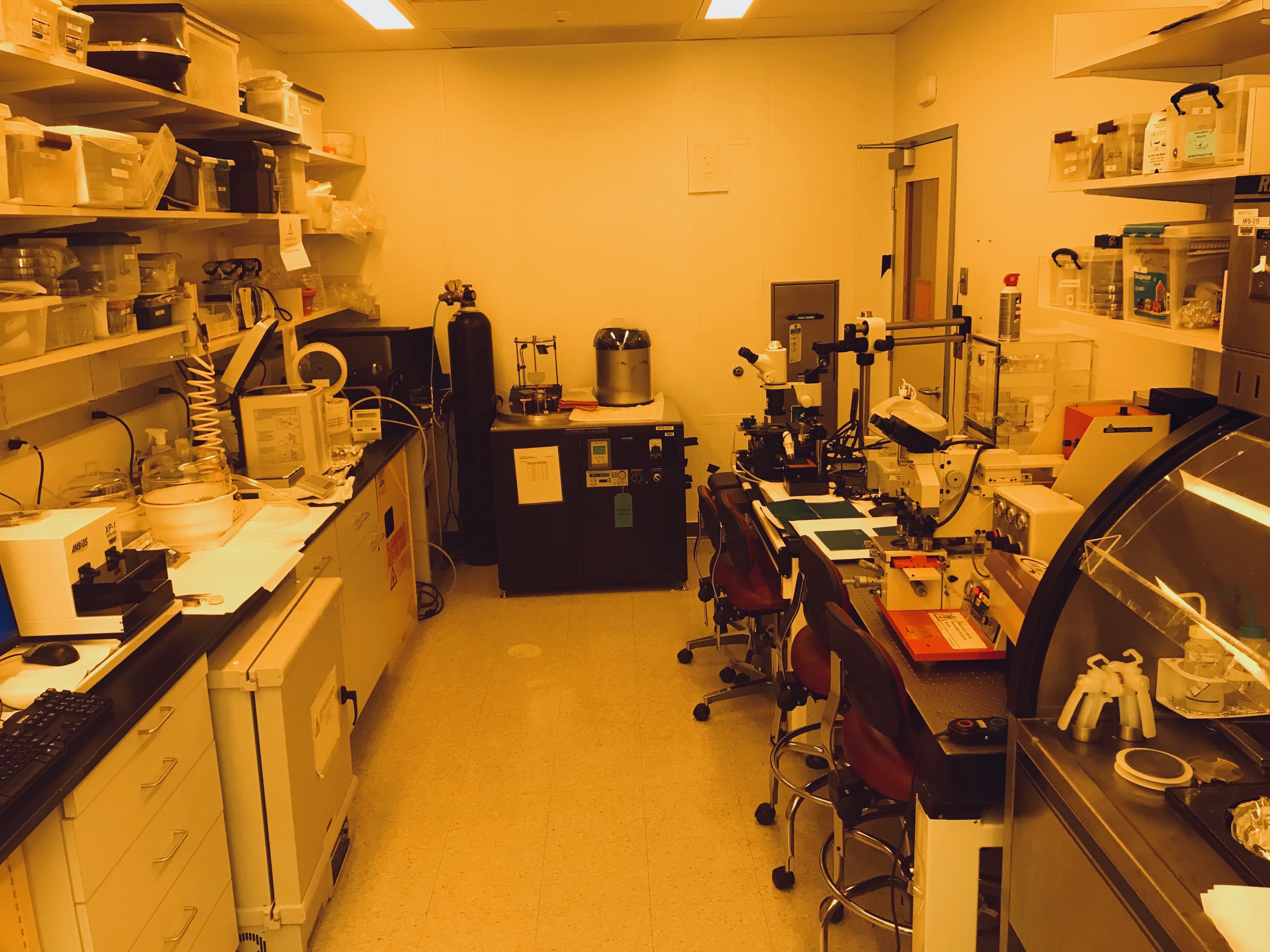
In the sunlit Orkin Lab at Harvard Medical School, lab technicians diligently carry out their experiments, pipetting meticulously into Eppendorf tubes. Next door, in a darkened room, a team of researchers are  huddled around a fluorescence microscope, tracking how gene‑editing tools can restore crescent-shaped red blood cells into their healthy state—a pathway the Orkin team helped pioneer.

Like the Orkin Lab, countless biomedical research labs across the United States engage in lifesaving research every single day. Their research is now in jeopardy. Funding inconsistencies in the National Institutes of Health (NIH), including proposed cuts to indirect costs and the halt in federal funding due to the current government shutdown, threaten to stall progress and could have lasting detrimental effects on both the ongoing research and the communities that rely on it, including Andover.

In April, the NIH cancelled $800 million in grants that it had already approved because the projects didn’t align with the Trump administration’s policies. In July, a federal judge then ruled that the cuts were unlawful, which restored research funding. According to the Boston NPR station WBUR, the US Supreme Court ruled that the NIH can withhold the grants in August.

In addition to withholding the grants, the Trump administration is proposing to significantly reduce funding for “indirect” costs of research, supported by the narrative that the funds “were largely administrative bloat, unrelated to the costs of research.” According to the Harvard Crimson, these indirect funds include costs such as lab construction, research equipment, hazardous waste removal and “countless other very real and necessary costs of research.” For institutions in our own backyard, the impact is tangible: Harvard University stands to lose hundreds of millions of dollars, a blow that could ripple across its affiliated hospitals—including Boston Children’s Hospital, Brigham and Women’s hospital, Dana-Farber Cancer Institute, Massachusetts General Hospital, and many more. Across the country, other US institutions stand to lose billions more.

To fully understand the effects of the funding cuts, it’s important to start at the source: with the research itself. Research is a long, iterative process, full of ideas that start small and experiments that may or may not work. Unlike labs and experiments in school, where the outcome is clearly defined and predetermined, research can be filled with dead ends and uncertainties.

It often begins with something as simple as an idea. Dr. Nathan Crook, an associate professor in the Department of Chemical and Biomolecular Engineering at North Carolina State University, described a project’s start as the moment you first think of a concept, and the end as the moment you stop actively working or thinking about it

“Normally, you or someone in your lab has a flash of insight… at these early stages, you usually don’t have dedicated funding for it,” he said. Early experiments are often small-scale pilot tests that can be supported by seed-funding (typically around $10,000) from the university, or a research foundation. More senior researchers may have access to discretionary funds – “rainy day” funds to use on early projects that aren’t bound by any specific research question.

Dr. Sara Smaga, an AAAS Congressional Science and Engineering Fellow and former Executive Director at the NSF Center for Genetically Encoded Materials, added that this initial stage is the beginning of a longer iterative process.

“In academia, faculty choose what topics they want to study…often a student will collaborate to design their project within their advisor’s topic area,” she explained. “The results of each experiment generate new questions, leading to further hypotheses, even if the initial result is ‘nothing happens!’”

Each experiment can quickly expand into multiple interconnected projects. Each project requires more resources, which are obtained by funding, typically in the form of research grants.

“Let’s say the pilot test goes well, and you get some interesting data,” Crook said. “You will then likely apply for a ‘normal’ research grant using those results as preliminary data. Usually the cool projects are kind of crazy, and the grant reviewers won’t believe that you will be able to do what you are proposing unless you have some sort of proof-of-concept that it is working.”

These grants can come from a variety of sources, including private foundations (such as the Gates foundation or the Chan Zuckerberg Institute), federal funding, internal university funding, state grants, or industry funding. 

“Generally, a Principal Investigator (usually the senior faculty member overseeing the lab), will craft a proposal describing what they’d like to study and why, and submit to a funder,” Smaga said. “After submission, proposals are reviewed by a panel of experts in the field, who evaluate each proposal for feasibility and impact. Not every proposal is funded, and sometimes it takes multiple tries to write a proposal that gets chosen for funding.”

If a proposal isn’t funded right away, researchers often continue the project on the side, refining their ideas and re-applying for grants until they can secure official funding. Once secured, labs can expand, hire more researchers, and pursue the project in earnest. Ultimately, the most significant source of funding for research projects—especially in academia—comes from federal funding, typically the NIH.

“Most of the funding in every lab I’ve ever been a part of has come from federal funding,” Smaga said. Crook agreed, stating that “the most important [source of funding] by dollar amount, are federal grants,” and that “federal grants have funded 77 percent of the research in [his] lab.”

This reliance on federal support means that any disruptions in the grant cycle—whether from delays, government shutdowns, or the proposed cuts to indirect costs at agencies like the NIH—can ripple far beyond the walls of a single lab, outpouring from academia to industry, and eventually, impacting the lives of citizens. The money from NIH funding is a key part of funding early-stage projects, like projects being worked on by Smaga and Crook, laying the foundations for industry to develop novel therapeutics. 

“Just one example: NIH-funded research on bacterial immune systems gave us gene editing, which is now being used to cure sickle cell and rare genetic diseases,” Smaga said.

Jackie Thompson, who works on targeted cancer treatments at Takeda Pharmaceuticals in Cambridge, agreed. “My current work involves developing cell and gene therapies for cancer,” Thompson said. “These treatments rely on decades of foundational research…that was often NIH-funded.”

For communities like Andover, where students and educators are deeply connected to Massachusetts’ vibrant research ecosystem, those losses hit especially close to home. Sarepta Therapeutics, a biotechnology company with an office in Andover, develops gene therapies that depend on the same fundamental research NIH grants have long supported. 

At AHS, the BioBuilder club gives students hands-on experience with synthetic biology research, and the opportunity to work on projects that can be published in a student research journal. While BioBuilder opens doors for aspiring scientists, those doors exist within a larger research ecosystem that relies on consistent federal funding.

“It’s not something that you can just reinstate the funding and think that things are going to pick up as normal,” said Dr. Lindsey L’Ecuyer, the advisor of Andover High School’s BioBuilder club. “When people set up a lab somewhere else, they’re not coming back… it’s going to make it really hard for us to come back from that.”

L’Ecuyer sees the loss trickling down to high school classrooms, mentorship programs, and the students who might have been inspired to pursue science in the first place. “It feels like we’re losing a whole generation of people that would be coming to do research in the U.S.,” she said. “America has been a leading country in scientific research, and it’s going to make it really hard for us to come back from that.”

Crook agreed. “Other countries certainly aren’t reducing research funding, and guess where top scientists—even US citizens—will go? It really hurts our country’s economic…and actual…security to reduce research funding.”

Smaga also worries that America could lose a generation of scientists, and she’s already seen the early signs. “This past cycle, we saw graduate programs responding to funding freezes and future funding uncertainty by admitting fewer students,” Smaga said. 

Biomedical research supports far more than scientific discoveries and the university labs that make them: according to the nonprofit United for Medical Research, every dollar of NIH funding generates about $2.56 in economic activity. The stakes of losing consistent funding are clear in places like the federally funded Orkin Lab at Harvard, where gene-editing research is already transforming lives. The lab is a clear example of how federal support fuels the discoveries that save lives, and it continues to inspire students and scientists to pursue the next breakthroughs. 

“It’s a challenging time to be in biomedical research, but I’m still optimistic about the field,” Thompson said.

“For students who want to get into science, the advice is simple: start early, get involved, and follow the questions that excite you,” she said. “Even sending an email to a professor whose work interests you can open doors. Despite the obstacles, the next generation of scientists has a real shot at making a difference—and it could be your curiosity that drives the next big breakthrough.”

Continue reading

Leave a Reply

You Might Also Like

Spanish Department to Host Day of the Dead Fair

  • November 12, 2025

Funding the Future of Science: Proposed NIH Funding Cuts Throw US Biomedical Research Into Uncertainty

  • November 4, 2025
Funding the Future of Science: Proposed NIH Funding Cuts Throw US Biomedical Research Into Uncertainty

Student-Hosted Video Game Hackathon Scheduled for Late September

  • September 22, 2025
Student-Hosted Video Game Hackathon Scheduled for Late September

World Languages Coordinator Reflects On Career, Retirement

  • June 9, 2025
World Languages Coordinator Reflects On Career, Retirement

CollegeBoard Scores 1/5 on AP Testing Administration

  • June 9, 2025

AHS Student Directs Coming-of-Age Film, ‘Horizon’

  • June 9, 2025

Discover more from AHS NEWSPAPER

Subscribe now to keep reading and get access to the full archive.

Continue reading