‘Into the Woods’ Expands with New Characters 
  • November 13, 2024

Janaesa Macasaet

STAFF WRITER

Andover High School’s fall musical, “Into the Woods,” incorporates new fairytale characters into the beloved 1986 Stephen Sondheim musical, adding more roles.

The new characters Hansel, Gretel, Goldilocks, Rumpelstiltskin, the Huntsman, and Tom Thumb each shed light on views never seen before. Director of Theater Arts Susan Choquette previously directed the musical 18 years ago, and has once again decided to add new characters to challenge the cast and include more people in the production. 

While “Into the Woods” has many feature roles, there is no ensemble. Gabriel Cordio, a freshman playing Rumpelstiltskin, finds the new characters make the stage and songs sound fuller. 

“On the stage, all the fairytale characters are going to be in their costumes, so it’s cool to see there’s Rumpelstiltskin, there’s Goldilocks… It helps fill out the play.  [Because] “Into the Woods” is all the fairytales combined, adding more is going to look cooler,” said Cordio. 

Many find the addition of new characters to be beneficial to give more people a chance to participate in the show. In addition to supporting upperclassmen who plan to pursue theater beyond high school, the production also provides underclassmen, especially freshmen like Cordio, valuable opportunities––even in smaller roles.   

“It allows the Drama Guild to be more inclusive,” said Grace Armstrong, a sophomore playing Goldilocks. “I think they added the parts to show that you [could] still be in the production even if you don’t have a main role.”

The lack of ensemble in the original “Into the Woods” leaves out many possibilities––the incorporation of new characters explores these possibilities. 

“I think it creates a larger world,” Choquette said. “To expand the world, especially when the giant starts to wreak havoc… the giant impacts more characters than are in our focus. There’s a whole kingdom out there that’s being affected.” 

Armstrong echoed this opinion, pointing out that the added characters give the audiences different perspectives and reactions to the conflicts in the musical. 

Nonetheless, the addition of new characters does not come without a lack of challenges. Without direct guidance from the original script, actors must research and explore the resources given to them by Choquette in order to depict their characters the right way. 

“When you’re trying to portray a character that’s not in the actual play, you have to make sure you portray the character, but also not take away from the actual story,” said Cordio.

Some roles, on the other hand, have a different type of challenge altogether. Armstrong mentioned that as Goldilocks, she doesn’t have any lines, making it difficult to show different emotions. Some actors must rely on body language to portray their characters.

Despite these unique challenges, the fundamental work stays the same. All roles require research, whether the role is a fictional character or one that has always been part of the script, according to Choquette.

“I hope this experience has given actors in this show some practice doing that research, because the next play they do, they’re going to have to do the same thing,” said Choquette. “What they can’t find, they get to add. And that’s really the fun of being an actor.” 

Still, when choosing new characters, Choquette made sure they contributed to the original musical’s theme. They go into unfamiliar territory, which creates conflict and drives the story. 

“They go into the woods, wherever that is, in search of something…they get in trouble, and a lot of these characters share that,” said Choquette.
Continue reading
“What do you think of the world?”
  • November 13, 2024

AHS History Department Tackles American Politics

Eva Liss

EXECUTIVE EDITOR

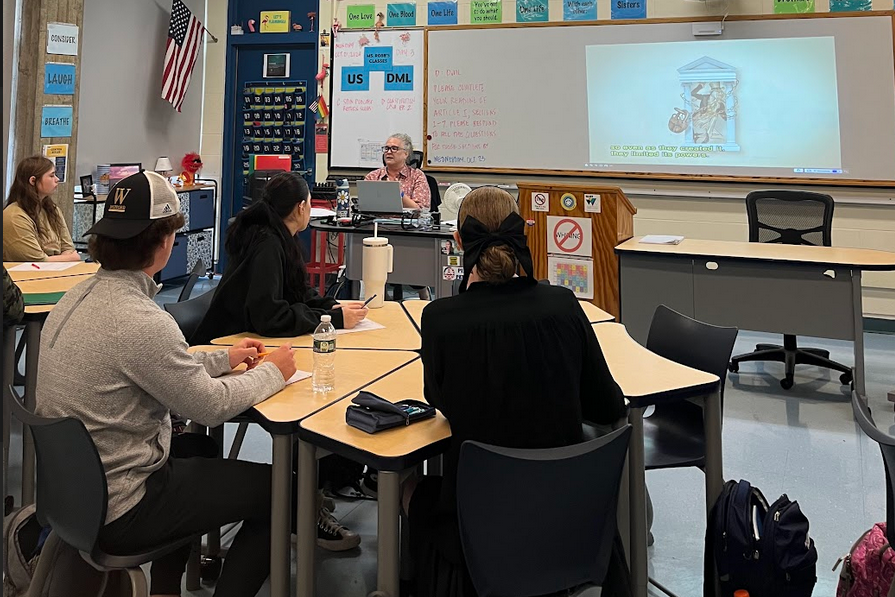
As the 2024 presidential election hovered in everyone’s minds, the Andover History Department continuously tackled difficult topics, hoping to improve students’ abilities to think critically about their world. 

During election years, courses such as World History, US History, and Democracy & Media Literacy face a unique challenge to teach students thoughtfully and neutrally. To face this challenge, teachers like Mary Robb and Brendan Gibson use homegrown frameworks and supervised discussion to encourage students, especially voting-age seniors, to become involved and informed decision-makers. The Massachusetts Department of Elementary and Secondary Education (DESE) also sets guidelines for what can and cannot be taught at the high school level. 

A major aspect of political awareness within history classes is active engagement with the current political environment. Democracy & Media Literacy, a course unique to AHS, aims to instruct students in being critical thinkers and decision-makers. Students in the class have regular news reviews, in which they research a current event from multiple news sources across the political spectrum and analyze how the differences found affect outlook on the event. 

Robb, who teaches multiple sections of Democracy & Media Literacy, said she believes the course is crucial to students’ development as active consumers of media, especially when it deals with political freedom. “One of the key skills our students sharpen [in this class] is their ability to recognize bias,” she said. “[They] then say ‘okay, now, what are the facts in this story?’ and [draw] their own conclusions.”

This is similar to strategies found in Gibson’s ninth- and tenth-grade World History classes, where students choose their own current events stories every 8-day cycle and prepare for class discussions on the topic. 

Gibson’s World History sections deal with both chosen current events and more complicated or controversial topics, such as gun violence, abortion, or the vice presidential debates. Gibson said he has not observed much controversy between students, and he believes students are naturally respectful of each other’s opinions. 

“I think students are still trying to learn about these issues by and large… If ever there is a contentious topic, I try to keep things as rooted in fact as possible,” Gibson said of the discussions he’s observed. 

Anna Bacchi, a senior in Democracy & Media Literacy, expressed a similar opinion. “I think we’ve all been very good so far at not getting straight-up angry at each other and what we’re seeing,” she said. “We usually try to express our ideas as our own and are able to disagree without yelling.”

“We focus more on policy than personality,” Gibson said when interviewed prior to the election.  “We [looked] at polling data from the seven main swing states [each cycle]… Polling is not a perfect science, but… it’s interesting to keep a [finger] on the pulse of these states which… largely [determined] the [election’s] outcome.”

Students in Democracy & Media Literacy also use the widespread media coverage of the presidential election. They explore political patterns found in the modern world through both research and class discussions. 

Assignments consisted of watching the presidential and vice-presidential debates, as well as taking notes on documentaries about the candidates. The framework students were provided for note-taking, created by history teacher Kathryn Reusch, goes deeper than simply observations. In it, students are asked to record policies the candidates discussed and their behavior: evasion of questions, criticism or insults, and whether their words were fact-checked and proven false. 

“I think [they have] really highlighted how separated our country is politically in comparison to previous generations,” Bacchi said on class discussions and analysis assignments. “I don’t think [they’ve] changed many of my political beliefs, but [they’ve] made me very conscious of how I talk about my opinions and ideas.”

Ultimately, history classes at AHS do not seek to convince students one way or the other. Instead, they are there to prepare students to engage thoughtfully with the world around them, especially as they grow up into a fraught political climate. 

“[Students should] be healthy skeptics [and] consciously thinking about what they know,” said Robb. “The goal is for them to know as much as they can about candidates [and] ballot questions so… they can take all that information and [decide] what they need and want from their government.”

Continue reading
Election Literacy Among AHS Seniors Higher Compared to Previous Years
  • November 13, 2024

Ella Hu

STAFF WRITER

Many students at AHS plan on participating and actively voting in the upcoming election on November 5, and AHS elective Democracy and Media Literacy provides students with further information on the topic. 

Senior Kara Stefani, along with other seniors who will be voting in the upcoming election, recalled learning about the voting process mostly from their parents. The idea of voting seems daunting at first, but Stefani said her parents will guide her through the voting process. Other students enrolled in the Democracy and Media Literacy class are learning about the process as well through projects and finding their own political stance. 

“I listen to the news—mostly CNN every morning—and that’s where I get most of my information from. However, I usually just get the information from my parents, who were the ones that pushed me to vote in the first place,” Stefani said. 

Students in the AHS elective course Democracy and Media Literacy taught by Mary Robb learn about the U.S. elections and gain an in-depth understanding of United States democracy, and how the election functions. “The elective is designed to teach students about the election and other parts of our democracy,” Robb said. “This is so when they leave high school, they can be well-informed and active members of their community.” 

According to Robb, Many students who do not have guidance and are not well-informed about the election process tend to back away from voting, one of the most crucial parts of our democracy. She observed that one of the most critical issues behind election illiteracy is the increase in AP classes. Since most students try to take as many AP classes as possible for college, they tend to overlook electives that will prove useful for them in participating in their community in the future. 

With the amount of false information surrounding the election spreading on social media and online, students can easily be influenced. “Essentially, you learn how to keep track of what the government is doing in the class, with the goal for students to find their political voice,” Robb said. “We talk about what it is to be conservative and what it is to be liberal, and we hope they can navigate their way through the sea of political chaos that has been going on and find their own political philosophy.” 

Continue reading
Ballot Question Challenges Necessity of the MCAS 
  • November 13, 2024

Areeta Faiz

STAFF WRITER

Question 2 on the November 5 ballot sought to abolish the mandate that high school students must pass the Massachusetts Comprehensive Assessment System (MCAS) in order to graduate.

The MCAS has been a hotly contested topic for years now, and both proponents and opponents of Question 2 presented a variety of factors to consider. Passage of the ballot question would not change the administration of the test but would lift the requirement and likely some of the pressure associated with it. The shift would take effect immediately for this year’s senior class. 

ANDOVERVIEW went to press prior to Tuesday’s election results being finalized, so this article aims to capture how community members felt about the ballot question in the weeks leading up to this important vote.

Graduating isn’t the issue: according to the Massachusetts Department of Elementary and Secondary Education, about 99% of students pass the exam. So, one of the most important changes to consider in Andover is the effect of the requirement on results.

Alan Hibino teaches a range of courses in the math department from Algebra I to Statistics. He noted the importance of reliable data to help serve students, align curriculum, and ensure material is adequately but not excessively reviewed each year.

“Whether it’s a requirement or not, that data is valuable to… math teachers to help us shape our program of studies here at the high school.” Hibino hoped that “students would continue to take the administration of the MCAS seriously.”

This, however, might not completely be the case.

“I try to do my best, but I know a lot of people don’t,” offered sophomore Mina Kacemi. “If you take away the requirement, I feel like nobody would care at all. I hear a lot of people say that they just don’t try during MAP testing because it doesn’t actually impact them. I think the same thing would happen for MCAS.”

The Massachusetts State Secretary of Education, Patrick Tutwiler, expressed a similar opinion. “High school students will not take it seriously going forward,” he said, “so it won’t be a useful assessment anymore.”

The biggest effect felt by students at AHS is anxiety caused by the exam. Many students have expressed that the MCAS is at least somewhat stressful, perhaps more than it’s worth.

“I’m kind of stressing about the math one already, in the back of my mind,” said Kacemi, who is set to take her math and language arts MCAS tests this spring. 

“I am concerned about [high-stakes testing] in terms of the well-being of our students,” said Hibino.

Many supporters of Question 2 argue that the exams disproportionately affect students from low-income households, English Language Learners (ELLs), those with learning disabilities, and those who may otherwise struggle.

“It’s really difficult to do well in the MCAS due to the language barrier, even though this year I feel more confident,” said one ELL at the high school. He also suggests that doing one’s best does not have to be synonymous with pressure and that a singular test determining a student’s ability to graduate feels unreasonable.

Much of the debate, Hibino added, lies in whether the state truly needs a concrete measure of a student’s abilities. “Ultimately I think MCAS provides a basic standard; the basic ability to do fractions, for example, or to understand context for the English MCAS,” he said. “And I think a lot of these skills happen organically from the classes we take. So, the question is, do we really need a test to definitively prove that?”

“[Another] one of the things that we talk about in our faculty is the ‘vision of the graduate.’ What do we expect of a student that is graduating [from] Andover High? And so if not the MCAS… what [is] part of our vision?” said Hibino.

Tutwiler pointed out that the ballot did “not propose something as a replacement. All it [did was] deconstruct the current system…you’ll just have a local assessment and understanding of how students are doing,” he adds, “and I’m saying that’s not enough.”

Continue reading
AHS Students Travel and Serve with Global Pathways
  • November 13, 2024

Anushka Dole

ONLINE EDITOR

AHS students are going to Japan over February vacation and Costa Rica over April vacation as part of the Global Pathways program.

The Global Pathways program is an AHS club and three-year experience that is open to students starting sophomore year. This year, the Japan trip is open to all AHS students, while the Costa Rica trip is specific to Global Pathways students. 

Global Pathways is an immersive experience that allows students to explore international life and develop a global lens through which they can view the world. Over the course of three years, students embark upon at least one international travel experience, which can take place over a school trip or a trip with friends or family. 

However, the Global Pathways trips are different from a typical venture of casual tourism. Daniel Brennan, a staff advisor of Global Pathways, elaborated on the distinction between the two. “There’s a difference between a traveler and a tourist. When we’re tourists, we’re…using a lot of resources and not necessarily adding much to the place that we’re traveling to,” Brennan said. He went on to clarify that the goal of a Global Pathways travel experience is to broaden student perspective through community engagement in international communities.

“What we’re looking for in the program is more of an immersive experience where we’re…interacting with community members…and doing things that aid that community, ” Brennan said.

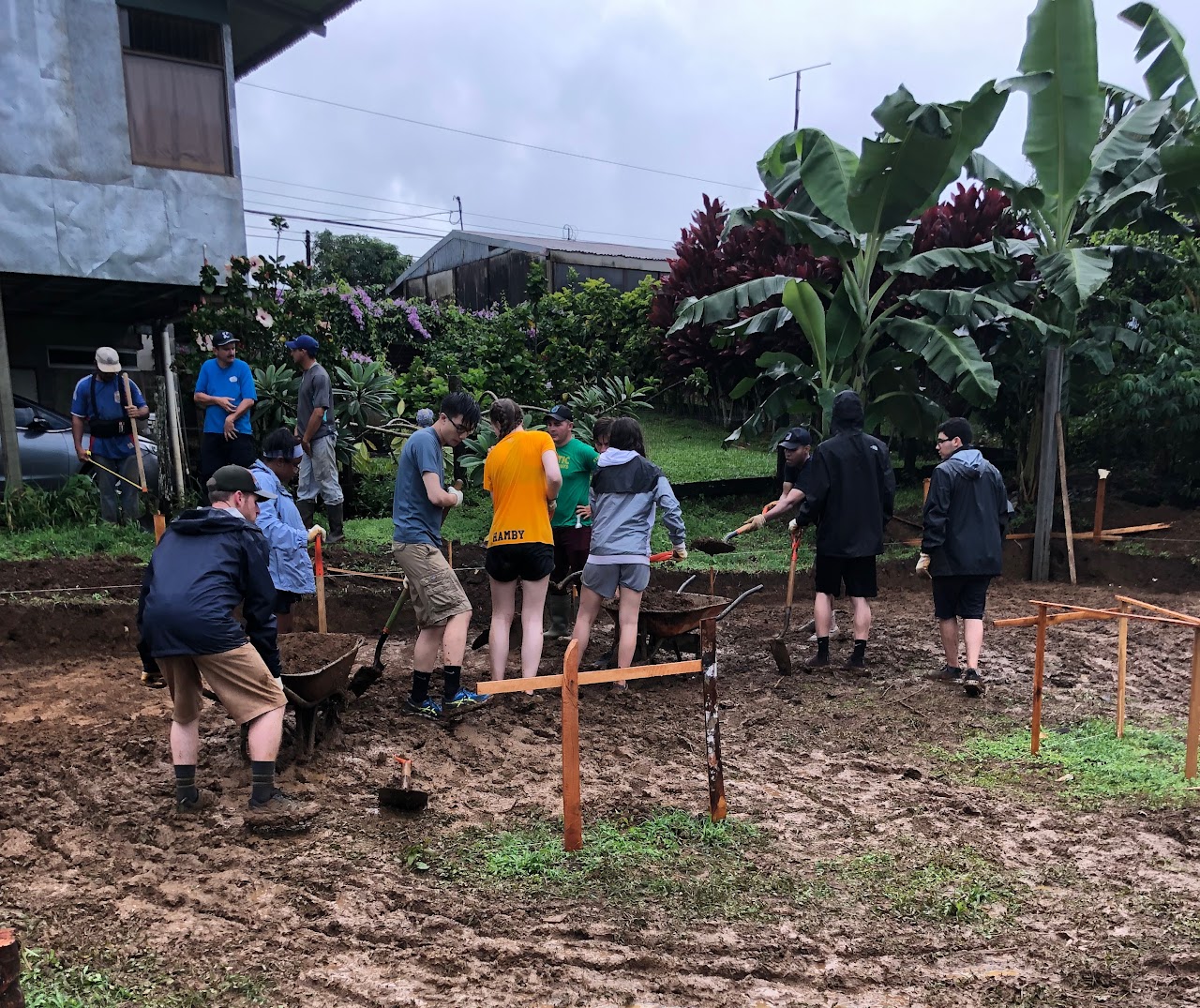
During the Global Pathways 2019 Costa Rica trip, students worked on a community service project that aimed to bring drinkable water to regions that didn’t have access to it, and during the 2024 Thailand trip, students worked in elephant sanctuaries. During the upcoming Costa Rica trip, students will continue the initiative. The Japan trip doesn’t have community service built into the travel plan, so Global Pathways students may seek to fulfill their required “glocal” – globally minded local service – elsewhere.

Even for students who are unable to partake in the international trips, various global activities are offered by the program. Judy Elkotory, a senior and one of the leaders of the program, detailed the many activities that were designed for the program over the years:

“We helped plan [the winter fundraiser]…we planned to do a movie night with hot cocoa in the cafeteria…. [and] we also started painting the rock…because our theme last year was saving the ocean.”

Each year, Global Pathways adopts a new theme centered around one of the seventeen of the United Nations (UN) sustainable goals, and student leaders like Elkotory design activities related to the theme. Elkotory mentioned that the program has also collaborated with the exchange program that brought international students to AHS.

“[We attended] Korean exchange H-blocks…and we got to do Ddakji, like [the] squares [game]…from Squid Game…[and] we had Vietnamese students also come in and talk about their school life back in Vietnam and their food and culture,” she said.

Global Pathways continues to draw new sophomores each year who are eager to embark on their global journeys. Connor McGovern, a sophomore and new member of Global Pathways, spoke about his enthusiasm for gaining a global perspective by joining the program. “I thought it’d be really interesting to talk to people from other countries and get to travel to other countries and do service… . It shows you how many different places there are in the world and gives you… a sense of your options for the future,” McGovern said.

Each student’s journey in Global Pathways is a unique experience, and this is by design. Brennan highlighted that ultimately, students are the ones to define their own adventures in the program. 

“We try hard to make it so that students can kind of make [the program] their own. We call it ‘walking their own global path’,” Brennan said.

Continue reading
Mice appearing in classrooms?
  • November 13, 2024

Staff and students debate a hygienically concerning event

Kaveri Dole and Arshiaa Prem

STAFF WRITERS

“Cloudy with a Chance of Meatballs” is an animated movie we all love, with various foods falling from the sky in a blissful buffet. Obviously, this is everyone’s dream, but how would you feel if the meatballs were a little less appetizing and a little more hairy?

Health teacher Betsey Desfosse’s freshman class was horrified when they saw dead mice on their floor, just inches from students. It was around 8:30 a.m. on an early October morning, and the students were still groggy and tired. Was it fake? Was it perhaps a meticulously placed practical joke? That is what prevented the class from “screaming bloody murder,” Desfosse said. That is, until ten minutes later when two students approached Desfosse asking about the creatures.

“I was a lunatic, I was screaming,” Desfosse said while recalling the incident. “I fell short in the bravery department that day.”  

However, Desfosse was not the only teacher who encountered these pests. Science teacher Jennifer Rodier also had similar experiences. Rodier valiantly threw away not one, not two, but three dead mice, all from Desfosse’s classroom, earning the title of Mrs. Desfosse’s knight in shining armor after running into the room after hearing her screams. Finally, Desfosse exclaimed, “That’s it, I can’t do this anymore!” and ran out the door.

“I get there are mice in the building and it’s starting to get cold and we eat snacks all over the place,”  Desfosse said. She was very logical after the fact, confirming, “This has never happened before but it’s not shocking.” 

Her theory is that a mouse likely gave birth, producing more offspring. However, she recalled a similar incident from about fifteen years ago, when a mouse fell out of a hole in the ceiling tiles and landed in a student’s backpack.

Freshman Ishwa Dharan, who was present in the health class where the mice reappeared, reflected on the experience. It was a total shock to her, so much so that it didn’t seem real. In fact, at first, she thought it was fake. “I started laughing because I didn’t know what to do,” she recalled. 

Her reaction highlighted another issue; students at Andover High School are unprepared for such situations and unaware of the health concerns associated with these pests. Without the proper knowledge of what to do in these situations, students are at risk of mishandling the animals in an attempt to kill or dispose of them, potentially contracting a disease.

The Centers for Disease Control and Prevention (CDC) points out the dangers of physical contact with vermin, which can be a threat to our students. “Contact with rodent droppings, urine, and saliva can spread by breathing in air or eating food contaminated with rodent waste.”  The CDC added that infestations of rodents through buildings are the main cause of disease spreading from rodents to people. In addition, many diseases carried in mice don’t show apparent symptoms, meaning there is no visual difference between an infected and a healthy mouse. These diseases range from bacterial, viral, and even parasitic and can be transmitted directly or indirectly. 

So what can we do to reduce the spread of these diseases? Candice McVeigh, a health teacher at AHS, advised community members “to start being mindful of the food we bring into classrooms and how we clean up after ourselves.” However, in her opinion, the mice aren’t a real issue unless the problem worsens. “All buildings this size have mice,” she says. The real concern is not eradicating the rodents, but instead keeping them under control. This mirrors Desfosse’s thoughts as well: “I don’t know how in a building this size with this many people and so much food that you wouldn’t have mice.” 

As for measures taken to combat this problem, Desfosse stated that rat traps have been set. However, they remained empty after a few weeks. 

These rodents are indeed becoming pests for our students and staff. They bring hygienic concerns and, in general, cause chaos and disarray. Mice or meatballs, you wouldn’t want either in your classroom, would you?

Continue reading
Mrs. Breen Steps Up to New Ninth Grade Coordinator Job
  • November 13, 2024

MADDOX TO

STAFF WRITER

After 23 years of teaching in the Health Department at Andover High School, Holly Breen has recently taken up the role of 9th grade coordinator.

For 23 years before her new role, Breen taught 11th and 12th graders, taking a one-year break during her time as a health teacher to focus on taking care of her children. Breen has also been the senior class advisor since last year, and she said she’s “always really actively involved in the student body and other activities outside of teaching at school.”

The 9th grade coordinator job was created last year, offering a position that Breen read and thought fit her perfectly. “Working with a variety of stakeholders like parents and students and teachers and community members [sounded amazing]… I absolutely love that part of my job,” she said.  

Joanna Ganci was hired as 9th grade coordinator last year. So in the time being, Breen decided to get her administration degree so that when the opportunity became available again, she would be ready to apply for it. 

Due in part to perfect timing, Ganci changed roles this year to become an assistant principal, leaving Breen—now qualified with an administration degree—ready to take the job. 

Breen is now participating in administrative meetings to get properly integrated and comfortable in her new job position. 

“It’s hard right now because I’m really doing both jobs,” Breen said. “Although Mr. D’Andrea has been awesome about trying to not let me get too overwhelmed because [one of] my main priorities right now are my classes.”

“Mrs. Breen is an awesome addition to the office and our staff administration,” Principal Jimmy D’Andrea said. “She’s been working very hard for the past couple of weeks to complete her set training for [the] qualifications of becoming the new 9th-grade administrator and we’re very lucky to have her.”

Even though Breen has shared the happy parts of taking up a job that she loves, she expressed that it’s still hard to let go of her longstanding history of education in the health department.

Breen said, “I will not be teaching any longer, which is bittersweet for me because I really love teaching. I just felt like it was time to broaden my outreach to the school and take on a different role in that way—to meet kids in a different way.”

Continue reading
AHS Students Showcase School Community Involvement
  • November 13, 2024

Shreya Soni

STAFF WRITER

Though often confused as the same thing, the Student Government Association (SGA) and class boards are two different leadership bodies that tackle different issues in AHS.

There are a multitude of opportunities at AHS to get involved in the community as a leader, two of which are SGA and class boards. SGA is responsible for solving problems involving the school as a whole and prevalent town issues, while class boards aim to solve problems involving their respective grades. If you are a student interested in tackling the issues concerning the entire student body, SGA is the perfect place to showcase this passion. 

“One of the responsibilities of the student government is to participate in 10 community events,” said senior Daniel Shin, the SGA president. These events include attending a School Committee meeting to gain more knowledge about problems that the student body and faculty have faced, and the annual holiday fun drive, which provides gifts for low-income students at AHS during the holiday season. A notable event that SGA is responsible for organizing is the pep rally, which Shin mentions has benefitted the student body by fostering school spirit and a sense of community.

As a four-year member of the SGA, Shin has seen the positive impact that it has had on school rules and his peers, emphasizing the pivotal role that SGA plays in vocalizing student opinions. “We’re the only club that revises school policies and has direct communication with administration,” he said, “[and we have] helped to get feedback on policies and formulate them”. One of these policies that SGA has been instrumental in modifying is the bullying policy, which can be viewed online in the student handbook.

However, if you’re a student wishing to take on a less ambitious goal and provide an impact specific to your grade, joining a class board is a great option. 

“Some of the responsibilities of the boards are to be consistent with attending meetings and to be prepared to share ideas,” said Akshara Vijay, a sophomore and member of the Sophomore Board. A member of the Freshman Board last year, Vijay decided to join the board once again so that she could work with other motivated students to solve the pressing issues in her grade and plan out events for them. 

“Last year, the freshman board planned out the freshman dance,” Vijay mentioned. “And this year, we are going to do fundraisers to raise money for events like field trips, such as a field trip to Boston or Six Flags.” Another initiative that the board has been interested in pursuing is finding volunteer opportunities for students, such as working at the snack shack at football games and setting up a donation booth during lunch time to promote community events.

As a result of the dedication and perseverance of the class boards, Vijay has noticed that her grade has become “more inclusive and united,” with many individuals fostering friendships with other students that they hadn’t interacted with before.

Because the deadline to apply for these committees has passed for this year, students can support them by attending their respective events. Additionally, interested students can find out more information by asking the faculty advisors or student members and applying next year in September.

Continue reading
AHS Introduces New H-Block Numbering
  • October 7, 2024

Isabella Yan
ARTS EDITOR

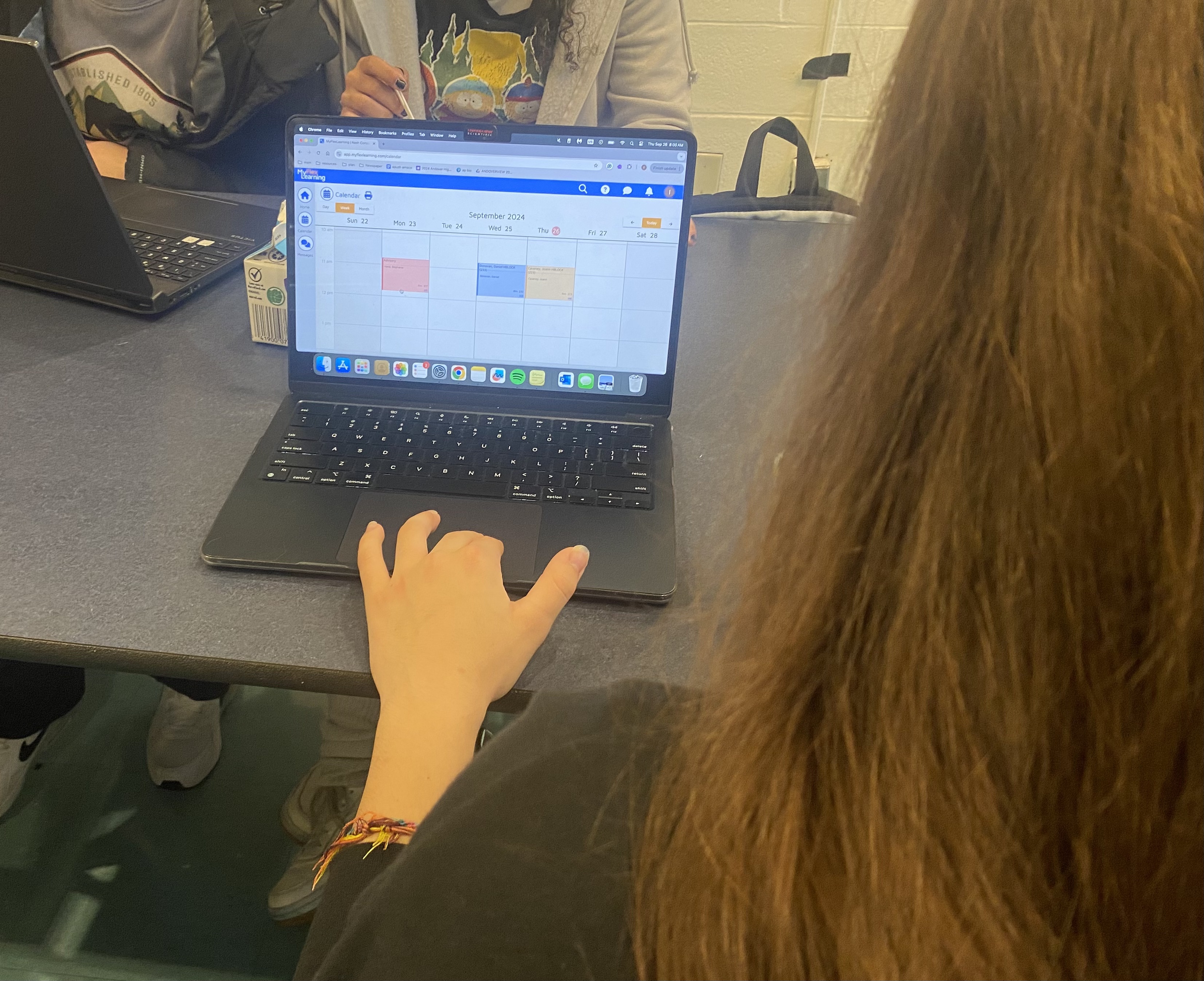
In the winter of 2023, the H-Block Planning Team surveyed students and faculty to gather opinions regarding the H-Block schedule and offerings. Following the feedback received from the survey, H-Blocks have been renumbered, aligning with the days on the 8-day rotation. The previous H-Blocks followed a consecutive order where H2 was the second H-Block in the schedule, H3 was the third H-Block in the schedule, and so forth. After the change, H2 became H3 because it occurs on Day 3, and H3 became H4 because it occurs on Day 4. Altogether, H-Blocks will now consist of H3, H4, H6, and H8 rather than the previous H2 through 5.

The H-Block Planning Team—currently in its third year running—is responsible for overseeing these changes. The team includes faculty members across various departments at AHS who meet monthly to discuss and plan the advisory curriculum and H-Block offerings. Reflecting on the student and faculty feedback received from the survey, Assistant Principal Alicia Linsey, the administrative facilitator of the H-Block Planning Team, shared that the previous schedule was confusing and needed a change.

STAFF PHOTO / Isabella Yan
Student chooses H Blocks.

In the previous school year, the H-Block Planning Team began implementing the change of renaming H1 to Advisory. “It was important to clarify… [that] H1 has a distinct purpose [more so] than other H-Blocks,” according to Linsey.

The change of renumbering the H-Blocks has posed a challenge for students adapted to the old H-Block schedule. “I think it’s more confusing now,” said senior Sharayu Josh. She points out a communication hurdle, “You have to clarify whether you mean H4 meaning Day 4 or H4 meaning the fourth H-Block.”

However, students like junior Pranav Yadla have appreciate the new change, finding that the previous schedule was difficult to follow. “It’s more simple than last year,” he said. With the new schedule, Yadla offers a perspective that the new change has created clarity in navigating the schedule. “It’s way easier to know H4 is on Day 4 and not on Day 6,” he said. “You also know what day is coming up. So, it’s not just using the H-Block name just for H-Block, but also to find out what schedule that day is.”

While this change may take some time to get adjusted to as people settle in for the new school year, Josh acknowledged, “People will get used to it. It’s not really impactful on anything other than H blocks.”

Continue reading
First Year Mentor Program Aims to Cultivate Community 
  • October 7, 2024

By Samantha Sun
SOCIAL MEDIA EDITOR

Health teacher Holly Breen and Assistant Principal Alicia Linsey devised the program as a way to smooth the transition into the AHS community. Each advisory has two or three mentors who visit once every six to eight weeks to help out ninth grade students throughout their entire freshmen year. The mentors include sophomores, juniors, and seniors. The pairs are in different grades to resolve conflict with any grade specific activities done in their advisories, such as class meetings. 

”It is a school priority to continue to cultivate a community that fosters a culture of belonging and collaboration,” Linsey said. Breen added that she feels responsible to support relationships between students.  “I want [freshmen] to feel that this is home for them and… welcomed,” she explained. 

Not every freshman has siblings or friends who already attend AHS, Linsey noted. These are the kids the program intends to reach, in order to provide an upperclassmen support system to incoming students. Mentors and freshmen first meet during freshmen orientation so that they are familiar with each other throughout the entire school year. 

COURTESY PHOTO / Alicia Linsey
Alan Hibino and Allison Peters’ freshmen advisory class poses for a photo.

“I think [it gives] perspective for some of the mentors,” said Linsey. “You forget what it’s like to be a ninth grader [and how] it’s really big when you get to high school.” 

“I really like being a role model for others,” Lana Huynh, a junior and mentor, said. “The freshmen were very unsure and scared of what to do next, so [mentoring is] like being there as their older sibling in the school and [helping] them with things I’ve already experienced.” 

Junior Daphne Hatzigiannis has also enjoyed her experience being a mentor. “It’s a relatively simple job,” she said. “So far, the most memorable part has been the initial tour we gave our group, [and] it honestly got me pretty excited for school to start.”

“When I was a freshman I thought that upperclassmen were helpful when figuring things out,” Huynh said. “It made my transition a lot easier.” 

The leadership training, called Student Empowered Leadership (SEL), was designed by a group called Ignite Nation and funded by the Andover Coalition for Education. Ignite Nation collaborates with schools to help students feel connected and inspire students to lead and mentor their peers. There was a one day training session in January 2024 and a two day training session in June 2024, after the school year ended, to help prepare mentors for the following year.

The mentors learned how to facilitate conversations, how to be a great leader, how to act with integrity, and how to help with the transition process, Breen said. They also did trust-building exercises, skits, and fun games, such as a rock paper scissors tournament.

“It’s important [to] have this be a community to people, and the first step in that is building relationships,” said Breen. The First Year Mentor Program has been getting a lot of positive feedback from freshmen, mentors, and advisors. ”[The program] has really helped build connections across the AHS community,” Linsey concluded.

Continue reading