Tik. Tok. Time is Running Out
  • April 1, 2025

AHS Students and Staff Speak Out on Almost-Ban

Ella Hu and Shreya Soni || STAFF WRITERS

After months of legal turmoil, political debates, and relentless pursuit by its competitors to enact the ban, TikTok has beaten the clock once again. Content creators and small online businesses breathe a sigh of relief as users once again listlessly scroll to see posts from their favorite celebrities. TikTok may have dodged the ban for now, but AHS teachers and students still speculate and are uncertain of the app’s usage in the U.S., especially with ongoing discussions about data privacy and national security concerns. We reached out to several AHS teachers and students to survey their perspectives on the TikTok ban and how it would impact their daily lives. 

The Risk Taker 

AHS senior Youssef Ghidi has long used TikTok as a source of entertainment. However, as the ban approached the impending date of January 18, 2025, Ghidi decided it was time to quit focusing on the opinions of those around him and post a humorous “Get-Ready-With-Me” (GRWM) style video. Ghidi believed that once the ban was enacted, his videos would not reach a large audience, as most TikTok users are based in the U.S. When the ban was lifted, he was shocked that his content had gone viral, amounting to more than half a million views. 

“When TikTok was about to get banned, I was like, I just won’t care, and I created a video making up fake stories,” Ghidi explained. “The first one I made blew up a little bit—around 20 thousand views—then I made another one, and it was more outrageous and had a better hook. It has over 500,000 views, and I also gained a lot of random followers. Everyone knows about it, and it’s just funny.”

Like Ghidi, many TikTok content creators have also begun to post their “drafts” and videos that they were initially apprehensive about posting. For many of them, it was a way to reveal and post more about themselves despite what they believed others would think of them.  

The Alternative Seekers

Others were searching for an alternative app once the ban took place. Among those was Xiaohongshu, a Chinese social media app. The app, similar to TikTok, serves as a lifestyle platform and is a space for users to share reviews on travel tips, suggestions, and shopping recommendations.

“I have been using Xiaohongshu since last year, and it has become my favorite app,” said Chinese teacher Lin Wu. “It has become really popular recently, especially with many ‘TikTok refugees,’ but it is more lifestyle content-related compared to TikTok.” 

Despite the recent popularity spike of the app as a part of the TikTok trend, Wu has been using it for a while in her teaching. “I actually use this app as a teacher, and many other Chinese teachers in the U.S also share their teaching resources. I love watching their videos and they give me ideas and inspiration,” she said. 

For Instagram, the TikTok ban seems beneficial, acting as a method of ridding itself of its top competitor, but TikTok users disagree. AHS students who use TikTok daily agreed that Instagram is a more serious app compared to TikTok, which promotes carefree content. To students, TikTok also has more variety content-wise and offers more inspiration on many topics for students. 

According to Ghidi, “Instagram is so much more different. The vibes are different, and people on Reels are mean and don’t enjoy the sillier stuff; they are so judgmental and mean. Making a post on Instagram is more formal, and it’s for others. I post every once in a while when I’m feeling myself or on special occasions, but TikTok is for [posting] whenever I want.”

The Indifferent

Some students, like senior Mitran Kumar, are entirely unaffected by TikTok’s ban. Unlike most teenagers, who use TikTok on a daily basis, Kumar does not use the app at all and is “rather neutral” on the subject. However, Kumar uses other forms of social media like Instagram and recognizes the chokehold that TikTok and similar apps have had on society, especially on those belonging to the younger generation. 

“I think TikTok has a lot of weight in terms of culture, and it can give a platform for new ideas and creators, brainrot or not,” said Kumar. With the rise of new trends and social ideologies, specifically the usage of slang or “brain rot,” TikTok has been a prominent aspect of its users’ lives. Kumar has personally experienced this within his everyday interactions with friends who use the app.

Kumar understands that government intervention was necessary in mitigating any potential harm that TikTok could inflict on its users. “I trust elected government officials over private corporations, wherever they are from, as we often can’t see the inner workings of tech companies. The legacy of TikTok isn’t very positive, and I feel like the government was in the right to step in,” he said.

The Hesitant

Many are uncertain about TikTok’s impending fate in the U.S,. but agree its impact on social culture is undeniable. Whether seen as a creative outlet, a source of entertainment, or a controversial platform under government criticism, the app continues to influence interactions with digital content. While some, like Ghidi, used the ban as an opportunity to express themselves, others have sought alternatives, believing Western platforms are safer. 

For health teacher Betsey Desfosse, the line is drawn closer toward safety rather than the loss of a source of entertainment. It is undeniable that the impact TikTok has had on society makes it more than an app. However, now that it has become a force that dictates how we connect, communicate, and share our lives, Desfosse believes safety should be the utmost priority when using TikTok. 

“There are companies in the United States that won’t even let their employees download TikTok on their phones,” Desfosse asked. “So what does that government agency know about TikTok, and the information they’re taking in from you?”


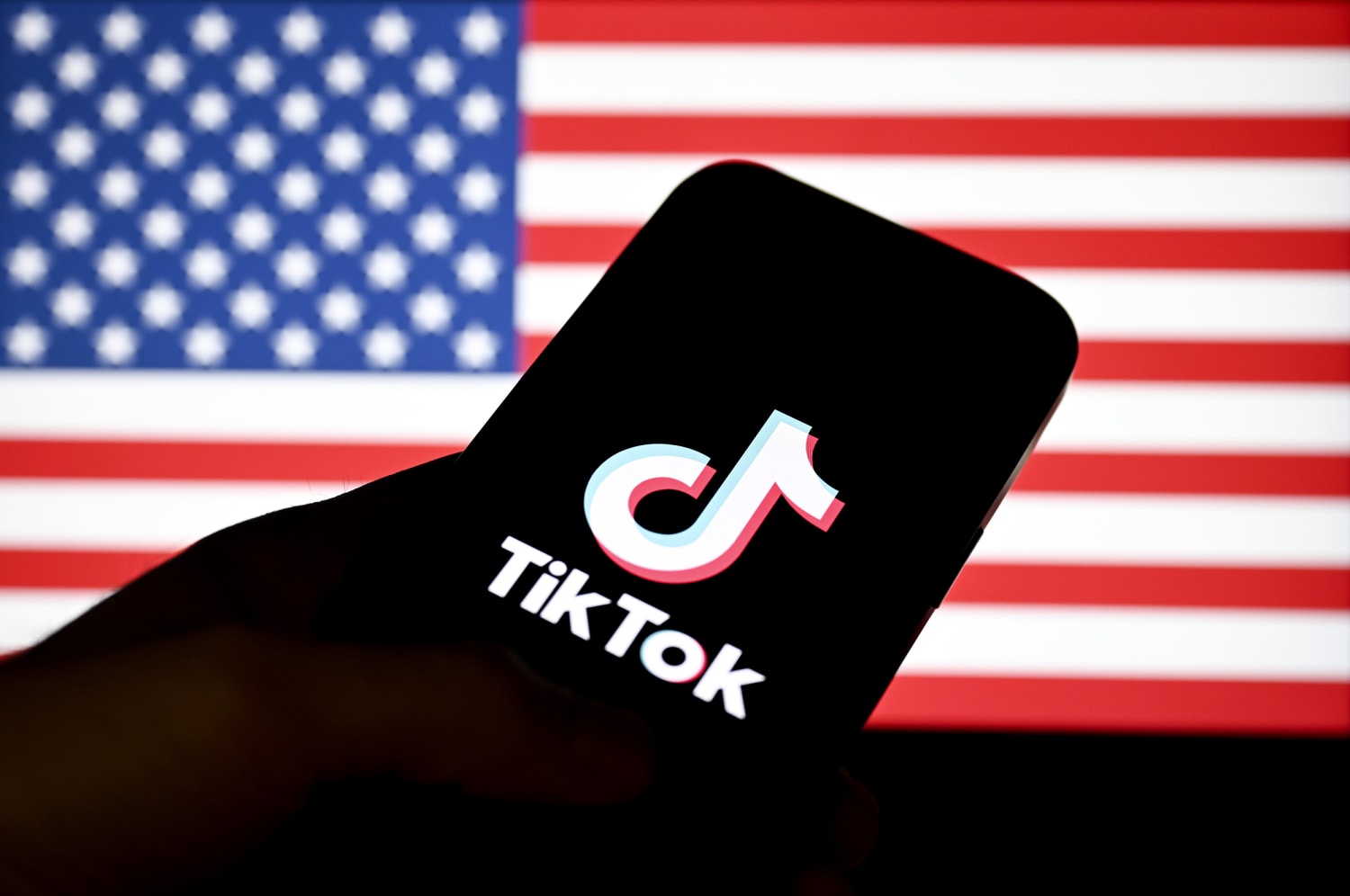
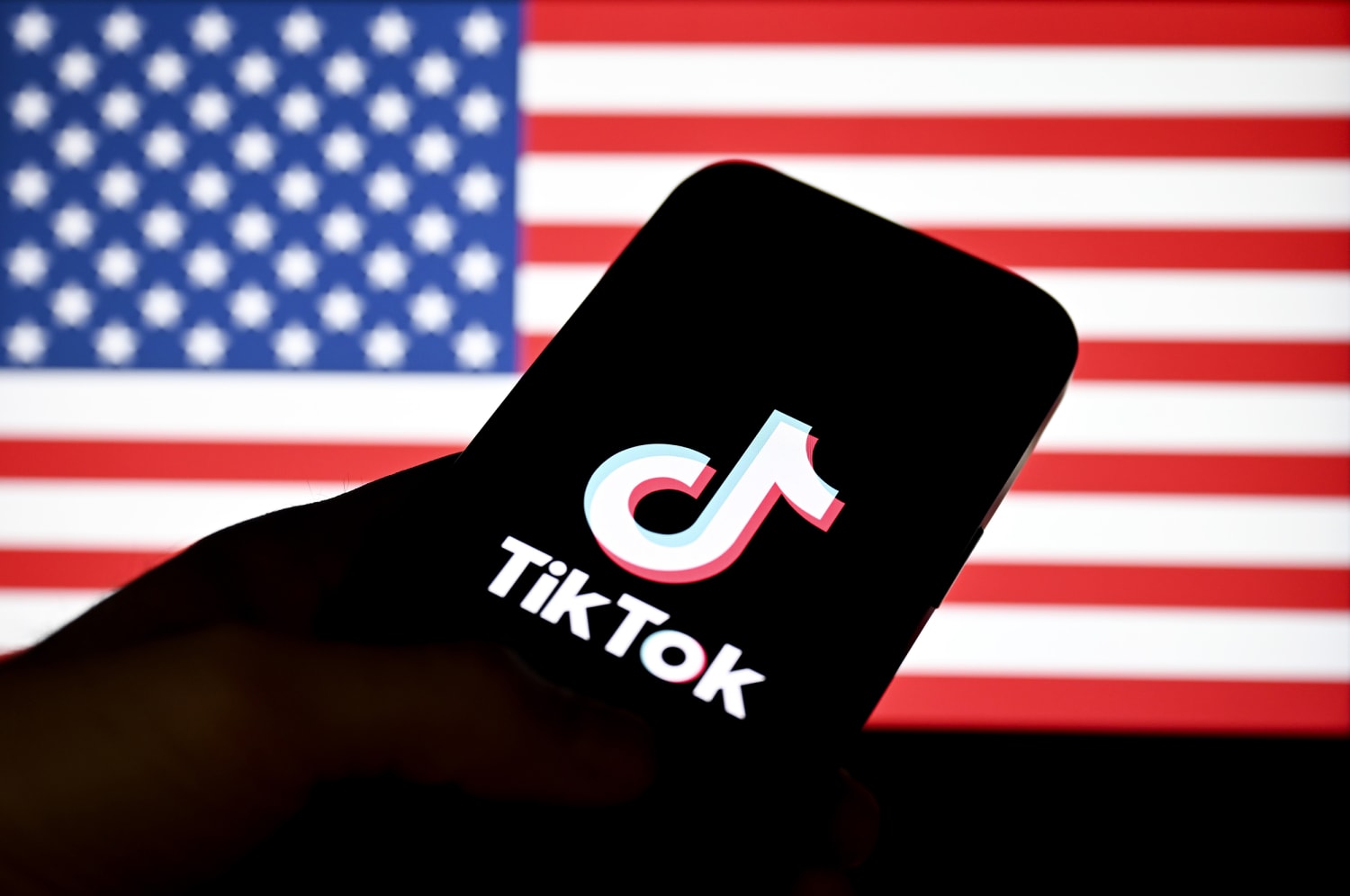
image credit: NBC news

Continue reading
OPINION: Freedom vs. Control in the Digital Era: Balancing Privacy and Security
  • October 7, 2024

Anushka Dole
STAFF WRITER

Pavel Durov, the founder of Telegram, a secure messaging app, was arrested on August 24 in France under allegations of allowing terrorist activities and other abuses to take place on the platform. The arrest has had a ripple effect across the globe, as Durov was an openly pro-privacy figure who is being penalized for it like many before him. 

Privacy was a cornerstone of Telegram, which protects user’s privacy by not sharing user data to third parties and enabling end-to-end encryption for certain chats. Durov’s arrest has led to collective anxiety about what can be shared online—even in a simple phone call or text to a friend—and has opened up conversations at AHS about online freedom. To protect our freedoms, we must completely reform the legal system to accommodate for the digital era and encourage companies to moderate content with algorithms rather than immediately handing data over to the government.

Digital freedom and privacy of data is especially important for teenagers, as we live much of our lives online. Since we are free to communicate in person without fear of the government listening in and regulating our conversations, then it shouldn’t be any different online. However, government surveillance of the internet has been prevalent since its inception—this is not necessarily a bad thing, because government intervention is necessary in criminal activity, but there is a line between protecting user safety and infringing on their privacy. 

Junior Milena Tiernan said she thinks, “It is our liberty to be able to communicate privately with each other, but [the government] should be able to see if people are trying to hurt other people in the real world.” 

Senior Aaryan Deshwal expressed similar views. “There should be a balance between free speech and using speech to incite violence and crime,” he said. “Free speech should not be regulated at all unless there are clear indications of bad intention.” 

 In Massachusetts, and the overall United States, COPPA (Children’s Online Privacy Protection Act) is set in place to protect children’s data from being exploited online, but the act only protects people 13 and under. High schoolers—even adults—are still vulnerable and impressionable, and if they make a mistake or fall in with the wrong digital crowd, their digital footprint will condemn them for the rest of their life. Making a mistake online directly escalates to law enforcement, something that has not been seen in the past.

In the past, even for adults who had their own home and privacy, the reliance on others in order to be able to send communications provided checks and balances on misdeeds. The mailman noticing a questionable package or neighbors noticing suspicious activity from the house next door served as informal obstructions to those who would attempt to perform illegal activity. 

Today, parents find it difficult to police their children’s content due to the sheer volume of production. And for the community surrounding the perpetrator? It’s very difficult to find signs of unlawful activity when there is no access to physical records or patterns of behavior to examine. 

Law enforcement has simply not caught up to the leaps that technology has made. The systems that are currently in place to safeguard us are built on a shaky foundation and are far too outdated. Algorithmic analysis of content could be a necessary intermediary—like neighbors or mailmen—to keep the balance between total anarchy and total surveillance.

Sophomore Arnav Josh had similar thoughts. “Tech companies should have basic, non-invasive filters meant to accurately recognize obvious illegal activity… it would be a huge breach of privacy for companies to be able to look at every conversation between people,” he said.

“You would need some sort of think tank, philosophers, people across the political spectrum, privacy experts, legal experts… You need a whole 360-degree view of people who can talk this through,” Bezaire added. “You need people from different walks of life, different education, different backgrounds to be able to put together a new ‘tech bill of rights’ that protects people but also helps keep us safe.”

Durov’s arrest may leave more questions than answers. And that’s okay—these are deep, complex issues that strike at the very core of humanity. Resolving them will require much more thought, countless conversations, and inevitably, even more questions. The tension between privacy and security will always be challenging to navigate, but it’s a balance we must find. The future of our society depends on it.

Continue reading
EDITORIAL: AHS Phone Policy Teaches Compliance, Not Responsibility
  • October 7, 2024

There’s a new phone policy at AHS, and you’ve probably noticed it. Our phones go into what one might call a “phone jail”—those numbered slots where our devices are locked up during class, sometimes with an actual lock and key. The rationale is clear: no phones in class, no distractions. But let’s ask the question: why have we gone to such extremes? 

We at ANDOVERVIEW strongly believe that class time is for learning, and phones can be and have been a major distraction. The administration has had enough of our glowing faces, aglow not from intellectual enlightenment, but from under brightly lit phone screens. Our teachers are concerned about our development; it is not that it gives them pleasure to deprive us of our hypnotic devices. But does locking up our phones, as if they’re dangerous contraband, teach us the right lesson?

This is high school. We’re constantly being told to act maturely and take responsibility for our actions. Some of us are already 18—legally adults—yet we’re treated as though we can’t be trusted with even the smallest responsibility. By removing the temptation completely, the administration is not teaching us how to manage it. It is just kicking the can down the road. Very soon, many of us will be heading off to college or entering the workforce. In those environments, policies like this one don’t exist. There won’t be phone jails. No one will force us to lock up our devices. It is up to us to learn to make responsible choices.

The phone policy creates a false sense of order. It’s easy for students to follow the rules because we don’t have a choice. But the moment the structure is gone, those who never learned self-discipline may be the first to revert to bad habits. What if, instead, we were trusted with our phones? If someone is caught using their phone during class, they face immediate consequences, as well as potentially being singled out for phone jail—with no parole—for the rest of the year. This is about accountability. We learn by making mistakes and facing consequences. If we’re shielded from making mistakes in the first place, we’ll never learn.

The new phone policy does enforce compliance with rules, but one should remember that we are expected to follow rules, even without heavy-handed enforcement. We need to be treated like the almost-adults that we are. It’s time to trust us to learn from our choices, not lock them away.

Continue reading
Teachers Enforce Cell Phone Policy
  • October 4, 2024

Ariana Teasdale || STAFF WRITER

Last year, Scott Darlington, former assistant principal, received a grant to investigate cell phone usage in school. He gathered teachers to create a specific committee. In May, phone boxes were brought into classrooms.

Technology teacher Daniel Brennan was responsible for creating a video that was played before the guest speaker that appeared last year. There were four other teachers, including history teacher Ruth Masters, science teacher Seema Gupte, and math teacher Shawn Remy on the committee.

“Ms. Masters was keeping the faculty informed, Ms. Gupte was [keeping] the students [informed and] spearheading bringing the guest speaker in, and Mr. Remy worked with parent communication,” Brennan explained.

Brennan is trying harder to enforce the cell phone policy in his classes. After researching and looking at statistics, he started using the metal cell phone caddy. “I teach film and video and so we use [phones] a lot. We try to find a healthy balance, but for me, it’s class by class. As long as you’re being respectful and not distracting other people I think there are ways to make it work. If we cannot follow that, it’s tough to not use the phone caddy,” he said. 

Although she has emailed, made signs, and provided boxes, Masters thinks some teachers are not enforcing  it as much as they should. “Most teachers have the tools to implement the policy, but whether they’re actually doing it? I do not know,” she explained. “I still see some kids in the hallway with their phones, so that’s telling me teachers probably aren’t [enforcing the policy].”

Art teacher Emily Ross enforces the policy a bit differently: “During direct periods of instruction, the cell phone needs to be away, and I’m pretty adamant about that, but during work time, on occasion, students might need to use them.” 

Ross explained how her class is a visual arts classroom, so looking at pictures for references is important; however, she does also recognize the distraction cell phones impose.“I think having stricter rules during the academic day is important because they can be a distraction to learning and it’s really hard for people to multitask,” Ross said. ‘I’m not 100 percent no-phones in school, but I think people need to learn how to use them effectively because we’ll have them for the rest of our lives.”

Junior Noor Bhatti feels a similar way. “I think a phone box could definitely help people that get distracted really easily but I think for the majority of people it’s kind of unnecessary,” she said. Bhatti says the majority of her teachers do not strictly enforce the policy. She also thinks that it’s easy to get distracted on a computer too and so using her phone does not affect her productivity as much.

Some students, however, find the phone caddy helpful. “I really have been liking the phone box system.” sophomore Anika Abbot said.“I am more focused and attentive in class. Although I do appreciate the freedom of keeping phones in our bags, I think for learning purposes the phone box is extremely beneficial.”.

Continue reading