Freshmen Adjustment Into Post-COVID Learning
  • January 13, 2022

Dane Connor and Ethan Zabar

STAFF WRITERS

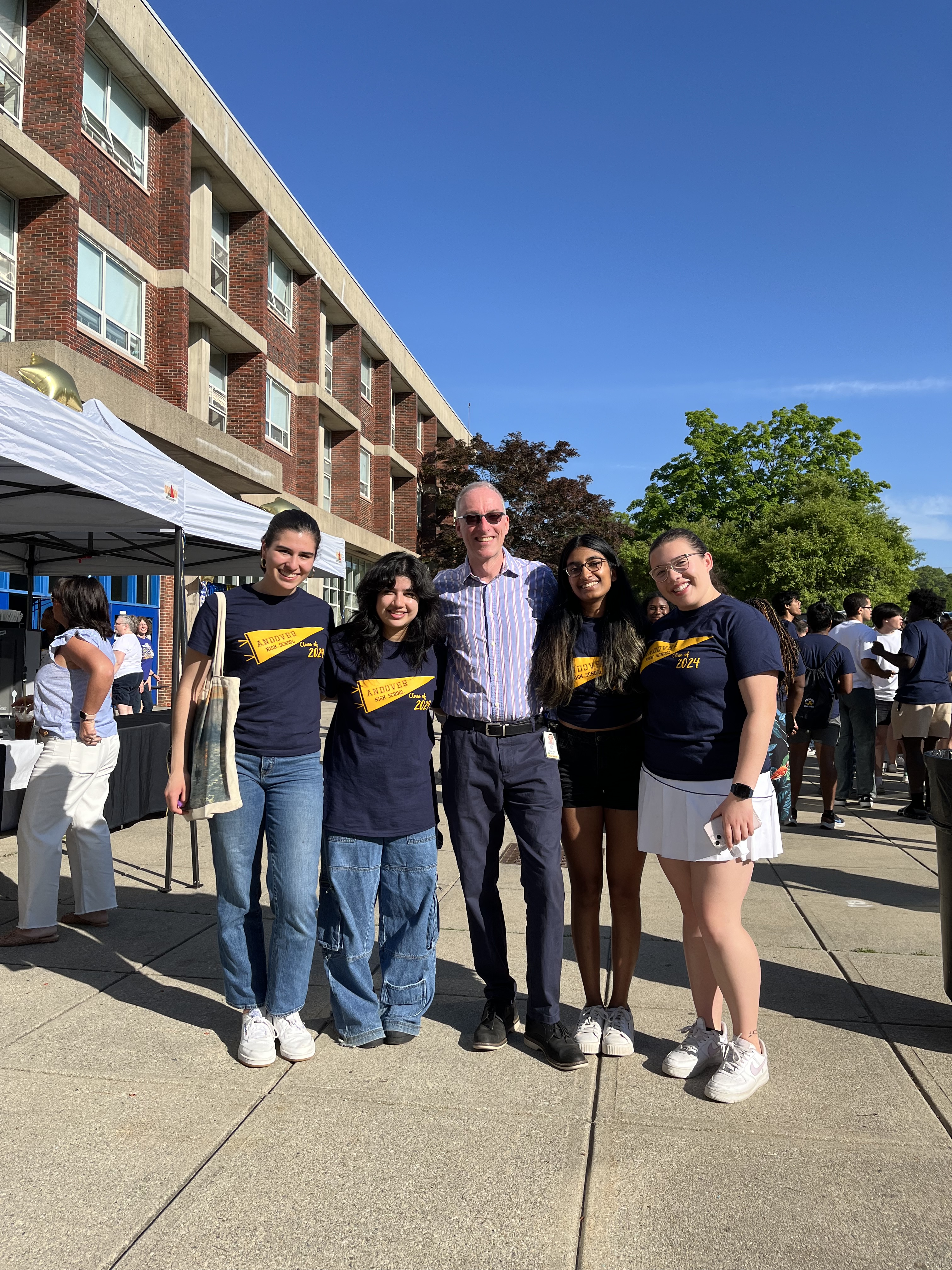
Andover High School’s current freshmen, the Class of 2025, is adjusting to the transition into a high school environment after the COVID-19 pandemic. 

After the COVID-19 outbreak in March 2020, the lives of many people changed drastically, for better or worse. School sessions were held in a hybrid or fully remote setting, and that was a huge adjustment for students everywhere. Now, Andover High School’s Class of 2025 must handle the transition back into fully in-person learning on top of the massive change to learning in a high school setting. 

Katherine Johnson, an English teacher at AHS, believes that despite the setbacks caused by the past year in online learning, the class of 2025 may be able to take valuable lessons away from that period and apply them to their freshman year. “In my opinion, though not ideal, the skills that students were able to gather and hone during remote learning could be a huge asset to draw from for their high school experience,” Johnson stated. “Remote learning forces a lot of students to look at themselves as learners, and understand what works for them as students in terms of organization and time management.”

Johnson is of the belief that from a teacher’s standpoint, expectations for students should not change, but should come with empathy after a long time struggling with the threat of COVID. “My standards have not changed,” Johnson said. “Students are people; we are all here to learn from each other and to do the best work we can do. We’re here to think, and read, and learn, and write, and laugh… I appreciate that for all students the past couple of years has been intense and challenging. We all need to be sensitive and approach one another from a place of compassion, understanding, and kindness.” 

She continued by saying that teachers had adjustments to make as well. “As a teacher, logistically, remote learning forced me to be incredibly clear about my expectations and pacing.” She then stated that she sees this year’s freshman class as highly engaged learners, and hopes that as a teacher, her class is a safe and productive learning environment for the new additions to AHS. 

Sahil Khosla, an AHS freshman, felt that the trajectory of his peers’ maturity dipped during the pandemic. “Overall, I feel as though the growth of most of the people around me has stagnated, and I find more and more of them beginning to approach education and school with carefreeness and listlessness,” he said. 

However, Khosla felt that COVID’s impacts are beginning to fade. “Overall, the effects of COVID only really affected my eighth-grade year, as that was when the experience was new to all of us,” he added. “We’ve been going through it for so long now that the memories of how we did things before seem less realistic with each passing day.”

Although their eighth-grade year during the heat of the pandemic is over and memories have started to fade, many freshmen still feel a great impact from their time with COVID. Brody Harris, another member of the freshman class, said that life, especially school, has still been difficult for him as a result of COVID’s impact. “My eighth-grade year was very bad grade-wise, and I am in classes that are a little lower than I would like to be in,” stated Harris. “For example, my eighth-grade math teacher did not let me do geometry this year and Algebra 1 is mostly repeat stuff I already know.” 

Harris also felt like communication with teachers was as difficult in his freshman year as it was in eighth grade with the pandemic present. However, he did credit the teachers, acknowledging that the school staff had just as difficult a time. 

Possibly the biggest worry about the pandemic impacting incoming freshmen was that they have matured slower during their time in isolation and that as a result, they’d have a more difficult time making responsible decisions. Conversely, in an unofficial survey run by ANDOVERVIEW staff, two-thirds of the interviewed students felt that socializing with their peers was as easy as it had always been, despite a possible dip in social maturity.

Ms. Reidy, an AHS math teacher, gave some comments about the freshmen’s transition into high school. During their last year of middle school, the class of 2025 was thrown into an online learning environment, and Reidy believes that the high school workload shocked inexperienced freshmen. “They didn’t have that year to ramp up work,” she said.

Reidy stated that the increase in workload from middle school to high school is a difficult transition for everyone, and the circumstances given to the freshmen have only made that transition more difficult.  She added that she felt the freshman being isolated for so long impacted their ability to socialize with peers and adults. “They weren’t with anybody,” she said. Reidy felt that the freshmen’s excitement to be back in person for introduction to high school would provide a boost in energy and morale, and in turn, motivate them to make up for the lost time.

Continue reading
APUSHing it? High AP Drop-Out Rate This Year
  • January 13, 2022

Drop-Out Rate in 2021-2022 School Year Brings Light to Difficulty of AP Classes

With many students dropping out of Advanced Placement and Enriched classes, a pressing question persists: How has the COVID-19 pandemic impacted the student drop rate in these classes? 

AP classes, which are college freshman level courses taught in high school, are known to be both quick-paced and work-intensive. Throughout the year, some students will request level changes down to honors, bringing a bit of light to the difficulty of some of these classes. According to some AP teachers, Andover High School has experienced more students moving down from AP levels this year than ever before.

When one thinks of an AP course, there are a few infamously difficult ones that come to mind: AP U.S. History (often abbreviated to APUSH) and AP Calculus are among the few. But what do actual students and teachers of these classes have to say about them? 

APUSH is a class that is known to be extremely difficult. The pace, depth of content, delivery, and assessments of APUSH are more challenging than what students are used to. “For juniors who are first taking an AP class, it’s quite an adjustment. If you think about it, it’s literally skipping two grades,” said Mary Robb, who taught APUSH up until this year. 

STAFF PHOTO / Melody Tang
AP students Larissa Cardine (left), Julia Kole (middle), and Julia Benjamin (right) study in the morning before class.

Andover High School junior Bori Kim said, “APUSH is definitely a challenge, but it’s not always hard. The pop quizzes are hard to study for, though, and projects are a lot of work. The key to APUSH is time management.”  

AP Calculus, which is one of the most notoriously difficult AP classes, is split into two levels: AB, which teaches half a year of college calculus in one school year, and BC, which teaches one full year of college calculus in one school year. “AP Calculus specifically is also, for some students, the first time that they struggle with math,” said Megan Mulert, who teaches both Honors Calculus and AP Calculus AB.  “For a lot of students, it’s the first time that they actually have to put in the work and learn how to study.” 

While there are usually only one to two students who drop down from BC to AB, Mulert said she has had around 10 this year. Mulert remarked, “The main skills you need for AP Calculus are algebra II and precalculus, and… most of that for them was during COVID. So, I’ve seen the effects of the pandemic much more this year even than I did last year.”

AP Calculus BC teacher Karen Waters also brought up an important point: although there were many students who moved down this year, there were also many students who were taking courses in a level higher than they were recommended for. This might have played a role in the increased number of students moving down, since they were not well prepared for the rigor of the class. 

Shawna Chu, a senior at AHS, said that AP Calculus BC is especially rigorous because there are no “homework grades or participation grades, so your grade is just however well you do on tests.” 

A couple students interviewed mentioned that APs weren’t as difficult as they thought. Several say that most of the difficulty is self-inflicted. AHS junior Yash Kalwani, who is taking four APs, explained, “Honestly it’s not really a lot of work, it’s just poor time management that leads juniors to struggle with APs.” 

Procrastinating can become an AP student’s worst enemy. AHS junior Annie Song, who is in AP Chemistry, also gave a piece of her advice. She jokingly warned, “Don’t be like me and play nine hours of games before you start homework.” Altogether, the general consensus is that APs definitely require more work and effort than a college prep or honors course. However, as long as you don’t procrastinate, the work shouldn’t become crushingly overwhelming.  Unfortunately, many students are tempted by procrastination and it snowballs into being behind on lots of classwork and homework, which often results in doing poorly on tests. 

AP Tips and Tricks

Although AP classes are infamously difficult, there are many tips and tricks on how to get through these courses while maintaining a good grade.

Interviewed teachers stressed to always ask for help, to be at every class present and participating, and to do homework every night so as to not fall behind. AP Calculus BC teacher Karen Waters mentioned that summer work is important as well, observing that students who really put in the effort to thoroughly do their summer work did better when classes began. 

Mary Robb, an AP U.S. History teacher up until this year, also noted the importance of reaching out for help when needed, mentioning that the students who came to see her during H-block were the ones who showed the most growth throughout the year. 

“If you pay attention in class, you should be pretty set for the tests anyways. I say to not go in over your head because if you end up taking too many APs, that can take up a lot of your time,” junior Annie Song added, “Depending on the person, it can stress you out a lot, so know your boundaries… [and] always make time for yourself.” 

AHS Junior Bori Kim also commented, saying, “Think about which ones may help you in college or [in] the major that you’re thinking of [pursuing].” Being proactive, attentive, and staying on top of your course load is really the secret behind surviving AP courses.

Continue reading
Remote Learning: Tips and Trials
  • February 8, 2021

By Avi Shapira

STAFF WRITER

Opinions on remote learning have been mixed across the AHS student body, but learning remotely, whether in remote academy or hybrid, has been difficult for many. 

Online school has caused many health issues because of extended screen time, lack of movement throughout the day, and inability to interact with other students often. Those health challenges are also hindering people’s ability to do well in school. 

“I have really bad headaches and it’s gotten so much worse this year due to online school,” said junior Ollie Neilly. “It’s very painful and it makes it hard for me to concentrate or have my camera on.”

“It’s been difficult to get outside and get fresh air, or interact with friends, pets and family,” added Atlas L., a junior.

Anya Lazar, a junior, also said that remote learning negatively affected her posture. 

“We worried even before this pandemic about how much screen time students are getting, it creates a sedentary lifestyle… you’re not moving around and being social,” said health teacher Candice McVeigh.

During remote days, students interviewed said they have to spend between six to eight hours on a computer just for school-related work, and in remote academy or when hybrid is all remote teachers hold class-long meets. Most homework also requires going online to complete, and most teachers spend the entire class lecturing. 

Abby Clement, a sophomore, said “A lot of the time, after spending a day completely online without much of a break, I do not want to go back online and do more school work so I put it off, procrastinate, and end up becoming more stressed.”

Teaching online is also difficult for teachers, whose health is affected and have to design “more engaging activities [online], while also considering the time that students need to look at the screen,” according to Chinese teacher Lin Wu. 

STAFF PHOTO/ Erin Li
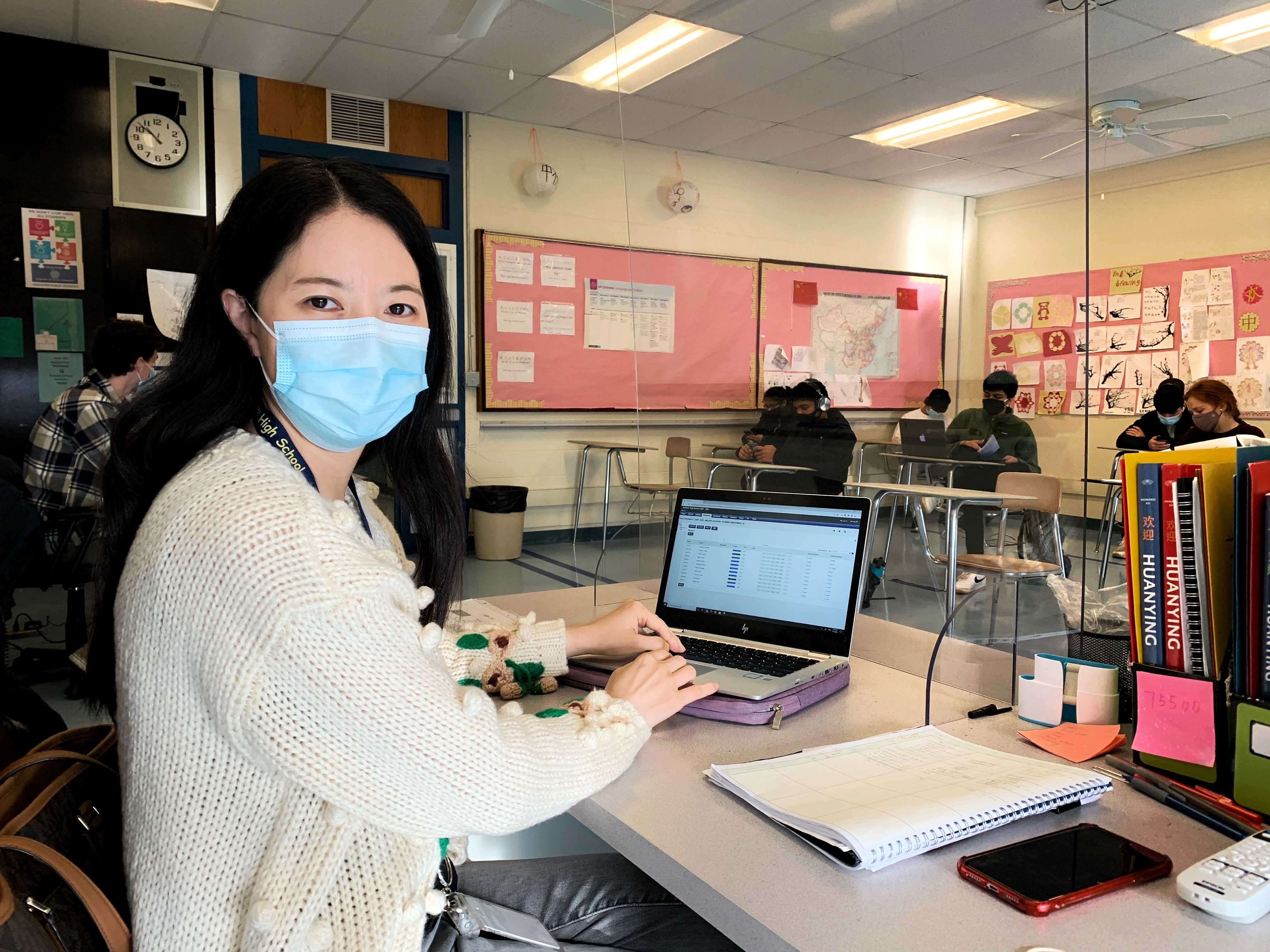
Ms. Wu teaches in-person and remote students at the same time during an H Block.

Despite all the challenges with online school, it’s possible to make it easier for both students and staff. 

Some students said they prefer having independent work rather than a live remote class. 

Neilly said it’s easier to concentrate on independent work, and Google Meets can be stressful.

L said both types of classes have benefits. “It’s easier to learn when I can hear the teacher talking about a subject, but I overall spend less time sitting in front of my computer and it’s easier to get work done when it’s independent work… it’s easier to go at my own pace.”

Sophomore Shannon Chu suggested a mix of both would be good. “My French teacher… gives the beginning of class off for us to do some [independent work] and then our actual class is only 45 minutes.” Other students expressed similar ideas.

To make remote classes easier, McVeigh mixes independent work and lecturing, and also makes sure to include group work in her health classes. “I heard from some kids that they appreciate that,” she said.

Many students said that mask breaks, or any short break in the middle of class, were helpful for them.

“Our brains can’t focus for long periods of time so having a ten to twenty minute break in the middle of class would help our productivity and focus levels and give us time to get away from the screens and stretch,” said Neilly. 

Students said it would be helpful if they got less homework in general.

L said less homework would mean they wouldn’t “burn [themself] out by spending all of [their] time focusing on school work.”

Chu questioned whether homework is necessary. “If homework is making kids more stressed how is that helping at all?” she asked.

“Our education is already being affected by our mental health and the inability to concentrate,” Neilly explained. While he agrees that some homework are necessary, many teachers could give lower amounts of homework.

Because of these challenges, many students have had to skip or miss classes because of technological issues or headaches. Due to the online platform, making up this work is more difficult, and students interviewed suggested that teachers post an agenda and don’t take points off late work to make making up work easier.

Some students thought having physical textbooks and getting more assignments on paper would be helpful. 

I think physical books [are better than] online books, for the reading experience,” said Chu. Physical books would also mean students have to look at screens less. 

Lazar had a mixed opinion. “I actually hate doing assignments on paper because writing hurts my hand, so I prefer being able to type everything. Physical textbooks would be great because I have a lot of issues with loading the online ones.”

Multiple students suggested teachers should change the way they grade assignments. 

“Teachers could not rely on tests and quizzes for grades as much as they do right now, since it’s very hard to learn an entire topic when everything around you is a distraction and you can’t pay attention,” said L.

“[Teachers should] give more opportunities to improve grades, be more lenient, etcetera,” said Clement. She suggested teachers grade on completion rather than accuracy of homework assignments. 

Continue reading
Quizzes and Tests are not the Best
  • February 7, 2021

By Andoverview

We know that the majority of the student population dislikes taking tests or quizzes. But during a global pandemic they’re even worse. From keeping your camera on your paper to loading hybrid students up with tests on the in-school days so they can be supervised in person, we’ve seen all of the methods of “cheatproof” testing. While preventing students from cheating on tests and quizzes seems like a good thing, it’s not the best idea during times like these. First of all, the camera-on-paper plan doesn’t work for students who don’t have working cameras or those who don’t have access to a printer to print out the test. There are also some students who can’t move their computer’s camera, which provides more difficulty with this kind of test. Additionally, the mental and physical health of many students are in a decline due to these difficult times, and that should be taken into consideration: Many of us who are hybrid students find that we get loaded up on tests on the in-school days, which is extremely stressful. And those of us who are remote students have had to stick with all of the… creative ways that teachers are trying to administer tests. Because of all these reasons, we feel that grades should be based more on classwork, projects, or other homework assignments, rather than test and quiz scores. Teachers should put the effort they put into preventing cheating on tests into giving assignments that will still assess students’ understanding, or giving work that requires us to use what we learned in class.

Continue reading
Teachers Navigate Online Testing
  • January 2, 2021

Teachers Modify Online Testing in Many Different Ways

By Jacqueline Zhu

STAFF WRITER

The switch to remote learning has prompted many AHS teachers to use creative methods for monitoring their students during online assessments.

Administering tests and quizzes online has proved to be a great difficulty. Technical issues, time constraints, and the increased possibility of cheating are only some of the challenges teachers face with online testing. Now more questions are arising regarding whether monitoring students is a necessary step or detrimental to the trust between students and teachers.

One of the most common ways teachers track their students is by instructing them to leave their cameras on or tilt their cameras down. “[W]hen [students] start to take the quiz/test, they need to lower the camera to make sure the teacher can see their paper and both hands,” said Chinese teacher, Lin Wu. 

Sophomore Louis Morrison told ANDOVERVIEW one of his teachers has students keep their cameras on during tests to watch for suspicious behavior. He thought this method was effective because of “the scare tactic factor that could lead to some students … deciding not to cheat because they don’t understand how the teacher is using their webcam to identify their cheating.”

STAFF PHOTO/ Erin Li
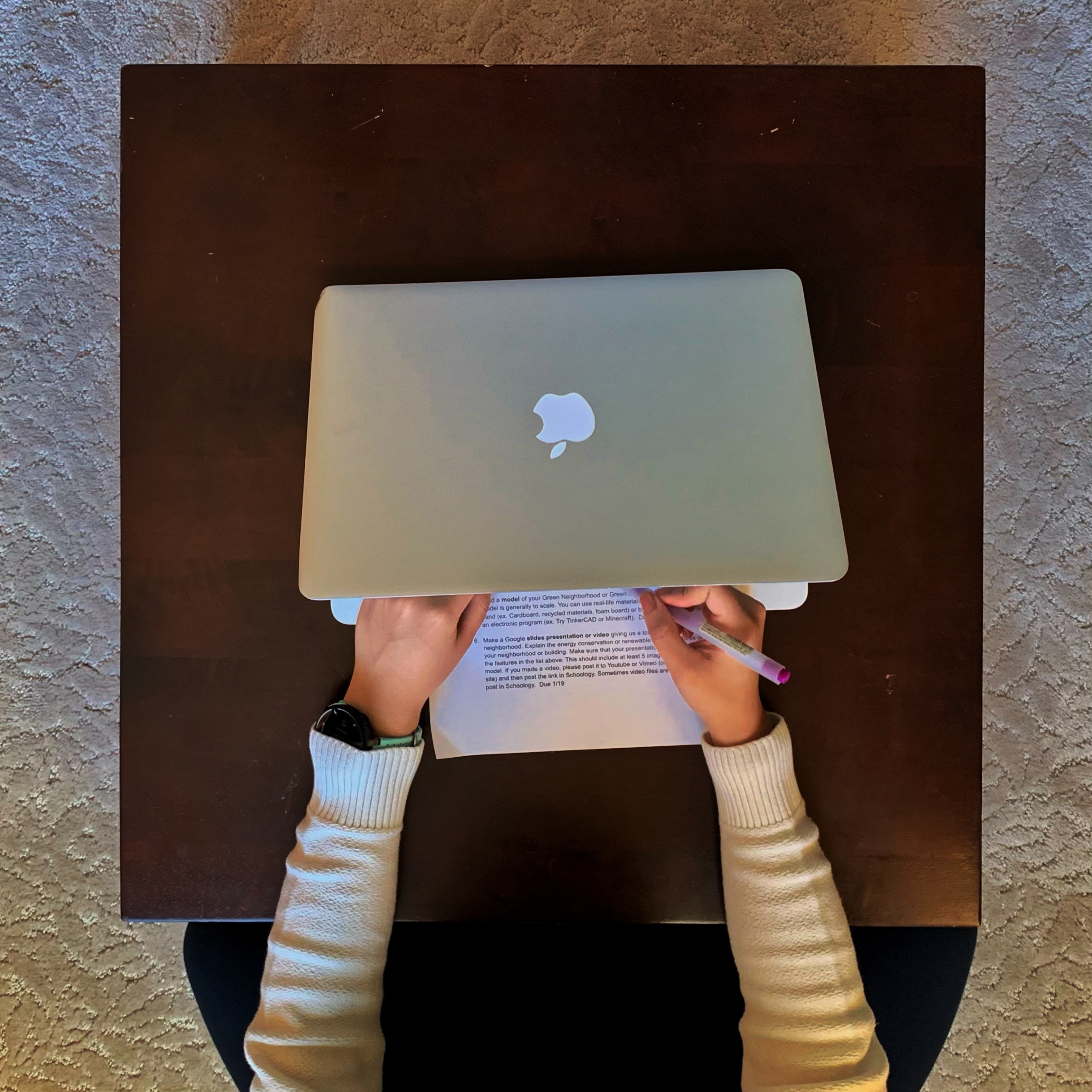
Example of a set up where the camera is facing the hands and test in order to prevent cheating.

Some teachers also use more unconventional methods. 

“[My teachers] create [breakout rooms] in Google Meet or Schoology for each student,” said sophomore Vivian Tang. “Once inside each breakout room, each student will then present their screen and the teacher can then monitor each [students’ screens] for any signs of cheating.”

“I have students use their phone as the camera for the conference – and it is supposed to be directed toward their computer screen and their hands,” said Minda Reidy, who teaches programming and geometry. She uses this method to see if her students’ computer screens move away from the test and to see if their hands move towards notes or near the camera to look things up.

STAFF PHOTO/ Erin Li
Example of a set-up for an online test where the phone faces the computer and their hands.

Others rely on the honor system. “Before we take tests, our teachers tell us not to use our notes, search up answers on [G]oogle, not to use lecture notes, etc.,” said sophomore Dhriti Motwani. “There are directions provided to us before we take our tests.”

But Math teacher Stephanie Ragucci told ANDOVERVIEW that relying on the honor system may be a little naive. “I think what [teachers] really need is some sort of a lockdown browser that would allow students to only be in the assessment they are working on,” she said.

Many students feel the measures their teachers take to prevent cheating are necessary and effective. “[These] methods are necessary because even though tests are online, students can tend to search up answers and get them right,” Motwani said. “But in the end, students are not learning and just creating bad habit[s] for themselves.”

“I think it is necessary to implement this rule since it would mean that everyone is taking the test equally and without outside resources,” said Tang, adding that she believes the methods are efficient in ensuring there’s no cheating.

Many teachers have stated the frequency and length of assessments given has reduced since the switch to remote learning. “In the past, there [would] be one quiz every two weeks in general, while now, it [is] one per month,” Wu said. “For Chinese, students usually have a vocabulary quiz and a general quiz, while now, it will be one or in other formats as assessment.”

Ragucci is moving to smaller assessments since the larger ones take too long to grade. She has been giving out fewer assessments in general that would be considered a quiz or a test. “These crazy times have forced us to learn to assess differently than we are used to,” she said.

Continue reading