Introducing: The Good, Bad, and Ugly Experiences With VHS
  • March 26, 2021

By Elisabeth Shin

STAFF WRITER

In a year where digital learning is the norm, the Virtual High School (VHS) program has been a common sight on many AHS student schedules

When certain classes can be difficult to take in remote learning or through the hybrid model, VHS is now the go-to opportunity to take such classes. ANDOVERVIEW takes a look at student experiences, this semester and last, to some advice for VHS students in future years.  

“I personally feel like we are teaching ourselves,” said Dia Ganesh,  a sophomore who’s currently taking a VHS class in Java programming. 

According to Ganesh, most of the learning is asynchronous. She and the other students learn from the lessons they are given every Wednesday, and they can ask questions of the teacher through a discussion post on the site. 

“My teacher nitpicks everything,” she said, adding her issues with the grading in VHS. “I got a 90 on an assignment for forgetting to specify one word. She’s [the teacher] a really tough grader.” 

Sophomore Avanthika Suryadevara does not hold the same sentiments towards grading, telling ANDOVERVIEW that she’s “been doing the bare minimum and I’ve been getting 100s.”

But she does have her own concerns. Specifically, one topic was the teaching of Alice 3 in her VHS Java class. Alice 3 is a program that allows one to utilize objects, or computer-generated models that can be moved around in a virtual world. 

“The software is old,” Suryadevara said, adding that “I understand where we are going with it as it builds into Java. However, I am concerned that I am not getting the [same] exact material [that I would] if we were in school.”

On the other hand, sophomore Abhinav Bapanalli had a more positive view of the program: “The workload is tight, but it is interesting in what we are doing.”

For all three sophomores, VHS is a relatively new experience. While they agreed the actual tasks/work materials they had received so far was not overwhelming, the amount they had to do each week was high.  

The students who took VHS in the first semester mostly agreed with some of the sentiments above. For senior Meera Kumar, her “first semester was all right overall” in AP Psychology and she got through the course well by keeping good contact with her digital classmates and staying on top of her work.  

Senior David Irza had a less favorable opinion of his first semester with VHS in the Remote Academy. Taking two classes in physics and engineering, Irza had trouble asking questions and getting help on problems during his physics course and faced technical issues late into his engineering class. This led to unfavorable grades and his sour experience with the system.  

On the other hand, David’s sister, sophomore Rachel Irza said her experience in the VHS course on cybersecurity was successful. 

“I think the only reason I was successful in my VHS course was because I truly enjoyed learning about the topic of cybersecurity,” she said. “I would advise [students] to fully understand that there will be a large amount of work that is very time consuming.”

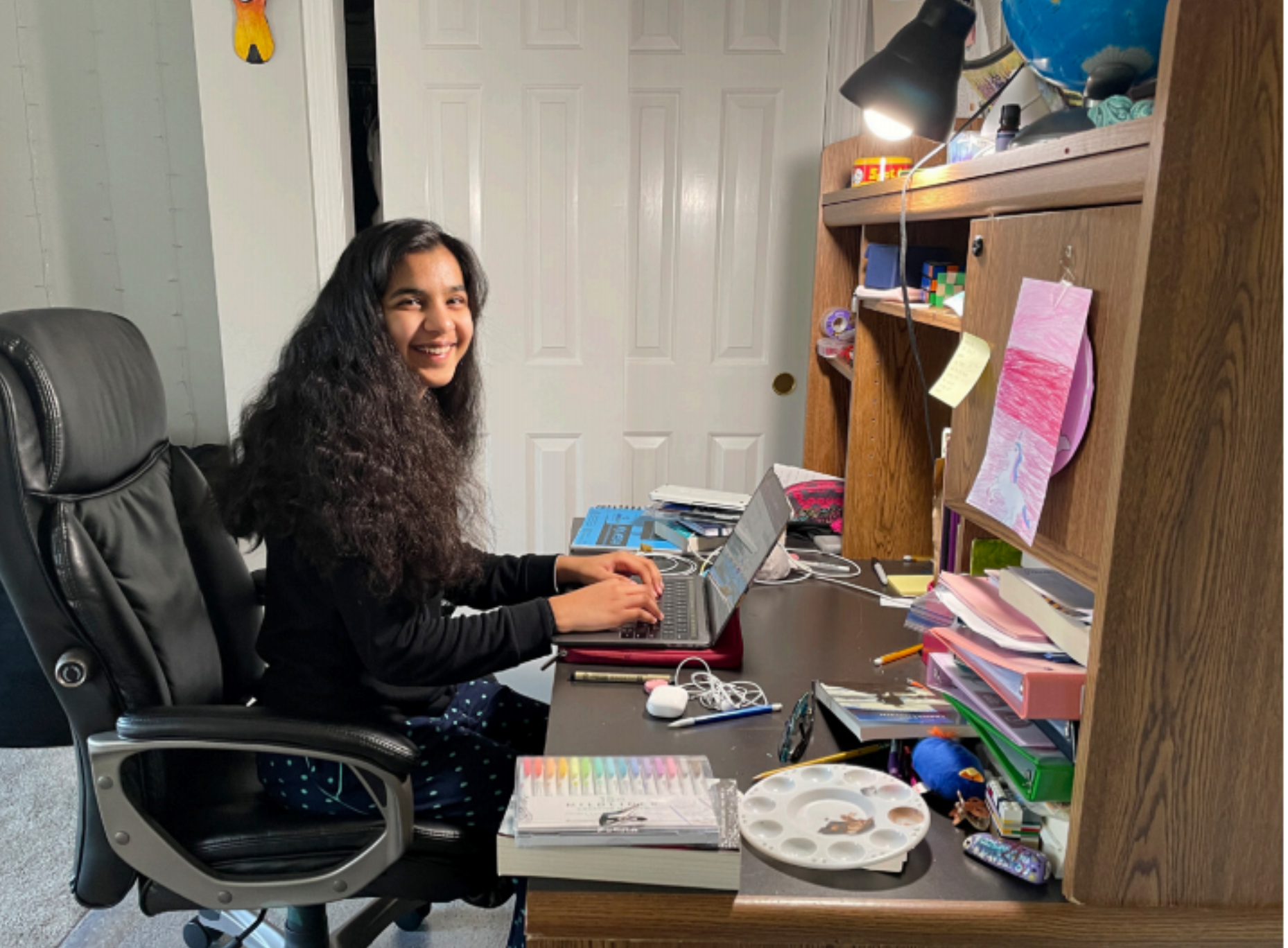
COURTESY PHOTO/ Manavi Vajhallya
VHS Student, Manavi Vajhallya, working on an assignment for the remote academy at
her desk.

Manavi Vajhallya, a sophomore who started VHS in the second semester, advised students to keep up with their work by checking the website daily. Kumar also had tips on getting to know your class. 

“My advice would be to establish a line of communication between yourself and your classmates…you can easily get help and feel more connected to your class,” she said. 

For Vajhallya, she has optimistic beliefs for the future of her VHS learning:  “I’m hoping it gets better; this is the second week!”  
Continue reading
Synchronized Classes at AHS
  • March 26, 2021

By Olivia Janasik

STAFF WRITER

For the second semester of this school year, Andover High School has decided to make synchronous classes mandatory for all students to attend. Students must be in class for at least a certain period of time, depending on the teacher, leaving many students anxious for the rest of the school year. 

Throughout this past year, senior Maeve Snell “prefers asynchronous classes because they allow [her] to work when it is best for [her] and take advantage of [her] schedule.” 

Senior Lizzie Jones agreed, stating that “over the course of this year, [she’s] learned how to manage [her] time better, with asynchronous classes [she’s] had a much more flexible schedule and time to work on assignments.” She continues by adding, “I like that I could take a shower or go get a snack, get a break in the midst of my day without having to worry about paying too much attention to classes I had already completed the work for, it just made it easier”. 

Although Snell feels that “the synchronized meets are unnecessary but in classes such as math, I think it makes sense to have synchronous lessons”. 

However, moving forward, the school has decided to hold synchronous classes for all students, not only affecting those at home, but the learning experience in-person as well. Senior Ben Entner stated that he dislikes “the classes where we are fully synchronous because when I am at school, it makes it difficult to feel as though I’m getting time to talk with my teachers or get any sort of individualized attention. I think these online meets aren’t helpful when I’m at home because it’s often difficult to pay attention in class and get my work done while at home as well.” 

Also affected by this sudden change are the teachers at the high school. Entner added, “I think this also makes it more difficult for teachers to focus on both students at home and at school at the same time.” 

However, this may result in a more engaged classroom and a rise in academic achievement amongst students. Mrs. Michaud stated, “Keeping your camera on during synchronous classes shows that you are engaged and interested in participating in what’s happening in the course. Trying to be a part of the classroom community, whether it is in person or online, is important in the hybrid environment. As a teacher, it also helps to gauge how students are feeling when you can see their expressions.”

This year has definitely impacted students and teachers a tremendous amount, and synchronized classes will continue to do so throughout the remainder of the year. “I’m hoping for a brighter future next year, where synchronized classes will be mandatory because we’ll all be in school instead of the hybrid classes we have now,” says senior Lizzie Jones. 

Continue reading
Remote Learning: Tips and Trials
  • February 8, 2021

By Avi Shapira

STAFF WRITER

Opinions on remote learning have been mixed across the AHS student body, but learning remotely, whether in remote academy or hybrid, has been difficult for many. 

Online school has caused many health issues because of extended screen time, lack of movement throughout the day, and inability to interact with other students often. Those health challenges are also hindering people’s ability to do well in school. 

“I have really bad headaches and it’s gotten so much worse this year due to online school,” said junior Ollie Neilly. “It’s very painful and it makes it hard for me to concentrate or have my camera on.”

“It’s been difficult to get outside and get fresh air, or interact with friends, pets and family,” added Atlas L., a junior.

Anya Lazar, a junior, also said that remote learning negatively affected her posture. 

“We worried even before this pandemic about how much screen time students are getting, it creates a sedentary lifestyle… you’re not moving around and being social,” said health teacher Candice McVeigh.

During remote days, students interviewed said they have to spend between six to eight hours on a computer just for school-related work, and in remote academy or when hybrid is all remote teachers hold class-long meets. Most homework also requires going online to complete, and most teachers spend the entire class lecturing. 

Abby Clement, a sophomore, said “A lot of the time, after spending a day completely online without much of a break, I do not want to go back online and do more school work so I put it off, procrastinate, and end up becoming more stressed.”

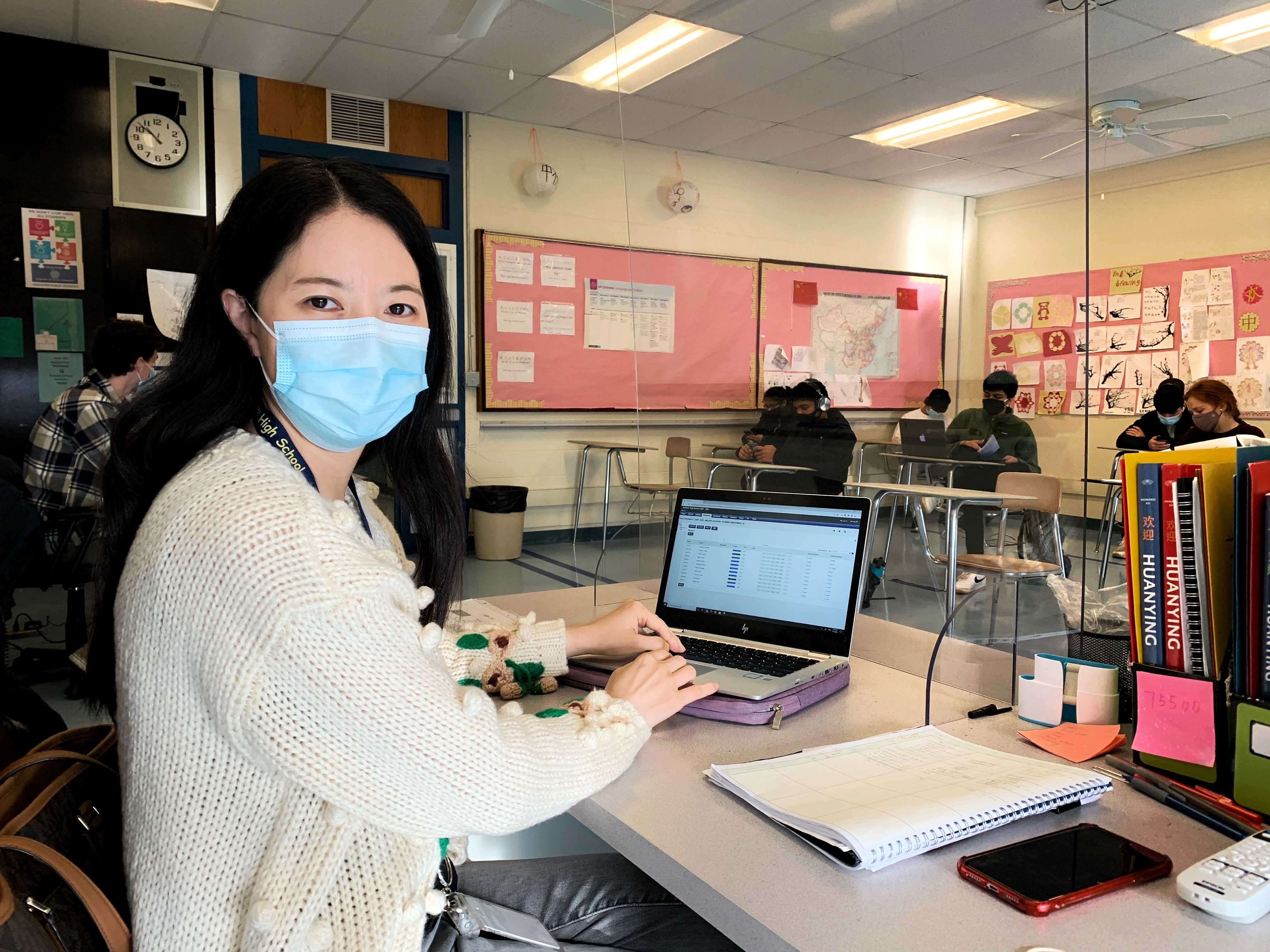
Teaching online is also difficult for teachers, whose health is affected and have to design “more engaging activities [online], while also considering the time that students need to look at the screen,” according to Chinese teacher Lin Wu. 

STAFF PHOTO/ Erin Li
Ms. Wu teaches in-person and remote students at the same time during an H Block.

Despite all the challenges with online school, it’s possible to make it easier for both students and staff. 

Some students said they prefer having independent work rather than a live remote class. 

Neilly said it’s easier to concentrate on independent work, and Google Meets can be stressful.

L said both types of classes have benefits. “It’s easier to learn when I can hear the teacher talking about a subject, but I overall spend less time sitting in front of my computer and it’s easier to get work done when it’s independent work… it’s easier to go at my own pace.”

Sophomore Shannon Chu suggested a mix of both would be good. “My French teacher… gives the beginning of class off for us to do some [independent work] and then our actual class is only 45 minutes.” Other students expressed similar ideas.

To make remote classes easier, McVeigh mixes independent work and lecturing, and also makes sure to include group work in her health classes. “I heard from some kids that they appreciate that,” she said.

Many students said that mask breaks, or any short break in the middle of class, were helpful for them.

“Our brains can’t focus for long periods of time so having a ten to twenty minute break in the middle of class would help our productivity and focus levels and give us time to get away from the screens and stretch,” said Neilly. 

Students said it would be helpful if they got less homework in general.

L said less homework would mean they wouldn’t “burn [themself] out by spending all of [their] time focusing on school work.”

Chu questioned whether homework is necessary. “If homework is making kids more stressed how is that helping at all?” she asked.

“Our education is already being affected by our mental health and the inability to concentrate,” Neilly explained. While he agrees that some homework are necessary, many teachers could give lower amounts of homework.

Because of these challenges, many students have had to skip or miss classes because of technological issues or headaches. Due to the online platform, making up this work is more difficult, and students interviewed suggested that teachers post an agenda and don’t take points off late work to make making up work easier.

Some students thought having physical textbooks and getting more assignments on paper would be helpful. 

I think physical books [are better than] online books, for the reading experience,” said Chu. Physical books would also mean students have to look at screens less. 

Lazar had a mixed opinion. “I actually hate doing assignments on paper because writing hurts my hand, so I prefer being able to type everything. Physical textbooks would be great because I have a lot of issues with loading the online ones.”

Multiple students suggested teachers should change the way they grade assignments. 

“Teachers could not rely on tests and quizzes for grades as much as they do right now, since it’s very hard to learn an entire topic when everything around you is a distraction and you can’t pay attention,” said L.

“[Teachers should] give more opportunities to improve grades, be more lenient, etcetera,” said Clement. She suggested teachers grade on completion rather than accuracy of homework assignments. 

Continue reading