Meatless Monday Comes and Goes at AHS: Meatless Mondays end due to staff shortages and lack of student feedback
By Harry Guo
STAFF WRITER
Andover High School was introduced to Meatless Monday, a global movement to encourage students to reduce meat consumption, in February. It was set in motion by the Environmental Club in collaboration with Deeply Rooted Farms, a company that produces meals made from plant-based and sustainable ingredients.
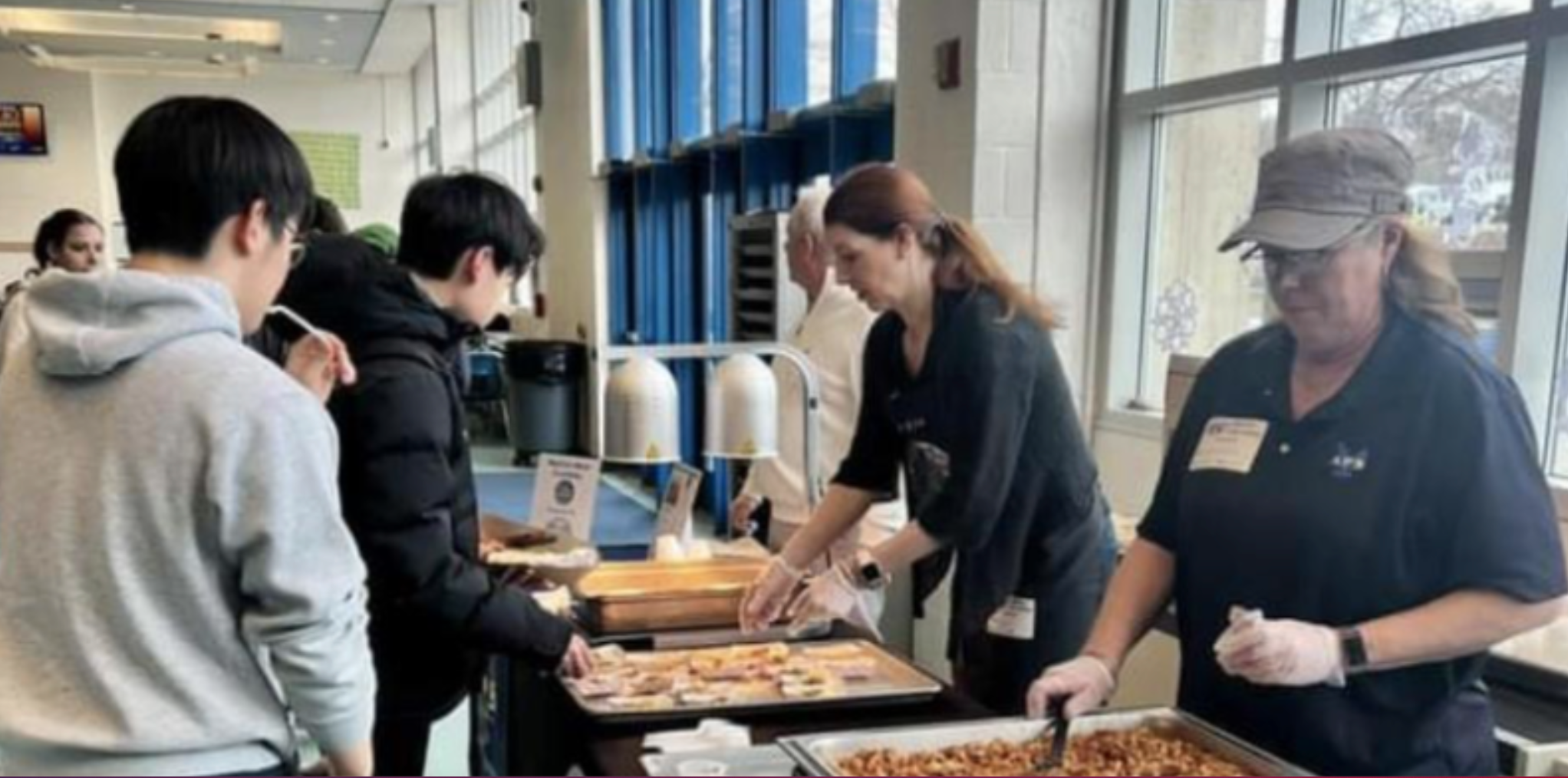
Two weeks before Meatless Monday was officially incorporated into the Andover High School lunch menu, over 400 samples of Italian and Mexican styles of meat substitutes were given to students over one lunch period. A week later, the first Meatless Monday lunch item, chop suey with meat made from pea protein, appeared on the menu. However, Meatless Mondays only lasted for two weeks, which left many AHS students and staff puzzled.

Samples of Italian-style meat substitutes were handed out to AHS students.
According to Taylor Pirog, the assistant food service director of Andover Public Schools, the demise of Meatless Monday can be traced back to the staffing shortages, especially among office workers like interns, that AHS is facing in the food department and the lack of student feedback. “When I had an intern… she created the marketing tools and helped come up with the menu… [but] she is now done with her internship,” said Pirog. “I need to know that there is true student interest, [then] I will put the time into it if students want it.”
Even the students who helped introduce Meatless Monday weren’t sure why it was gone. “We went through all the steps of adding it to the school cafeteria,” said William Yu, a sophomore and vice president of the Environmental Club. “We got approval [from] the head chef, and we even did a test run.”
On the Student Government side, they have never put out an official statement on the matter, but the topic of Meatless Monday was discussed during meetings, according to Nicholas Vaccaro, a junior and vice president of the Student Government. “In my personal opinion, I believe the intentions of the Meatless Mondays implementation are incredibly pure and for a good cause,” said Vaccaro. “But there [were] also people [from Student Government] who shared sentiments that they look forward to their hot lunches and don’t necessarily enjoy vegetarian meals compared to their norm.”
Members of the Student Government were also confused by how the meal plan was going to be implemented due to the lack of communication before it was put on the menu. “Of course, there was the sampling of the food, which went very well; however, the full move towards Meatless Mondays was quick and surprising,” said Vaccaro.
Other students were also not entirely in support of Meatless Monday. “The taste was definitely off… [but] they could try something like this again,” said Sampath Kalagarla, a sophomore and non-beef eater. “It was a good initiative, though it was badly executed.”
While the opinions on Meatless Monday were mixed, the positive human health and environmental impacts are definitely present, according to Melanie Cutler, a science teacher and advisor of both the Garden and Environmental clubs. When animal proteins are raised, they are fed antibiotics, so some of the antibiotic drugs end up in the meat for human consumption, which is causing an increase in diseases caused by antibiotic-resistant bacteria.
“Eating a more plant-based diet is healthier than eating more of a meat-based diet,” said Cutler. “Animal fat and saturated fats can lead to increased heart disease.” And by eating more plants, which are on the lower end of the food chain, energy from the sun and photosynthesis are consumed more directly. However, when eating meat, which is on the upper end of the food chain, some of the energy that was originally captured by the plants is lost.
Cutler stated that eating meat not only wastes energy, it also leads to habitat destruction due to Confined Animal Feeding Operations (CAFOs), which take up a lot of land and produce waste. They cause soil erosion due to the high concentration of animals trampling down the vegetation. When the vegetation dies, no roots hold the soil in place, which causes the soil to erode.
And all the waste that the animals produce are dumped into large manure lagoons, which can cause water pollution when they get into rivers and streams due to the flooding caused by the soil erosion mentioned earlier.
Animals living in CAFOs are also often fed corn, and there’s even more environmental impact, like pesticides and fertilizers, from raising the corn to feed the animals. And many of these animals, like cows, have evolved to eat grass, not corn, which can lead to intestinal issues. “One of the intestinal issues is that cows that are fed corn produce more methane gas, basically cow farting,” said Cutler. “Methane gas is a greenhouse gas that contributes to climate change.”