Zzzzzzz The All Nighter Epidemic zzzzzzZ
Importance of Prioritizing Sleep & Effects of Sleep Deprivation
Samantha Sun || SOCIAL MEDIA EDITOR
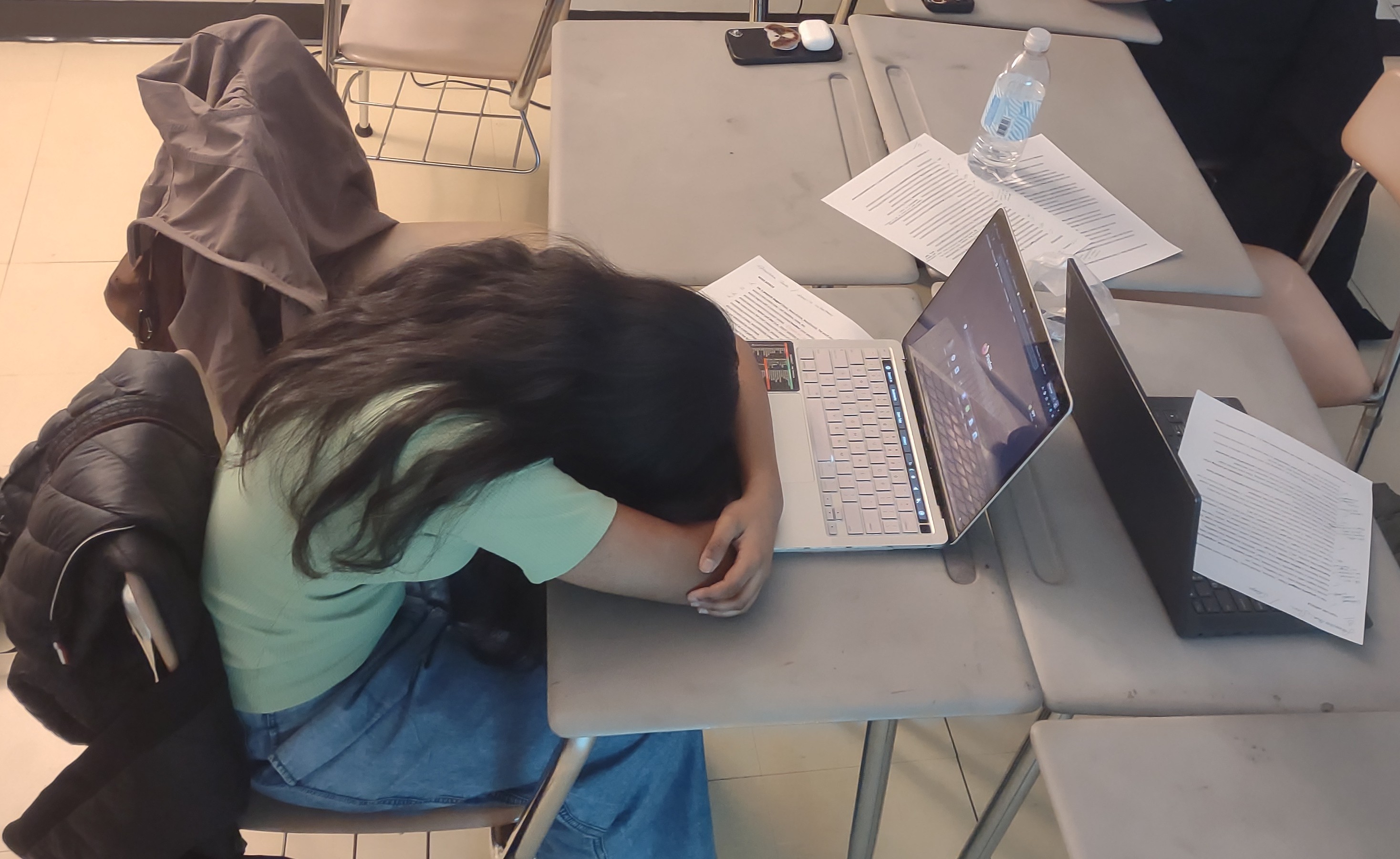
The exhausting Monday morning starts with eye bags and eight ounces of coffee. Despite the waft of caffeine filling the air, everyone seems to be as awake as zombies. Walking through the halls at eight in the morning, murmuring about pulling all-nighters or late-night study sessions fill the air. First period is a chorus of yawns, and somewhere, someone is already dozing off at their desk. Rather than eight ounces of coffee, it’s eight hours of sleep that AHS students need.
Every AHS student has been there—whether it’s staying up late to finish a project after procrastinating for the past week, studying for a test last minute because it was pushed back to prioritize the other homework, or doom scrolling through social media until the sun rises.
Junior Meredith Cummings admitted to getting an average of four to six hours of sleep during school nights. “I think I got five hours of sleep today, or yesterday, or whatever. I don’t know anymore. The days are blurry,” she said with a shake of her head.
On Mondays, she has Orchestra and doesn’t get home until 8:15 p.m. Usually on Mondays, teachers will assign a bunch of work because it’s a new week, Cummings noted. “It’s too much,” she said. Sometimes it’s not just staying awake in class but being able to be alert to do even the simplest tasks. “[Once] I was so tired…I left my glasses in the fridge,” Cummings said, reminiscing and laughing about the memory.
“For me, when I wake up I’m awake but one to two hours later my brain just goes completely blank and it’s really hard for me to focus on my work and to understand topics,” senior Sana Godhani said, who is currently researching sleep deprivation for her Capstone project.
But what does sleep do? The simple answer is that it keeps us alert and ready for the day. “I think about it like filling your gas tank,” said health teacher Bestey Desfosse. Cells and muscles are repairing, rebuilding, and regenerating while resting. Sleep refreshes energy and ensures that students are equipped to deal with all the mental or emotional challenges in life, Desfosse said.
Beyond drowsiness, sleep deprivation can lead to higher chances of getting sick, more emotional reactions, or increased procrastination. In fact, many issues that students face during the day are rooted in the fact that they aren’t getting enough rest at night, Desfosse explained.
But why don’t students get enough sleep? Stress. According to the Cleveland Clinic, stress throws off the melatonin balance and the amount of Gamma-aminobutyric acid (GABA) in the body’s system decreases, making it harder to fall asleep. GABA is a neurotransmitter in the brain that regulates mood, relaxation, and sleep. However, when it’s not balanced, it causes a cycle where stress leads to poor sleep, and poor sleep increases stress. “It’s like a spiral,” Cummings said.
“There’s also things that you can do during the day to help boost your system like going outside…[or] working in a space where natural light is able to come in,” advised Godhani.
Simple things like taking a walk, purposefully getting eight to ten hours of sleep, or meditating can help balance GABA levels and help with relieving stress. “Talking and, like, letting it out [helps],” Cummings said. For her, chatting with friends and family helped make the burden of stress lighter.
However, after a long day of school, clubs, and other commitments, the easiest thing to do is unwind and check social media. But one hour of relaxing can turn into the infamous monster of doom scrolling. “Teenagers’ brains that aren’t fully developed are prone to getting sucked in,” said Desfosse.
The blue light from phones tricks the brain into wakefulness, making it more difficult to fall asleep at night. “If you use blue light glasses [or] change the color on your phone to red, it could help decrease those effects,” Godhani advised. While it’s okay to use social media as a tool to relieve stress, it shouldn’t become an obstacle that prevents sleep.
Sleep deprivation isn’t normal—it’s an issue with real consequences. Sleep is not a luxury, it is a necessity. At the end of the day, the best way to stay awake isn’t a cup of coffee, it’s a good night’s sleep.