Students Advance to DECA ICDC but Factors Constrain their Attendance
By Anika Nagle and Samantha Sun
STAFF WRITER
Distributive Education Clubs of America (DECA), a competitive business and entrepreneurship club at Andover High School, had several members who qualified for the International Career Development Conference (ICDC), but none are attending.
Anusha Sambangi, Ayush Munot, Christina Ahn, Emily Flanagan, Ethan Zabar, and Sunjae Kim are the six AHS students who passed DECA states and qualified for ICDC. This year, the DECA ICDC will take place in Orlando, Florida during April break. However, there are several features—such as the timing and location—which constrain who can attend.
A student can compete in one of several DECA categories, each of which involves a different testing setting. According to Ashley Kinsman, a faculty advisor of the DECA club, students present a business plan or project they have been working on or roleplay in a business setting to judges. The overall structure of the tests and exams remain the same throughout all levels of the competition, including districts, states, and internationals. However, standards vary between the competitions. Judges score individuals or groups based on a rubric; according to their score, a student may advance to the next level.
“I was really excited to do well in states this year and qualifying for nationals again was awesome,” said Flanagan, who is a senior. She competed in the business service marketing category, one of the roleplay events at DECA. Last year, Flanagan competed in ICDC, but she does not plan on repeating the experience and explained she is “not going to the competition this year because [she has] to tour a bunch of colleges during April break.”

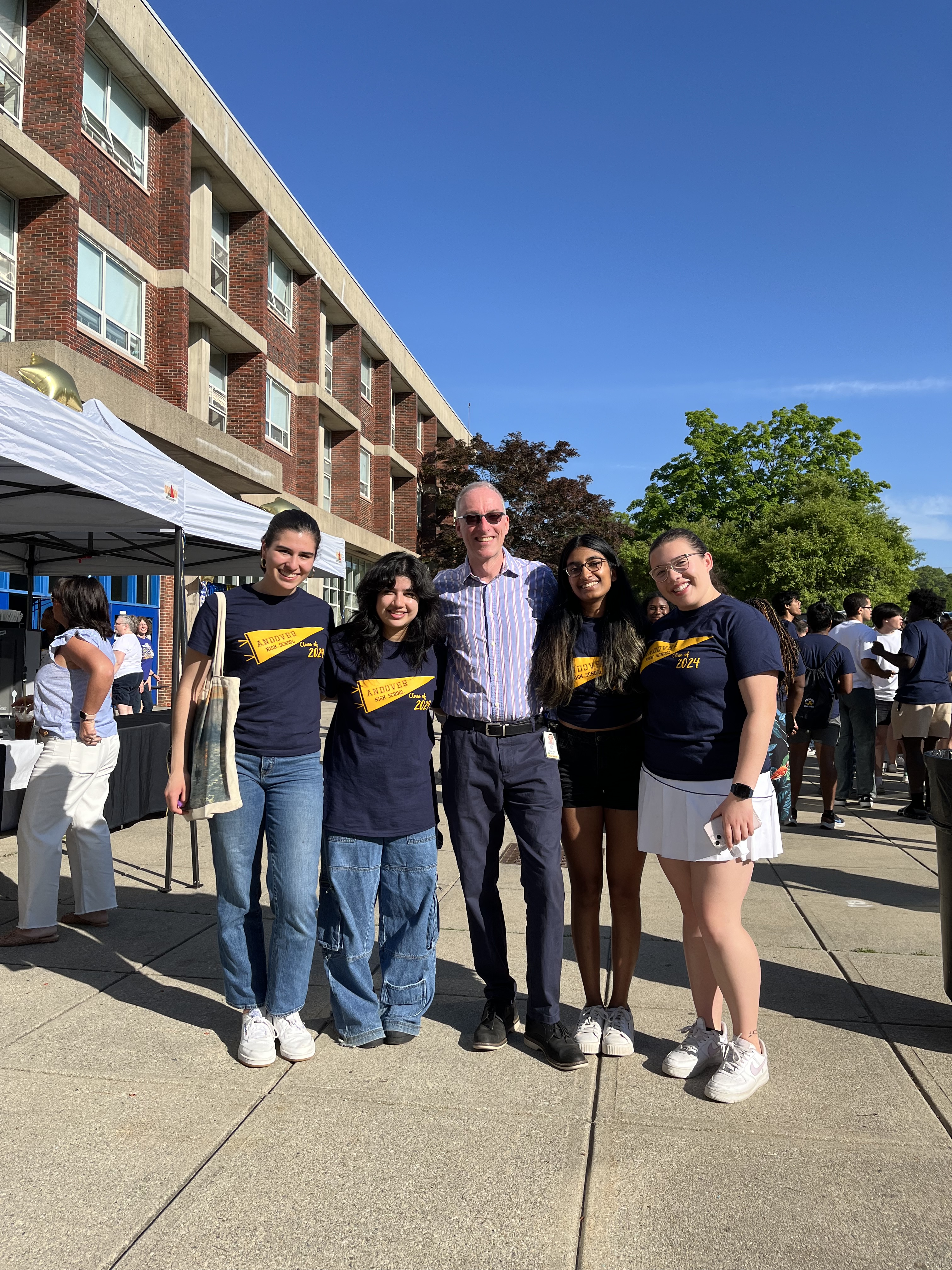
Christina Ahn, a DECA ICDC nationals qualifier, and Melissa Kinsman, the club advisor for DECA, pose for a photo.
Last year, the trip to DECA ICDC was a school-sponsored event, since many students had qualified for it. However, with fewer members this season, it was up to individuals and their guardians to finance the journey.
Kinsman added, “It is typically not a large enough group that qualifies so it no longer becomes a school and teacher sponsor[ed] event and so they need to find their chaperone. Which is typically in the form of a parent and if the parent can’t commit then the kids are unable to attend nationals.”
The DECA organization “makes you pay for specific hotels, those hotels tend to be more expensive than other ones and they won’t let you attend the conference if you don’t stay at these specific hotels,” said sophomore Ahn, vice president of DECA who also made it to ICDC. She will not be attending due to the steep fees required for the trip.
“[It does] cost a lot of money, it’s pretty expensive for the hotel and competition fees, and this year it’s in Orlando, so flying to Florida during April break is expensive,” said Flanagan. “You also do miss a week of school after April break and I know for me last year that was a lot of work to catch up on. But if you do qualify I do recommend going if it’s possible.”
For many, DECA extends beyond the competitive aspect. “I think it’s really rare to find such an organization that helps students display their passion and knowledge for business in such a great way,” said Ahn, who has developed her love for accounting through this organization and hopes to further expand her passion through college.
“I got involved in it the last two years and I think it’s a great opportunity for students who take the business classes or are interested,” Kinsman added. “The organization itself has a lot of tools to support kids in the business field and give them exposure to it.”