Mrs. Breen Steps Up to New Ninth Grade Coordinator Job
  • November 13, 2024

MADDOX TO

STAFF WRITER

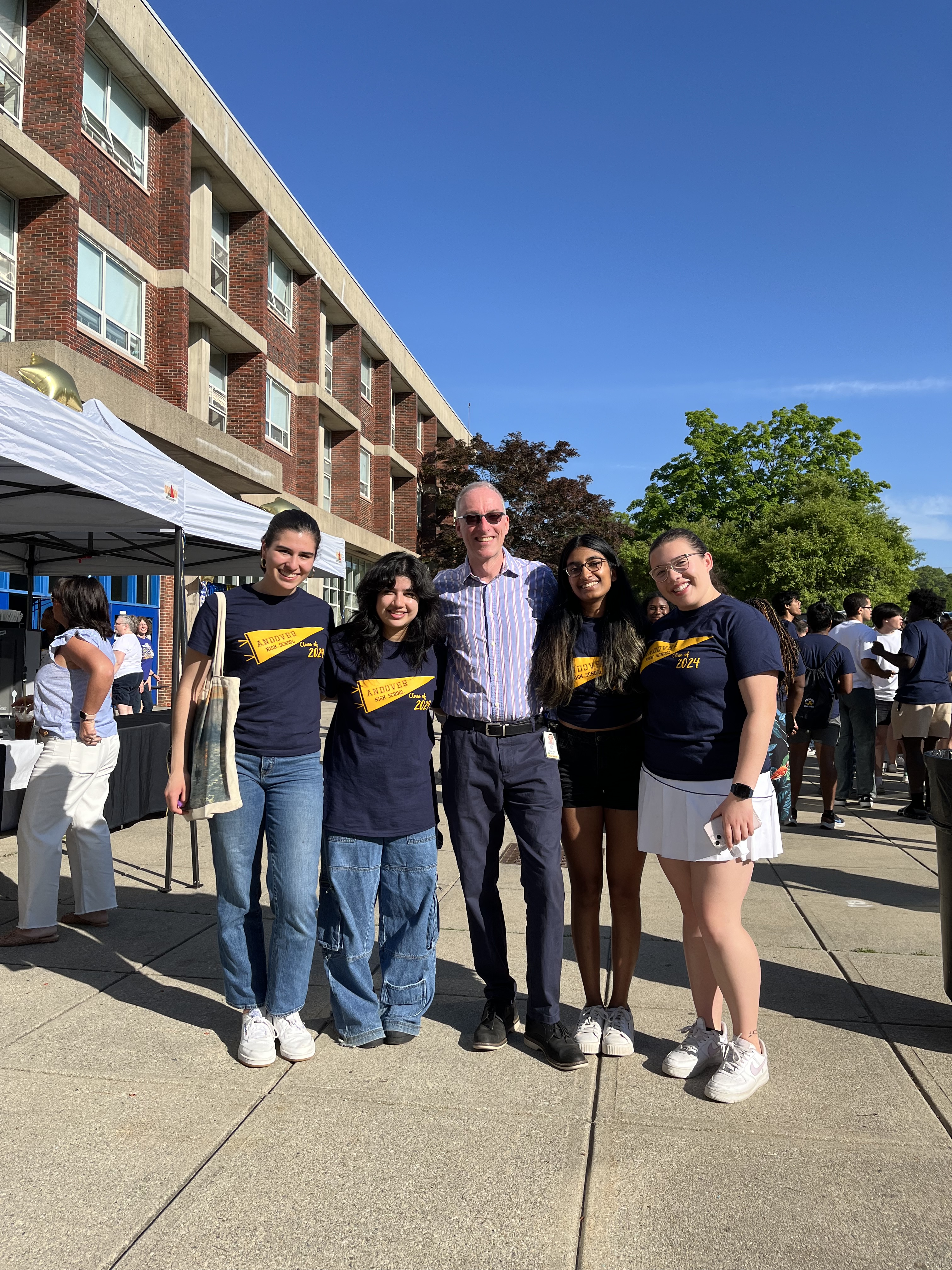
After 23 years of teaching in the Health Department at Andover High School, Holly Breen has recently taken up the role of 9th grade coordinator.

For 23 years before her new role, Breen taught 11th and 12th graders, taking a one-year break during her time as a health teacher to focus on taking care of her children. Breen has also been the senior class advisor since last year, and she said she’s “always really actively involved in the student body and other activities outside of teaching at school.”

The 9th grade coordinator job was created last year, offering a position that Breen read and thought fit her perfectly. “Working with a variety of stakeholders like parents and students and teachers and community members [sounded amazing]… I absolutely love that part of my job,” she said.  

Joanna Ganci was hired as 9th grade coordinator last year. So in the time being, Breen decided to get her administration degree so that when the opportunity became available again, she would be ready to apply for it. 

Due in part to perfect timing, Ganci changed roles this year to become an assistant principal, leaving Breen—now qualified with an administration degree—ready to take the job. 

Breen is now participating in administrative meetings to get properly integrated and comfortable in her new job position. 

“It’s hard right now because I’m really doing both jobs,” Breen said. “Although Mr. D’Andrea has been awesome about trying to not let me get too overwhelmed because [one of] my main priorities right now are my classes.”

“Mrs. Breen is an awesome addition to the office and our staff administration,” Principal Jimmy D’Andrea said. “She’s been working very hard for the past couple of weeks to complete her set training for [the] qualifications of becoming the new 9th-grade administrator and we’re very lucky to have her.”

Even though Breen has shared the happy parts of taking up a job that she loves, she expressed that it’s still hard to let go of her longstanding history of education in the health department.

Breen said, “I will not be teaching any longer, which is bittersweet for me because I really love teaching. I just felt like it was time to broaden my outreach to the school and take on a different role in that way—to meet kids in a different way.”

Continue reading
AHS Students Showcase School Community Involvement
  • November 13, 2024

Shreya Soni

STAFF WRITER

Though often confused as the same thing, the Student Government Association (SGA) and class boards are two different leadership bodies that tackle different issues in AHS.

There are a multitude of opportunities at AHS to get involved in the community as a leader, two of which are SGA and class boards. SGA is responsible for solving problems involving the school as a whole and prevalent town issues, while class boards aim to solve problems involving their respective grades. If you are a student interested in tackling the issues concerning the entire student body, SGA is the perfect place to showcase this passion. 

“One of the responsibilities of the student government is to participate in 10 community events,” said senior Daniel Shin, the SGA president. These events include attending a School Committee meeting to gain more knowledge about problems that the student body and faculty have faced, and the annual holiday fun drive, which provides gifts for low-income students at AHS during the holiday season. A notable event that SGA is responsible for organizing is the pep rally, which Shin mentions has benefitted the student body by fostering school spirit and a sense of community.

As a four-year member of the SGA, Shin has seen the positive impact that it has had on school rules and his peers, emphasizing the pivotal role that SGA plays in vocalizing student opinions. “We’re the only club that revises school policies and has direct communication with administration,” he said, “[and we have] helped to get feedback on policies and formulate them”. One of these policies that SGA has been instrumental in modifying is the bullying policy, which can be viewed online in the student handbook.

However, if you’re a student wishing to take on a less ambitious goal and provide an impact specific to your grade, joining a class board is a great option. 

“Some of the responsibilities of the boards are to be consistent with attending meetings and to be prepared to share ideas,” said Akshara Vijay, a sophomore and member of the Sophomore Board. A member of the Freshman Board last year, Vijay decided to join the board once again so that she could work with other motivated students to solve the pressing issues in her grade and plan out events for them. 

“Last year, the freshman board planned out the freshman dance,” Vijay mentioned. “And this year, we are going to do fundraisers to raise money for events like field trips, such as a field trip to Boston or Six Flags.” Another initiative that the board has been interested in pursuing is finding volunteer opportunities for students, such as working at the snack shack at football games and setting up a donation booth during lunch time to promote community events.

As a result of the dedication and perseverance of the class boards, Vijay has noticed that her grade has become “more inclusive and united,” with many individuals fostering friendships with other students that they hadn’t interacted with before.

Because the deadline to apply for these committees has passed for this year, students can support them by attending their respective events. Additionally, interested students can find out more information by asking the faculty advisors or student members and applying next year in September.

Continue reading
Strength in Struggle: Teaching on the Path to a New Kidney
  • November 13, 2024

Isabella Yan

ARTS EDITOR

This past year has been a journey of perseverance and uncertainty for English teacher Elena Emory who has been battling chronic kidney disease and kidney failure since August 2023.

Kidney disease has long been a part of Emory’s life. The disease is genetic in her family, and for years she has endured its slow and inevitable progression. In October of this year, Emory matched with a living donor, a 73-year-old man. 

“It’s a good kidney,” said Emory, “[I will] probably get 15 [or] maybe 20 years out of it.” The transplant can happen within the next two to six months.

Emory revealed the limited choices patients have during the kidney disease treatment process. “You don’t get options in this journey,” she said, adding, “[but] my surgeon gave me options.” 

Emory has the option to take the kidney from the donor or have a Kidney Paired Donation (KPD). KPD matches incompatible donor-recipient pairs with other donor-recipient pairs to exchange kidneys. Through KPD, the kidney of her living donor can go to someone who is of a closer age or more compatible, while she can receive a younger kidney.

In the past year, Emory has had to balance her teaching life with the challenges of kidney disease. In the face of her medical journey, she has expressed an unwavering dedication to her students. “It’s a hard thing because you have the appearance of all is well, and it’s not,” Emory said. 

Emory remains open to her students about her kidney disease. “I couldn’t keep it packed away,” she said, “they’re my kids… they get a sense of their teachers and something like this.” In sharing her experience with kidney disease with her students, Emory explained, “The kids will be on the journey to transplant…they’ll see the other side of it, [that’s] the beauty of that.” 

Junior Aneesa Hazarika previously had Emory as a teacher and reflected on how Emory’s experience with kidney disease shaped her relationships with her students. “She would relate to us in an emotional aspect because she was dealing with a struggle of her own,” said Hazarika. “When it came to talking with her, it was a lot easier because she was understanding in that [emotional] aspect.” 

Hazarika added that her story not only sheds light on the disease but also sheds light on what people––especially teachers––may be experiencing beyond what is seen at the surface level. “It’s not like they’re only surrounded by academics. They have their own personal life and personal struggles, and seeing that made me realize…they’re similar to us in more ways than one,” said Hazarika.

Emory shared that she has received enormous support from family and community members during her medical journey and has been incredibly thankful for the patience, love, and sacrifice she has received. “[People have been] reaching out,” she said, “[and] people do what they can.” However, the support that she has experienced from her students has been especially meaningful. “My kids have been the saving grace for me…they are everything,” she said. Hazarika pointed to the attentiveness, respect, and well-wishes of the students in her class upon learning of Emory’s story.

Despite the recent hopeful turn in her journey, the road towards securing a donor has been a challenge in itself. Around 17 people tested to be a living donor for Emory. Among these people was Emory’s husband, who completed numerous tests over three months intending to be a donor for Emory. However, on the final test, Emory and her husband received disheartening news: her husband was discovered to have Fibromuscular Dysplasia, a condition that involves the twisting of arteries including the ones that connect to the kidney, disqualifying him from being a donor. “As devastating as [the diagnosis] was, this was a ‘God-Moment,’ one of the many,” said Emory. “My husband and our family now have this information and can keep our eyes on it.”

Since finding out that she has matched with a donor, Emory shared that the biggest thing for her has been answering the question, “How do you pay this forward?” One thing is spreading the message that there are many people who are in need of a kidney. “It’s really important to think about…What can you do to help someone in need?” Emory said. She encourages people to learn about the importance of being an organ or blood donor. “Kindness takes many hands and many forms,” Emory explained, “everyone can do something to help someone else out and every gesture makes a huge difference.” 

By sharing her story, Emory is a voice for many others experiencing kidney disease or other health challenges. “My journey is far from over, I have learned so much,” said Emory. With remarkable strength and courage, she takes on the role of an educator in an inspiring way. “The road to transplantation is never straight, can be lonely, and is not without ‘bumps,’” said Emory, “and that is indeed part of the journey.”

Continue reading
To Stand or Not to Stand?
  • November 13, 2024

Staff, Students Debate Pledge of Allegiance requirements

Avery Slaughter and Christina Saad

STAFF WRITERS

At 8:15 A.M., Ralph Bledsoe proudly stood with his hand over his heart as he recited the Pledge of Allegiance in time with the voice over the loudspeakers. The students, standing in rows at their desks, quietly listened while blinking sleep out of their eyes. To an outside observer, it seemed like nobody thought twice about the daily announcement.

At the same time, in Jeffrey Kuchan’s first period class, the band director watched the flag in the corner of the band room as the present students milled about. Some stood; some recited the Pledge in a muted mutter; some sat silently. It didn’t matter to him so long as they showed respect for the morning ritual.

It’s an elementary part of every student and staff member’s day, but the Pledge of Allegiance enthusiastically echoes through the school every morning. Some people don’t think twice about it; some regard it with irritation; some consider it greatly important. After years of the same routine, though, some staff and students in the building have begun questioning whether standing for the Pledge is something students should be required to do.

Currently, there are no federal laws requiring public school students to stand or recite the Pledge of Allegiance. Whether or not public schools must say it — and, furthermore, when the students must say it — is decided by the state, and it differs across the country. In Massachusetts, the Pledge must be said first thing in the morning or at the beginning of the school day. Private schools are not held to these standards and may decide by themselves whether or not they recite it.

Because public schools are government institutions, the legality around the Pledge is strict.

When he said the Pledge of Allegiance that morning, AHS Principal Jimmy D’Andrea, channeled his usual cheer, though it wasn’t a particularly notable part of his day. He was enthusiastic about the recitation just as he was every morning — inspiring a bit of joy at the beginning of the day could only be beneficial, after all. He didn’t mind whether or not people stood, nor had he ever, but he recognized the Pledge’s historical significance in the country. Despite the differing regulations across each school he’d worked in, it was a staple in all of them. He would say the Pledge with a smile each morning.

“Public schools were created many years ago for the public good by government agencies,” D’Andrea said, “and so as a result, most of these laws go back well over a hundred years. In this day and age, I don’t know if the same kind of laws would be created, but most [them] have been in the books for a very long period of time.”

While opinions on whether or not students should be required to stand are greatly conflicting, the general consensus seems to be that students should have a choice. Whether or not they should choose to do it out of respect is highly debated, though.

“I think it can’t be a requirement,” Bledsoe said, “but out of respect for the place you live, the people you live with, for the country you live in, out of respect, at least stand.”

Robert Michaud, a history teacher, agreed that you should have the choice but believed the decision was up to personal beliefs. “You’re going to be valued and respected here, as long as you’re not trampling on other people’s values that they have in this situation,” Michaud said.

Some people disagree entirely. Fred Hopkins, a history teacher, suggested that saying the Pledge could possibly promote violence in the country.

“Pledging allegiance is a very serious activity, and what the flag stands for and what it aspires to be are two different things,” Hopkins said, “so when you pledge allegiance, are you supporting all the violence that’s been done by this country and its military, or are you supporting a system of equality and justice, here and abroad, or are you supporting the ideals of freedom and liberty?”

For Kuchan, who taught in a school in Virginia where the Pledge of Allegiance is regarded as extremely important, the Pledge is something to be respected but not enforced. Many of his students in Virginia had veterans in the family or similar military backgrounds, and standing for the Pledge was a meaningful way to pay tribute to that.

“All I ask my students to do is make sure they are respectful during that time, so for those who choose to stand up and say it, they may; for those who choose to sit, they may, as long as they’re not being disruptive,” Kuchan said.

Senior Elina McKenna suggested that being in high school offers more freedom in saying the Pledge. When the Pledge was recited over the loudspeakers that morning, she didn’t pay it any mind. Most of the people in her class had a similar level of apathy regardless of whether they stood or remained seated. To her class, it seemed to be an inconsequential part of their day at best and a mild annoyance at worst. McKenna said that in elementary and middle school, standing and saying the Pledge felt required by the teachers. That pressure is now less intense at AHS, and as a result, people don’t feel it’s necessary to stand and recite it.

Wes Ong, a junior, agreed. “I haven’t heard anyone saying it in a long time. Sometimes the teacher will say it, but quietly,” Ong said.

So, should students be required to stand for the Pledge of Allegiance? There’s no clear answer, but most seem to agree it’s purely up to personal preference. The Pledge has been an omnipresent part of the school day since reconstruction after the Civil War and will likely be around for a long time, but having the personal freedom to choose to stand or not to stand is a great representation of our rights as citizens in the United States of America.


Continue reading
Who Let the Dogs Out?
  • November 13, 2024

Open-toed shoes at AHS have got to go

Carissa Dessin

EXECUTIVE EDITOR

However, despite their popularity, this lackadaisical type of footwear feels out of place in a school environment. In a place of learning, it is quite jarring to see dozens of students’ feet on a daily basis. While flip-flops and other open-toed shoes may scream “summer vibes,” they’re a far cry from the sense of professionalism, focus, and safety that a school setting should aim to foster.

The sound of squeaking and plastic slapping on the floor echoes through the halls at any given hour during the spring, summer, and warmer autumnal months, indicating an unfortunate trend at AHS: flip-flops. When the weather heats up, so does the presence of open-toed shoes in every corner of the school, from the cafeteria to the classrooms, as students opt for comfort and ease over more traditional footwear.

One significant concern with flip-flops and sandals in schools is the lack of protection they provide. In the bustling halls, it’s not rare to get stepped on. Senior Kai Cruz has personally witnessed “people’s feet getting trampled in the hallway.” In high-traffic halls like the ones in AHS, shoes should be practical, and flip-flops are anything but.

This lack of practicality becomes even more glaring when students are in gym or science classes. In settings where physical activity or exposure to hazardous materials is part of the curriculum, wearing open-toed shoes is not only impractical but downright dangerous. Teachers require students to wear closed-toed shoes in labs for good reason—broken glass or spilled chemicals could cause serious injuries. Chemistry teacher Sarah Fisher said, “In the lab, it’s absolutely a safety issue. I’ve seen students hurt themselves pretty badly because they were wearing slippers.” 

Gym teacher Meredith Emery has witnessed many injuries from students not wearing proper footwear, not only flip-flops but also slippers. She consistently emphasizes the importance of wearing sneakers in all of her Personal Fitness classes. “The first day of class two years ago in 2021, [a student] broke his toe because he was wearing Crocs,” she said. This is not an isolated incident, Emery stated; injuries like this are a recurring issue every year. 

Then there’s the issue of hygiene. While the cleanliness of a person’s feet is not a strong concern, the mere thought of seeing other students’ feet day in and day out feels uncomfortable. Cruz summed it up perfectly when she said, “Most people hate feet, as they should, and keep them as private as possible. I personally think feet should always be hidden.” Open-toed shoes add a level of discomfort that goes beyond style, whether it’s the sight of exposed toes or the after-smell of sweaty sandals after hours of walking through school.

What makes the situation even more perplexing is that many students, who would never wear flip-flops or sandals in a professional context, see nothing wrong with wearing them to school. This type of thinking ignores the reality that school serves as a practice run for adulthood in many ways. Emery pointed out, “You wouldn’t go to your job in inappropriate clothing. And this is, to me, your job.”

Given that flip-flops are simple to put on, and ideal for warm weather, it’s no wonder students choose to wear them all the time. However, there is a price for that convenience. Schools are places where focus and safety should come first, and open-toed shoes just do not fit that bill. Whether it’s the distraction of frequent foot exposure, the safety dangers in labs and gym courses, or the lack of professionalism that flip-flops imply, these casual shoes are better suited for weekends and summer vacations—not for school.

In the end, it’s about respect. Respect for the learning environment, respect for peers who don’t want to see or smell your feet, and respect for the safety standards that schools are responsible for maintaining. So, next time you reach for those flip-flops, think twice. After all, some comforts are worth saving for when the final bell rings, and you’re heading anywhere but school.

Continue reading
New APs Coming to AHS
  • November 13, 2024

Harry Guo

EXECUTIVE EDITOR

There are simply not enough APs! It just feels like the amount of homework is just not enough for us students who are underworked and unoccupied with other activities. To remedy this issue, the College Board has announced a bunch of new APs. I’ll go through the ones that are coming to AHS this school year:

APULL: The class for students to enroll in during their senior year after taking APUSH (AP US History). The topic of this class is seduction, with the goal of helping students pull a girlfriend or boyfriend. However, designers are still struggling to get a higher average class grade than 0% in recent trials. 

AP Brain Rot: In this introductory college-level skibidi studies course, students cultivate their understanding of brain rot from the founding of the Sigma to the present through analyzing historical sources and learning to make connections and craft historical arguments as they explore concepts like John Pork identity; doom scrolling, rizzing, and mewing; geography and the Grimace Shake environment; looksmaxxing and mogging; the role of Fanum Tax; brain rot from the screen to the ring to the pen to the king; brain rot and TikTok Rizz Party culture; and social structure of the Costco Guys.​​​​​​

AP Algebra II: In an effort to make more money—I mean, to enrich the skill sets of high school students—the College Board will introduce AP Algebra II, the prerequisite for the newly formed AP Precalculus course.

AP Personal Fitness: Focuses on the art of pretending to work out when the teacher walks by. 

AP Computer $$$cience: I did NOT fumble on the keyboard. This course might look like a long-lost cousin of AP Computer Science A or AP Computer Science Principles, but it’s a completely different beast. I’m talking about a class designed for those future computer scientists who’ve got nothing but dollar signs in their eyes. The course kicks off with a unit composed of how to find a job in an oversaturated job market, with the last unit teaching students about how to handle a midlife crisis. What’s a computer science career without a dash of existential reflection?

AP Lunch: Lettuce not get carried away here, this class won’t be as easy as pie… the steaks in this class are very high. Let’s get to the meat of the situation: if you don’t get at least seconds during lunch or don’t have the money in your account to, you’re going to end up in a pickle. This AP isn’t for everyone, it’s going to cost a lot of cheddar. Eggscuse me with how corny I was milking all these puns just now; there is good news, despite how fishy this course may seem. If you get a 4 or 5, you walnut have to take lunch in college. 

AP Calculus ABC: If you’re the kind of student who tackles AP Calculus BC with the grace of a baby giraffe on roller skates, and then makes an exit to AP Calculus AB, where you can’t help but yawn at the pace of the lessons, then AP Calculus ABC is perfect for you.
AP Pig Latin: In this in-depth course studying the ancient language of Igpay Atinlay, students will tackle the language’s rich vocabulary and complex grammar while covering various classic titles, such as Evernay Onnagay Ivegay Ouyay Upyay by Ickray Astleyyay.

Continue reading
New Weekly Phone Calls Keep Families Involved
  • November 13, 2024

Luka Oatman

STAFF WRITER

Principal Jimmy D’Andrea has introduced a new method of communicating with AHS families this year: a newsletter delivered via phone call.

In previous years, AHS updates were only conveyed to families through email. While this method worked for some parents, others who may not have had time to thoroughly read the letter had to rely on their students to learn about school news. However, with a new principal comes new traditions, as the school has seen during D’Andrea’s time at AHS.

These Sunday-night phone calls go live every week around 7 P.M. They include around two minutes of information about events and changes around the school. 

“I try to think from the perspective of, ‘What are the key things that parents and guardians need to know related to the school as a whole?’” said D’Andrea when asked about how he decides what to tell families about each week. “They’re things that students may mention to their parents, but it’s also helpful for the parents to have access to this weekly news so that they can support their student.”

Students and parents around AHS have expressed appreciation for the new form of news, feeling that it helps make it easier for families to stay connected and involved with the school.

“Every Sunday night, when the phone rings, my parents are quick to answer the phone. They’re very excited to hear the principal’s message,” said Henry Kane, a senior. “I think it’s really helpful for families to stay informed and be prepared for the week ahead.” 

D’Andrea hopes that parents and students alike will benefit greatly from these quick and easy broadcasts, learning about school events from parent-teacher conferences to homecoming dances and getting more involved than ever before.

Continue reading
Athletes Navigate Unique Challenges in College Sports Recruitment
  • November 13, 2024

Brandon Nguyen

EXECUTIVE EDITOR

Andover High School’s athletes face a vastly different college application process than their peers, navigating the complex world of sports recruitment that involves early outreach, performance assessments, and competitive pressure.

The recruitment process starts early, often around sophomore or junior year, and can be overwhelming, according to Kerry Cashman, the assistant athletic director at Andover High School. “The heaviest amount of recruitment is happening in sophomore and junior years,” Cashman explained. “It really depends on the sport and skill level, and some sports can start as early as middle school.” 

The process itself can be daunting, as senior swimmer Amelia Barron described. “It was a little weird at first because no one really tells you [what to do]… so I just started emailing random coaches,” she said. Athletes are often left to initiate contact with potential schools on their own, attending recruitment camps or sending game footage when campus visits aren’t feasible. Barron will be headed to Pomona College next fall to compete on its swim team. 

The recruitment process also requires resilience, as athletes often face rejection from coaches. “Some schools just didn’t write back, or they’d write back and say no,” said Barron. “But honestly, just don’t get discouraged because there is a place for you somewhere.” 

Senior and lacrosse goalie Addison Glavin, who will be headed to Colby-Sawyer College, also emphasized the pressure of maintaining communication with coaches. “Reaching out to coaches is really difficult… you just think, ‘They’re going to hate me, they’re going to hate me.’” 

But both Glavin and Barron agreed that if they had any advice for students going through the sports recruitment process in the future, it would be to have confidence and reach out to colleges as much as possible. As senior Jed Gallaudet put it, “The worst [colleges] can say is no.” 

For some athletes, the sports recruitment process can reduce stress around traditional application requirements but adds new forms of pressure, both during and after recruitment. “Once you commit, there’s a little more pressure,” said Gallaudet, who will be part of the cross country and track and field programs at Colby College in the fall. “Now everybody knows you have the skill to compete at the next level.” 

Gallaudet also reflected on the pressure of the recruitment process: “[The process] was time-consuming, and it can also put pressure on races that maybe can take away from some of the fun that the sport brings. It sometimes feels like coaches see you as a number.” 

Cashman, who was also on the other side of the recruitment process as a college basketball coach at UMass Lowell, emphasized that coaches look for much more than athletic stats: “How did they handle mistakes that they made or their teammates might have made? What was their demeanor on the bench? How did they interact with their coaches? Those were hugely important,” Cashman explained. “I don’t think high school students necessarily know that… they think it’s about how many points they score or how fast their times are. They want kids who are high-quality, high-caliber, and just really good kids.”

For students like senior and field hockey player Lucy Baker, the school for you might not be the one you first expect. Baker, who is committed to Kenyon College, shared, “I thought the recruitment process was already over when Kenyon reached out. It was exciting, but also a little overwhelming to add another option to my list.” Originally looking for schools on the East Coast, Baker decided on Kenyon after visiting their campus in Ohio. “Their academic programs felt like a good fit for me as someone interested in the liberal arts programs they had.”

While each student-athlete’s journey varies, the thread of persistence, early preparation, and adaptability runs through them all. According to Barron, “It’s about finding the place where you fit, both with the team and in the classroom.” All students interviewed emphasized finding the college that speaks to you. As Baker said, “While the process is daunting, what people should really focus on is finding a community of like-minded people at a school and a place they can be happy at.”

Continue reading
Club Spotlight: Ink Magazine
  • November 13, 2024

Avery Slaughter

STAFF WRITER

ANDOVERVIEW sat down with Ink Magazine co-Editor-in-Chief Keira D’Angelo to discuss the literary club’s purpose and impact within AHS. 

When and where is it?

Thursdays after school, Room 222.

What does a typical club meeting look like?

It depends what we’re working on. The past couple of weeks, it’s been us trying to figure out how we’re going to get this year up and going. We have a lot of ideas for different themes we could do for our magazine. Last week, we were working on how to publicize, so we were talking about flyers and social media and stuff like that. But it’s all still up in the air as of right now. This Thursday, we’re gonna solidify some stuff [and]  make it more intentional.

How will students who attend benefit from this club?

We’re a literary magazine, so we do a lot of art stuff. We’ll pick a theme, and then you can submit anything from photographs to short stories. A lot of people submit poems, and a lot of people submit drawings. You’ll benefit from learning what it’s like to be in a published magazine. You’ll also learn how to be creative within a theme. I think that’s a lot of what holds people back from submitting. They feel like the theme isn’t what they fit in to, but it can be interpreted in so many different ways and I’m sure whatever you’ve created will be totally fine.

How does the club impact and contribute to the Andover High community?

I think it offers a creative outlet for a lot of people, because a lot of clubs here are very STEM-based. It’s all very, “this is what’s gonna look good on college apps or resumes,” and I think it’s really important to have a place where you can go to just have fun at the end of the day. I think a lot people can benefit from just letting their STEM side take a break and letting their creative side take over a bit.

Ink is currently looking for submissions to the magazine (which has no theme at this time). Please email your pieces to ahs.ink.magazine@gmail.com!

Continue reading
Senior Boat Cruise Returns; Senior Board’s First Steps for Fun Senior Year
  • October 7, 2024

Brandon Nguyen
EXECUTIVE EDITOR

The event was held on September 29 from 4:00 to 7:00 pm, departing from 60 Rowes Wharf in Boston. Activities included a picnic dinner, a DJ, dancing, and views of the sunset. The decision to renew the event was made by the Senior Board advisors, health teacher Holly Breen, and math teacher Scott Armstrong. 

Previously a longstanding tradition for seniors at AHS, the boat cruise was last held in 2019 before being canceled due to the pandemic. “When I was the Senior Board Advisor in prior years, we always had the boat cruise, which was always a phenomenal event,” said Breen. Another reason for bringing the boat cruise back was in order to spread senior events throughout the school year. “We don’t want to just have senior activities at the end of the year,” said Breen, “we want to get seniors really starting to hang out together and to be a group and community at the beginning [of the year].” 

According to senior Shreya Desai, a member of the Senior Board, a large school issue the Senior Board is focusing on tackling is the lack of school spirit. “We all felt like we had no fun senior events until the end of the year with Senior Week. And with the beginning of the year so stressful for seniors with [college applications], we wanted to give seniors a little more fun.” 

320 tickets were sold, according to Breen, out of 410 seniors at AHS. “A big part of that success has been the students on the Senior Board,” said Armstrong. “Their biggest part was getting the word out and getting people to come, which they clearly have been successful at.” Senior Aidan Loucks, another member of the Senior Board, stated, “Our goal is to make this a super fun year for everyone, and get as many people attending and engaging in community events like this.” 

STAFF PHOTO / Brandon Nguyen
Seniors look out at the Tobin Bridge in Boston Harbor from the cruise

The boat cruise isn’t the only event the Senior Board has planned this year. “We have Homecoming on October 19, and the charity football game will be the Monday before Thanksgiving,” said Breen. “We’ll also do the Halloween Costume Contest, and we want to do another event in February or March that’s open to all seniors.”

Loucks and Desai both agreed that their main goal with upcoming events is to increase the turnout. “Attendance wasn’t quite as we wanted [last year] for Homecoming while I was on Junior Board, but this year we’re hoping to turn that around,” said Loucks. “We’re going to work with the Junior Board this year,” said Desai, “to try and bring some new ideas to Homecoming and other future events.” 

Overall, the Senior board is working towards brightening up the school and creating a closer community for AHS seniors. “I hope more students just get involved and participate in what we’re planning,” said Armstrong. “I think it’s really going to enhance the culture, but more importantly, it’s going to be fun for everyone.”

Continue reading