Executive Editor Jumps Ship
Tommy Kruecker-Green || EXECUTIVE EDITOR
After careful consideration and a complicated relationship with Adobe InDesign, Tommy Kruecker-Green has decided to retire from ANDOVERVIEW, effective immediately.
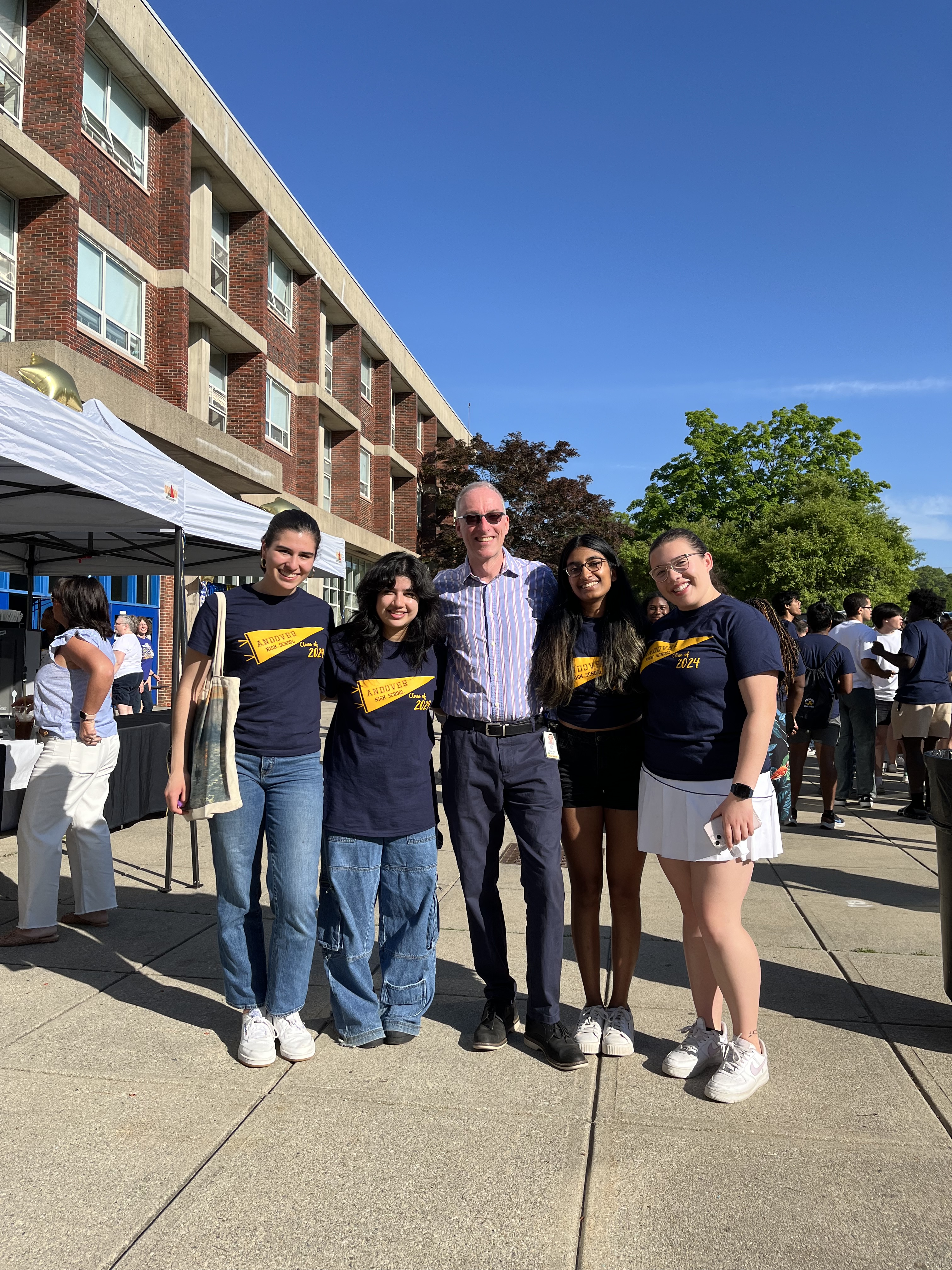
Joining Newspaper Production in sophomore year felt natural, Kruecker-Green said. Inevitable, even. “Not only do I naturally love to write,” he explained, “but it was like stepping back into freshman ELA.” Not the English 9 classroom, which he describes as a windowless room optimistically decorated with fairy lights and warmly lit with floor lamps—but the camaraderie within, at one special table with fellow students and future co-editors Isabella Yan and Saarvi Deshwal. Whatever Saarvi reported back freshman year about the enigmatic Mr. Aubrey apparently left Kruecker-Green intrigued.
Kruecker-Green arrived at ANDOVERVIEW sophomore year ready to write. He left sophomore year ready to InDesign. Multiple eyewitnesses, including well-abused Command+Z keys, can report otherwise.
According to Kruecker-Green, nobody had thought to mention that the layout program operates on principles yet to be fully understood by modern science. “Move a caption a millimeter up and it vanishes into a dimension from which it cannot be retrieved,” Kruecker-Green reported. And he learned the hard way that there is no autosave. But he stuck through. Imagine Kruecker-Green’s pride when, after reaching a higher stage of newsroom evolution, he saw others struggling and knew he could actually help, explaining text justification while still privately guessing what the heck that meant. This was a newfound responsibility, one that he embraced, and one he says he will miss.
Kruecker-Green considers the introduction of the satire column as the “single greatest addition to this paper” during his time at the newspaper. “I will not pretend I didn’t enjoy writing those pieces the most,” he admitted, “nor did I approach them with appropriate restraint.” After the publication of a certain article pertaining to the filming of a horror movie in the legendary Dirt Room, Kruecker-Green received a text with a photo of the headline—the satire section label notably absent—accompanied by the urgent question: “Chat is this real??”
“A useful demonstration of how misinformation spreads,” Kruecker-Green says optimistically through gritted teeth, “which I offer free of charge to any media literacy curriculum looking for a case study.”
This past year also brought a more formative journalistic experience, Kruecker-Green said. He had already come to the uncomfortable realization that with great journalism comes great responsibility. An article proved difficult to report for reasons outside his control, and navigating that situation taught him a lot. He said, “Naturally many stories have a lot more beneath the surface than is initially visible. Figuring out what you can responsibly do with that information, in a school environment, with all the constraints that entails, is difficult. What do you owe the reader versus what do you owe the people involved? And how do you tell the reader what they need to know without oversimplifying complex subjects?” Kruecker-Green believes this is what real journalism is about.
Kruecker-Green talks fondly of the evenings spent at the whiteboard with Isabella and Saarvi, mapping out each issue’s layout—where each article would go, what front-page stories would get jumped to an interior page. Those sessions also inevitably devolved into drawing things on the board that Kruecker-Green hopes will never be publicly released.
Kruecker-Green will miss the walks before class, trying to get a breath of fresh air after seven hours in the building before committing to two more. (He said he will miss them slightly less than Isabella does due to “a tick incident.”) He will miss the daily news quiz Kahoot, which he approached with a level of competitiveness that was disproportionate to any prize, since there was none. “I will miss, believe it or not, the dead silence that falls over the room when I ask for editorial ideas. The HVAC system, reliable in no other aspect, could always be counted on to cut out at this moment,” Kruecker-Green added. “I think it’s trying to show some solidarity.”
He will miss running late to class, half a dozen donuts in tow after a trip downtown in Saarvi’s car, involving parking decisions he describes as “brave.” He will miss her dedication, including her willingness to upload final issues at 4:30 in the morning. He will miss Isabella’s heroic organizational instincts and reminders. He will miss the other newspaper editors and staff whose collective efforts produce a great newspaper.
“And Mr. Aubrey, I will miss you,” Kruecker-Green said. “I have always admired your calm, steady mentorship, even at times when the ship seemed adrift in a sea of missed deadlines, nonexistent photos, interviewees gone AWOL, and other newsroom disasters. Thank you for believing in me, and in all of us.”
According to Kruecker-Green, there is more room in this paper—and probably more places in your life than you’d expect—to be creative, and to make an impact. “An editorial I wrote was brought up by the principal at a staff meeting,” he said. “Of course, one does not anticipate these things when writing. One never knows which piece will reach the right audience. But you write anyway.” Kruecker-Green, not known to be a big talker, is emphatic that your words matter.
It has been four years at AHS, and three in room 224. Is it a cliché to say it all went by so fast? Kruecker-Green said, “Yes, but it’s only the truth. And you know, I would do every bit of it again. Adobe InDesign can never take this from me.”