AHS Spring Show Announced: Selection Process Revealed

Janaesa Macasaet || STAFF WRITER

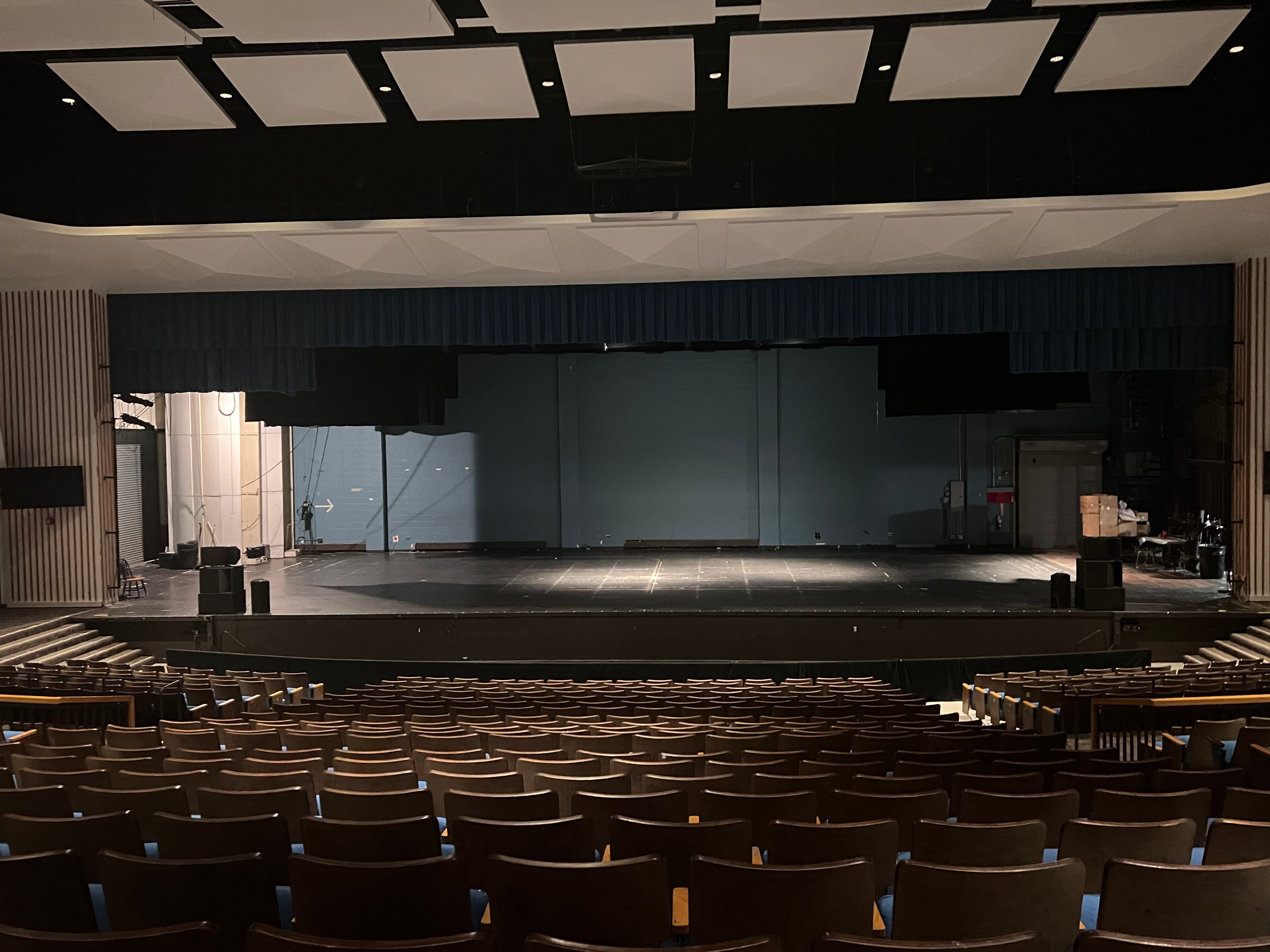
Andover High School’s anticipated spring production has been announced to be You’re A Good Man, Charlie Brown. Susan Choquette, Director of Theatre Arts, revealed the process of selecting a production. For the spring show, whether a musical or play is chosen is dependent on several factors, including the results of the Drama Fest. 

Preparation has recently begun, with the show taking place mid-May. The Theatre Guild always produces a musical in the fall, and a play for Drama Fest—an annual competition between schools—in the winter. The spring show, however, can either be a play (10-minute, one-act, Shakespearian), or a musical, which is largely impacted by the results of Drama Fest.

Kai Cruz, a senior who has been in the Theatre Guild for four years, said, “I think that making it to finals, because it extends so much of our time in the Theatre Guild to focusing on the festival, eats into some of the time that we have for the spring show.”

Time constraints for the spring show not only include time from the Drama Fest, but also time taken away due to the Collins Center being rented out almost every weekend to dance companies. Licensing and budget also play a role in the choice, with musicals costing more for royalties and the rental of orchestra scores each night. 

In general, however, Choquette approaches her process of choosing a production with a four-year cycle, where a different type of play or musical is done each year to ensure students of each grade experience a variety of shows. 

“I want them to look at the list of shows that they have participated in and look at a very diverse list,” said Choquette. “I feel that’s my mission as an educator—to make sure that kids get lots of exposure to different kinds of theater.”

Choquette also looks for different themes and messages when choosing a production. When dealing with more serious topics, the administration’s approval is always taken into account, though it has rarely been an issue.

“Our administrators have always been super supportive…. One of my mottos is if we can talk about it in health class, we can put it on the stage. If these topics are not forbidden in our health and wellness classes, then we should be able to tell stories that involve those themes,” said Choquette. 

Choquette also aims to choose productions that best fit with the Theatre Guild, and make changes when necessary. In the fall production of Into The Woods, roles were added to the story, though a few actors were cut, which is not a common occurrence. 

“There haven’t been many changes to how productions are run lately… They only really cut people once every ten years or so,” said Anna Bacchi, a senior in the Theatre Guild. “I don’t have many things that I would change because I think our creative team does a really good job with running things.”

While students are not directly involved in the decision-making process, they are able to make suggestions. For the seniors, the spring show is more than their typical production. 

“This spring is a time for celebrating, and for the graduating seniors, it’s their last show, so it’s always just a bittersweet moment, but I think that this spring show is sort of the culmination of everything that we’ve done as a guild together,” said Cruz.

Related Posts

Steve Zrike Appointed MA Secretary of Education

Avery Slaughter || ONLINE EDITOR

Steve Zrike was appointed Massachusetts Secretary of Education by Governor Maura Healey on February 10. He will assume the position on February 13.

Zrike will succeed Patrick Tutwiler in the role. As Secretary of Education, Zrike will oversee the Executive Office of Education, which is responsible for managing pre-elementary, K-12 and higher education across the state.

“My responsibility is to the children of the Commonwealth,” Zrike said. “I just want to make sure that that is clear–that at the end of the day, the job is about improving the student experience in our public institutions across Massachusetts.”

Zrike is currently the superintendent of Salem Public Schools. Previously, he also served as superintendent of both Holyoke and Wakefield. He has held various other positions in school districts across Massachusetts.

“I feel like I’ve had a lot of experiences in a lot of different types of communities,” Zrike said. “I’m going to rely on the different relationships and different experiences I’ve had across all those places. Of course, I have a lot to learn, and I’m excited to get started with better understanding the many different types of education programs that exist across Massachusetts.”

An Andover resident, Zrike began his career in education as a fifth grade teacher in Andover Public Schools. Prior to this, he received education at Dartmouth College and attended the Harvard Graduate School of Education.

“Andover was an amazing place for me to start my career,” Zrike said. “I learned a lot from the people that I worked with. I’ve carried that experience with me since.”

AI, Wikipedia Share Problem

Samin Faiz & Avery Slaughter || STAFF WRITERS

Recent developments in the AI industry have taken our generation by storm.

With AI-generated responses taking over Google searches and a pocket-sized AI assistant just one click away for many, it’s not unreasonable to say that our robotic friends are becoming increasingly integrated into our daily lives. This is no surprise, considering the attractive list of benefits it brings to students.

“It’s helpful at times for quick answers,” explained senior Vignesha Jayakumar. “You don’t need to go to a site and get bombarded with ads and all that cookie nonsense.”

Despite its brevity and user-friendliness, AI is notorious for its shortcomings. According to a 2025 study from Columbia University——as well as the past experiences of many——the majority of leading AI engines give answers that are either partially or completely incorrect. The fabrication of information is a phenomenon known as “hallucination,” and it’s a trap that many students fall into while researching.

“It’s very inaccurate at times—. Sometimes, AI just spouts out hallucinations when they feel like they’re expected to give an answer,” Jayakumar noted.

The unreliability of AI seems oddly familiar to certain AHS faculty. Having taught courses that place an emphasis on research, history teacher Ruth Masters shares her experience with a well-known source that presents a similar threat to students.

“It’s a place to start—, kind of like when I’m teaching research and students ask, ‘Can I use Wikipedia?’ I’ll say, ‘No, but you can go to the bottom of an entry and use those sources—.’ I think of it in the same vein as that.”

Jayakumar sees the parallels between AI and Wikipedia, as well. “Every teacher has their own guidelines for research,” he added. “But Wikipedia is a one-stop shop for information; Wikipedia is unreliable, AI is unreliable, so maybe we should treat them the same.”

NMany newer computers come with a built-in button that summons Microsoft’s compact AI assistant, Copilot—a feature that cannot be disabled. Furthermore, search results and AI-generated responses seem to come in a package deal nowadays, with Google’s AI overview illuminating across your screen in place of top results. So let’s face it: AI is nearly impossible to avoid, even for those that do not intend to use it. This raises an important question: is AI use considered a form of academic dishonesty if it’s unintentional or unwilling? To what extent should AI use be allowed before it crosses the line into cheating?

“Sure, read it. But that’s not your source,” asserted Masters. “You’ve got to go digging for your information. So do I think it’s unavoidable? I think that’s a choice. And if you choose to use it in lieu of your own critical thinking, then yeah, I think that’s academic dishonesty.”

According to a 2025 study from Pew Research Center, only one percent of people habitually verify linked sources when provided with a Google AI summary. Instead, they trust that the information is accurate—the exact opposite of academic honesty.

“The thing is that students have to be proactive in making sure that what they’re taking from that information is accurate and reliable, just like how you would go to any news source and check whether they’re saying something biased or not biased,” reasoned Jayakumar.

This easy access to often unreliable information can be correlated with a higher rate of use, especially amongst students. It does, after all, seem like a bottomless well of information. Accurate or not, it’s undeniably a temptation that countless students succumb to.

“You know at some point, students need to learn self-control, right? There’s probably stuff in your house that is one step away from your use that you ought not be using,” Masters said.

It’s easy to fall prey to the allure of AI searches in a world where—, according to both Google’s AI overview and a verifiable report from Forbes—, the economy itself relies on companies like OpenAI. Teachers like Masters believe it still falls on students to use good practice when verifying their information, especially in the face of such temptations.

“I think that our role as high school teachers is to teach critical thinking… and I have a lot of concerns with students’ decreasing abilities to intellectually wrestle with information.”

Leave a Reply

You Missed

Steve Zrike Appointed MA Secretary of Education

AI, Wikipedia Share Problem

Hey! What about the teachers?

Academic Pressure Drives Students to Cheat

Academic Pressure Drives Students to Cheat

Study Tracks AI Dependence and Cognitive Decline

Study Tracks AI Dependence and Cognitive Decline

“Did you use AI?”

Discover more from AHS NEWSPAPER

Subscribe now to keep reading and get access to the full archive.

Continue reading