Andoverview
Mo Gearin || Staff Writer
The Centers for Disease Control and Prevention (CDC) has officially declared senioritis a national pandemic. senioritis, now classified under Educational Fatigue Disease (EFD), is described by the CDC as “a virus from high school seniors that drains motivation and academic effort.” The CDC has begun development on containment and prevention policies.
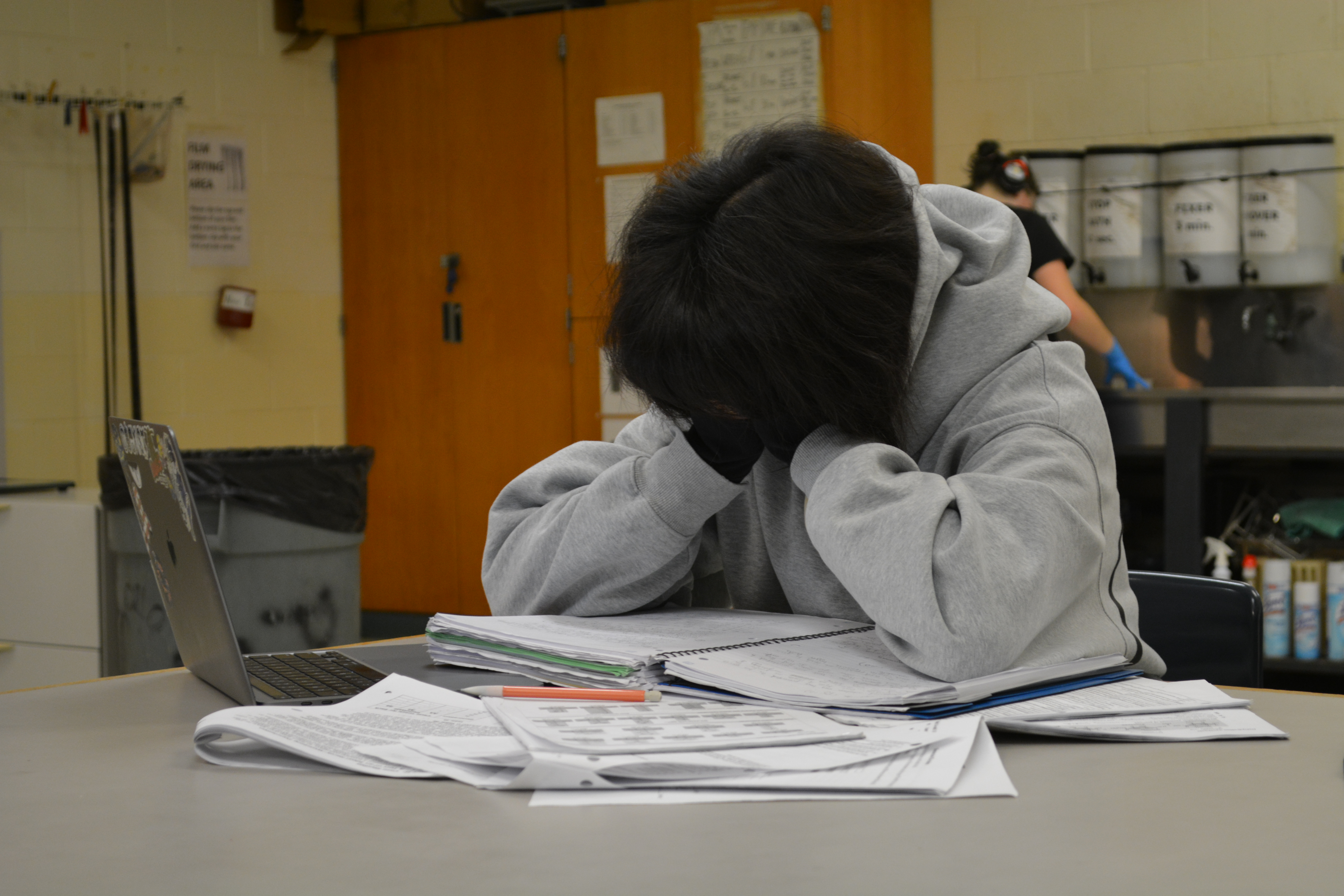
An infected senior at AHS, while choosing to stay anonymous, describes their symptoms: “I feel like a zombie…my wrist grows tired whenever I think about picking up a pencil.” CDC epidemiologists warn that senioritis is dangerously contagious this season, and new strains have breached other classes. This is due to weather patterns and increased allergens promoting airborne transmission. Pathogens of EFD in the air can still be infectious for up to an hour. New anti-hallway-loitering policies are being pushed for by the CDC in order to keep EFD within the senior class.
The CDC has advised freshmen and sophomores to limit exposure to infected seniors and at-risk juniors, and avoid all contact with college-based conversations. The CDC has also developed the Goal-Setting Accountability Partners Programs (GSAPP) and is pushing for schools to implement GSAPP as soon as possible. “The Goal-Setting Accountability Partners will pair seniors with a peer or teacher mentor to set weekly goals and check-in,” says Sandra Harwood, a medical researcher from the CDC Global Health Center. “This will hopefully lessen infectious symptoms and improve morale during these times.”
More common symptoms include chronic procrastination, uncontrollable sighing, and a sudden or intense interest in napping. The pandemic status symptoms can mimic those of the common cold or a stomach bug. Reported cases at AHS range from mild, such as missing assignments and forgotten school supplies; to acute, which is possibly forgetting what class you’re in and falling asleep during lectures; to AP effort failure, where the effort put in by AP students becomes redirected or fatigued by EFD. In some AP effort failure cases, students have begun journaling about the “futility of all human effort” in place of their assignments. The progression and diversity of the symptoms is one of the main reasons for the huge spread and lack of treatment.
“Honestly, I didn’t think senioritis was real until it hit me like a snowplow made of overdue assignments,” said senior Claire Helle.
Others claim the pandemic has created unexpected side effects. “I tried to start my essay three times! My body physically rejected productivity,” exclaimed junior John Woodring, who experienced overwhelming nausea.
“I used to color-code my planner,” admitted Priya Shawn, a senior, “Now I use it as a coaster.” Seniors across the board are expressing the severity of EFD in their daily lives.
“I used to chase extra credit,” said Kyle Cabener, another senior, “Now I chase the feeling of finishing one task a week.”
The pandemic status of senioritis has left it to mutate into new strains, the most prominent at AHS being the APocalypse Strain. This mutant strain overcomes the memory cells that foster improved immunity in AP students. Also detected at AHS is Early-Onset senioritis (EOS), sometimes detected in juniors, but mostly seen in sophomores. The CDC announces concern about “destabilization of the high school ecosystem” in regards to EOS, stating that “the normalcy that most students depend on to succeed could be greatly disrupted if EOS is left as it is.”